.webp&w=384&q=75)

Loading, please wait...
Loading, please wait...

Ring chromosome 20 syndrome is an ultra-rare genetic epileptic encephalopathy that poses major diagnostic and therapeutic hurdles. Clinicians frequently encounter severe drug resistance and progressive behavioral regression in affected individuals. However, robust data outlining long-term seizure evolution and psychosocial independence have historically remained scarce. A landmark cohort study evaluating 47 patients has illuminated critical prognostic indicators that directly influence management pathways. By elucidating how chromosomal mosaicism rates and specific anti-seizure medications shape therapeutic success, these findings offer invaluable guidance for clinical decision-making.
Ring chromosome 20 syndrome typically manifests during mid-childhood after a period of neurotypical early development. Patients experience a sudden emergence of refractory epilepsy, often presenting with nocturnal focal seizures that originate from the frontal networks. In addition, patients frequently suffer from recurrent prolonged episodes of non-convulsive status epilepticus. During these episodes, individuals exhibit fluctuating confusion, subtle rhythmic blinking, and sudden behavioral arrest. Routine structural neuroimaging rarely reveals causative abnormalities, which often delays prompt recognition. Because standard short-read genetic sequencing frequently misses structural ring configurations, clinicians must maintain high clinical suspicion. Electroencephalographic recordings typically show characteristic bilateral frontally dominant slow-wave discharges interspersed with low-amplitude fast activity. Cognitive decline and emotional shifts frequently accompany seizure emergence. As a consequence, parents and clinicians often confuse initial manifestations with primary psychiatric disturbances or acute viral encephalopathies. Early identification allows clinical teams to design proactive medical management protocols. Therefore, recognizing this distinct presentation avoids repeated diagnostic missteps and prevents avoidable therapeutic delays.
Achieving complete seizure freedom in this condition represents a formidable clinical undertaking. Nevertheless, a favorable seizure outcome—defined as seizures that do not disrupt basic daily living—remains achievable in roughly 30% of cases. The landmark 47-patient cohort analysis identified lamotrigine as the single most effective therapeutic agent. Specifically, lamotrigine achieved clinical efficacy in 69% of individuals who received the drug. Furthermore, multivariable statistical analysis confirmed that lamotrigine administration independently predicted favorable seizure control. Sodium valproate also demonstrated substantial benefit, delivering measurable efficacy in 43% of treated individuals. Clinicians observed notable improvements with other sodium channel blockers as well. In contrast, several broader broad-spectrum anti-seizure regimens yielded poor clinical returns when clinicians used them indiscriminately. Consequently, clinicians should prioritize rational pharmacological combinations early in the clinical course. Medical teams must carefully evaluate drug responsiveness, prioritizing lamotrigine titration while monitoring for cognitive side effects. When physicians implement targeted pharmacotherapy, patients experience fewer disabling status epilepticus events and retain better daily functionality.
Chromosomal structure significantly influences disease severity and therapeutic responsiveness. Ring chromosome formation results from breakages in the short and long arms of chromosome 20, leading to circular fusion. Most affected patients exhibit a mosaic karyotype, wherein a proportion of somatic cells carries the intact linear chromosome while others contain the aberrant ring. The studied cohort demonstrated an average mosaicism rate of 33%, with individual proportions spanning from 1% to 97%. Importantly, multivariable regression identified a lower mosaicism rate as a primary independent determinant of favorable seizure outcomes. Patients possessing fewer ring-bearing cells demonstrated greater responsiveness to standard antiepileptic medications. Furthermore, lower mosaic burdens correlated with higher baseline intelligence quotients and preserved adaptive functioning. Conversely, patients with high mosaicism percentages experienced early cognitive decline, prominent non-convulsive status epilepticus, and severe intractable seizures. Therefore, assessing the exact degree of chromosomal mosaicism provides critical prognostic insight. Clinicians must order extended metaphase karyotype analyses, counting at least 50 to 100 metaphases, to capture low-level mosaic populations accurately.
Neuropsychiatric morbidity constitutes an immense barrier to long-term quality of life in affected patients. In the 47-case cohort, intellectual disability affected 57% of all participants, reflecting substantial neurodevelopmental impairment. In addition, 17% of patients received a formal diagnosis of autism spectrum disorder, exhibiting difficulties with social communication and behavioral flexibility. Psychiatric symptoms emerged in 21% of cases, encompassing affective lability, psychosis, severe anxiety, and obsessive-compulsive traits. These psychological challenges frequently compound the neurological disability caused by recurrent epileptiform activity. Moreover, non-convulsive status epilepticus can present deceptively as sudden behavioral worsening rather than overt convulsive activity. Consequently, care teams must avoid misinterpreting ictal confusion as purely functional psychiatric decompensation. A multidisciplinary approach featuring close collaboration between pediatric neurologists, adult epileptologists, and neuropsychiatrists is essential. Routine psychometric screening helps clinicians identify emerging deficits before severe school failure or behavioral crises develop. Thus, holistic supportive management must extend beyond antiepileptic pharmacology to ensure sustained psychological well-being.
Transitioning from adolescence into adulthood presents tremendous challenges for individuals living with this rare chromosomal disorder. Among adult patients evaluated in the cohort, independent vocational integration was limited. Only 23% of adults attained competitive employment, while 17% previously worked but subsequently lost their positions due to progressive disease. Additionally, 10% worked within specialized disabled employment settings, and 20% depended entirely on structured community employment support. An additional 20% possessed no formal employment history whatsoever. Residential autonomy proved equally constrained, with 83% of adult patients remaining dependent on family care at home. Furthermore, only 7% of individuals achieved marital independence. These staggering figures highlight that persistent subclinical seizures and cognitive limitations restrict adult self-sufficiency. Therefore, adolescent transition programs must address vocational rehabilitation, financial guardianship, and supported community living arrangements early. Clinicians should educate caregivers about available state welfare resources and community networks. Ultimately, structured social support systems are necessary to reduce long-term caregiver burnout and promote dignity.
Managing complex epileptic syndromes requires clinicians to adopt a comprehensive, lifelong therapeutic model. First, medical providers must streamline early diagnostic pathways by choosing standard cytogenetic karyotyping over microarray tests that may miss non-deleted rings. Second, pharmacological management should emphasize lamotrigine and valproate early, optimizing dosages before attempting invasive measures. Third, neurologists must monitor patients using serial video-EEG telemetry whenever behavioral fluctuations arise, ensuring prompt termination of non-convulsive status epilepticus. Furthermore, medical institutions must build integrated multidisciplinary transition clinics bridging pediatric and adult neurological specialties. Because most adult patients reside with ageing parents, social workers must formulate sustainable long-term care plans well before parental crises occur. Similarly, support organizations provide crucial education, peer support, and advocacy resources that empower affected households. As therapeutic discovery advances, targeted genetic insights may eventually generate precision disease-modifying therapies. Until then, clinicians must combine rigorous seizure control, neuropsychiatric support, and tailored social care to maximize functional independence.
Standard chromosomal karyotype analysis using peripheral blood lymphocytes is the definitive diagnostic method. Clinicians must analyze at least 50 to 100 metaphase spreads to detect low-level chromosomal mosaicism accurately. Newer microarrays and next-generation sequencing panels frequently miss balanced ring formations without microdeletions, delaying timely diagnosis.
Lamotrigine demonstrates the highest therapeutic efficacy, benefiting approximately 69% of patients in recent clinical cohorts. Multivariable analyses confirm lamotrigine use as an independent predictor of favorable seizure outcomes. Valproate also provides substantial benefit in 43% of cases, and other sodium channel blockers frequently provide useful adjunct control.
Non-convulsive status epilepticus frequently mimics acute psychiatric disturbance, confusion, or behavioral apathy rather than obvious motor convulsions. Subtle signs such as rhythmic blinking, staring, or speech arrest can persist for days unnoticed. Consequently, urgent prolonged video electroencephalography is necessary to differentiate prolonged electrographic seizures from baseline cognitive fluctuations.
Disclaimer: This content is for informational and educational purposes only... Refer to the latest local and national guidelines for clinical practice.
References

Read summarized clinical updates, watch expert medical content, and earn CME certifications right from your smartphone.
Open your smartphone camera to scan and install.





A cohort study of 47 patients with ring chromosome 20 syndrome reveals that 30% achieve favorable seizure control, with lamotrigine use and lower mosaicism rates serving as independent positive predictors. However, profound adult psychosocial constraints persist, highlighting the need for comprehensive care.
Today

A multicenter propensity-matched study evaluated DOAC plus single versus dual antiplatelet therapy after carotid artery stenting. Findings revealed comparable intracranial hemorrhage and ischemic stroke rates, supporting DOAC plus SAPT as a viable antithrombotic strategy in high-risk patients.
Today

Meghalaya recorded a historic 55% reduction in maternal deaths, dropping from 244 to 107 over five years. Through the MOTHER app, dedicated transit homes, and expanded infrastructure like the 150-bed Tura Maternity Hospital with its first public NICU, the state demonstrates an effective public health model.
Today

Explore modern perioperative management protocols for clinical xenotransplantation. Learn how costimulation blockade, anti-inflammatory perfusion, and coagulopathy rescue overcome interspecies hurdles.
Yesterday

A cross-sectional study reveals that sarcopenic obesity independently increases functional impairment and severe disc degeneration in patients with degenerative lumbar spinal stenosis, highlighting the need for body composition assessment.
Today
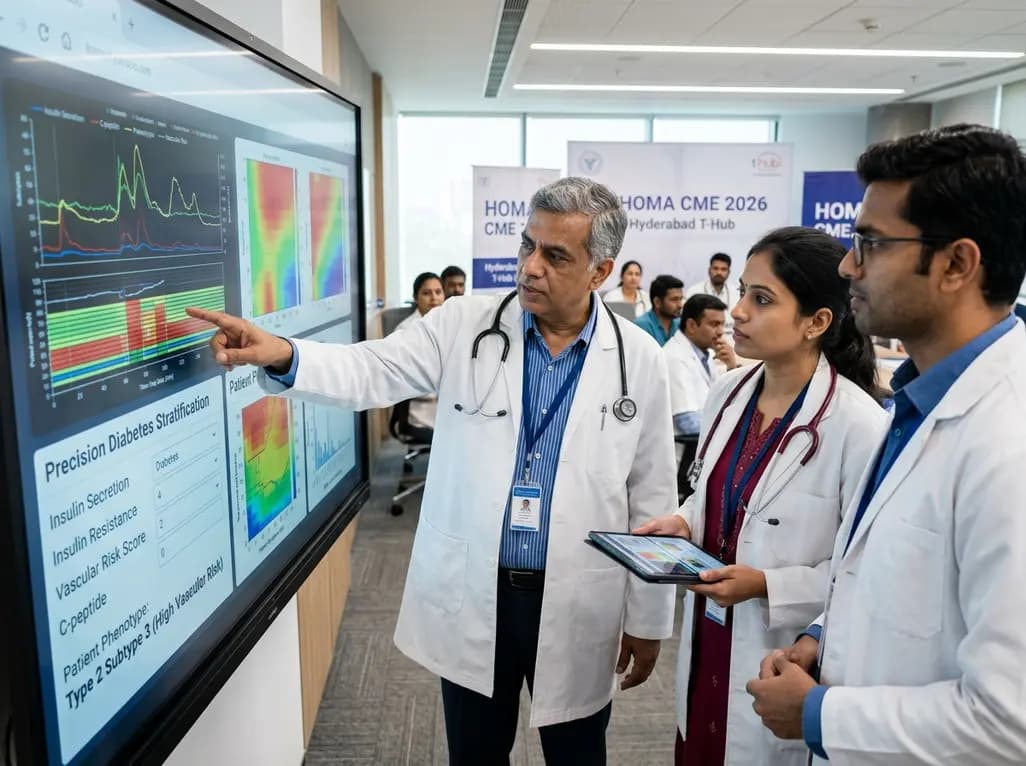
At Homa CME 2026 at Hyderabad's T-Hub, healthcare leaders emphasized moving beyond routine metrics through digital calculators and precision stratification. Discover why characterizing individual insulin secretion, resistance patterns, and vascular risks transforms chronic metabolic care in India.
Yesterday
