

Loading, please wait...
Loading, please wait...
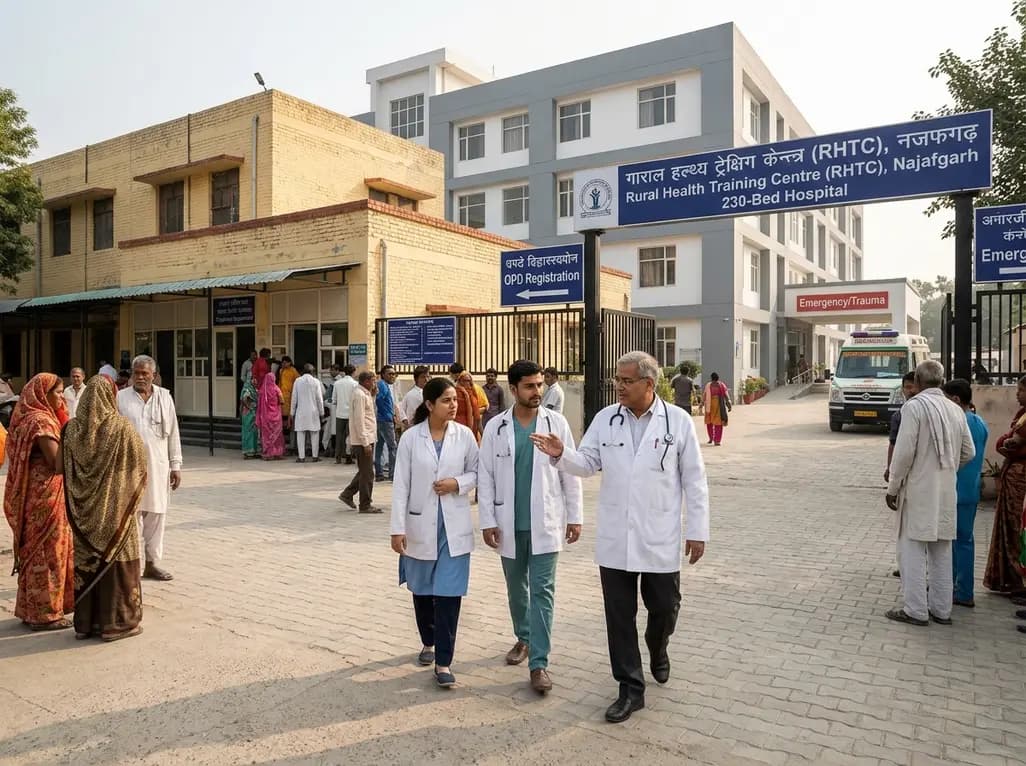
Primary healthcare delivery in peri-urban regions requires robust infrastructure and agile clinical management. Recently, Union Health Minister J P Nadda thoroughly reviewed the operational performance and infrastructure expansion of RHTC Najafgarh services. This historic institution plays a pivotal role in delivering comprehensive medical care to rural and semi-urban populations in Delhi. Moreover, the review highlighted key clinical milestones and outlined strategic roadmaps for medical education.
The Rural Health Training Centre continues to transform public healthcare delivery through a broad multidisciplinary approach. Consequently, RHTC Najafgarh services have expanded well beyond basic outpatient care to encompass complex clinical interventions. The institution operates an Anti-Rabies Centre alongside a dedicated snake-bite treatment facility. These emergency services provide immediate care to residents in surrounding villages. In addition, the centre maintains fully functional labour rooms to promote safe institutional deliveries. Patients also benefit from dedicated Ayurvedic and dental clinics operating on campus. The facility pharmacy currently dispenses more than 350 essential medicines. As a result, local patients receive reliable treatments without facing out-of-pocket medication expenses. Furthermore, healthcare teams conduct regular health education sessions to promote disease prevention. Clinicians focus heavily on antenatal care, childhood immunisation schedules, and maternal nutrition. These concerted efforts ensure that community members receive comprehensive clinical support near their homes. Therefore, the hospital establishes an effective first line of defence against preventable morbidity across the region.
During the recent three-month evaluation period between August and October, patient attendance reached historic highs. The facility recorded 94,927 outpatient visits across 10 specialised departments. In addition, medical teams managed 35,985 emergency presentations during the same timeframe. These numbers clearly reflect the intense clinical demand placed on the rural centre. Meanwhile, inpatient wards admitted 198 patients who required close monitoring and targeted therapy. Surgeons at the institution successfully performed 691 surgical procedures during this quarter. Specifically, this caseload included 101 major operations alongside 590 minor surgical interventions. Hospital staff maintained high clinical standards despite high patient volume. In addition, routine tuberculosis symptom screening remains active during every clinical consultation under the national elimination campaign. Health workers quickly isolate suspected cases and initiate prompt diagnostic workups. Similarly, triage protocols allow medical teams to prioritise acute trauma cases and critically ill patients. Thus, the facility consistently maintains high throughput while delivering evidence-based clinical care.
Modern clinical management relies fundamentally on timely diagnostic accuracy. Accordingly, the centre has substantially upgraded its laboratory and imaging services in recent months. The central laboratory now holds full accreditation from the National Accreditation Board for Testing and Calibration Laboratories. Consequently, patients receive rapid and standardised pathology reports. Furthermore, the newly operationalised ultrasound unit performed 148 scans within its initial weeks of launch. The facility also houses active physiotherapy and audiometry units to support patient rehabilitation. Audiology specialists conducted 252 formal audiometry evaluations during the recent review period. Moreover, administrative teams are working rapidly to install CT scan and digital X-ray facilities. These imaging suites should become fully operational during the first quarter of next year. The centre also plans to open a modern mortuary and blood storage unit. Therefore, local doctors will soon access advanced diagnostic imaging directly on site. This step will eliminate the need to transfer unstable patients across long distances for basic scans.
The central government is actively expanding RHTC Najafgarh into a full-scale 230-bedded secondary hospital. This infrastructure project addresses the growing demand for secondary care in southwest Delhi. Consequently, the expansion will provide spacious inpatient wards and modern intensive care units. In addition, the ministry plans to establish formal academic departments in Family Medicine and Emergency Medicine. Planners project that these academic divisions will launch before the end of the first quarter of 2027. This transition bridges critical gaps between grassroots clinical medicine and post-graduate medical education. Medical residents will gain direct exposure to complex rural case presentations. Furthermore, senior specialists and resident doctors will oversee round-the-clock emergency care. Collaborations with premier central institutions, including Safdarjung Hospital, actively strengthen clinical manpower and technical capacity. As a result, the hospital will deliver advanced interventions while retaining its community-oriented focus. This transformation ensures that vulnerable populations access secondary healthcare without navigating crowded tertiary apex hospitals.
Primary healthcare delivery requires strict adherence to quality benchmarks and rigorous infection control protocols. Established in 1937, RHTC Najafgarh provides primary services through three Urban Primary Health Centres. These primary centres are located at Najafgarh, Ujwa, and Palam. Moreover, sixteen peripheral sub-centres extend preventive care into surrounding villages. The institution is pursuing National Quality Assurance Standards certification for all three primary centres. Notably, staff have already completed 105 out of 129 designated quality action points. State-level quality assessments will conclude shortly, followed by national inspections. Additionally, the centre complies fully with biomedical waste guidelines from the Delhi Pollution Control Committee. Engineering teams have concluded essential structural, energy, and fire safety audits. In contrast to fragmented clinics, these accredited facilities guarantee structured maternal and child healthcare. Dedicated staff members regularly track high-risk pregnancies and manage non-communicable disease registries. Consequently, the peripheral network significantly improves clinical outcomes throughout the district.
Sustained institutional growth requires a steady pipeline of trained medical and nursing personnel. Therefore, the administration recently renovated the Auxiliary Nurse Midwife Training School on campus. This academic institution maintains an annual intake capacity of 44 students. In addition, the campus provides modern residential hostel facilities accommodating 60 nursing candidates. Looking ahead, long-term plans include establishing a full BSc Nursing College and an Allied Health Sciences College. These institutions will cultivate skilled healthcare professionals dedicated to community practice. Meanwhile, the centre plans to operationalise specialised clinics by December. These new services will cover thalassemia, adolescent health, rheumatology, and substance de-addiction. Clinicians will also offer dedicated sessions for venereal diseases and chronic lifestyle disorders. In addition, digital records and telemedicine modules will link peripheral centres directly to senior consultants. Thus, RHTC Najafgarh establishes a scalable paradigm for public health delivery across India.
Q1: What major upgrades are currently planned for RHTC Najafgarh?
The facility is currently undergoing an expansion into a 230-bedded hospital. Key infrastructure upgrades include establishing post-graduate teaching departments in Family Medicine and Emergency Medicine. In addition, administrators are installing advanced diagnostic tools such as CT scans, digital X-rays, and an on-site blood storage unit. Future projects include establishing a nursing college and specialised outpatient clinics.
Q2: How many patients utilised outpatient and emergency services during the recent review period?
Between August and October, RHTC Najafgarh managed 94,927 outpatient visits across 10 distinct specialities. During this three-month window, emergency teams treated 35,985 patients. In addition, surgeons completed 691 operations, which included 101 major and 590 minor surgeries. The hospital also admitted 198 inpatient cases, demonstrating substantial regional healthcare demand.
Q3: How does RHTC Najafgarh support rural and community health networks?
Established in 1937, the centre operates three Urban Primary Health Centres located in Najafgarh, Ujwa, and Palam, supported by peripheral sub-centres. These units deliver essential immunisations, antenatal care, and routine disease screenings. The network is currently pursuing National Quality Assurance Standards certification, having completed 105 of 129 required quality action points.
Disclaimer: This content is for informational and educational purposes only. It does not constitute medical advice or replace professional judgment. Refer to the latest local and national guidelines for clinical practice.
References

Read summarized clinical updates, watch expert medical content, and earn CME certifications right from your smartphone.
Open your smartphone camera to scan and install.





A high-level review of the Rural Health Training Centre in Najafgarh highlighted massive outpatient footfall, enhanced surgical capacity, and planned academic departments in Family and Emergency Medicine. The facility is transitioning into a 230-bed hospital to serve rural and peri-urban populations.
Today
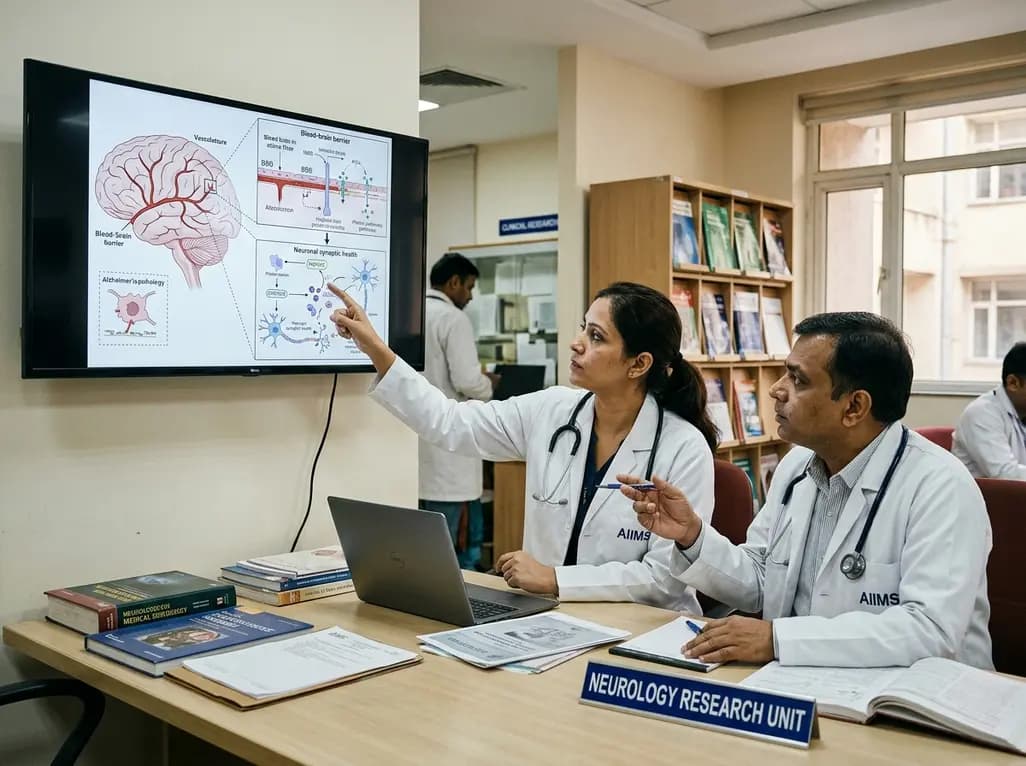
Groundbreaking research from the Gladstone Institutes demonstrates that the blood-brain barrier functions as an active molecular filter rather than a static wall. By identifying systemic proteins like APOA1 that preserve neuronal synapses, investigators unveil promising outside-in therapeutic targets for dementia.
Today
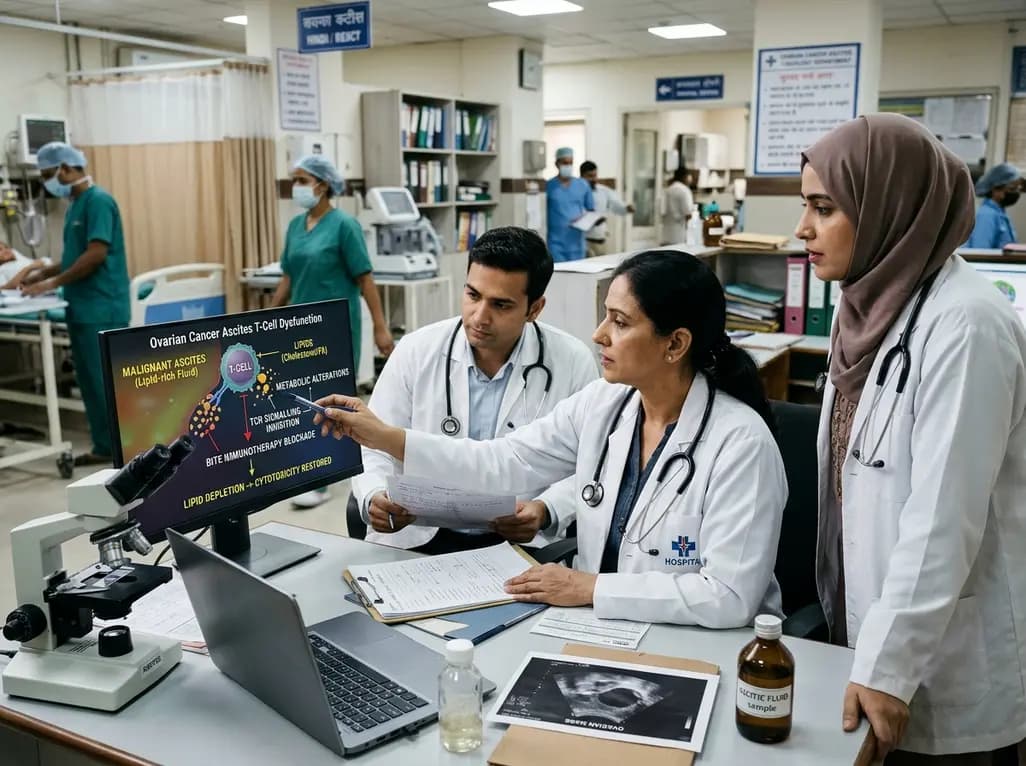
A landmark study reveals that lipid-rich malignant ascites alters the T-cell metabolic transcriptome, causing cholesterol efflux and impaired fatty acid oxidation. This suppresses TCR signalling and blocks BiTE immunotherapy, while lipid depletion restores antitumour cytotoxicity in ovarian cancer.
Today

Novel clinical evidence demonstrates the feasibility of combining VA-ECMO with the NyokAssist self-expanding transvalvular pump for active left ventricular unloading in infarct-related cardiogenic shock, achieving successful stabilization and decannulation.
Today
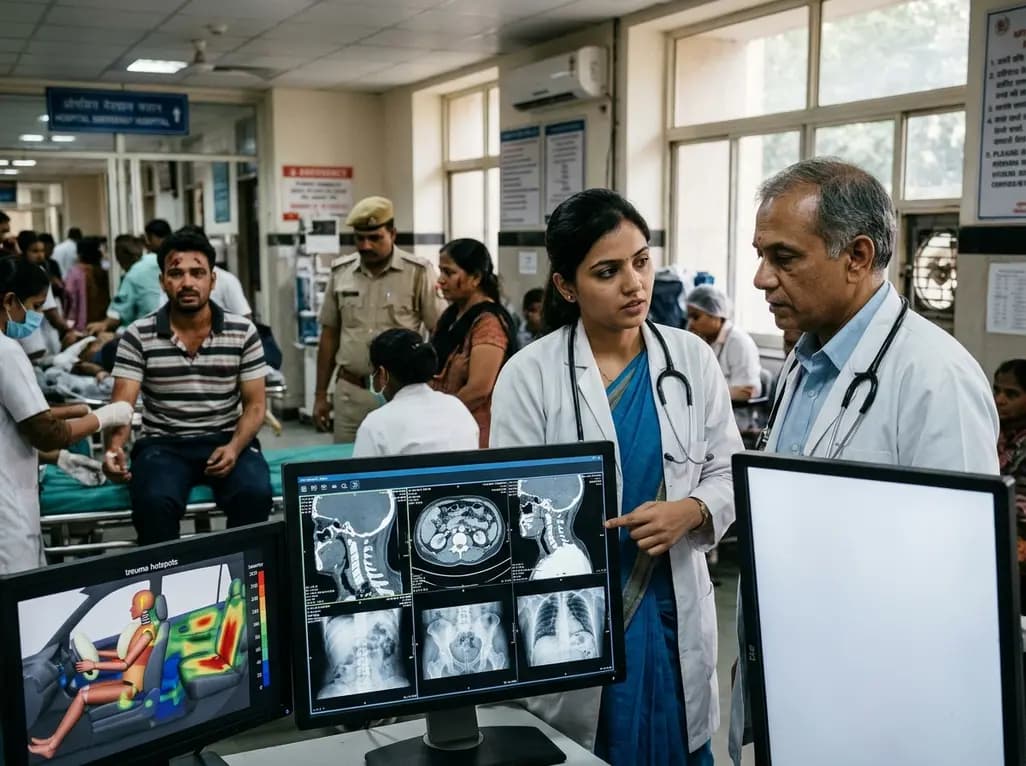
Recent crash analyses demonstrate significant variations in traffic injury severity across vehicle seating positions. Electric vehicle passengers face disproportionately higher trauma risks than drivers, particularly during airbag deployments, demanding adapted emergency assessment and clinical vigilance.
Today
Understand the causal role of Lipoprotein(a) in cardiovascular disease, why international guidelines recommend once-in-a-lifetime molar testing, and the clinical implications of recent phase 3 RNA outcome trials.
Today
