.webp&w=384&q=75)

Loading, please wait...
Loading, please wait...

Recent research into rheumatology fellowship training in the United States highlights significant diversity in how programs structure their curricula. While programs operate within the frameworks set by the American College of Rheumatology (ACR) and the Accreditation Council for Graduate Medical Education (ACGME), they often tailor their offerings to local institutional strengths. This adaptability ensures that trainees receive exposure to unique clinical environments, although it results in a lack of uniformity across the country.
A comprehensive survey of 91 ACGME-accredited programs revealed a response rate of over 70%. Most programs successfully incorporate core ACGME-recommended elements. However, researchers noted substantial differences in specific areas. These include the balance between ambulatory and inpatient training, the variety of elective offerings, and the depth of procedural experience provided to fellows. Didactic structures and research opportunities also varied significantly between institutions.
Moreover, the study emphasized that variability is not necessarily a drawback. Instead, it reflects the ability of rheumatology fellowship training programs to leverage specialized local resources, such as interdisciplinary clinics or specific research niches. For instance, some programs may offer intensive exposure to musculoskeletal ultrasound, while others focus more heavily on academic research tracks or complex inpatient consultations. This flexibility allows fellows to select programs that align with their long-term career goals, whether in clinical practice or academic medicine.
In the global context, these findings are particularly relevant for medical educators in India. Currently, India is working toward harmonizing its own rheumatology training to meet international benchmarks. Understanding how the US manages curricular diversity while maintaining high standards can provide valuable insights for Indian institutions. Strengthening procedural supervision and structured didactics remains a priority for emerging specialties worldwide. Therefore, analyzing these differences is essential for improving educational outcomes and ensuring global clinical proficiency.
US programs often feature highly structured subspecialty tracks and rigorous procedural supervision for skills like ultrasound-guided injections. In contrast, training in India is currently moving toward a more harmonized national curriculum to address historical heterogeneity across different states and institutions.
The core components typically include ambulatory continuity clinics, inpatient consultation services, structured didactics (such as journal clubs and case conferences), and mentored research opportunities. Procedural training in joint aspiration and injection is also a vital requirement.
Variability often reflects a program's adaptation to its specific resources. While core competencies remain standardized, different programs may produce specialists with varying strengths in research, clinical subspecialties, or procedural expertise, depending on the program's unique focus.
Disclaimer: This content is for informational and educational purposes only and does not constitute medical advice or a recommendation for any specific training program. Refer to the latest local and national guidelines for clinical practice.
References
Pattanaik D et al. Variations in the Adult Rheumatology Fellowship Training in the United States: Opportunities and Challenges. Arthritis Care Res (Hoboken). 2026 Feb 16. doi: 10.1002/acr.80023. PMID: 41693642.
Kadel J et al. Rheumatology Training in India Compared to the United Kingdom: An Observational Study. ResearchGate. 2025 Sep 12.
Srivastava M et al. Rheumatology education in India: a survey-based cross sectional study. PMC. 2021 Aug 06.
"
Read summarized clinical updates, watch expert medical content, and earn CME certifications right from your smartphone.
Open your smartphone camera to scan and install.





A study of 91 US programs reveals significant diversity in rheumatology fellowship curricula, reflecting institutional strengths and local resource adaptabi...
8 months ago
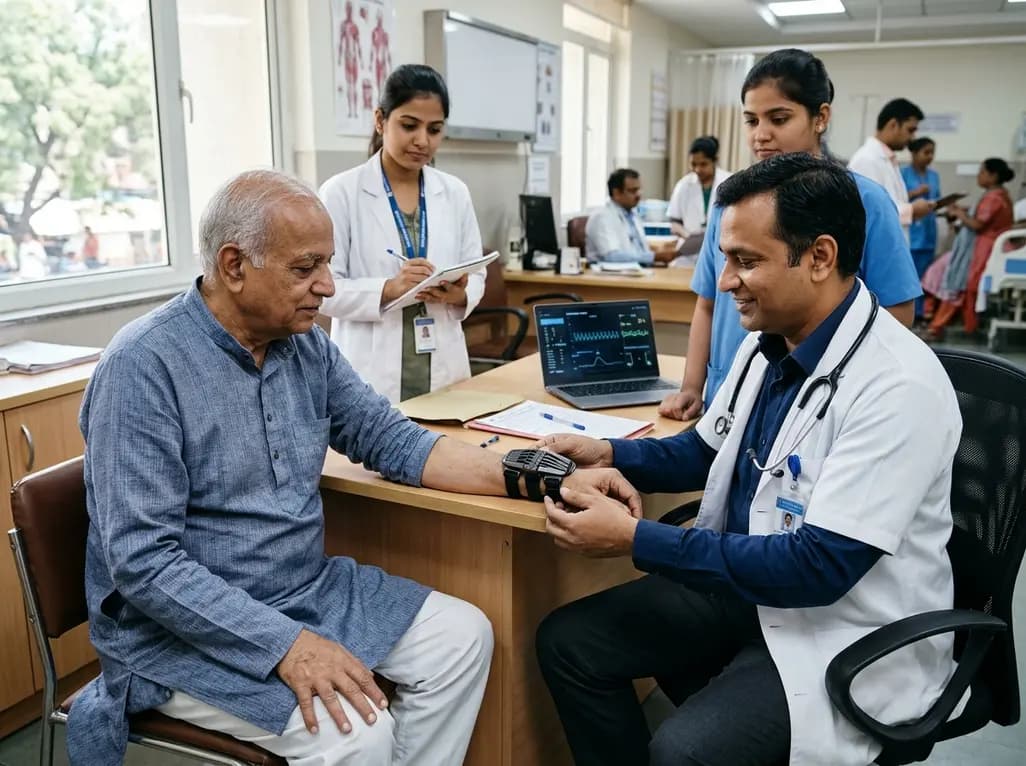
The TREM-AB open-label pilot study evaluated a wearable passive nonlinear vibration absorber for essential tremor. The Nonlinear Energy Sink bracelet reduced clinical Fahn-Tolosa-Marin tremor scores by 32.1% and electrophysiological tremor power by 49.2% with no adverse effects reported.
Today
A population-based study of 20,928 children reveals that small vulnerable newborns face sex-divergent mental capital outcomes at ages 6-7: term SGA girls show higher behavioral difficulties and lower resilience, while preterm non-SGA boys experience increased behavioral problems.
Today
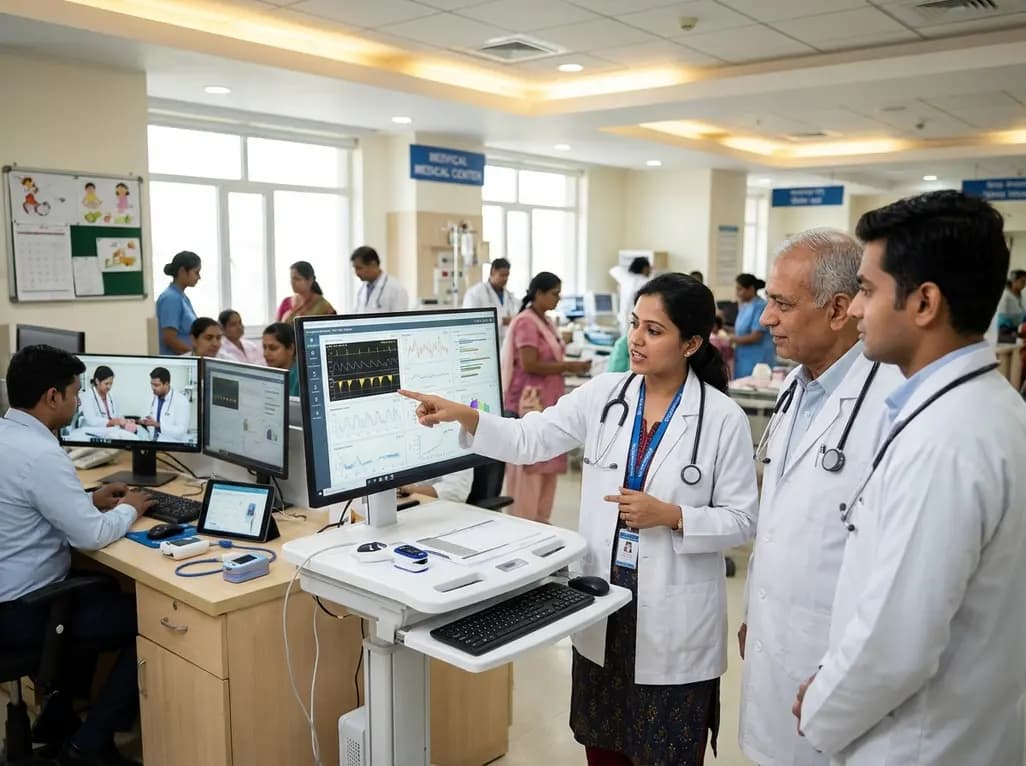
A landmark study details how an enterprise pediatric remote patient management model expanded from a single cardiology pilot to 16 diverse specialty programs by combining centralized digital operations with specialty clinical leadership.
Today

A comparative review of tension band wiring and intramedullary screw fixation in thumb metacarpophalangeal arthrodesis, evaluating union rates, hardware complications, and clinical outcomes.
Today
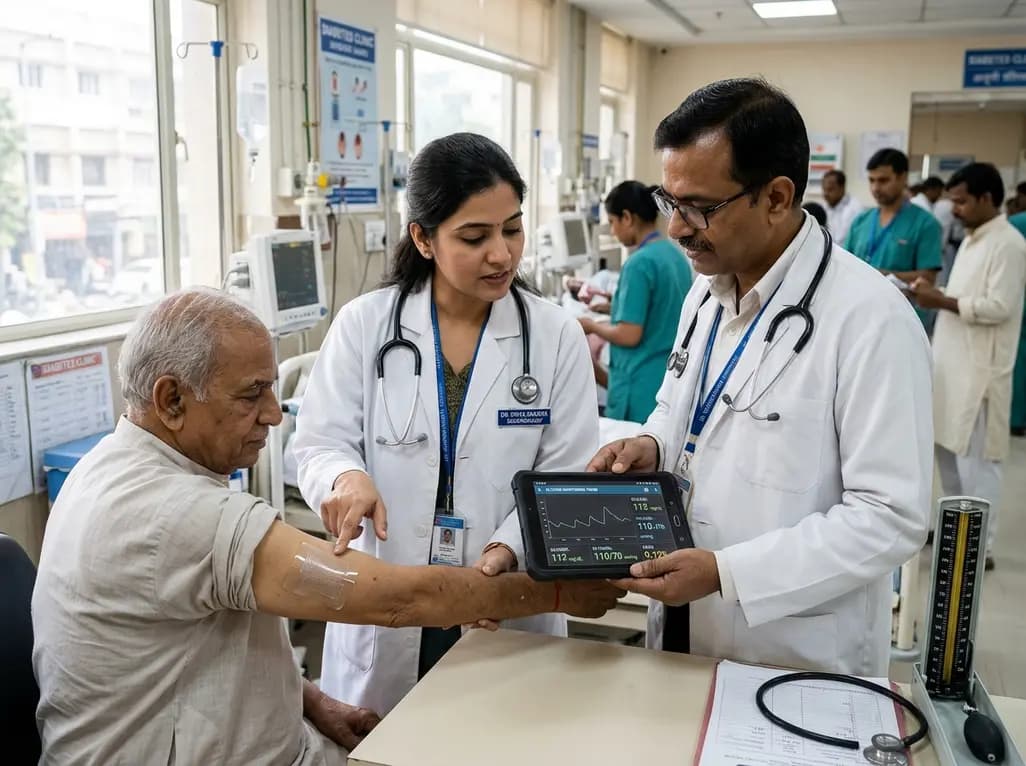
A breakthrough ultrathin multimodal sensor decouples physical hemodynamic monitoring from disposable electrochemical calibration, achieving long-term wearable glucose prediction with 81.36% accuracy and a 9.12% MARD. This offers a robust, drift-free solution for outpatient metabolic surveillance.
Today
