.webp&w=384&q=75)

Loading, please wait...
Loading, please wait...

Mandibular reconstruction surgery requires extreme precision to restore both facial aesthetics and vital functions. Traditionally, surgeons have relied on freehand techniques or expensive, patient-specific 3D-printed cutting guides. However, a new study introduces a novel adjustable osteotomy guide (AOG). This reusable tool effectively translates in-house virtual surgical planning (VSP) into controlled fibula flap osteotomies. Consequently, it offers a high-precision alternative without the logistical hurdles of external manufacturing.
Researchers developed the AOG to bridge the gap between low-tech wire templates and high-cost printed guides. They tested the device using 3D-printed models of the maxilla, mandible, and fibula. Specifically, the team used 3D Slicer software to perform in-house virtual planning. This approach allowed them to measure segment lengths and osteotomy angles accurately before the physical simulation began.
The study compared the AOG technique against the conventional wire-template method across five representative cases. Furthermore, the results showed that the AOG technique significantly improved symmetry metrics. Specifically, the angulus-gnathion distance ratio (b1/b2) and the midline-angulus distance ratio (d1/d2) showed median values closer to the ideal 100. These improvements were statistically significant, suggesting that the AOG provides more predictable outcomes than traditional methods.
In addition to improved accuracy, the AOG technique enhanced surgical efficiency. Procedure duration dropped significantly from a median of 20 minutes with conventional templates to just 14 minutes with the AOG. Moreover, the reusability of the guide addresses a major barrier in resource-limited settings. By reducing the dependence on one-time-use patient-specific guides, hospitals can lower costs while maintaining high standards of care. Ultimately, this practical pathway supports VSP-informed surgeries with reduced financial and logistical burdens.
The AOG is reusable and cost-effective. It improves facial symmetry and significantly reduces the time required for fibula shaping during mandibular reconstruction surgery.
While patient-specific guides are accurate, they are often expensive and take time to manufacture. The AOG allows for in-house virtual planning and immediate use, reducing logistical delays and costs.
The study utilized 3D Slicer, which is an open-source tool for medical image processing. This makes the workflow accessible to surgical teams with basic 3D planning capabilities.
Disclaimer: This content is for informational and educational purposes only. It does not constitute medical advice or a substitute for professional healthcare. Always seek the advice of your physician or other qualified health provider with any questions you may have regarding a medical condition. Refer to the latest local and national guidelines for clinical practice.
References
1. Topaloğlu E et al. Development of a Novel Adjustable Osteotomy Guide for Use in Free Fibula Flap Osteotomies and Comparison With Conventional Methods on 3D-Printed Models. J Craniofac Surg. 2026 May 15. doi: 10.1097/SCS.0000000000012938. PMID: 42138856.
2. Monsalve-Iglesias F, et al. Virtual surgical planning in fibula flap mandibular reconstruction - AME Publishing Company. Oral and Maxillofacial Surgery. 2020.
3. Shah S, et al. Impact of 3D printing on Orthopedic Surgery in India: Has the Technology Really Arrived! NIH. 2023.
"
Read summarized clinical updates, watch expert medical content, and earn CME certifications right from your smartphone.
Open your smartphone camera to scan and install.





A study introduces a reusable adjustable osteotomy guide that enhances symmetry and reduces surgical time in mandibular reconstruction surgery....
5 months ago
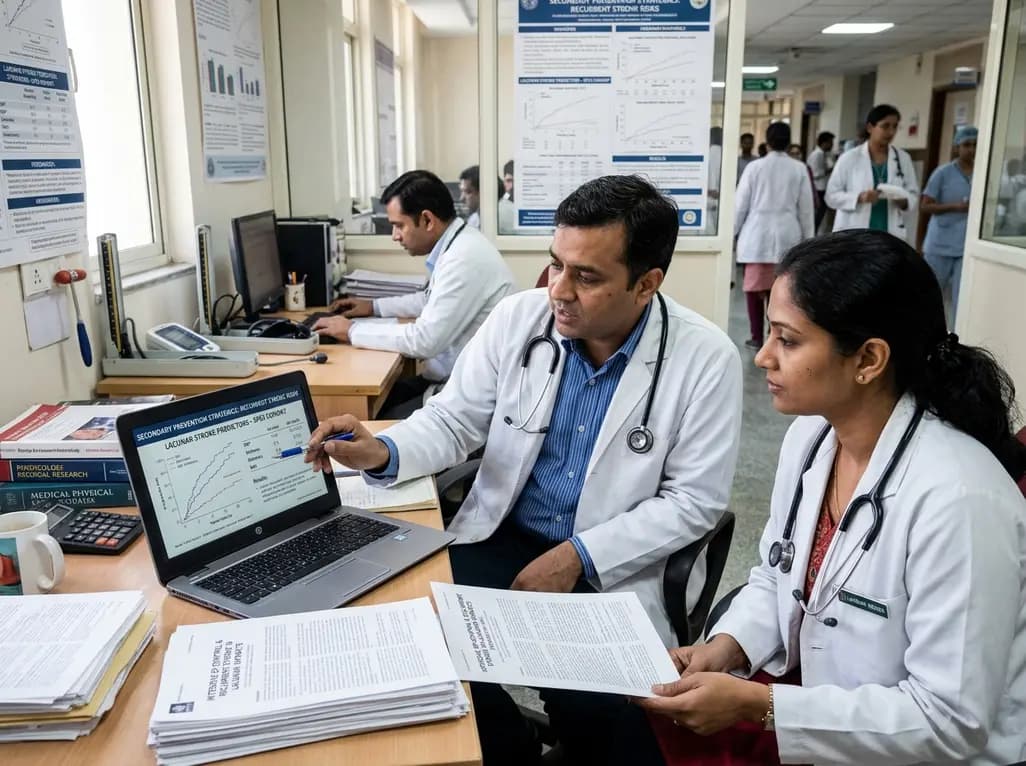
Explore vital recurrent stroke predictors in lacunar stroke patients managed with intensive blood pressure lowering. This analysis examines trial findings from SPS3 to uncover residual vascular risks, metabolic factors, and targeted secondary prevention strategies for high-risk neurological patients.
Today

A comprehensive scoping review synthesises evidence linking prenatal maternal mental health to long-term offspring neurodevelopment, evaluating neuroendocrine, inflammatory, and epigenetic pathways while highlighting clinical screening and future research priorities.
Today

The Directorate General of Health Services directs Indian states to halt the hazardous reuse and reprocessing of single-use medical devices. Discover regulatory implications under the Drugs and Cosmetics Act, critical infection risks, legal liabilities, and operational changes required across clinical specialties.
Today
Mitochondria-targeted nanoparticles self-assembled from EGCG and L-glutamic acid effectively restore mitochondrial homeostasis, suppress synovial inflammation, and attenuate chondrocyte senescence in osteoarthritis, offering a promising disease-modifying nanotherapy.
Today

India is advancing preventive healthcare by integrating genomics, artificial intelligence, and quantum technologies. With the SANGAM programme sequencing one million Indian genomes, clinicians can unlock personalized therapies, detect cardiometabolic risks early, and curb the burden of diabetes and heart disease.
Today
