.webp&w=384&q=75)

Loading, please wait...
Loading, please wait...

A breakthrough study introduces a cascaded deep learning framework for more accurate respiratory motion quantification using surface electromyography (sEMG). Traditionally, monitoring diaphragmatic activity is difficult because electrocardiographic (ECG) artifacts often contaminate the signal. This new approach successfully isolates respiratory components, offering a robust solution for real-time clinical monitoring. Consequently, doctors can now obtain cleaner data without the latency issues of linear processing methods.
The proposed framework uses a two-stage cascaded design. First, a CNN-LSTM hybrid model filters out noise while isolating essential respiratory signals. Subsequently, a multi-scale CNN utilizes nonlinear feature abstraction to perform precise respiratory motion quantification. Notably, this architecture allows for high-fidelity artifact suppression without the need for additional post-processing. Because it works in real-time, it holds significant potential for tracking patient breathing during complex procedures.
Researchers validated this model using data from 45 subjects. The results demonstrated a Pearson correlation of 0.949, which is significantly higher than traditional gating techniques. Furthermore, the system remains effective across various clinical environments. This technology could improve radiotherapy tracking, ensuring that radiation beams align perfectly with moving targets. Additionally, intensive care units could use this for non-invasive patient monitoring, potentially reducing the need for more invasive sensors.
ECG signals are often much stronger than respiratory sEMG signals and overlap in frequency. Therefore, they hide the breathing data, making accurate motion tracking very difficult.
Older methods often rely on linear assumptions and introduce delays. In contrast, the CNN-LSTM model uses deep learning to process data nonlinearly and in real-time, providing better accuracy and faster results.
The framework is particularly useful for radiotherapy tracking, where precise breathing data is needed to target tumors. It is also beneficial for monitoring patients in intensive care settings.
Disclaimer: This content is for informational and educational purposes only. It does not constitute medical advice or a professional relationship. Refer to the latest local and national guidelines for clinical practice.
References

Read summarized clinical updates, watch expert medical content, and earn CME certifications right from your smartphone.
Open your smartphone camera to scan and install.





A study presents a cascaded CNN-LSTM framework for accurate, real-time respiratory motion quantification from sEMG signals, overcoming ECG interference....
8 months ago
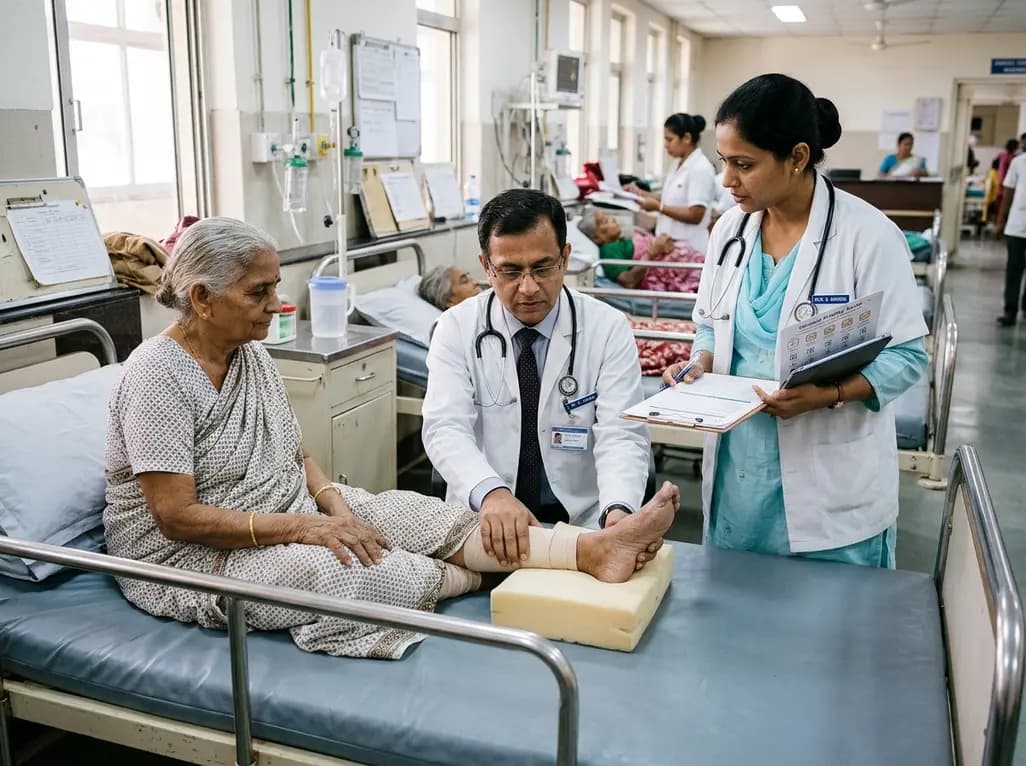
A retrospective cohort study reveals that frailty quadruples the odds of pressure injuries in hospitalized older adults. Integrating the Clinical Frailty Scale with comprehensive geriatric care is crucial for identifying vulnerability early and implementing targeted multidisciplinary prevention.
Today
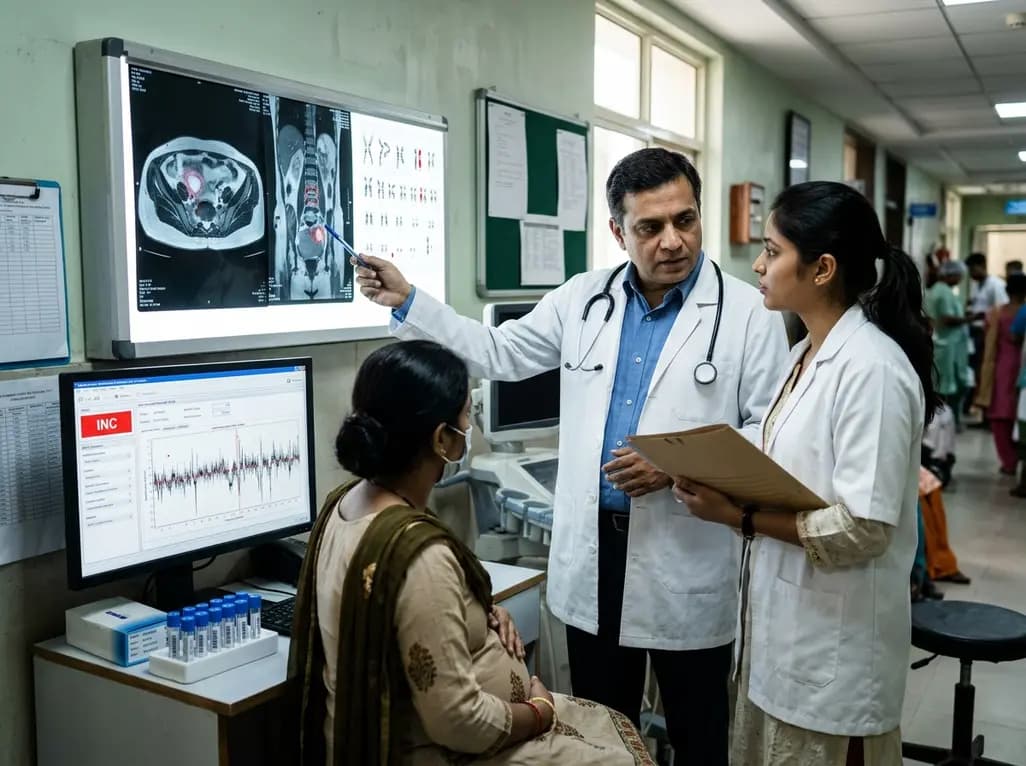
Occult maternal malignancy accounts for 3.82% of persistent unreportable NIPT results with genomic noise. Multiple chromosomal aberrations, notably on chromosome 18, warrant thorough oncological evaluation and whole-body MRI to ensure timely maternal diagnosis while preserving fetal care.
Today

This article reviews the forensic and clinical complexities of acute myocarditis arising on left ventricular hypertrophy in children, highlighting early diagnostic red flags and multidisciplinary postmortem autopsy protocols.
Today

A randomized controlled trial demonstrates that an eight-week dual-task training intervention significantly improves static and dynamic postural control over standard balance exercises in individuals with chronic ankle instability, addressing critical neurocognitive deficits during athletic and daily activities.
Today

A retrospective cohort study of 7,716 ICU patients from the MIMIC-IV database demonstrates that Gradient Boosting Decision Trees significantly outperform traditional SOFA scores in predicting in-hospital mortality among patients with sepsis and diabetes, with SHAP analysis providing clinical interpretability.
Today
