

Loading, please wait...
Loading, please wait...

Professional string musicians routinely perform complex technical tasks under strenuous physiological conditions. Consequently, playing-related musculoskeletal disorders frequently threaten their artistic careers. In particular, fifth-digit discomfort in violinists represents a challenging clinical entity that severely impairs digital dexterity and finger independence. Musicians frequently describe a subjective sensation of fifth-digit shortness when reaching across the fingerboard. Because violinists must sustain extreme left-wrist supination, unnatural finger abduction patterns rapidly generate cumulative tissue strain. Furthermore, prolonged practice routines intensify fatigue within intrinsic and extrinsic hand musculature. When repetitive mechanical strain overwhelms tissue adaptation, debilitating functional impairment inevitably emerges. In addition, psychological stress from elite performance schedules exacerbates neuromuscular tension. Therefore, healthcare providers must understand these unique occupational challenges to avoid diagnostic delays. Clinicians frequently miss subtle biomechanical flaws because conventional orthopedic assessments fail to analyze instrument-specific postures. By examining the dynamic interface between the musician and the violin, practitioners can identify early compensatory habits. Prompt conservative care restores neuromuscular balance. Consequently, players regain confidence during demanding performances. Ultimately, early recognition of small finger strain allows timely rehabilitation before chronic disability ends a musical career.
Musculoskeletal dysfunctions in string musicians rarely develop in isolation. Instead, digital symptoms often stem from proximal kinetic chain impairments spanning the shoulder, forearm, and wrist. For example, violinists support the instrument between the left clavicle and jaw while simultaneously elevating the glenohumeral joint. Consequently, restricted scapular upward rotation or adhesive capsulitis forces compensatory adjustments throughout the distal limb. When proximal mobility diminishes, the forearm must over-supinate to position the hand over the fingerboard. Furthermore, excessive forearm flexor tightness alters normal tendon excursion, creating disproportionate tension across the ulnar digits. As a result, the fifth digit suffers altered pull from the flexor digitorum profundus and lumbrical tendons. This structural imbalance produces joint instability, tendon catching, and perceived anatomical shortening. Moreover, excessive isometric contraction of the opponens digiti minimi accelerates local muscle fatigue. Over time, these combined proximal and distal stressors compromise microvascular perfusion within overloaded soft tissues. Chronic hypoperfusion subsequently leads to localized myofascial trigger points and persistent pain syndromes. In turn, targeted proximal therapies unload distal structures effectively. Therefore, clinicians must thoroughly assess the entire upper limb kinetic chain rather than focusing solely on localized finger complaints.
Accurate diagnosis requires comprehensive evaluation combining standardized medical terminology with instrument-specific functional testing. Clinicians should document findings using established frameworks, including the International Classification of Functioning, Disability and Health. For instance, violinists frequently present with impaired fine hand use alongside shoulder discomfort and glenohumeral joint stiffness. During physical examination, physicians evaluate active and passive range of motion across all upper extremity joints. Additionally, practitioners must assess muscle length in the pectoralis minor, biceps brachii, and superficial forearm flexors. Patients often report subjective shortening of the small finger despite demonstrating normal anatomical bone lengths. In reality, improper positioning of the first metacarpophalangeal joint creates this illusion by tethering distal reach. Furthermore, clinicians must check for clicking, popping, or triggering over the fifth metacarpophalangeal and interphalangeal joints. Provocative manual tests frequently reveal subclinical tendon subluxation or localized collateral ligament laxity. High-resolution dynamic ultrasound can also visualize tendon excursion during simulated musical maneuvers. Moreover, thorough functional testing rules out compressive peripheral neuropathies. By observing the artist during active violin playing, therapists identify subtle pathological movement compensations. Consequently, this detailed multidimensional assessment establishes the foundation for individualized, successful therapeutic interventions.
Successful management integrates targeted medical therapies with precise ergonomic modifications tailored to individual anatomy. First, clinicians address proximal joint restrictions through joint mobilizations, therapeutic exercises, and modalities for adhesive capsulitis. Simultaneously, therapists release myofascial tightness across the anterior chest wall and forearm flexor compartments. However, physical therapy alone cannot resolve symptoms if ergonomic flaws persist during performance. For instance, repositioning the left thumb into a neutral, relaxed posture immediately improves fifth-digit reach. This single modification expands the web space, thereby eliminating the perceived shortening of the small finger. Additionally, clinicians utilize rigid taping techniques to correct minor joint malalignments and resolve tendon catching sensations. Taping stabilizes unstable collateral ligaments and guides smooth gliding of the extensor and flexor tendons. Moreover, adjusting chin rests and shoulder rests optimizes violin height and tilt angle. These equipment alterations reduce required cervical lateral flexion and decrease glenohumeral abduction angles. Customized instrument modifications also redistribute static loads across larger muscle groups. Furthermore, dedicated therapist guidance ensures smooth integration into daily practice routines. As a result, the musician plays with minimal compensatory muscular effort, protecting vulnerable hand structures from recurrent strain.
Sustained recovery requires ongoing collaboration among orthopedic surgeons, physical therapists, occupational specialists, and music educators. Therefore, rehabilitation programs should incorporate structured warm-up routines, neural mobilizations, and progressive endurance conditioning. Musicians must practice scheduled rest intervals during prolonged practice sessions to facilitate metabolic waste clearance. Furthermore, educators must teach young instrumentalists proper body mechanics before dysfunctional postural habits become permanently entrenched. Clinicians also emphasize neuromuscular re-education to maintain dynamic stability throughout the hand and wrist. For example, intrinsic muscle strengthening exercises enhance lumbrical and interosseous muscle control without loading superficial flexor tendons. Additionally, regular ergonomic reviews ensure that instrument modifications adapt to evolving performance demands. Hand therapists frequently introduce gradual pacing schedules so artists rebuild endurance safely after injury. In addition, biofeedback training assists violinists in identifying unconscious tension patterns during demanding repertoires. When artists encounter recurrent discomfort, early clinical consultations prevent progression to catastrophic career-ending conditions. Medical teams empower musicians by teaching self-monitoring strategies and appropriate stretching routines. Finally, routine follow-up assessments preserve technical gains throughout demanding concert seasons. Musicians thereby sustain peak artistic performance without pain. Thus, combining medical precision with ergonomic science restores full musical function and safeguards long-term performance health.
Violinists frequently perceive fifth-digit shortness because of altered hand biomechanics and excessive muscular tension rather than actual anatomical deficits. When players hold the thumb in an excessively adducted or flexed position, the functional span of the hand narrows dramatically. Additionally, proximal tightness in the forearm flexors and shoulder girdle limits distal finger excursion. Consequently, restoring neutral thumb alignment and releasing proximal soft tissues effectively resolves this distressing subjective shortening sensation.
Repositioning the thumb into a neutral posture dramatically reduces mechanical strain across the entire left hand. When a violinist grips the violin neck with excessive thumb flexion, the palmar fascial tension restrains small finger abduction. By adopting a neutral, relaxed thumb placement, the musician instantly expands the first web space and unloads the extrinsic flexors. Furthermore, this ergonomic modification eliminates compensatory hyperextension, allowing the fifth digit to contact the strings effortlessly and accurately.
Rigid taping serves as a crucial temporary therapeutic intervention to correct joint malalignments and stabilize hypermobile finger joints. Specifically, taping prevents painful tendon catching by guiding appropriate tracking of the digital flexor and extensor mechanisms during rapid movements. Moreover, external tape support unloads inflamed collateral ligaments and provides vital proprioceptive feedback to the performer. Consequently, violinists maintain optimal digit kinematics during practice while retraining their fine motor coordination without triggering inflammation.
Disclaimer: This content is for informational and educational purposes only and should not be considered medical advice. Always consult with a qualified healthcare professional regarding any medical condition or treatment. Refer to the latest local and national guidelines for clinical practice.
References

Read summarized clinical updates, watch expert medical content, and earn CME certifications right from your smartphone.
Open your smartphone camera to scan and install.





Discover how combining ergonomic adaptations, kinetic chain management, and joint realignment effectively resolves fifth-digit discomfort in violinists.
Today

The VOCAL-AHF study reveals that most acute heart failure patients across reduced and non-reduced ejection fraction categories are eligible for in-hospital GDMT initiation. Notably, nearly two-thirds of HFrEF patients qualify for quadruple therapy, while non-reduced EF patients show high eligibility for dual therapy.
Today
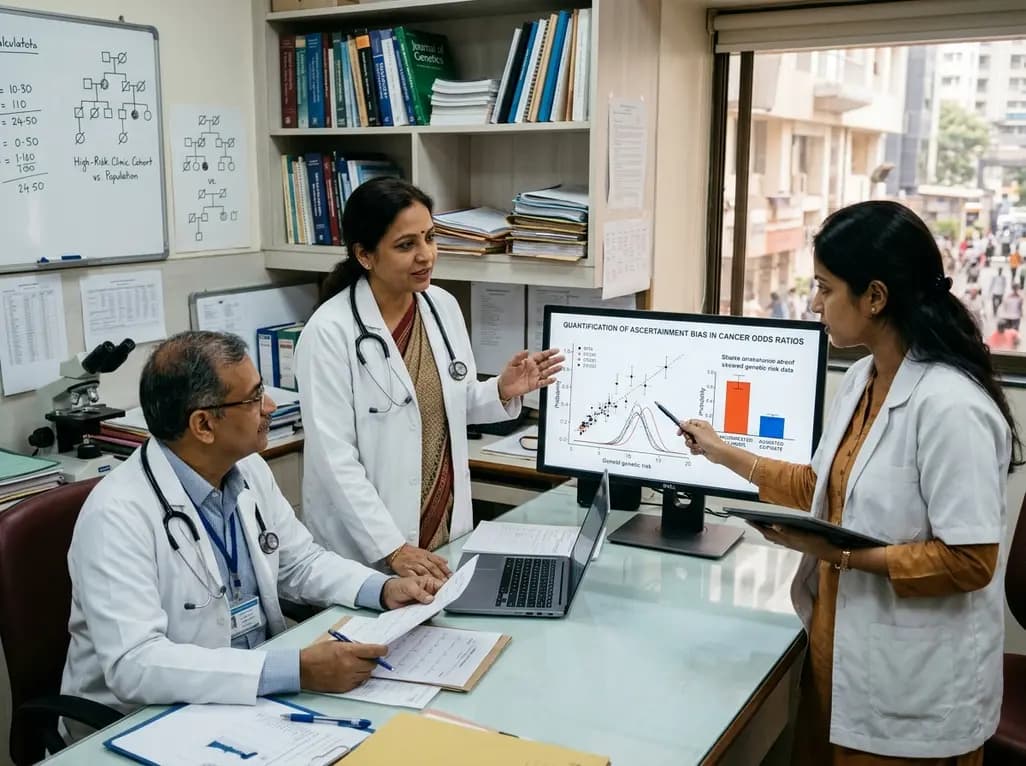
Ascertainment bias in cancer case-control studies inflates odds ratios and penetrance estimates when cases are drawn from high-risk clinics. A landmark modeling study demonstrates substantial bias ranging up to 23.72, highlighting the critical need for ascertainment adjustment in genetic risk counseling.
Today
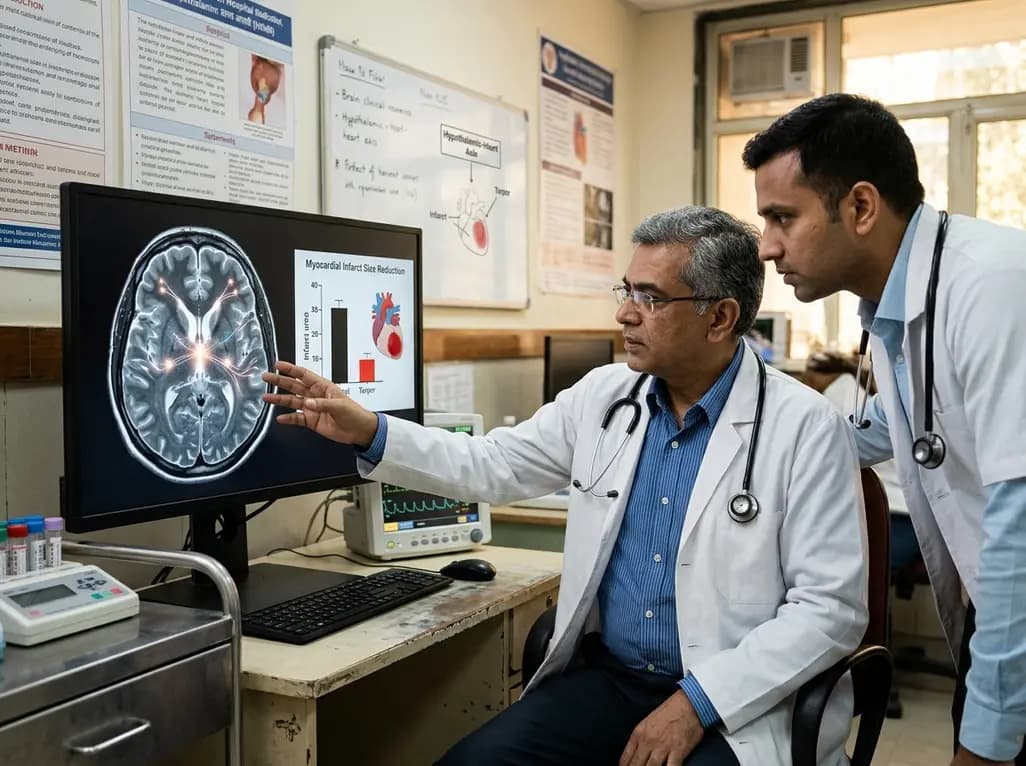
Researchers demonstrate that central induction of synthetic torpor in non-hibernating rats provides striking cardioprotection, reducing myocardial infarct size by ~40% during ischaemia-reperfusion injury through endogenous survival signaling, independent of hypothermia.
Today
A landmark network meta-analysis of 92 RCTs clarifies carpal tunnel syndrome management across severity levels. While endoscopic release ranks highest for short-term symptom relief, non-surgical approaches like shockwave therapy and PRP demonstrate exceptional clinical value in mild-to-moderate neuropathy.
Today

A novel fluorine-functionalized near-infrared copper fluorescent probe selectively illuminates lung tissue, revealing critical links between hyperglycemia, ER stress, and pulmonary malignancy for improved early diagnosis.
Today
