.webp&w=384&q=75)

Loading, please wait...
Loading, please wait...

The recent conflict in Israel has significantly increased distress levels among various segments of the population. Specifically, parents of combat soldiers face unique psychological stressors during periods of heightened armed conflict. These individuals often navigate a complex emotional tension between pride in their child’s military mission and constant fear for their safety. Historically, most research concerning military families focuses primarily on spouses and children. However, this new qualitative study offers vital insights into the specific resilience of parents.
Researchers identified five core themes through extensive parent interviews. First, clear communication with both the child and the army is vital for managing parental anxiety. Additionally, parents reported a significant emotional impact, characterized by fear and functional distress. Various coping strategies also emerged, including prayer, self-care routines, and repression. Furthermore, support networks and shifting family dynamics are critical factors in the coping process. Consequently, these elements help parents maintain stability during high-stress deployments.
Healthcare providers must recognize these distinct coping mechanisms when treating military families. Moreover, engaging in prosocial and meaningful activities often enhances parental self-regulation. Mental health services should therefore prioritize the development of peer networks for this group. Ultimately, strengthening the resilience of parents of combat soldiers supports the entire family unit. Future research should continue to evaluate specific interventions designed to build these psychological strengths.
Parents often experience intense fear for their child's safety and distress from limited communication. They also struggle to manage daily functions while under extreme psychological pressure.
Resilience is built through social support networks and religious practices like prayer. Additionally, parents benefit from self-care routines and involvement in meaningful community or prosocial activities.
Disclaimer: This content is for informational and educational purposes only. It does not constitute professional medical advice, diagnosis, or treatment. Always seek the advice of your physician or other qualified health provider with any questions you may have regarding a medical condition. Refer to the latest local and national guidelines for clinical practice.
References
Chertok IA et al. Qualitative Study of Resilience Among Parents of Combat Soldiers During Armed Conflict. Mil Med. 2026 Apr 25. doi: undefined. PMID: 42035299.
Shrira A, et al. Distress Levels among Parents of Active Duty Soldiers during Wartime. Frontiers in Psychology. 2017;8:1621. doi: 10.3389/fpsyg.2017.01621.
Lester P, et al. Mechanisms of Risk and Resilience in Military Families: Theoretical and Empirical Basis of a Family-Focused Resilience Enhancement Program. Clinical Child and Family Psychology Review. 2016;19(1):10-24. doi: 10.1007/s10567-015-0196-z.

Read summarized clinical updates, watch expert medical content, and earn CME certifications right from your smartphone.
Open your smartphone camera to scan and install.





This study explores distress and resilience among parents of combat soldiers, highlighting coping mechanisms and support systems during armed conflict....
5 months ago
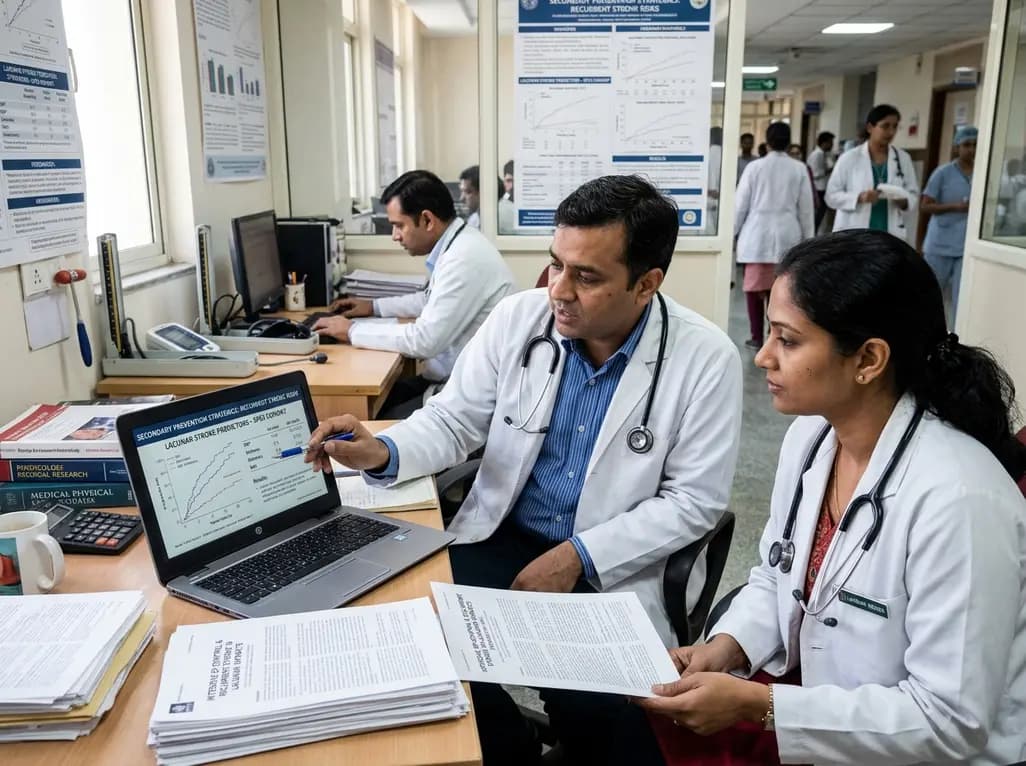
Explore vital recurrent stroke predictors in lacunar stroke patients managed with intensive blood pressure lowering. This analysis examines trial findings from SPS3 to uncover residual vascular risks, metabolic factors, and targeted secondary prevention strategies for high-risk neurological patients.
Today

A comprehensive scoping review synthesises evidence linking prenatal maternal mental health to long-term offspring neurodevelopment, evaluating neuroendocrine, inflammatory, and epigenetic pathways while highlighting clinical screening and future research priorities.
Today

The Directorate General of Health Services directs Indian states to halt the hazardous reuse and reprocessing of single-use medical devices. Discover regulatory implications under the Drugs and Cosmetics Act, critical infection risks, legal liabilities, and operational changes required across clinical specialties.
Today
Mitochondria-targeted nanoparticles self-assembled from EGCG and L-glutamic acid effectively restore mitochondrial homeostasis, suppress synovial inflammation, and attenuate chondrocyte senescence in osteoarthritis, offering a promising disease-modifying nanotherapy.
Today

India is advancing preventive healthcare by integrating genomics, artificial intelligence, and quantum technologies. With the SANGAM programme sequencing one million Indian genomes, clinicians can unlock personalized therapies, detect cardiometabolic risks early, and curb the burden of diabetes and heart disease.
Today
