.webp&w=384&q=75)

Loading, please wait...
Loading, please wait...
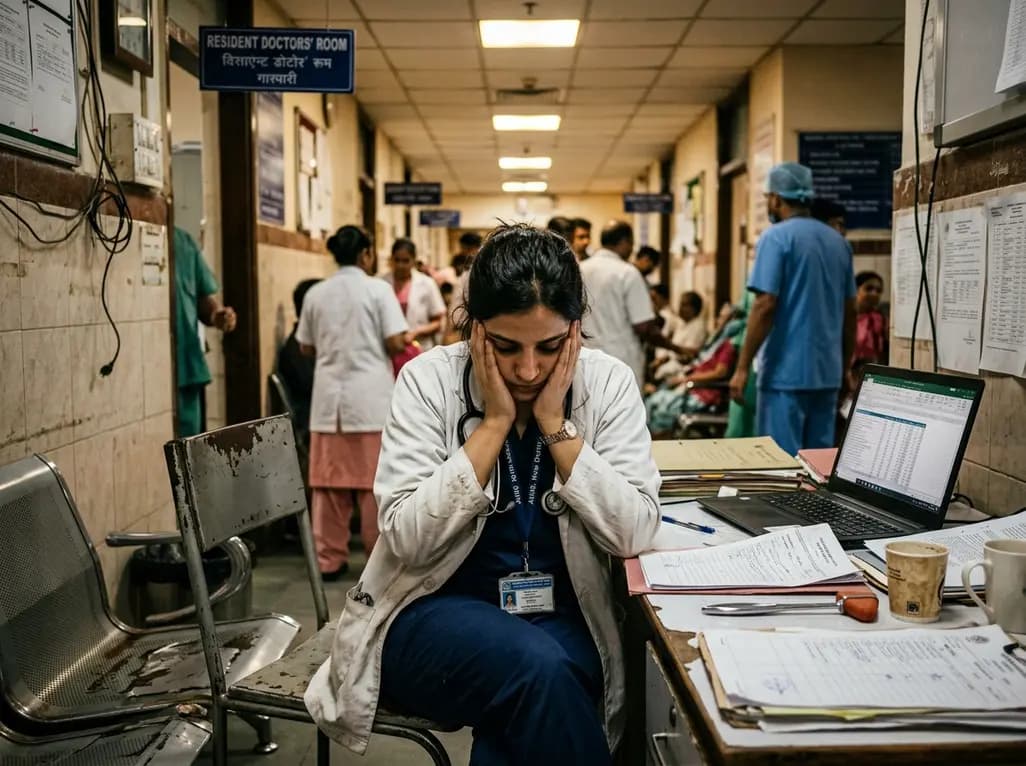
Medical postgraduate education represents a critical phase in clinical development, yet it frequently imposes substantial psychological strain on trainees. In recent years, resident physician stress has emerged as a major global concern affecting both clinician health and healthcare delivery standards. Resident physicians routinely manage heavy patient volumes, intense academic requirements, sleep deprivation, and challenging interpersonal dynamics in high-stakes clinical environments. A multicenter cross-sectional study recently evaluated these interrelated challenges among young physicians undergoing standardized residency training. The findings offer valuable insights into how occupational demands transform into severe psychological distress. Furthermore, the investigation reveals critical pathways that connect everyday training pressures to burnout and depressive symptoms. Understanding these sequential associations is essential for medical educators, program directors, and healthcare administrators. By examining the structural factors that drive psychological burden, institutions can develop targeted interventions that safeguard trainee well-being and elevate overall clinical care standards.
Residency training requires junior doctors to transition rapidly from supervised medical students into independent practitioners. Consequently, trainees experience sharp increases in clinical responsibility without always possessing commensurate institutional autonomy. The standardized residency training system aims to unify clinical competencies across teaching hospitals. However, this rigorous framework often creates demanding workloads, long shift hours, and rigorous continuous assessments. Perceived stress reflects the degree to which trainees evaluate their current situations as unpredictable, uncontrollable, and overwhelming. When residents encounter chronic workplace stressors without adequate coping mechanisms, psychological strain accumulates rapidly. Additionally, cultural expectations in medical training frequently discourage physicians from acknowledging vulnerability or seeking psychological assistance. As a result, trainees may internalize chronic tension rather than addressing it constructively. Recent multicenter data demonstrate that high perceived stress affects nearly four out of ten resident physicians during their formative training years. This substantial burden highlights the urgent need to understand occupational stressors systematically. Ultimately, addressing baseline stress is crucial before it cascades into more debilitating psychological disorders.
The multicenter study evaluated 504 resident physicians across teaching hospitals using standardized, validated psychometric instruments. Specifically, the researchers administered the 10-item Perceived Stress Scale, the Maslach Burnout Inventory-General Survey, the Effort-Reward Imbalance scale, and the Patient Health Questionnaire-9. The findings revealed an alarming prevalence of psychological distress across the cohort. Notably, 83.13% of the surveyed resident physicians experienced occupational burnout, with 37.5% suffering from moderate to severe manifestations. Furthermore, 38.49% of participants reported high perceived stress levels, while 30.16% exhibited a pronounced effort-reward imbalance. Probable depression was identified in 27.58% of the trainees, indicating substantial clinical morbidity within the cohort. Mean psychometric scores reinforced these widespread challenges across participating hospital departments. For instance, the mean perceived stress score reached 17.61, while the mean burnout score stood at 43.26. Moreover, correlation analyses demonstrated significant positive relationships among all four evaluated variables. These statistics underscore that psychological distress during residency is not an isolated phenomenon. Instead, it represents a widespread systemic challenge that demands immediate structural attention.
The Effort-Reward Imbalance model provides a robust theoretical framework for understanding occupational strain in healthcare settings. According to this model, severe psychological distress arises when high work effort is met with inadequate reciprocal rewards. In standardized residency training, junior doctors routinely invest immense physical, cognitive, and emotional labor into patient care. However, they frequently encounter minimal financial compensation, limited job security, and scarce formal recognition. Consequently, this discrepancy produces an unsustainable imbalance that undermines professional morale and self-worth. In the study cohort, nearly one-third of trainees exhibited significant effort-reward imbalance scores. Furthermore, path analysis demonstrated that higher perceived stress directly correlates with elevated effort-reward imbalance. When residents feel that hospital systems undervalue their daily sacrifices, their intrinsic motivation declines sharply. Additionally, the lack of career certainty and professional validation exacerbates feelings of alienation in clinical departments. Therefore, addressing compensation structures, career progression pathways, and mentorship support represents a pivotal step in rectifying this institutional imbalance.
A primary contribution of this research is the elucidation of a serial mediation pathway linking environmental stress to clinical depression. Using bias-corrected bootstrap path analysis, researchers demonstrated how occupational pressures progress systematically through intermediate psychological stages. First, high perceived stress significantly predicts an increased effort-reward imbalance among trainees. Subsequently, this imbalance strongly drives the development of occupational burnout. Burnout, characterized by emotional exhaustion, depersonalization, and reduced personal accomplishment, then directly leads to more severe depressive symptoms. Specifically, the path analysis yielded robust standardized coefficients along this sequential chain: perceived stress to effort-reward imbalance, imbalance to burnout, and burnout to depressive symptoms. Furthermore, perceived stress maintained a direct association with depression, confirming both direct and indirect routes of harm. Consequently, depression does not typically appear as an isolated event in residency. Rather, it represents the cumulative endpoint of unmitigated perceived stress, unrewarded labor, and emotional depletion. Recognizing this sequential progression allows educators to identify critical intervention points before depressive disorders manifest.
The psychological health of resident physicians directly influences the broader healthcare delivery ecosystem. When trainees suffer from chronic stress and burnout, cognitive functions such as attention, decision-making, and diagnostic accuracy become compromised. As a result, occupational distress significantly elevates the risk of medical errors, adverse events, and suboptimal patient communication. Furthermore, depressed and exhausted physicians experience higher rates of absenteeism, presenteeism, and early career attrition. This turnover places additional burdens on remaining healthcare staff, creating a vicious cycle of workplace overextension. In addition, untreated psychological distress can have catastrophic consequences for trainee health, increasing the risk of substance misuse and suicidal ideation. Because residency constitutes the foundation of lifelong clinical practice, early burnout can permanently impair professional development and empathy. Therefore, protecting resident well-being is not merely a matter of individual welfare; it is a fundamental prerequisite for maintaining institutional healthcare quality. Healthcare administrators must recognize that investing in trainee wellness directly enhances patient outcomes and hospital safety metrics.
Mitigating resident physician stress requires comprehensive, multi-tiered institutional strategies rather than relying solely on individual resilience. First, healthcare institutions must tackle workload management by enforcing duty hour limits, minimizing non-clinical administrative tasks, and ensuring adequate rest intervals. Second, training programs should address the effort-reward imbalance by offering competitive stipends, clear promotion criteria, transparent job security, and public recognition for exceptional clinical service. Third, hospitals must establish accessible, confidential, and destigmatized mental health resources specifically tailored for medical residents. Onsite counseling services, peer support programs, and structured mentorship initiatives can provide vital psychological buffers against clinical burnout. In addition, curriculum designers should incorporate formal training in stress management, emotional regulation, and mindfulness into residency schedules. Hospital leadership must also foster a non-punitive culture that encourages junior doctors to report mental health struggles without fear of professional repercussions. Ultimately, combining structural workplace reforms with proactive psychological support will create a resilient, sustainable training environment for future physicians.
Primary drivers include excessive workloads, long shifts, high patient volumes, sleep deprivation, and steep learning curves. Furthermore, administrative burdens, limited clinical autonomy, and intense continuous assessments compound this pressure. When combined with inadequate financial compensation and poor work-life balance, these demanding factors significantly increase psychological vulnerability among resident doctors.
Effort-reward imbalance occurs when trainees invest extensive time, physical effort, and emotional labor without receiving commensurate financial, professional, or social rewards. Consequently, this perceived injustice diminishes intrinsic motivation, accelerates emotional exhaustion, and fosters depersonalization. Over time, chronic unrewarded effort directly drives severe occupational burnout and professional dissatisfaction.
Institutions should enforce manageable duty hour regulations, streamline administrative documentation, and provide fair financial compensation. In addition, programs must provide confidential, destigmatized mental health support and active peer mentorship networks. Establishing a supportive training environment effectively mitigates burnout and prevents the progression of stress into severe depression.
Disclaimer: This content is for informational and educational purposes only and does not constitute medical, legal, or psychological advice. Healthcare professionals should consult relevant institutional protocols and mental health support services. Refer to the latest local and national guidelines for clinical practice.
References

Read summarized clinical updates, watch expert medical content, and earn CME certifications right from your smartphone.
Open your smartphone camera to scan and install.





A multicenter study investigates resident physician stress during residency training, demonstrating how perceived stress sequentially leads to effort-reward imbalance, burnout, and depressive symptoms, emphasizing the need for targeted institutional reforms.
last month
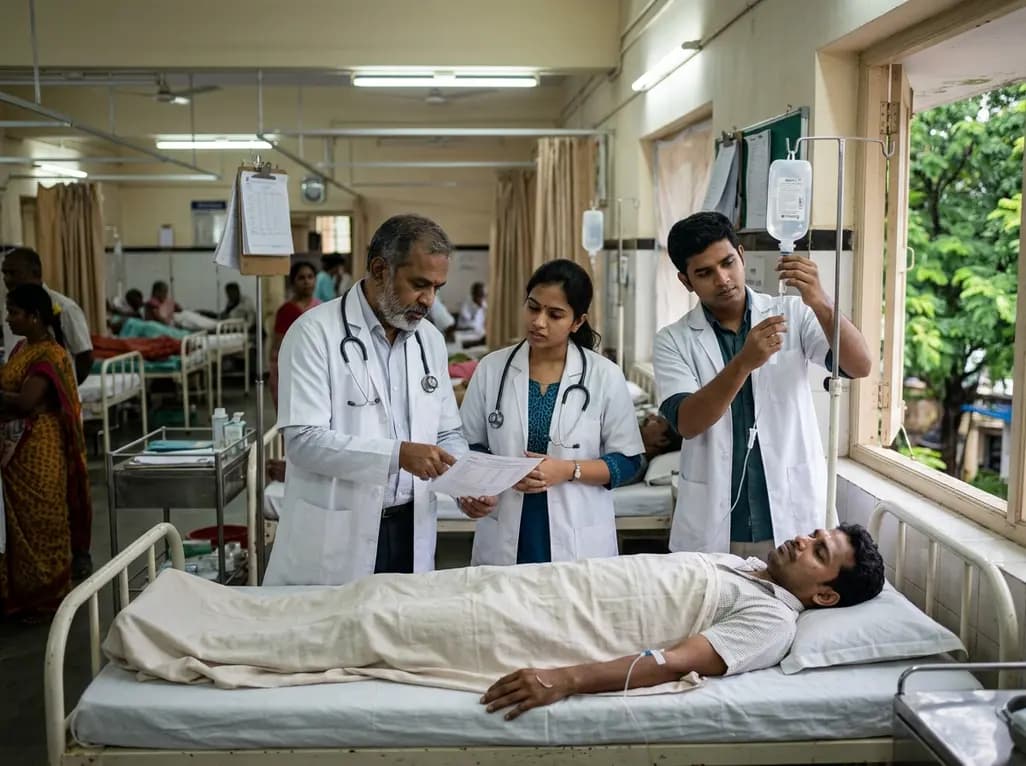
With post-monsoon dengue surges threatening South Asian health systems, physicians must refine triage and management. This guide covers vital warning signs, plasma leakage detection, crystalloid titration, and vector containment strategies to prevent mortality during seasonal arboviral epidemics.
Today

Findings from Project Viva indicate that sustained postpartum weight retention, rather than excessive gestational weight gain alone, directly worsens women's mid-life cardiovascular health, degrading blood pressure and glycemic parameters decades after delivery.
Today
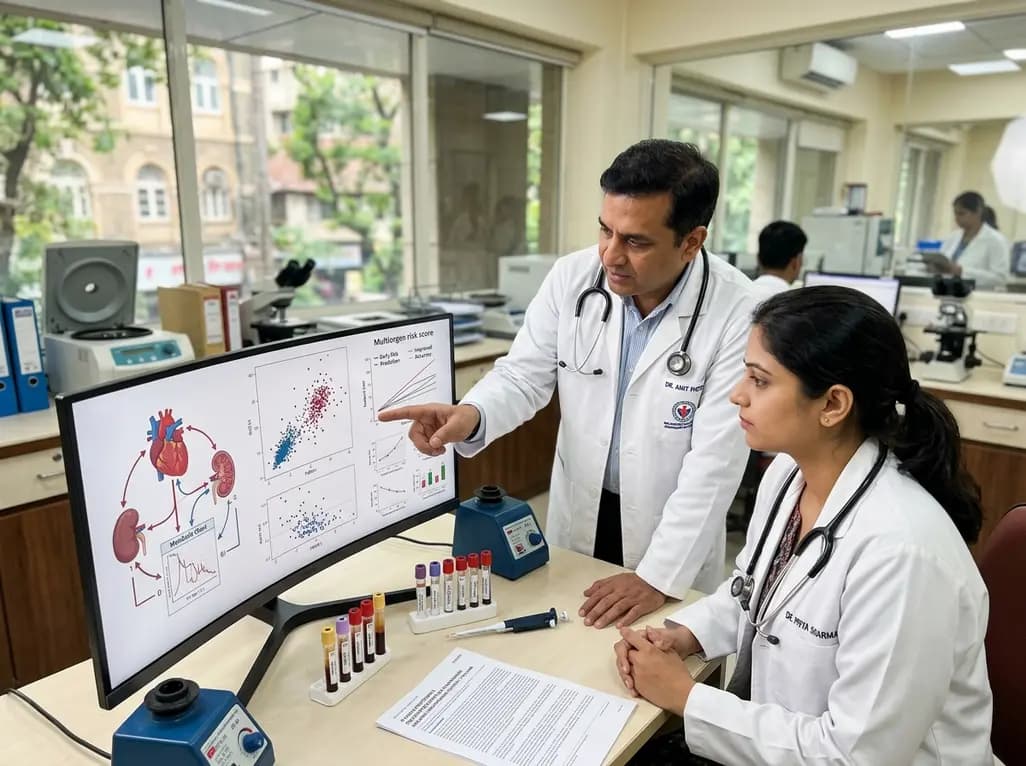
A large UK Biobank study reveals that plasma proteomic signatures capture preclinical organ damage and improve multiorgan risk prediction across early CKM syndrome stages 0 to 2 beyond traditional PREVENT clinical models.
Today
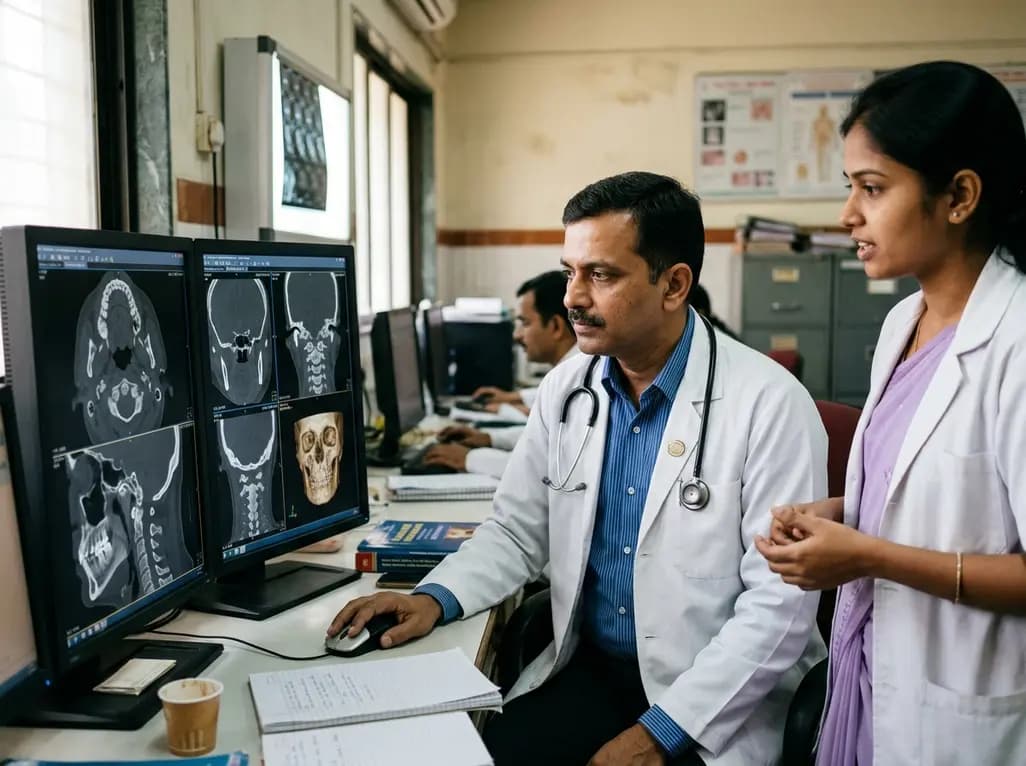
A retrospective CBCT study reveals that superior TMJ space asymmetry correlates moderately with occipital condyle-atlas-axis asymmetry in unilateral TMJ osteoarthritis, highlighting an imaging correlate between jaw biomechanics and upper cervical alignment rather than a standalone diagnostic marker.
Today

A Bayesian multilevel meta-analysis reveals that aerobic training combined with moderate carbohydrate restriction modestly lowers HbA1c in type 2 diabetes. However, sparse data and very low certainty leave incremental benefits over exercise or diet alone unproven, highlighting the need for individualized care.
Today
