.webp&w=384&q=75)

Loading, please wait...
Loading, please wait...

Promoting patient-centered reproductive autonomy remains a vital objective for obstetricians, gynecologists, and primary care physicians worldwide. In many rural communities, deep-seated cultural traditions and religious norms heavily influence women's family planning choices. When healthcare practitioners recognize the complex social dynamics that affect female agency, they can deliver far more empathetic and effective clinical counseling. Recent qualitative research from rural Muslim communities reveals that women actively negotiate their reproductive health decisions within religious and familial boundaries. By understanding these dynamics, clinicians can dismantle care barriers and support informed choice.
In rural Muslim communities, women routinely negotiate reproductive autonomy within established theological parameters rather than directly challenging religious authority. Islamic jurisprudence broadly endorses birth spacing to preserve maternal wellness and infant viability, a concept recognized as tanzim al-nasl. Consequently, women frequently invoke these doctrinal principles to justify modern contraceptive use to their spouses and in-laws. However, theological interpretations vary considerably across rural regions. While regional scholars often support reversible contraception, local leaders sometimes frame modern birth control as contrary to divine destiny. Therefore, patients experience intense moral anxiety when balancing their personal health goals with community expectations. Clinicians must actively acknowledge these theological nuances during routine reproductive health consultations. When doctors frame family planning as a protective health measure that aligns with spiritual welfare, female patients gain confidence in their reproductive decisions. Moreover, this culturally informed communication creates a supportive environment that validates personal choices without compromising deeply held spiritual values.
Beyond ideological considerations, rural women face formidable structural and administrative barriers when attempting to access reproductive healthcare. Public health posts in remote areas frequently suffer from chronic stock-outs of contraceptive commodities and severe deficits of trained female practitioners. Consequently, female patients must undertake long journeys to secondary centers, which generates significant transportation expenses and domestic disruption. Furthermore, rigid administrative procedures, such as demanding spousal signatures or formal identity documentation, systematically disenfranchise vulnerable women. In addition, rural clinical settings frequently lack soundproof consultation rooms, which compromises patient confidentiality in close-knit communities where reproductive decisions invite intense neighborhood scrutiny. Therefore, healthcare systems must decentralize reproductive services to dismantle these institutional deterrents. Establishing mobile outreach clinics and training trusted community health workers ensures uninterrupted access to contraceptive supplies. Additionally, streamlining administrative intake protocols and guaranteeing absolute medical privacy encourages women to seek family planning services without fear of social repercussions or clinical obstruction.
In rural environments where clinical literacy remains limited, women predominantly depend on informal channels for reproductive information. Extended family circles, neighborhood peers, and traditional birth attendants frequently serve as primary educators rather than qualified healthcare professionals. Unfortunately, these informal networks regularly circulate severe medical misconceptions regarding modern contraception. For instance, common community rumors suggest that intrauterine devices cause permanent sterility, uterine perforation, or genital cancer. Similarly, many rural residents mistakenly believe that hormonal injections permanently destroy maternal fertility. Consequently, unfounded fears regarding physical health and future childbearing deter women from adopting reliable modern methods. To resolve this widespread issue, clinicians must engage communities directly rather than waiting for patients to present at rural clinics. Physicians and nurse practitioners can conduct village-level awareness seminars that clearly debunk common myths with scientific evidence. Furthermore, providing accessible educational resources in local languages empowers women to make evidence-based decisions, ultimately replacing pervasive village folklore with reliable medical knowledge.
Rural societal norms often place overwhelming emotional and psychological demands on married women throughout their reproductive lives. On one hand, newly wedded women experience intense familial pressure to prove their fertility immediately after marriage. On the other hand, encountering an unplanned or closely spaced pregnancy shortly after childbirth brings intense community stigma and moral condemnation. Consequently, women carry an unfair burden, balancing contradictory social expectations while protecting their physical health. Furthermore, community culture frequently views unintended pregnancies as personal moral failures rather than consequences of systemic contraceptive shortages or physiological method failures. This persistent social judgment deters distressed women from seeking timely medical counsel or post-conception care. To address these vulnerabilities, clinical teams must create non-stigmatizing environments where patients receive empathetic, confidential guidance. Healthcare practitioners should evaluate emotional well-being alongside physical health during routine checkups. Moreover, community educational campaigns must reframe reproductive planning as a mutual spousal responsibility, effectively removing solitary moral blame from rural women.
A subtle yet damaging impediment to female reproductive health in patriarchal settings is reproductive and sexual coercion within marriage. Husbands and extended family patriarchs frequently dictate contraceptive choices, sexual intimacy, and desired family size. In many cases, partners actively discard prescribed oral contraceptives or forbid visits to health centers. Because local customs prioritize male marital dominance, rural women rarely recognize these actions as abusive coercion, instead accepting them as marital norms. Therefore, healthcare providers must routinely implement sensitive screening for domestic coercion during private clinical consultations. When clinicians identify covert coercion, they can offer patient-controlled methods such as injectable medroxyprogesterone or subdermal contraceptive implants that remain undetectable to partners. In addition, public health programs must engage husbands and community elders directly in educational outreach. When clinicians explain the substantial maternal health risks of rapid consecutive pregnancies, they help transform men into supportive partners. Ultimately, combining compassionate clinical screening with targeted community education safeguards women against reproductive coercion and promotes genuine autonomy.
Religious beliefs strongly influence contraceptive choices because community members frequently seek moral alignment before initiating modern family planning. When local religious interpretations endorse birth spacing for maternal wellness, contraception uptake rises significantly. Conversely, when conservative interpretations mischaracterize contraception as forbidden, women encounter severe moral anxiety and social pushback. Therefore, healthcare providers must collaborate with respected religious leaders to promote evidence-based information that harmonizes spiritual values with modern reproductive healthcare.
Reproductive coercion occurs when partners or relatives exert non-consensual control over a woman's reproductive choices, pregnancy timing, or contraception access. Common manifestations include hiding contraceptive pills, threatening divorce, and sabotaging barrier methods. Clinicians can detect coercion by conducting private, one-on-one consultations during routine pelvic examinations. By routinely asking standardized screening questions regarding reproductive freedom and personal safety, providers can identify vulnerable patients and discreetly recommend undetectable contraceptive options like intrauterine systems or injectables.
Rural healthcare facilities can drastically improve access by eliminating administrative hurdles such as requiring spousal consent or rigid documentation. Facilities must guarantee strict patient confidentiality to prevent village stigmatization. Additionally, clinics should maintain steady supplies of modern contraceptives, train female providers, and offer flexible operating hours. By deploying mobile health teams and community health workers directly to remote households, healthcare centers bring reliable family planning services to women facing severe mobility limitations.
Disclaimer: This content is for informational and educational purposes only... Refer to the latest local and national guidelines for clinical practice.
References

Read summarized clinical updates, watch expert medical content, and earn CME certifications right from your smartphone.
Open your smartphone camera to scan and install.





A qualitative study examines reproductive autonomy and family planning among rural Muslim women, identifying cultural barriers, administrative obstacles, and covert coercion. Healthcare providers must adopt culturally sensitive counseling models to foster equitable maternal and reproductive health outcomes.
Today
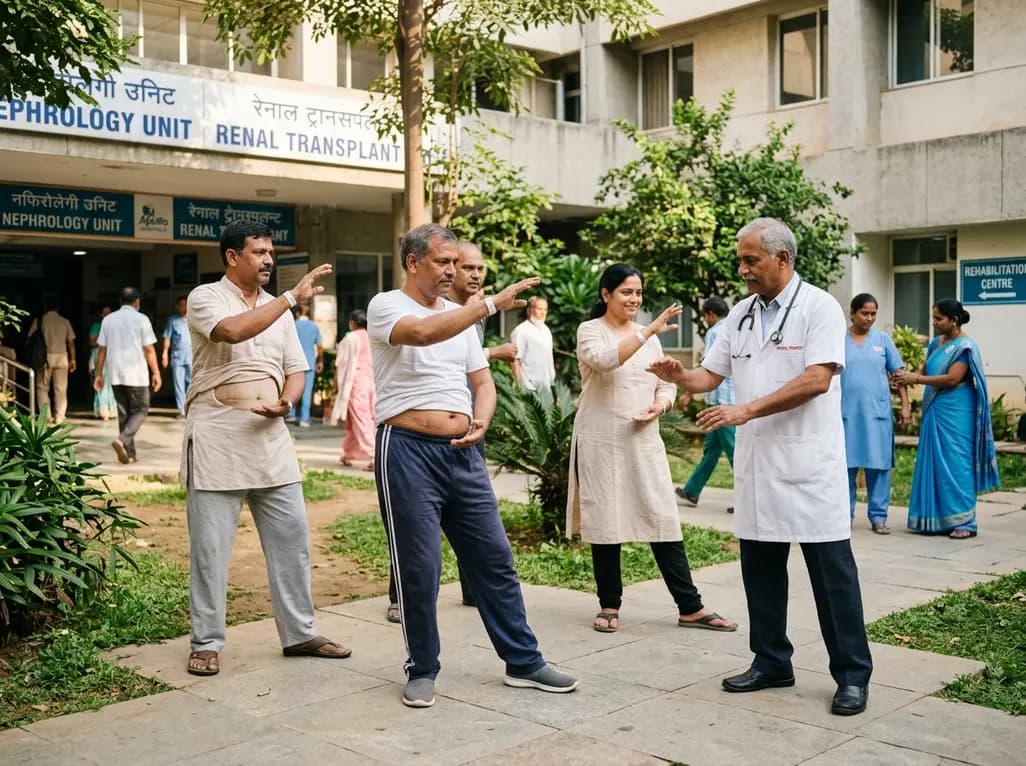
A randomized controlled trial demonstrates that a 12-week Tai Chi program significantly reduces post-transplant fatigue, enhances sleep quality, and increases 6-minute walk distance in renal transplant recipients, providing a safe and effective non-pharmacological rehabilitative exercise therapy.
Today

A study shows that the aggregate index of systemic inflammation (AISI) significantly associates with elevated myocardial injury markers, including cardiac troponin T and CK-MB, in patients with coronary heart disease, highlighting its potential utility for cardiovascular risk stratification.
Today

The state government is deploying helicopter emergency medical services across the Mumbai-Pune Expressway, Samruddhi Mahamarg, and Mumbai-Goa Highway. This initiative establishes unified standard operating procedures to enable rapid triage, advanced prehospital resuscitation, and seamless trauma care transfers.
Today

Calcimimetic therapy for primary hyperparathyroidism can induce profound tumor fibrosis, necrosis, and reduced vascularity. These changes alter ultrasound and 4D-CT imaging and cause dense recurrent laryngeal nerve adhesions, requiring heightened surgical vigilance during definitive parathyroidectomy.
Today
