

Loading, please wait...
Loading, please wait...

Recurrent anterior shoulder instability often involves humeral head bone loss alongside capsulolabral trauma. While isolated Bankart repair restores anterior rim congruity, an engaging Hill-Sachs lesion can lead to early failure. Consequently, surgeons frequently incorporate an infraspinatus tenodesis and posterior capsulodesis to convert the defect into an extra-articular entity. Recent technical investigations highlight how remplissage anchor placement directly alters joint stiffness and anterior translation. Therefore, optimizing anchor location has emerged as a crucial clinical strategy to tailor shoulder stability to patient-specific athletic demands.
Recent finite element analyses and cadaveric investigations provide critical insights into capsulodesis mechanics. When clinicians perform a concomitant Bankart and remplissage procedure, the anchored infraspinatus tendon actively prevents humeral head engagement. However, the exact spatial placement of suture anchors across the defect modulates biomechanical restraint. Placing anchors along the medial margin creates a stiffer tether that resists anterior humeral displacement under physiological load. Furthermore, medially located constructs distribute load efficiently across the abraded defect floor, which decreases localized contact pressures on the anteroinferior glenoid. Conversely, positioning anchors more laterally near the articular margin diminishes total joint stiffness. While lateral constructs still fill the defect, they offer less rigid checkrein capacity against anterior subluxation. Biomechanical testing demonstrates that medialized anchors significantly decrease translation across multiple abduction angles. Therefore, biomechanists emphasize that medial fixation delivers superior structural stabilization compared to standard lateral techniques. Surgeons must understand these physical principles before choosing their entry vectors, especially when encountering large off-track Hill-Sachs lesions.
The structural difference between medial and lateral fixation stems from tissue excursion and tensile load. When surgeons drive suture anchors into the medial aspect of the Hill-Sachs groove, they advance a broader footprint of the infraspinatus tendon. Consequently, this medial advancement shortens the effective working length of the posterior cuff unit. This tighter construct creates a dynamic barrier that effectively resists anterior translation during provocative athletic maneuvers. In contrast, laterally placed anchors secure tissue closer to the original anatomical insertion on the greater tuberosity. Thus, lateral fixation preserves baseline tendon excursion and minimizes excessive non-anatomical shortening of the muscular fibers. Moreover, finite element simulations indicate that medial anchors endure higher baseline suture-bone interface stress during shoulder motion. Because the medialized construct carries substantial tension, surgeons must utilize high-strength anchors and robust cortical purchase to prevent implant pullout. Lateral configurations experience relatively lower anchor pullout stress during physiological rotation, although they provide comparatively less anterior restraint. Understanding these tensile dynamics allows orthopedic specialists to choose fixation sites deliberately rather than applying a generic template to every glenohumeral instability patient.
Athletic demands vary dramatically across competitive sports, making customized surgical planning essential for anterior shoulder instability. In collision sports such as rugby, kabaddi, and football, athletes experience repetitive high-energy axial impacts. For these contact athletes, recurrent dislocation represents a devastating career complication. Therefore, collision competitors benefit substantially from the maximum structural restraint provided by medial remplissage constructs. The increased joint stiffness and robust mechanical block prevent off-track lesions from engaging the anterior glenoid during sudden collisions. Furthermore, mild limitations in extreme rotation rarely impair performance in collision sports, making stability the paramount objective. In contrast, overhead and throwing athletes operate under entirely different functional requirements. Pitchers, badminton players, and javelin throwers rely on substantial terminal external rotation to generate throwing velocity during the cocking phase. Subjecting an elite thrower to aggressive medialized capsulodesis could irreversibly compromise throwing mechanics and terminate competitive participation. Accordingly, sports medicine surgeons must balance joint stability against motion preservation based on the athlete's specific competitive role.
Preserving the late cocking phase of throwing remains the central challenge when performing posterior capsulodesis in overhead throwers. Historically, many orthopedic surgeons avoided remplissage in throwing athletes due to valid concerns regarding postoperative stiffness. Specifically, non-anatomical tenodesis can induce subtle internal rotation contractures or restrict external rotation in 90 degrees of abduction. However, recent biomechanical data suggest that laterally placed or centrally positioned anchors maintain rotational flexibility far better than medial constructs. By anchoring the infraspinatus near the lateral articular margin, the surgeon achieves sufficient defect coverage while avoiding overtightening of the posterior capsule. Consequently, the thrower retains the terminal external rotation necessary to achieve optimal kinetic chain transfer during overhead delivery. Moreover, dynamic shoulder rehabilitation protocols can safely stretch the posterior structures without disrupting lateral anchor fixation. Clinicians must thoroughly evaluate pre-injury shoulder rotational profiles before surgery. When operating on throwers with small or borderline engaging defects, centering anchors or favoring lateral placement provides an optimal balance between anterior stability and functional glenohumeral mobility.
Executing precise anchor placement requires careful arthroscopic visualization and sound technical judgment. Surgeons typically utilize an accessory posterior portal or a trans-cuff percutaneous approach to access the Hill-Sachs crater. Before inserting anchors, the operative team must meticulously prepare the crater floor down to bleeding subchondral bone to promote biological healing. Furthermore, the surgeon should dynamically assess glenoid track engagement by placing the arm in provocative abduction and external rotation. If the defect engages easily despite a planned Bankart repair, a medially directed anchor construct provides superior joint resistance. Conversely, if engagement occurs only at extreme physiological extremes, a more lateral construct provides sufficient protection without overtightening normal tissues. Additionally, using double-loaded or knotless suture anchors helps distribute soft-tissue compression evenly across the defect. Surgeons should tie or tension sutures while maintaining the arm in approximately 30 to 45 degrees of external rotation. This precise intraoperative positioning prevents overtightening the posterior capsule and protects against debilitating postoperative motion loss.
Medial anchor placement secures the infraspinatus tendon deeper along the medial base of the Hill-Sachs lesion. Consequently, this construct advances a thicker portion of posterior rotator cuff tissue into the bone defect. This configuration creates a stiffer checkrein against anterior translation and substantially reduces joint displacement under load. Furthermore, medial fixation effectively converts large off-track lesions into extra-articular surfaces, thereby preventing mechanical engagement against the anterior glenoid rim during provocative arm movements.
Competitive throwers rely heavily on terminal external rotation during the late cocking phase to generate throwing velocity. Placing suture anchors laterally along the articular margin limits excessive advancement of the infraspinatus tendon into the defect. Therefore, this construct avoids overtightening the posterior capsule and preserves physiological rotational motion. While lateral placement provides less anterior stiffness than medial fixation, it offers adequate defect coverage without sacrificing the joint flexibility essential for overhead athletic performance.
Surgeons should maintain the patient's arm in approximately 30 to 45 degrees of external rotation and mild abduction during suture tying. Securing the infraspinatus tendon in neutral or internal rotation overtightens the posterior capsule and severely restricts postoperative motion. Conversely, tying sutures in external rotation balances soft-tissue tension, obliterates the Hill-Sachs cavity, and protects future mobility. This technical step ensures durable defect filling while preventing severe postoperative stiffness in active athletic populations.
Disclaimer: This content is for informational and educational purposes only. It is not intended to substitute for professional medical advice, diagnosis, or treatment. Always seek the advice of your physician or other qualified health provider with any questions you may have regarding a medical condition. Refer to the latest local and national guidelines for clinical practice.
References

Read summarized clinical updates, watch expert medical content, and earn CME certifications right from your smartphone.
Open your smartphone camera to scan and install.





Biomechanical evidence indicates that medial anchor placement in remplissage enhances anterior shoulder stability for engaging Hill-Sachs lesions. Orthopedic surgeons must tailor anchor position to balance stability in collision athletes against the external rotation required by overhead throwers.
Today
A large network analysis of middle-aged and older adults reveals distinct sex-specific dependency pathways between lifestyle factors and cardiometabolic diseases. Physical activity, smoking, and alcohol exhibit divergent bridging roles in men and women, underscoring the need for tailored clinical prevention.
Today

A meta-analysis of 9 randomized controlled trials evaluated health-related quality of life when adding PD-1/PD-L1 inhibitors to standard therapy for endometrial and cervical cancer. Adding immunotherapy did not detectably change global quality of life or worsen functional and symptom domains.
Today
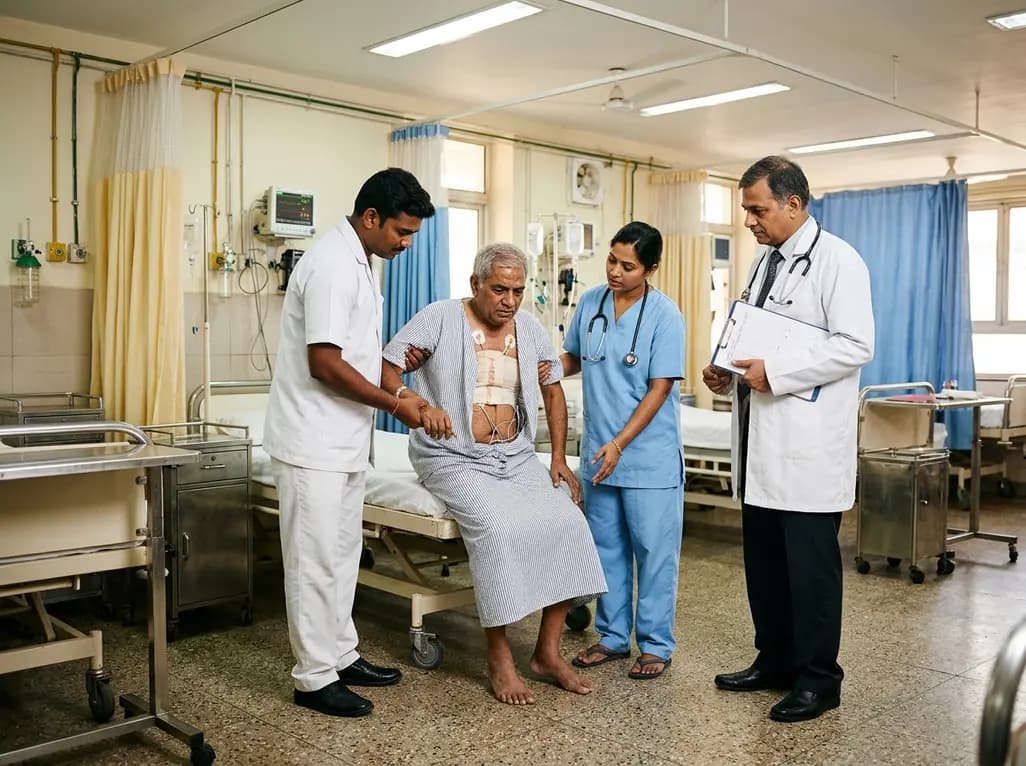
A cross-sectional study evaluates the critical intersection between acute surgical pain, kinesiophobia, and fall risks during initial mobilization after cardiac surgery, emphasizing targeted nursing strategies.
Today
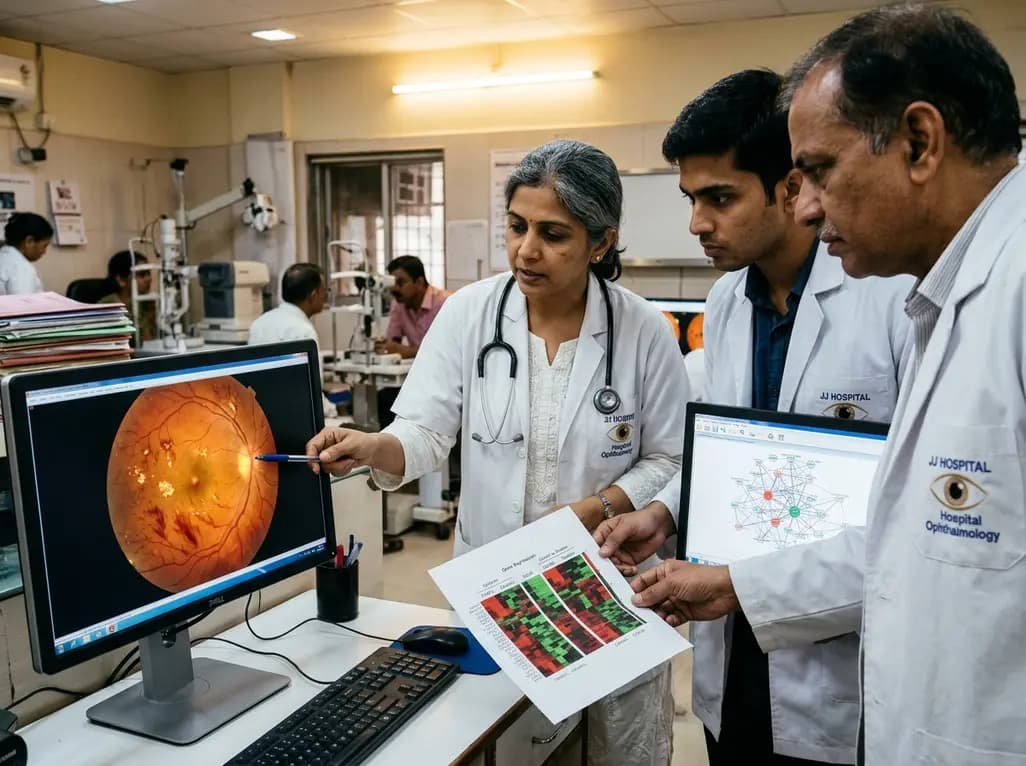
Single-cell transcriptomics reveals that STAP2 promotes retinal endothelial dysfunction in diabetic retinopathy through CXCR4 signaling. In vivo and in vitro studies show STAP2 knockdown reduces capillary drop-out and vascular leakage, uncovering a novel therapeutic target beyond anti-VEGF therapies.
Today
