.webp&w=384&q=75)

Loading, please wait...
Loading, please wait...

Management of localized myxoid liposarcoma has traditionally required a standard preoperative radiation dose of 50 Gy. However, the long-term results of the DOREMY trial suggest a new standard of care. Specifically, myxoid liposarcoma radiotherapy dose reduction to 36 Gy achieves exceptional local control while significantly minimizing treatment-related morbidity.
The DOREMY trial enrolled 90 patients across nine tertiary sarcoma centers. Each patient received 36 Gy in once-daily 2-Gy fractions before surgical resection. Furthermore, the 5-year follow-up data revealed a local recurrence-free survival rate of 97.4%. Consequently, this lower dose does not appear to compromise oncological safety. Additionally, the overall survival rate at five years was 88.5%, reinforcing the long-term viability of this de-escalated regimen.
Minimizing side effects is a primary goal of dose reduction. In this study, 21% of patients experienced wound complications. Only 16% of these individuals required further surgical intervention. Moreover, late toxic effects remained remarkably low. Only 3% of participants reported grade 3 late toxicity. These findings suggest that 36 Gy is a safer alternative to the conventional 50 Gy dose. Therefore, patients experience fewer permanent complications like fibrosis or joint stiffness.
Myxoid liposarcoma is uniquely radiosensitive compared to other soft tissue sarcomas. This biological characteristic allows for effective tumor volume reduction at lower doses. Given that phase 3 trials are impractical for such rare cancers, these phase 2 findings provide high-level evidence. Clinicians should discuss this 36 Gy approach with patients to optimize long-term quality of life. This strategy balances effective tumor management with a superior safety profile.
The DOREMY protocol uses a reduced total dose of 36 Gy delivered in 18 fractions. This is significantly lower than the standard 50 Gy dose delivered in 25 fractions for other soft tissue sarcomas.
No, this reduction specifically applies to translocation-confirmed myxoid liposarcoma. This subtype is exceptionally sensitive to radiation, unlike other varieties like pleomorphic liposarcoma.
Disclaimer: This content is for informational and educational purposes only and does not constitute medical advice. Refer to the latest local and national guidelines for clinical practice.
References
Lansu J et al. Dose Reduction of Preoperative Radiotherapy in Myxoid Liposarcoma: The Phase 2 DOREMY Nonrandomized Clinical Trial. JAMA Oncol. 2026 May 16. doi: 10.1001/jamaoncol.2026.1577. PMID: 42141895.
Lansu J, et al. Preoperative radiotherapy dose reduction in patients with myxoid liposarcoma: Results of the DOREMY trial. JAMA Oncol. 2020;6(12):e205864.
National Comprehensive Cancer Network (NCCN). Clinical Practice Guidelines in Oncology: Soft Tissue Sarcoma. Version 2.2024.

Read summarized clinical updates, watch expert medical content, and earn CME certifications right from your smartphone.
Open your smartphone camera to scan and install.





A long-term analysis of the DOREMY trial confirms 36 Gy preoperative radiotherapy provides excellent local control for myxoid liposarcoma with low toxicity....
5 months ago
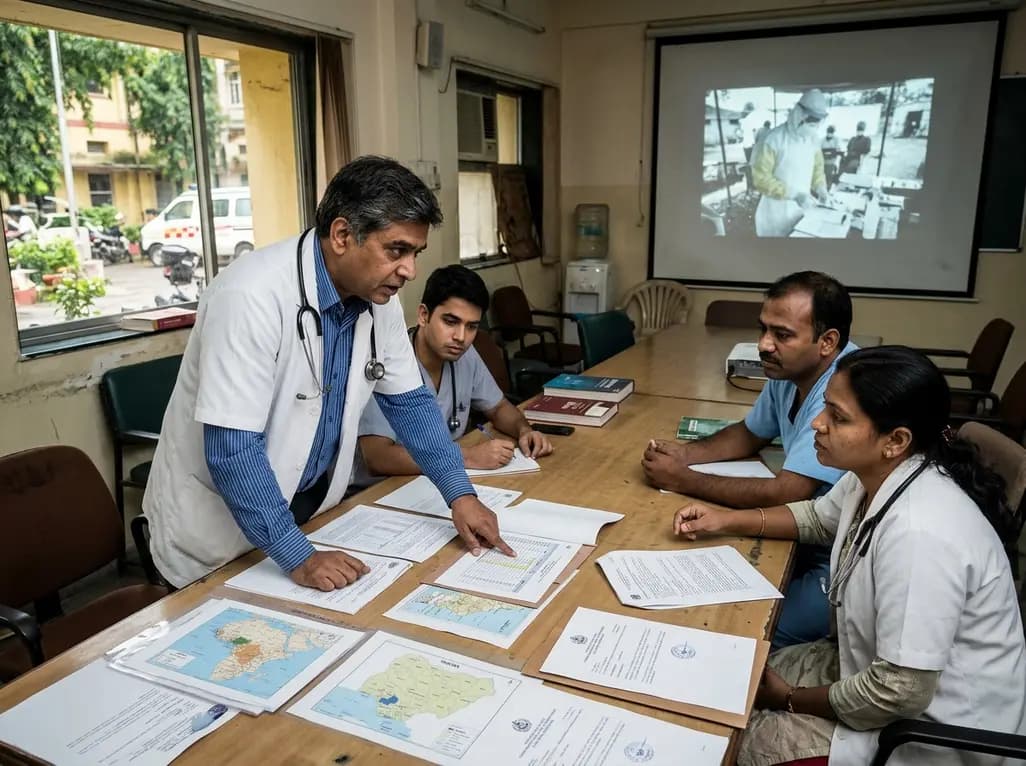
Following Nigeria's first recorded Ebola case linked to regional travel, the Africa CDC has convened an emergency ministerial summit. This alert underscores critical clinical priorities for healthcare professionals, including differentiating early viral infection from malaria, implementing barrier nursing, and triage.
Today

Leucine Rich Bio has introduced South Asia's first comprehensive vaginal microbiome test, BugSpeaks. By profiling microbial dysbiosis, pathogens, and antimicrobial resistance, this next-generation diagnostic platform provides clinicians with deeper insights into recurrent infections, fertility, and reproductive health.
Today

Review how tailored exercise programs benefit frail older patients with heart failure. Explore pathophysiological mechanisms, individualized training prescriptions, and strategies to overcome adherence barriers in clinical practice.
Today

This comparative study evaluates posterior labral tears with and without glenohumeral instability, highlighting distinct demographic patterns, MRI underestimation in stable shoulders, and successful arthroscopic repair outcomes.
Today

A clinical study demonstrates that early intervention with tocilizumab, either as monotherapy or bridged with corticosteroids, achieves significant proptosis reduction and resolves active inflammation in treatment-naive thyroid eye disease.
Today
