

Loading, please wait...
Loading, please wait...

Healthcare delivery systems worldwide are accelerating the implementation of conversational software to streamline patient intake and triage. However, the deployment of patient-facing clinical AI presents substantial safety challenges when navigating unpredictable human interactions. While static computational benchmarks measure linguistic coherence and broad medical knowledge, they frequently fail to detect latent conversational hazards under realistic high-risk conditions. Consequently, health systems require rigorous, prospective safety frameworks to stress-test these digital assistants before public launch. A prospective simulation study demonstrates that iterative clinical red teaming offers an empirical methodology to identify dangerous conversational vulnerabilities, direct engineering remediation, and measurably safeguard care pathways.
Patient-facing digital platforms must accurately interpret nuanced symptoms, elicit missing clinical history, and provide calibrated guidance without dispensing unauthorized medical directives. Nevertheless, medical large language models are vulnerable to conversational drift, over-reassurance, and subtle contextual misinterpretations. For instance, when a patient presents with ambiguous symptoms such as atypical chest tightness or sudden neurological deficits, an algorithmic system might inappropriately focus on benign etiologies. Therefore, developers and clinical leaders face significant risks if they deploy generative conversational platforms without adversarial stress-testing. Standard algorithmic evaluation sets rarely mimic the erratic, emotionally charged queries generated by real individuals seeking urgent medical care.
To expose these hidden vulnerabilities, clinical investigators have adapted adversarial red teaming protocols from cybersecurity to medical informatics. Rather than assessing baseline model accuracy on standardized multiple-choice question banks, multidisciplinary healthcare workers purposefully introduce stress-inducing prompts, atypical illness presentations, and deceptive edge cases. Furthermore, health systems must determine whether discovery of these failure modes can lead to systematic improvements. Without verifiable post-remediation reassessment, red teaming remains merely an observational audit rather than an active mechanism for quality assurance and error reduction.
To evaluate whether iterative adversarial stress-testing drives quantifiable safety enhancements, investigators conducted a two-phase prospective simulation trial at an academic medical center. The research team maintained a strict organizational firewall separating their evaluation unit from the external software developers. Specifically, during phase 1, forty-eight practicing healthcare professionals completed six randomized simulation encounters encompassing three medium-risk and three high-risk clinical presentations. These real-time interactions generated extensive conversational transcripts covering acute medical emergencies, subtle pediatric decompensation, and complex chronic disease exacerbations.
Following phase 1, independent raters analyzed the transcripts using a standardized five-domain safety rubric designed to capture clinical inaccuracies, overt triage misclassifications, and inappropriate clinical autonomy. Subsequently, the researchers synthesized the qualitative and quantitative findings into an aggregated, completely deidentified remediation briefing for the platform engineers. The engineering group then implemented targeted behavioral guardrails, revised clinical prompts, and adjusted context-handling architectures. In phase 2, twenty-seven new clinicians challenged the updated system across eight targeted high-risk scenarios, allowing direct statistical comparison of system performance under adversarial conditions.
The study outcomes demonstrated that targeted remediation guided by clinical testing dramatically mitigates critical errors. In the initial phase, the high-risk failure rate reached 30.2 percent across 116 transcripts, whereas medium-risk scenarios exhibited a modest 5.6 percent failure rate across 126 transcripts. Following targeted engineering updates, phase 2 testing revealed a striking decline in high-risk errors to 8.5 percent across 234 transcripts. This improvement represented an absolute risk reduction of 21.7 percentage points and an overall 72 percent relative reduction in severe safety hazards.
Importantly, the observed safety gains persisted across both prespecified test vignettes and novel, improvised clinical prompts generated spontaneously by participants. Methodological reliability remained robust throughout both phases. Agreement regarding binary safety failure classifications showed notable consistency, maintaining a Fleiss kappa of 0.70 across both experimental rounds, while observed inter-rater concordance improved from 90.9 percent to 94.9 percent. However, residual failures still clustered around triage calibration errors and boundary violations, underscoring that complete algorithmic perfection remains difficult to achieve in conversational medical settings.
A primary contribution of this prospective work is the establishment of a reproducible, five-domain clinical evaluation rubric. Rather than relying on unstructured subjective impressions, evaluating clinicians assess communication quality, evidence alignment, diagnostic restraint, escalation accuracy, and conversational safety boundaries. In addition, the creation of a formalized scenario taxonomy allows hospital governance committees to systematically replicate high-risk simulations. This operational blueprint bridges the gap between software development pipelines and hospital quality assurance departments.
Furthermore, maintaining an unbreached firewall between clinical evaluators and platform engineers represents a vital methodological safeguard for institutional governance. Because raw simulation scripts were withheld, software engineers could not overfit algorithms to specific test sentences. Instead, developers had to remediate root architectural causes such as system prompt design, conversational memory drift, and retrieval-augmented verification. Consequently, healthcare institutions can utilize this structured methodology as a reproducible model for enterprise-level pre-deployment audits and continuous post-market surveillance of generative medical software.
The findings of this clinical investigation carry enormous relevance for rapidly expanding digital health ecosystems, particularly within India. As teleconsultation platforms, automated triage interfaces, and smartphone symptom checkers scale across diverse urban and rural populations, the potential for catastrophic undertriage increases exponentially. A conversational agent that misidentifies acute coronary syndromes, severe dengue warning signs, or evolving cerebral malaria as mild illnesses poses severe public health dangers. Therefore, implementing localized red teaming protocols is imperative before deploying consumer-facing software across heterogeneous demographic landscapes.
Moreover, health tech developers in India must stress-test conversational models against regional language variations, non-standard medical terminology, and mixed-language expressions such as Hinglish. Establishing standardized clinical evaluation protocols enables Indian hospital networks and health authorities to enforce objective safety standards. By embedding practicing clinicians directly into iterative pre-deployment reviews, institutions ensure that digital intake portals uphold medical ethics, respect statutory scopes of practice, and safely escalate complex clinical presentations to qualified human physicians.
While structured red teaming provides indispensable pre-deployment validation, health systems must recognize that algorithmic evaluation requires lifelong operational monitoring. Generative models naturally encounter unforeseen linguistic variations, novel therapeutic paradigms, and evolving patient behaviors when scaled across general public populations. Therefore, healthcare organizations should integrate continuous telemetry and real-time failure capture into clinical workflows. Clinicians and software developers must maintain active post-deployment feedback loops to flag near-miss events and unexpected diagnostic recommendations.
Additionally, regulatory frameworks around the globe increasingly mandate documented proof of adversarial testing for clinical software as a medical device. Future initiatives will likely combine human-in-the-loop clinical red teaming with automated, model-driven stress-testing pipelines to evaluate thousands of edge cases simultaneously. Nevertheless, experienced human clinicians remain the ultimate arbiters of diagnostic safety, clinical context, and empathetic risk communication. Investing in rigorous, multidisciplinary testing methodologies ensures that medical artificial intelligence platforms protect patient well-being while fulfilling their transformative clinical potential.
Adversarial red teaming is a structured quality evaluation methodology where healthcare professionals deliberately challenge an artificial intelligence system with complex, ambiguous, or misleading medical scenarios. This adversarial testing actively uncovers conversational hazards, diagnostic hallucinations, inappropriate clinical reassurance, and critical triage failures before the digital tool interacts with real patients in live healthcare environments.
Standard computational benchmarks evaluate static medical knowledge and linguistic coherence using predictable examination questions, but they fail to capture the chaotic nature of human clinical dialogue. Patients frequently present atypical symptoms, omit crucial medical history, or express emotional distress. Clinical red teaming recreates these dynamic nuances, exposing safety risks that standard algorithmic benchmarks overlook.
Engineers analyzed deidentified, aggregated failure patterns across five standardized safety domains identified by clinicians during initial testing rounds. Developers then updated system prompts, reinforced triage escalation rules, refined context-window handling, and introduced stricter boundaries against dispensing unauthorized prescriptive advice, successfully driving high-risk failure rates down from 30.2 percent to 8.5 percent.
Disclaimer: This content is for informational and educational purposes only and does not constitute formal medical or technical advice. Healthcare professionals and health systems should exercise independent clinical judgment and follow established medical governance, testing, and validation protocols prior to deploying any artificial intelligence systems in patient care. Refer to the latest local and national guidelines for clinical practice.
References

Read summarized clinical updates, watch expert medical content, and earn CME certifications right from your smartphone.
Open your smartphone camera to scan and install.





A 2-phase prospective study reveals that iterative clinical red teaming combined with targeted remediation drops patient-facing AI safety failure rates from 30.2% to 8.5% in high-risk scenarios, providing a standardized validation framework for health systems deploying conversational medical agents.
Today
A randomized crossover trial evaluated fifth-year medical students interacting with an AI standardized patient versus a human standardized patient. The study revealed key differences in Mini-CEX scores, active engagement, and interview dynamics.
Today
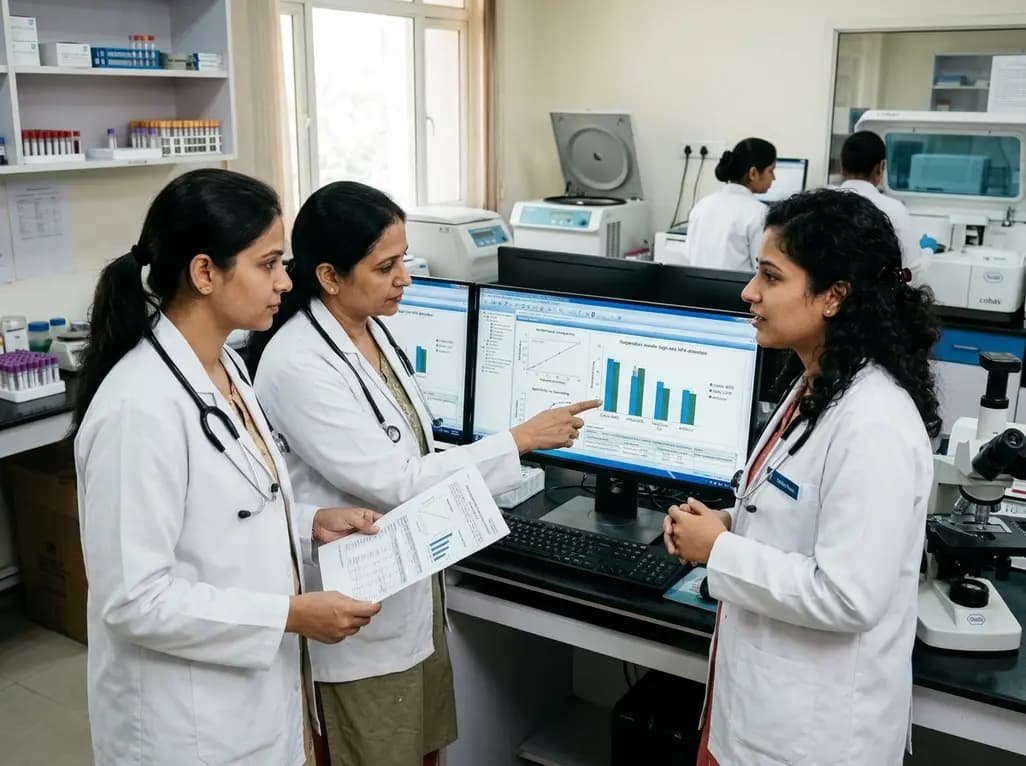
A comparative evaluation of INNO-LiPA, Cobas 4800, and Amplicor highlights significant assay-dependent variation in high-risk HPV detection, emphasizing the clinical distinction between analytical sensitivity and screening specificity.
Today

A Canadian nutrition study reveals that higher diet costs predict lower dietary energy density and higher fruit intake, but also increase sodium and processed meat consumption.
Today
Idiopathic spinal cord herniation is a rare pathology presenting with progressive thoracic myelopathy. Early MRI identification and meticulous microsurgical reduction with dual bolstered dural defect repair prevent irreversible neurological deterioration.
Today
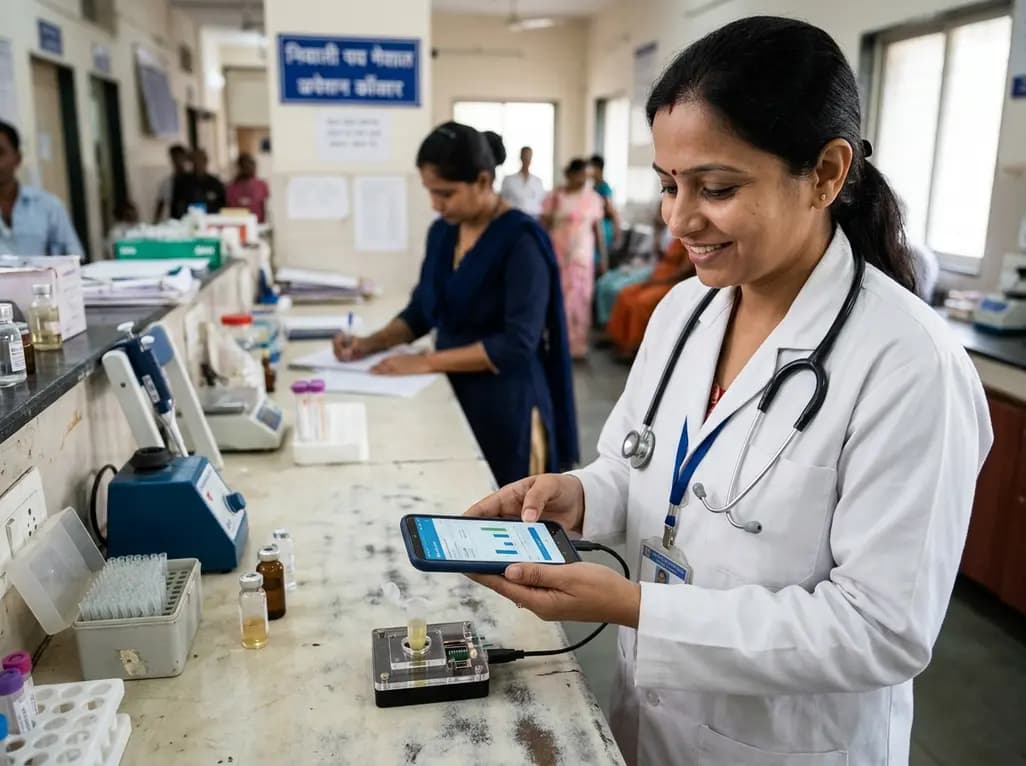
A novel smartphone-assisted biosensor utilizing molecularly imprinted polymers and catalytic nanozymes offers antibody-free, enzyme-free urinary microalbumin testing, enabling rapid, low-cost point-of-care screening for early chronic kidney disease.
Today
