.webp&w=384&q=75)

Loading, please wait...
Loading, please wait...

Physicians today recognize a significant gap between randomized controlled trials and actual clinical practice. While clinical trials show robust gains, real-world anti-VEGF outcomes often fail to meet these high benchmarks in patients with retinal diseases. Specifically, conditions like neovascular age-related macular degeneration (nAMD) and diabetic macular edema (DME) require intensive management that is frequently difficult to sustain in routine practice.
Data from global studies highlight a concerning trend. For instance, the AURA study reported minimal visual gains of only +0.6 letters by the second year. In contrast, clinical trials often achieve gains between 8 and 10 letters. This discrepancy occurs primarily because real-world patients receive significantly fewer injections than trial participants. Moreover, Indian cohorts often present with delayed symptoms, which further complicates the prognosis. The ARMOUR study in India confirms that while many patients maintain vision, the overall functional improvement remains modest due to reduced treatment intensity.
Closing the effectiveness gap requires a shift in how we approach chronic retinal care. Clinicians should prioritize the Treat-and-Extend regimen to balance the treatment burden with clinical efficacy. Additionally, earlier diagnosis remains the cornerstone of better long-term results. Furthermore, enhancing patient engagement through better education can improve adherence to follow-up schedules. Notably, cost-effective biosimilars or longer-acting agents could alleviate socioeconomic barriers that currently hinder optimal care in resource-limited settings.
Overall, the limitations of current therapies often stem from delivery challenges rather than drug failure. Therefore, addressing undertreatment and socioeconomic hurdles is essential for improving vision preservation in the Indian population.
Trial protocols involve strict injection schedules and frequent monitoring that are hard to replicate in busy clinical settings. Consequently, patients in the real world often receive fewer injections, leading to suboptimal visual gains.
Delayed presentation often means patients already have advanced disease or scarring at the time of the first injection. Therefore, achieving the significant visual gains seen in early-intervention trials becomes much more challenging.
Disclaimer: This content is for informational and educational purposes only. It does not constitute professional medical advice, diagnosis, or treatment. Always seek the advice of your physician or other qualified health provider with any questions regarding a medical condition. Refer to the latest local and national guidelines for clinical practice.
References
Sharma D et al. Anti-vascular endothelial growth factor therapy in clinical practice: Real-world scenarios, limitations, and outcomes. Indian J Ophthalmol. 2026 May 01. doi: 10.4103/IJO.IJO_185_26. PMID: 42060351.
Rao P, et al. The ARMOUR Study: Anti-VEGF in Neovascular AMD—Our Understanding in a Real-World Indian Setting. Asia Pac J Ophthalmol (Phila). 2017 Nov-Dec;6(6):501-506. doi: 10.22608/APJO.2017.155.
Holz FG, et al. Multi-country real-world experience of anti-vascular endothelial growth factor therapy for wet age-related macular degeneration. Br J Ophthalmol. 2015;99(2):220-226.

Read summarized clinical updates, watch expert medical content, and earn CME certifications right from your smartphone.
Open your smartphone camera to scan and install.





A detailed look at why real-world anti-VEGF results often lag behind clinical trials and how Indian clinicians can bridge this effectiveness gap....
5 months ago
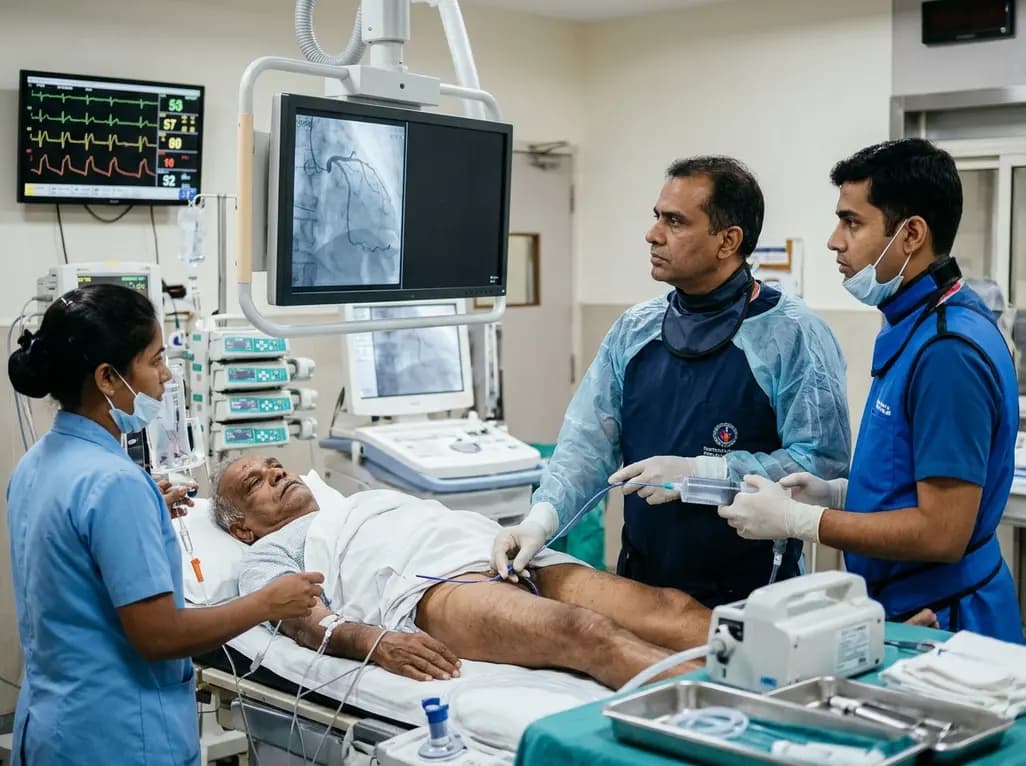
An elderly man with partially repaired Tetralogy of Fallot presented with STEMI caused by coronary embolism rather than atherosclerosis. Successful treatment with sustained mechanical aspiration thrombectomy underscores the vital need for high clinical vigilance in adult congenital heart disease.
Today

Demanding exhaustive hormonal profiling can inadvertently discourage clinical studies involving females. Methodological standards must align with the specific scientific question to expand, not restrict, equitable evidence for women.
Today

A recent study demonstrates that spinal oxygen sensors do not require mitochondrial electron transport to trigger sympathetic excitation during acute hypoxia, revealing new insights into how mitochondrial oxidative stress modulates autonomic tone in cardiovascular and neurological diseases.
Today

A novel calcium polyphosphate coacervate enables injectable bone implants with in situ hierarchical porosity via phase separation and gas foaming, significantly enhancing cell proliferation, energy metabolism, and osteogenic differentiation for minimally invasive bone defect repair.
Today

Following regulatory scrutiny from FSSAI regarding promotional representations and lean muscle preservation claims, Dr. Reddy's Laboratories and Nestlé Health Science are currently reviewing the branding and marketing strategy for their joint nutritional supplement Celevida GLP+.
Today
