.webp&w=384&q=75)

Loading, please wait...
Loading, please wait...

Recent medical advancements highlight the growing importance of rapid genome sequencing (rGS) in pediatric critical care settings. Furthermore, a single-center hospital policy shift has recently demonstrated that adopting rGS as a first-line diagnostic tool significantly improves patient outcomes. Specifically, this change led to a dramatic increase in genetic diagnoses. It also reduced the time required to pinpoint rare conditions in critically ill children.
Many children admitted to Cardiac and Pediatric Intensive Care Units (CICU, PICU) suffer from undiagnosed genetic disorders. Historically, clinicians reserved genetic testing as a later-tier option. However, new research proves that moving testing to the first line is beneficial. In a recent retrospective review, diagnostic yields reached 36.5% in the CICU and 31.2% in the PICU. This represents a substantial improvement over traditional diagnostic pathways. Consequently, more families receive answers during the most critical phase of their child's illness.
Moreover, the implementation of rapid genome sequencing in specialized units has revolutionized how clinicians approach rare diseases. By reducing diagnostic delays, medical teams can initiate targeted treatments much earlier. For instance, the time to diagnosis in the CICU dropped from 23 days to just 12 days. Similarly, the PICU saw a reduction from 33 days to 16 days. Therefore, rapid results allow for precision medicine interventions that were previously impossible.
The policy change also led to a 2.4-fold increase in genetic diagnoses within the CICU. Additionally, the number of genetics consultations requested by intensivist teams rose sharply. This indicates a growing confidence in genomic tools among frontline critical care providers. In contrast to traditional exome sequencing, the rapid approach ensures that findings remain actionable within the acute care window. As a result, the overall standard of care for complex pediatric cases continues to evolve globally.
It allows doctors to identify specific genetic causes for symptoms like organ failure or seizures. This often leads to changes in medication, avoidance of invasive biopsies, and better surgical planning.
While both are valuable, genome sequencing often identifies a wider range of variants. The "rapid" aspect is crucial in the ICU where treatment decisions must be made within days, not weeks.
The latest study reported an overall diagnostic yield of 36.5% for patients in the CICU, highlighting the prevalence of genetic factors in congenital heart disease.
Disclaimer: This content is for informational and educational purposes only. It does not constitute medical advice or establish a doctor-patient relationship. Always seek the advice of a qualified healthcare provider regarding a medical condition or treatment. Refer to the latest local and national guidelines for clinical practice.
References
Keefe AC et al. Implementation of First-Line Rapid Genome Sequencing for Children in Pediatric and Cardiac Intensive Care Units. Am J Med Genet A. 2026 Feb 16. doi: 10.1002/ajmg.a.70088. PMID: 41693637.
Dimmock D et al. Rapid Whole-Genome Sequencing and Clinical Management in the PICU: A Multicenter Cohort, 2016-2023. Pediatr Crit Care Med. 2024 Aug 1;25(8):699-709. doi: 10.1097/PCC.0000000000003522.
Sanford EF et al. Rapid Whole Genome Sequencing Has Clinical Utility in Children in the PICU. Front Pediatr. 2019;7:210. doi: 10.3389/fped.2019.00210.
"
Read summarized clinical updates, watch expert medical content, and earn CME certifications right from your smartphone.
Open your smartphone camera to scan and install.





Implementing first-line rapid genome sequencing in PICU/CICU leads to higher diagnostic yields and significantly faster clinical answers for critically ill ...
8 months ago
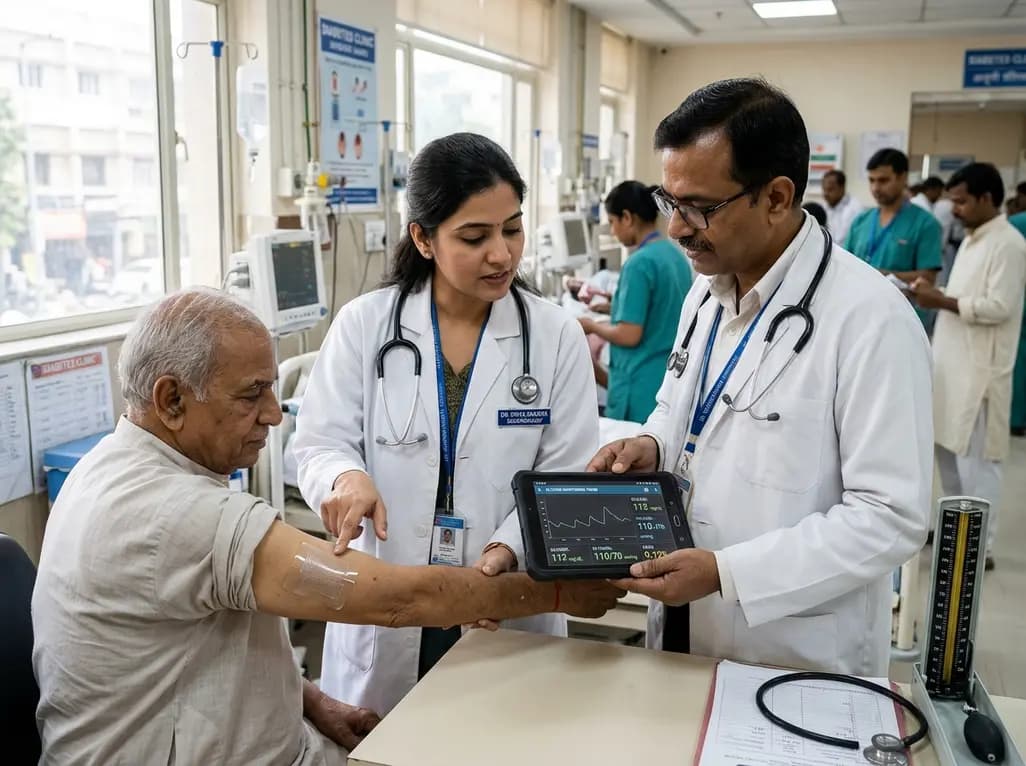
A breakthrough ultrathin multimodal sensor decouples physical hemodynamic monitoring from disposable electrochemical calibration, achieving long-term wearable glucose prediction with 81.36% accuracy and a 9.12% MARD. This offers a robust, drift-free solution for outpatient metabolic surveillance.
Today

Demanding exhaustive hormonal profiling can inadvertently discourage clinical studies involving females. Methodological standards must align with the specific scientific question to expand, not restrict, equitable evidence for women.
Today

Co-administering antiseizure medications and DOACs frequently causes pharmacokinetic interactions, subtherapeutic drug levels, and thromboembolic failures. This review highlights enzyme induction risks, unpredictable outcomes with levetiracetam, and the vital role of therapeutic drug monitoring.
Today

A comparative review of tension band wiring and intramedullary screw fixation in thumb metacarpophalangeal arthrodesis, evaluating union rates, hardware complications, and clinical outcomes.
Today

Following regulatory scrutiny from FSSAI regarding promotional representations and lean muscle preservation claims, Dr. Reddy's Laboratories and Nestlé Health Science are currently reviewing the branding and marketing strategy for their joint nutritional supplement Celevida GLP+.
Today
