

Loading, please wait...
Loading, please wait...

Immune checkpoint inhibitors have revolutionized modern oncology by providing durable responses across diverse malignancies. However, clinicians frequently encounter unexpected hypersensitivity reactions during treatment courses. When moderate or severe adverse events occur, standard premedication protocols often fail to prevent recurrent toxicity. Consequently, oncologists face a difficult clinical dilemma between permanent treatment discontinuation and life-threatening acute reactions. In this clinical scenario, rapid drug desensitization provides an essential management pathway. This precision reintroduction strategy temporarily alters mast cell and basophil responsiveness, thereby permitting the safe continuation of vital first-line immunotherapy.
Immune checkpoint inhibitors comprise monoclonal antibodies targeting regulatory pathways such as PD-1, PD-L1, CTLA-4, and LAG-3. While immune-related adverse events involving organ inflammation are well documented, immediate infusion hypersensitivity reactions remain underrecognized. Clinicians observe these reactions across multiple agents, including nivolumab, pembrolizumab, cemiplimab, ipilimumab, and durvalumab. Although standard premedication with antihistamines and corticosteroids mitigates mild infusion discomfort, moderate to severe events require advanced intervention. Historically, acute hypersensitivity forced oncologists to interrupt or permanently abandon the most effective anti-tumor therapy. In a major cohort, nearly two-thirds of reacting patients required immediate treatment termination during their index reaction. Therefore, distinguishing true immunological hypersensitivity from mild infusion-related reactions represents a critical clinical competency. Prompt recognition allows seamless referral to specialized desensitization teams. Consequently, patients avoid premature treatment switches to inferior second-line regimens.
Hypersensitivity reactions to checkpoint inhibitors present with distinct clinical phenotypes. Type I reactions involve classic IgE-mediated or direct mast cell degranulation, triggering urticaria, angioedema, bronchospasm, and hypotension. In contrast, cytokine release reactions stem from massive systemic release of pro-inflammatory cytokines like interleukin-6 and tumor necrosis factor. These reactions manifest primarily with rigors, chills, high fevers, nausea, and acute pain. Furthermore, data demonstrate that mixed reaction phenotypes occur in more than half of affected individuals. These complex presentations blend features of classic type I anaphylaxis with severe cytokine release symptoms. Understanding these specific phenotypes allows clinicians to tailor pre-infusion pharmacological coverage. For example, cytokine release reactions frequently benefit from targeted anti-inflammatory coverage rather than simple histamine blockade. Thus, systematic phenotypic classification directly informs patient risk stratification and protocol selection.
To safely deliver essential therapies, clinicians implement standardized rapid drug desensitization protocols. Specialists administer the target monoclonal antibody in consecutive dilutions, progressively escalating rates and doses every fifteen minutes. These regimens typically use multi-bag setups, transitioning from one to four bags based on individual risk. By exposing mast cells and basophils to minute, doubling increments of antigen, the procedure arrests intracellular signaling cascades. Consequently, cells temporarily resist degranulation without systemic mediator release. In a multi-year analysis comprising 461 desensitization procedures, this structured methodology achieved the full target therapeutic dose in every single attempt. Furthermore, more than 88 percent of all desensitization procedures finished entirely free of breakthrough symptoms. Therefore, structured protocol execution transforms potentially lethal drug allergies into manageable outpatient treatments.
Patient safety remains the paramount objective during outpatient desensitization. Despite gradual dosing, breakthrough reactions can occasionally occur during administration. Clinical registries indicate that breakthrough events occur in approximately twelve percent of procedures. Fortunately, nearly two-thirds of these breakthrough episodes remain mild in severity, presenting with transient pruritus or localized flushing. Clinicians rapidly control these symptoms by momentarily pausing the infusion and administering supplemental antihistamines or low-dose corticosteroids. Once symptoms subside completely, nurses resume the infusion at the preceding tolerated rate. Severe systemic anaphylaxis or hemodynamic collapse occurs exceedingly rarely under trained supervision. Additionally, routine laboratory monitoring and continuous vital sign assessment ensure early identification of instability. Because trained allergy teams follow rigorous safety algorithms, procedural success rates remain remarkably high.
A persistent clinical question involves whether desensitization must continue indefinitely for every patient. Interestingly, research indicates that a substantial subset of sensitized patients eventually regain drug tolerance. In clinical practice, repeated successful desensitizations can induce an extended state of immune unresponsiveness. Specifically, over twenty-eight percent of patients who undergo multiple consecutive desensitizations successfully return to conventional standard infusion times. Clinicians achieve this milestone through phenotype-guided reintroduction and systematic de-escalation protocols. This transition offers profound practical advantages for both cancer centers and patients. Standard infusions dramatically shorten chair time, decrease specialized nursing burdens, and reduce overall healthcare costs. Furthermore, returning to conventional infusion suites restores treatment convenience and patient quality of life without compromising oncologic efficacy.
In Indian tertiary cancer care, the utilization of immune checkpoint inhibitors continues to expand rapidly across solid and hematologic malignancies. However, access to specialized allergy and desensitization centers remains concentrated within large academic institutions. When Indian patients experience acute infusion reactions, clinicians frequently discontinue therapy due to fear of fatal anaphylaxis. Establishing multidisciplinary drug desensitization pathways in high-volume cancer hospitals can overcome this critical therapeutic barrier. Moreover, retaining first-line checkpoint inhibitor regimens is particularly vital in resource-constrained settings where alternative targeted drugs are either unavailable or cost-prohibitive. Indian oncologists, intensive care specialists, and clinical pharmacologists should collaborate to implement standardized desensitization algorithms. By adopting phenotype-guided protocols, cancer teams throughout India can preserve life-extending immunotherapies safely.
Type I hypersensitivity involves rapid mast cell degranulation, presenting primarily with cutaneous signs like urticaria, angioedema, bronchospasm, and hemodynamic collapse. In contrast, cytokine release reactions arise from systemic immune cell activation and inflammatory cytokine surges. These reactions manifest predominantly with shaking chills, high fevers, rigors, body aches, and headaches, demanding distinct pre-treatment anti-inflammatory strategies.
Rapid drug desensitization demonstrates excellent safety profiles even following severe index reactions. Clinical data confirm that over 88 percent of procedures conclude without any adverse reactions, and all patients reach full target dosing. While breakthrough symptoms occur in twelve percent of cases, most remain mild and resolve rapidly with temporary infusion pauses and rescue medications.
Although more than one quarter of patients successfully resume standard infusions after repeated desensitizations, recurrent hypersensitivity remains a potential risk. Clinicians must conduct transitions gradually under controlled observation. If breakthrough symptoms recur during standard infusion attempts, teams immediately return the patient to multi-bag desensitization to guarantee treatment completion safely.
Disclaimer: This content is for informational and educational purposes only and does not constitute medical advice, diagnosis, or treatment. Healthcare professionals should exercise their independent clinical judgment. Refer to the latest local and national guidelines for clinical practice.
References

Read summarized clinical updates, watch expert medical content, and earn CME certifications right from your smartphone.
Open your smartphone camera to scan and install.





A study evaluates 461 rapid drug desensitization protocols in 82 cancer patients experiencing hypersensitivity to immune checkpoint inhibitors. The approach proved safe and effective, enabling 100% target dose delivery and allowing over a quarter of patients to safely return to standard infusion schedules.
Today
A prospective phase IIa trial investigated TSG-01, an agent rich in secondary ginsenosides, for chronic heart failure in coronary artery disease. While NYHA functional class did not differ, TSG-01 significantly improved ejection fraction in digoxin-free patients with a favorable safety profile across all groups.
Today
Amniotic fluid cell-free DNA offers a rapid alternative to cultured amniocytes in prenatal testing. With high yield, lack of maternal contamination, and full concordance across microarrays and exome sequencing, it dramatically cuts diagnostic turnaround time.
Today
Knocking out the adipocyte ETB receptor attenuates high-fat diet-induced dyslipidemia, lowering LDL, cholesterol, and free fatty acids while preserving lipid oxidation gene expression in visceral adipose tissue.
Today

A systematic review of 15 studies and 574 competitive weightlifters establishes normative benchmarks for snatch drop-under kinematics, highlighting turnover speed, horizontal displacement, and trunk alignment to optimize performance and prevent overhead injuries.
Today
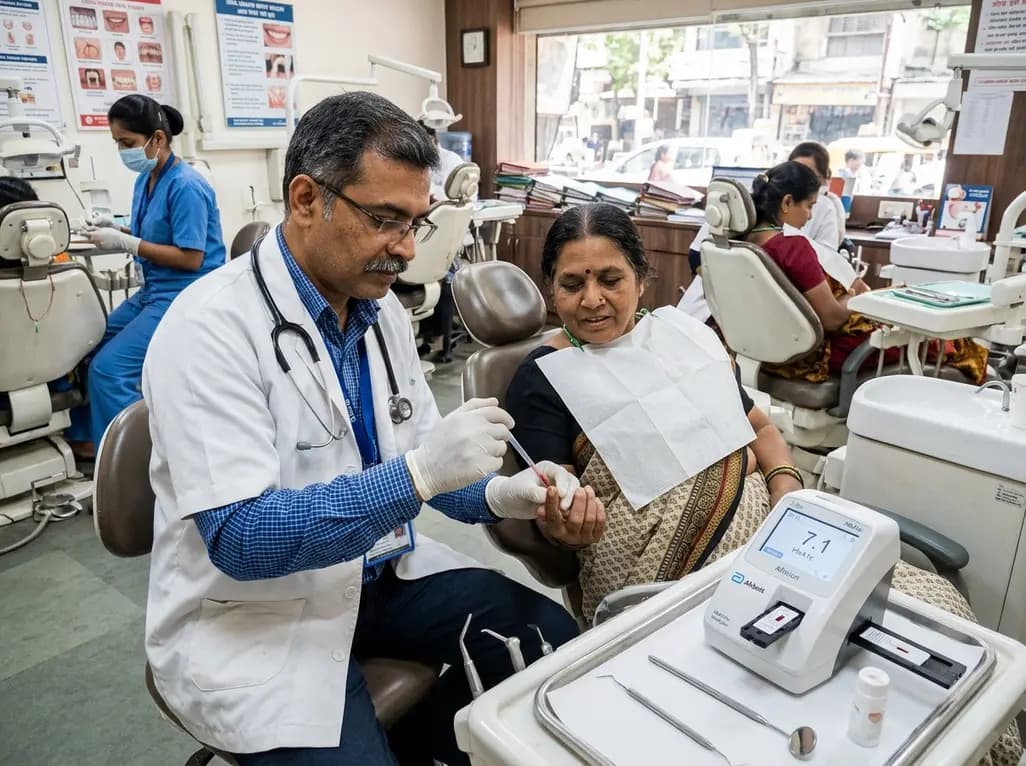
A cross-sectional study shows point-of-care HbA1c screening in dental settings detects elevated glycemia in 27.3% of adults. Over 60% of these patients had no prior glycemic concerns, especially those disconnected from primary care, highlighting the dental chair as an opportunistic screening site.
Today
