.webp&w=384&q=75)

Loading, please wait...
Loading, please wait...

Modern healthcare systems demand agile physician leaders who can guide complex clinical and diagnostic environments. Within academic medical centers, structured radiology leadership development has emerged as a fundamental driver of institutional resilience and career progression. Clinicians routinely manage multidisciplinary teams, advanced imaging technologies, and shifting regulatory demands. Consequently, medical educators recognize that clinical expertise alone cannot guarantee effective departmental administration. A taskforce from the Radiology Research Alliance recently surveyed academic radiologists to evaluate training exposure and professional aspirations. Their findings demonstrate substantial faculty interest in professional growth, alongside noticeable voids in local institutional programming.
Academic medical centers face unprecedented operational challenges, including rising workforce shortages, rapid technological shifts, and complex healthcare economics. In response, academic departments must cultivate physician leaders who possess strategic acumen alongside clinical diagnostic skill. Historically, academic medicine promoted faculty based primarily on peer-reviewed research publications or clinical longevity. However, contemporary healthcare leadership requires nuanced competencies that traditional residency curricula rarely cover. As a result, early and mid-career radiologists often assume administrative duties without adequate preparation. This operational disconnect can heighten administrative friction, degrade workflow efficiency, and accelerate physician burnout.
Furthermore, leadership competence directly influences healthcare delivery and departmental sustainability. Effective physician administrators streamline imaging workflows, advocate for advanced diagnostic tools, and promote inclusive learning environments. In contrast, untrained administrators often struggle with resource allocation and team conflict. Therefore, integrating structured leadership training throughout all professional tiers creates a resilient leadership pipeline. Early investment in non-clinical management skills empowers faculty to influence institutional governance positively. Ultimately, prioritizing these competencies ensures that radiologists maintain a pivotal voice in hospital leadership.
To assess training needs across different career stages, the Radiology Research Alliance taskforce distributed an internally validated survey. They sampled members of the Radiology Research Alliance and the Alliance of Clinician Educators in Radiology. The investigators issued approximately 350 invitations and achieved a response rate of 25.4 percent, gathering insights from 89 respondents. Notably, practicing radiologists represented 86 percent of the cohort, while trainees constituted the remaining 14 percent. In addition, an overwhelming majority of participants, specifically 89 percent, worked within academic medical institutions.
The study revealed strong appetite for skill acquisition among academic radiologists. Overall, 81 percent expressed explicit interest in developing leadership capabilities for career progression. Furthermore, 37 percent articulated strong interest in holding formal leadership posts, while 31 percent reported moderate interest. Only 10 percent expressed no desire for leadership roles. Thus, most faculty welcome opportunities to expand their administrative scope. These survey data confirm that leadership enthusiasm extends well beyond senior ranks into early-career faculty and residents.
The survey clearly delineated the specific competencies that academic radiologists deem most critical for their professional advancement. Interestingly, participants prioritized collaborative and conflict management skills over traditional administrative tasks. Partnership and collaboration emerged as the most favored skill, selected by 69 percent of respondents. Similarly, providing feedback and general management ranked high at 64 percent. Conflict resolution followed closely at 61 percent, while negotiation skills garnered 60 percent of participant interest.
In contrast, patient engagement ranked substantially lower, attracting interest from only 16 percent of respondents. This distribution reflects the daily realities of modern diagnostic departments. Radiologists regularly interact with interdisciplinary teams, hospital executives, clinical referring colleagues, and industry partners. Consequently, the ability to negotiate departmental resources and resolve interpersonal disputes directly determines operational success. Furthermore, giving constructive feedback remains essential for training junior residents and optimizing diagnostic report workflows. By focusing training on these practical interpersonal skills, institutions can address the precise operational pressures that academic clinicians face every day.
Despite high faculty demand, the survey illuminated significant deficiencies in localized educational offerings. Currently, only 32 percent of respondents reported having access to departmental leadership programs. Moreover, fewer than half of the surveyed radiologists had participated in broader institutional courses. Instead, clinicians frequently relied on external avenues to acquire managerial proficiencies. In fact, 54 percent had enrolled in external professional development programs, while 25 percent attended external medical leadership offerings.
This heavy reliance on external programming reveals a persistent gap at the institutional level. While national conferences offer high-caliber education, they impose financial and logistical burdens on faculty. In addition, external courses cannot address the unique cultural nuances of specific healthcare systems. Therefore, academic medical centers must develop accessible internal leadership curricula. Establishing internal tracks eliminates travel expenses, accommodates clinical duties, and builds interdepartmental cohesion. Ultimately, hospitals investing in local leadership retain talented faculty and foster institutional loyalty.
Mentorship represents another vital pillar of professional development that requires structured institutional support. The taskforce emphasized that guidance should not cease once a clinician transitions from trainee to faculty status. Instead, faculty members require dedicated mentors, sponsors, and executive coaches at every step of their career journey. Early-career radiologists benefit from mentors who clarify academic promotion pathways and provide feedback on diagnostic teaching. In contrast, mid-career and senior faculty members require executive sponsors who champion their candidacy for committee chairs and dean-level appointments.
Furthermore, self-crafted roles and informal leadership opportunities can accelerate personal growth before formal positions become available. Department chairs can assign junior faculty to quality improvement initiatives, radiation safety committees, or curriculum redesign teams. These micro-leadership roles provide safe environments for clinicians to practice consensus building and project management. Similarly, formal peer-coaching circles allow colleagues to discuss common administrative challenges openly. By formalizing both vertical sponsorship and horizontal peer networks, academic health systems create an environment where every physician can flourish.
Early-career radiologists and trainees frequently encounter complex multidisciplinary team dynamics, demanding administrative expectations, and rapid technological shifts. Formal training equips these emerging professionals with vital skills in conflict resolution, negotiation, and collaborative communication. Consequently, early preparation accelerates career advancement, enhances departmental efficiency, and protects junior faculty against early burnout. Establishing strong foundational capabilities early allows clinicians to transition seamlessly into senior managerial roles.
Survey findings highlight that academic radiologists place the highest value on partnership, team collaboration, constructive feedback delivery, and conflict resolution. In contrast to patient engagement, negotiation and managerial competencies emerge as top institutional priorities. Clinicians require these refined communication strategies to align diverse clinical teams, secure institutional resources, and manage interpersonal disagreements effectively. Therefore, modern leadership curricula must emphasize these practical interpersonal toolkits over purely theoretical administrative concepts.
Academic medical centers can bridge noticeable educational voids by sponsoring structured departmental workshops and integrating longitudinal mentorship networks. Furthermore, healthcare institutions should actively fund faculty participation in accredited external leadership academies, such as national society programs. By combining internal administrative exposure with targeted external coursework, medical centers foster an inclusive leadership pipeline. This deliberate strategy ensures that faculty members at every professional rank access equitable developmental opportunities.
Disclaimer: This content is for informational and educational purposes only... Refer to the latest local and national guidelines for clinical practice.
References

Read summarized clinical updates, watch expert medical content, and earn CME certifications right from your smartphone.
Open your smartphone camera to scan and install.





A recent survey of academic medical centers highlights that over 80% of academic radiologists desire leadership training. The study emphasizes the critical need for structured programs focusing on collaboration, conflict resolution, and career-long mentorship.
Today
A comprehensive meta-analysis of over 4.4 million out-of-hospital cardiac arrest patients reveals a global bystander CPR rate of only 32.1%, showing marked disparities between high-income and developing nations. Healthcare professionals must advocate for community resuscitation training.
Today
A recent interventional study assessed whether adding a single 150 IU dose of follitropin alfa before or after clomiphene citrate improves clinical outcomes in unexplained infertility. The findings demonstrate that sequential gonadotropin therapy does not increase ovulation or pregnancy rates.
Today
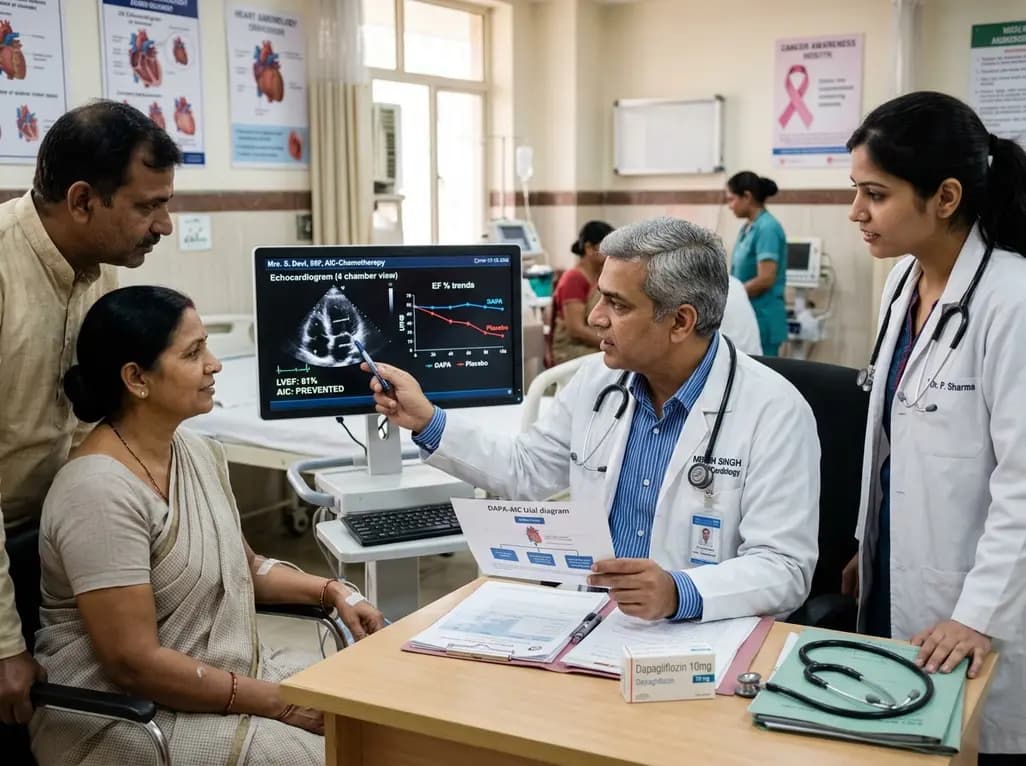
The phase II DAPA-AIC trial demonstrates that dapagliflozin 10 mg daily significantly preserves left ventricular ejection fraction compared to placebo over four months in adults undergoing anthracycline chemotherapy, highlighting a potential preventive strategy in cardio-oncology.
Today
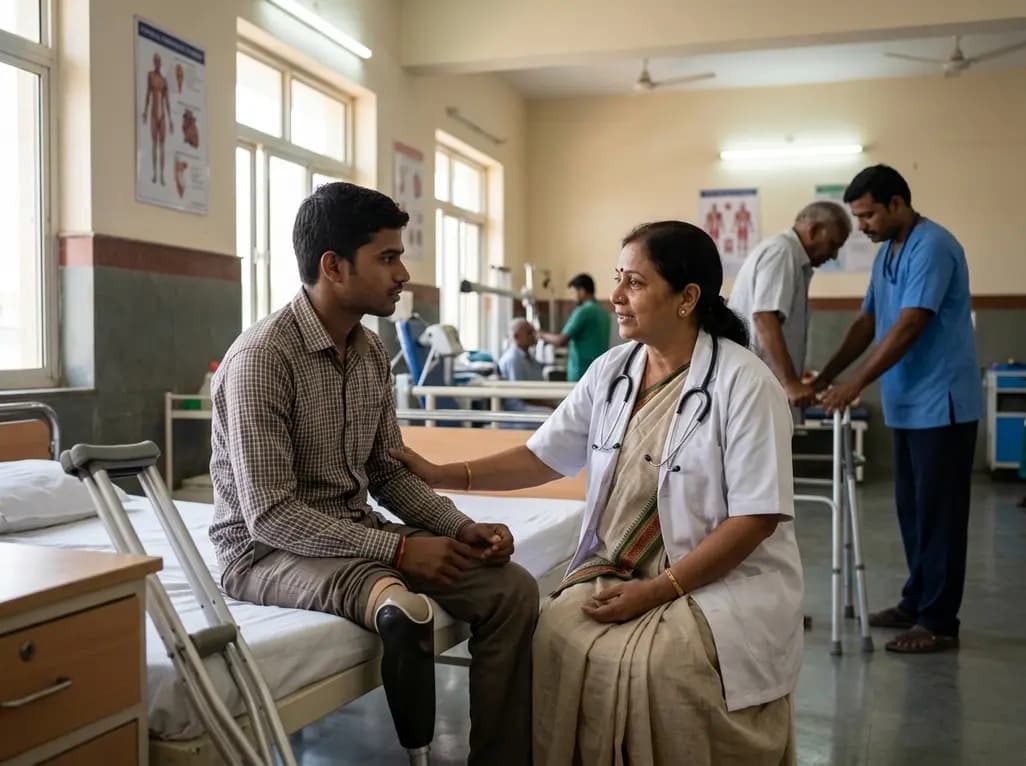
A scoping review reveals severe gaps in long-term assistive technology provision following humanitarian emergencies. Addressing post-disaster rehabilitation requires systematic follow-up, workforce training, and integration into national health systems to sustain mobility and recovery.
Today
A new study reveals that high-fat, cholesterol, and fructose intake drives MASH and hepatic fibrosis in a sex- and hepatocyte PPARγ-dependent manner. Male mice showed severe fibrosis and downregulated methionine metabolism, while hepatocyte PPARγ knockout protected against progression.
Today
