

Loading, please wait...
Loading, please wait...

Methicillin-resistant Staphylococcus aureus presents an escalating therapeutic challenge across modern healthcare systems, especially following extensive antimicrobial overuse in recent years. Consequently, innovative bioprospecting of traditional botanical and bacterial libraries offers promising therapeutic solutions. In this context, pyrrolomycin 5 has emerged as an exciting natural lead that combats resilient bacterial pathogens while preserving delicate host tissues.
Superficial and deep wound infections caused by methicillin-resistant Staphylococcus aureus represent significant morbidity across clinical settings. Traditionally, clinicians rely on systemic glycopeptides like vancomycin to eradicate complicated skin and soft tissue infections. They also frequently prescribe synthetic oxazolidinones such as linezolid. However, the overuse of broad-spectrum antimicrobials has accelerated selective pressure across clinical bacterial isolates. Consequently, staphylococcal strains frequently harbor multiple genetic elements that encode extensive multi-drug resistance. Front-line therapeutics now demonstrate diminishing returns in tertiary healthcare facilities. Moreover, conventional regimens require higher dosing thresholds that markedly elevate nephrotoxicity risks. Compromised skin barriers in traumatic injuries and chronic ulcers facilitate persistent staphylococcal colonization. Consequently, these dense bacterial communities shield pathogens from circulating immunoglobulins and topical antiseptics. As a result, infected wounds stall in continuous inflammatory cycles that impede fibroblast proliferation and epithelial migration. Clinicians therefore need novel antimicrobial molecules that kill resilient pathogens without inducing rapid resistance. Importantly, destroying conserved bacterial structural elements provides an effective therapeutic strategy. Therefore, isolating potent natural scaffolds from medicinal biological libraries has become an urgent clinical priority worldwide.
To overcome emerging resistance, natural product researchers recently screened characteristic medicinal plants and bacteria from Lingnan ecosystems. Through systematic bioassay-guided fractionation, scientists isolated a distinctive chlorinated metabolite identified as pyrrolomycin 5. Notably, microbiological assays revealed that this natural compound possesses potent anti-MRSA properties that rival conventional intravenous therapies. Quantitative microdilution testing demonstrated that pyrrolomycin 5 achieved an exceptional minimum inhibitory concentration of 0.78 micrograms per milliliter against resistant staphylococci. Furthermore, this bactericidal potency matches the clinical efficacy benchmark traditionally set by parenteral vancomycin. The molecule also demonstrated broad-spectrum antibacterial activity against several other Gram-positive pathogens, including pathogenic streptococci and enterococci. In addition to high potency, the compound exhibited remarkably low cytotoxicity against mammalian fibroblasts during safety assessments. Crucially, serial passage experiments demonstrated a negligible propensity for spontaneous bacterial resistance development over extended testing windows. While conventional antibiotics rapidly provoke target mutations in bacterial polymerases, this candidate agent consistently maintained its inhibitory threshold. Thus, pharmacological profiling validates pyrrolomycin 5 as an adaptable chemical scaffold for developing next-generation anti-infectives. Consequently, these findings encourage deeper mechanistic investigations into its bacterial killing pathways.
Elucidating the precise mode of action confirmed that pyrrolomycin 5 bypasses conventional intracellular metabolic targets altogether. Instead, detailed biophysical assays revealed that the lipophilic molecule directly attacks the architectural integrity of the bacterial envelope. Upon initial molecular contact, pyrrolomycin 5 inserts itself spontaneously into the phospholipid bilayer of the staphylococcal membrane. Consequently, this rapid insertion disrupts electrochemical gradients and immediately depolarizes the bacterial transmembrane potential. This abrupt loss of electrical polarization halts essential vital processes, including active solute transport and adenosine triphosphate generation. Furthermore, as local therapeutic concentrations accumulate, additional molecules aggregate along the outer and inner lipid matrices. This progressive surface saturation creates severe structural perturbations and compromises overall envelope integrity. Eventually, the destabilized membrane undergoes extensive mechanical rupture and pore formation. Consequently, vital cytoplasmic components, essential ions, and intracellular nucleic acids leak uncontrollably into the surrounding environment. Because this physical destruction attacks structural lipids rather than mutable proteins, bacteria struggle to establish defensive resistance. Therefore, pyrrolomycin 5 functions as a rapid bactericidal disruptor that swiftly kills both dividing and stationary cells. Additionally, this biophysical destruction prevents pathogens from establishing persistent survival states within infected tissues.
Translating promising in vitro bactericidal activity into complex biological systems often presents formidable pharmacological hurdles for novel compounds. Fortunately, in vivo validation utilizing murine skin infection models confirmed the therapeutic potential of pyrrolomycin 5. In these preclinical trials, researchers inflicted standardized cutaneous wounds and infected the exposed dermal beds with virulent MRSA strains. Topical administration of pyrrolomycin 5 produced rapid bacterial clearance across the infected wound margin. Furthermore, quantitative microbial recovery assays demonstrated a drastic drop in viable colony counts following short therapeutic courses. Histological examinations revealed accelerated granulation tissue formation, enhanced vascularization, and marked reduction in local inflammatory infiltrates. Consequently, treated wound margins contracted substantially faster than untreated control cohorts, exhibiting timely re-epithelialization. Moreover, the formulation elicited no observable local erythema, cellular edema, or systemic toxicity in treated animals. Repeated biochemical monitoring confirmed healthy hepatic and renal biomarkers throughout the therapeutic administration period. In contrast to classic glycopeptides that demonstrate sluggish tissue penetration, topical delivery achieves robust localized bioactivity. Therefore, these animal findings illustrate that pyrrolomycin 5 simultaneously controls severe staphylococcal colonization while accelerating physiological wound regeneration. Importantly, the treated wounds displayed minimal scarring and maintained structural integrity during subsequent healing phases.
The global spread of antibiotic-resistant organisms creates severe challenges for infectious disease specialists, dermatologists, and reconstructive surgeons. Clinicians worldwide urgently require alternative treatments for infected surgical wounds, post-traumatic lesions, and chronic diabetic ulcers. In endemic regions, healthcare-associated staphylococcal infections complicate inpatient recoveries and burden healthcare resources significantly. Because pyrrolomycin 5 features an inhibitory concentration of 0.78 micrograms per milliliter, it matches established intravenous benchmarks. Furthermore, its localized efficacy makes it an exceptional candidate for antimicrobial hydrogels and advanced nanofiber dressings. Formulating this agent into bioengineered wound dressings could prevent invasive bloodstream dissemination and mitigate hospital outbreaks. Additionally, utilizing localized topical therapy reduces unnecessary systemic antibiotic exposure, preserving commensal gastrointestinal microbiomes. However, investigators must conduct formal pharmacokinetic optimizations, stability assays, and human safety trials before initiating clinical translation. Research teams should also explore combination regimens featuring pyrrolomycin 5 alongside standard surgical debridement protocols. Ultimately, this natural scaffold represents an inspiring proof of concept for next-generation membrane-active antibiotics. By targeting conserved physical bacterial envelopes, pyrrolomycin 5 provides a powerful blueprint for managing refractory skin infections. Consequently, continued translational development may bridge the critical gap between antimicrobial discovery and practical bedside applications.
Pyrrolomycin 5 displays remarkable efficacy against resistant staphylococci because it targets the physical bacterial membrane rather than intracellular proteins. The compound rapidly embeds into the phospholipid bilayer, causing instantaneous membrane depolarization and severe structural lysis. This biophysical mechanism of action achieves an impressive minimum inhibitory concentration of 0.78 micrograms per milliliter, rivaling vancomycin. Consequently, it bypasses traditional bacterial resistance mechanisms, effectively neutralizing persistent strains that withstand standard antimicrobial therapies.
Most conventional antibiotics fail over time because bacteria develop simple point mutations in specific target enzymes or alter intracellular ribosomal sites. In contrast, pyrrolomycin 5 destabilizes the gross architectural structure of the bacterial cell envelope. Rebuilding an entire phospholipid bilayer to evade drug insertion requires extensive, energetically unfavorable genetic reprogramming. Therefore, repeated laboratory exposure over multiple bacterial passages fails to induce resistance, making pyrrolomycin 5 a remarkably durable candidate for treating recurrent infections.
Current management of resistant cutaneous ulcers often demands prolonged parenteral glycopeptide infusions, which carry significant nephrotoxic risks and high hospital costs. Pyrrolomycin 5 offers strong bactericidal potency alongside low eukaryotic cytotoxicity, making it ideal for localized topical applications. Formulated into advanced hydrogel dressings, it could directly eradicate surface pathogens and accelerate tissue re-epithelialization without systemic adverse effects. Consequently, this targeted approach could improve healing rates while substantially reducing the selective pressure driving hospital-acquired antimicrobial resistance.
Disclaimer: This content is for informational and educational purposes only. It is not intended to be a substitute for professional medical advice, diagnosis, or treatment. Always seek the advice of your physician or other qualified health provider with any questions you may have regarding a medical condition. Refer to the latest local and national guidelines for clinical practice.
References

Read summarized clinical updates, watch expert medical content, and earn CME certifications right from your smartphone.
Open your smartphone camera to scan and install.





Pyrrolomycin 5 emerges as a potent natural antibiotic that disrupts bacterial membranes to overcome MRSA resistance and accelerate infected wound repair.
Today
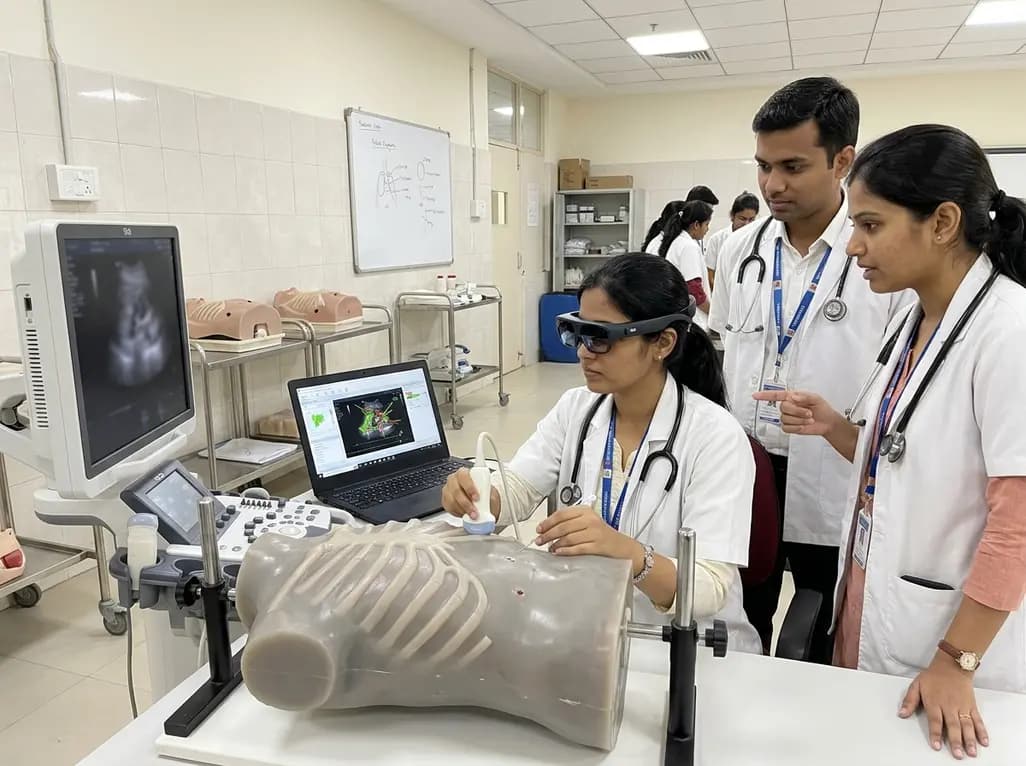
A pioneering study demonstrates that eye-tracking metrics provide robust response process validity evidence for an ultrasound-guided thoracentesis phantom, offering objective measurements of cognitive workload to improve procedural simulation and clinical training.
Today

Adaptive spectral analysis of umbilical venous Doppler recordings reveals that an elevated second-trimester maternal-fetal power ratio can distinguish pregnancies at risk of preeclampsia, offering a novel biophysical approach to enhance early vascular risk stratification.
Today

A real-world cohort study of 6,537 patients from the FOUNTAIN platform demonstrates that initiating finerenone significantly reduces albuminuria by 40.7% with minimal eGFR decline and manageable hyperkalemia risk, confirming its practical effectiveness and safety in diabetic kidney disease.
Today

A comprehensive analysis of MAP therapy resistance in osteosarcoma, examining canonical and non-canonical mechanisms across damage avoidance, enhanced DNA repair, and replication stress tolerance to identify novel vulnerabilities.
Today

A meta-analysis of 18 RCTs with 77,942 patients reveals that GLP-1 and dual GIP/GLP-1 receptor agonists significantly reduce serum uric acid, cut incident gout flares by 38%, and lower hyperuricemia risk, with dual agonism showing superior urate-lowering efficacy mediated partly by weight loss.
Today
