.webp&w=384&q=75)

Loading, please wait...
Loading, please wait...
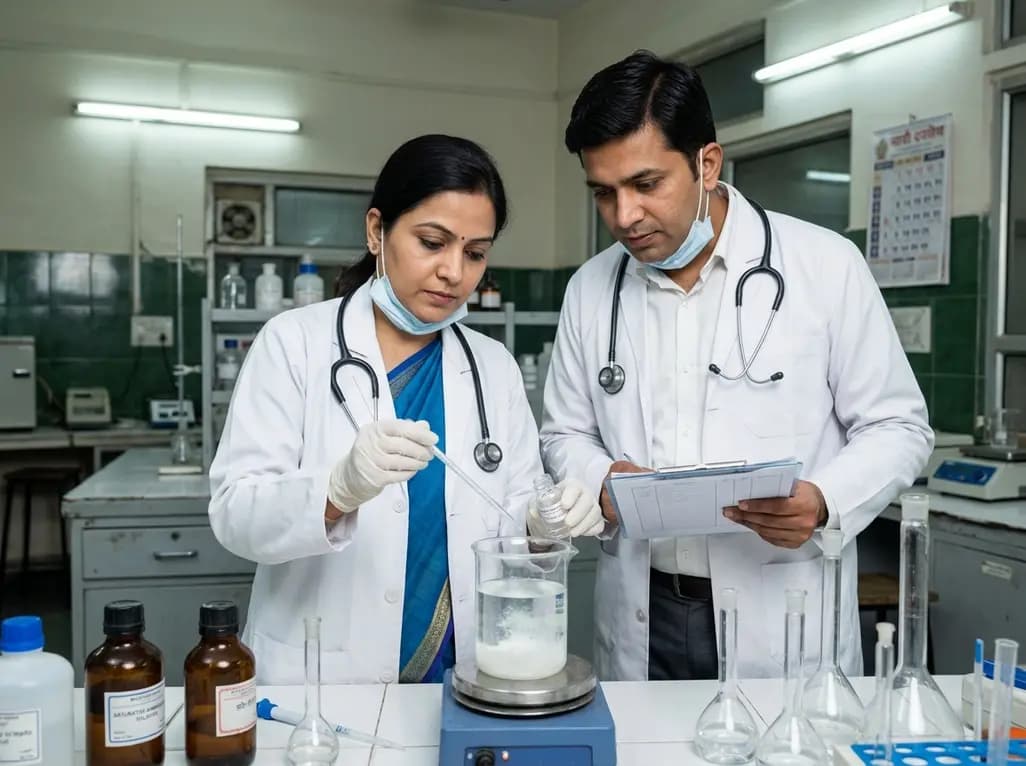
Purifying hydrophilic polymers is a vital step in creating safe and effective biomedical materials. Traditionally, researchers rely on time-consuming methods like dialysis or expensive high-pressure liquid chromatography. However, a recent study has introduced a much simpler alternative. By adapting ammonium sulfate precipitation (ASP)—a technique usually reserved for proteins—scientists can now isolate complex polymers with high efficiency.
The process works by exploiting the "salting-out" effect. When researchers add ammonium sulfate to a solution, it increases the ionic strength significantly. Consequently, the water-soluble polymers precipitate out while other substances remain in the liquid. This study specifically tested randomized PEG (rPEG), which consists of ethylene oxide and racemic glycidyl methyl ether. The results showed that ASP effectively handles both amorphous and semicrystalline structures.
Furthermore, the workup occurs directly from organic reaction media. This approach yields isolation rates of up to 97%. It removes solvents, salts, and low molar mass impurities efficiently in one step. Therefore, the resulting polymers maintain high purity, as confirmed by NMR spectroscopy and mass spectrometry. Because the method is cost-effective and rapid, it provides a viable path for large-scale pharmaceutical production.
Applying this method to other flexible polymers could revolutionize drug delivery systems. Many modern treatments depend on high-purity PEG derivatives to improve drug stability and reduce side effects. Since ASP is easy to implement, it allows laboratories to streamline their workflows. Additionally, the ability to isolate polymers without complex equipment makes this technique accessible for diverse research settings.
The method is faster and more cost-effective than dialysis. It provides high yields of up to 97% and effectively removes synthetic impurities in a single step.
While the study focused on rPEG, researchers suggest it can purify many amorphous and flexible hydrophilic polymers used in biomedical engineering.
Scientists use advanced techniques such as NMR spectroscopy, size-exclusion chromatography, and mass spectrometry to confirm the high purity of the samples.
Disclaimer: This content is for informational and educational purposes only. It does not constitute medical advice or professional consultancy. Refer to the latest local and national guidelines for clinical practice.
References
Simon L et al. How to Handle Hard-to-Purify Polymers: Ammonium Sulfate Precipitation of rPEG as a Prototype for Amorphous and Flexible Polymers. ACS Macro Lett. 2026 Jun 02. doi: 10.1021/acsmacrolett.6c00187. PMID: 42228380.
Lo CY. Design and Application of Functional Hydrophilic Polymers in Engineering and Biomedical Drug Delivery. eScholarship. 2026.
Krishna Prasad N. Optimisation of ammonium sulfate precipitation method to achieve high throughput concentration of crude alkaline phosphatase. Int J Anal Bio-Sci. 2014;2(1):7-13.

Read summarized clinical updates, watch expert medical content, and earn CME certifications right from your smartphone.
Open your smartphone camera to scan and install.





This work introduces ammonium sulfate precipitation (ASP) as a fast, high-yield method for purifying amorphous and flexible hydrophilic polymers like rPEG....
4 months ago

Novel diimide and hydrazone scaffolds, particularly compound #C4, synergistically reactivate latent HIV-1 when combined with JQ1 or PKC activators. Demonstrating donor-matched proviral transcription ex vivo and non-canonical signaling, these findings advance shock and kill strategies toward reservoir eradication.
Today

A cross-sectional study reveals that maternal RSV vaccination coverage reached only 43.7% in Argentina, with maternal vaccine knowledge being the sole independent predictor of uptake. Clinicians play a crucial role in eliminating informational and structural barriers to optimize infant health.
Today

Review how tailored exercise programs benefit frail older patients with heart failure. Explore pathophysiological mechanisms, individualized training prescriptions, and strategies to overcome adherence barriers in clinical practice.
Yesterday

This comparative study evaluates posterior labral tears with and without glenohumeral instability, highlighting distinct demographic patterns, MRI underestimation in stable shoulders, and successful arthroscopic repair outcomes.
Yesterday

A clinical study demonstrates that early intervention with tocilizumab, either as monotherapy or bridged with corticosteroids, achieves significant proptosis reduction and resolves active inflammation in treatment-naive thyroid eye disease.
Today
