.webp&w=384&q=75)

Loading, please wait...
Loading, please wait...
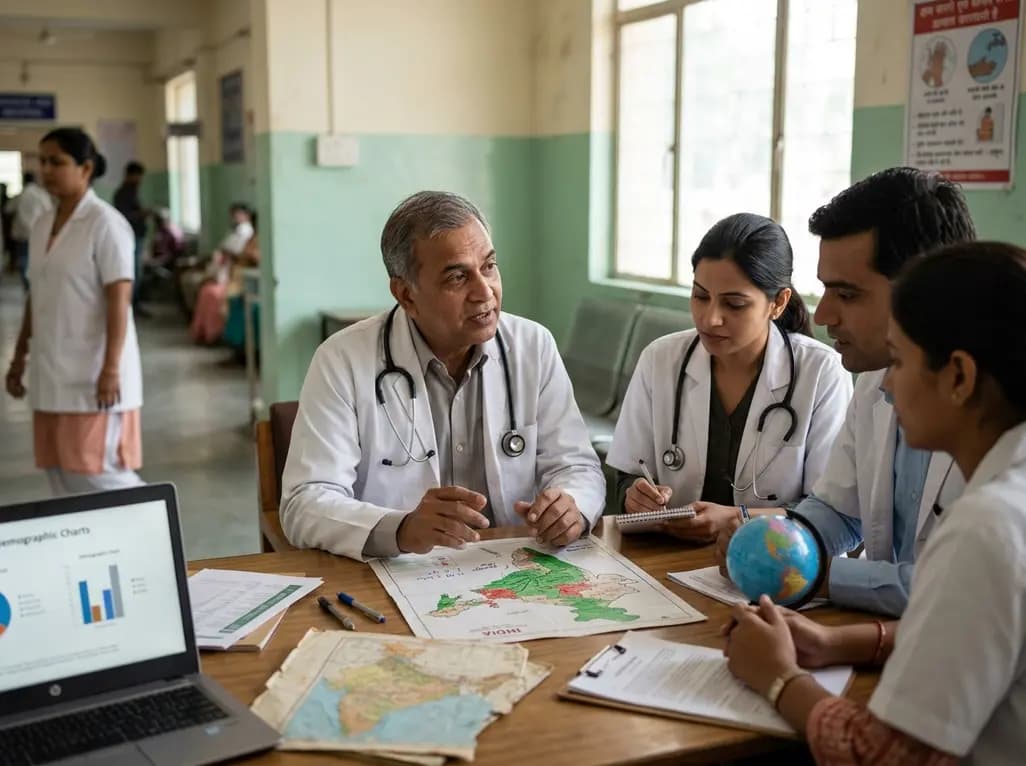
Developing nations currently stand at a crucial crossroads regarding healthcare financing and policy design. For decades, international donor assistance dictated vertical program priorities across low- and middle-income countries. However, dramatic cuts in global assistance have recently upended this traditional funding landscape. Consequently, national governments must now exercise greater strategic agency to finance essential services. To achieve lasting population wellness, leaders must rethink public health governance from the ground up. By embedding public health within a holistic human development framework, policymakers can transcend historical limitations and address interconnected social determinants directly.
Global aid reductions have exposed severe structural vulnerabilities in many developing nations. Previously, external donors channeled large financial sums directly into isolated disease programs. For instance, dedicated grants heavily targeted malaria, tuberculosis, and HIV while neglecting basic health infrastructure. However, this vertical funding model often fragmented local delivery systems and weakened long-term administrative capacity. Furthermore, when international donor flows suddenly declined, domestic ministries faced catastrophic budgetary shortfalls. In response, national authorities must now establish self-reliant, sustainable financing mechanisms. This structural disruption certainly presents immense logistical challenges for national finance ministries. Nevertheless, it also provides an unprecedented opportunity for domestic leadership. When governments control their health expenditures, they can align clinical priorities with domestic epidemiological realities. Therefore, countries can shift away from donor-driven agendas toward enduring public welfare initiatives. Ultimately, domestic self-sufficiency fosters greater resilience against global economic shocks and empowers local communities. Moreover, strong local stewardship ensures that essential investments reach the most vulnerable populations without unnecessary external conditionalities. Thus, national leaders can build resilient primary care foundations that endure across generations.
Historically, government ministries have operated in strict administrative silos. For example, the health department manages clinics, while separate ministries oversee education, municipal water, and social protection. Yet, clinical medicine shows that biological health depends heavily on broader living conditions. Consequently, isolating clinical healthcare from social welfare programs severely undermines preventive medicine. To overcome this limitation, national leaders must restructure public health governance to span across bureaucratic borders. In addition, leaders should integrate budgetary allocations across traditionally separated sectors. Rather than funding programs independently, governments can establish joint interministerial committees to oversee shared development goals. Such integrated structures ensure that agricultural, environmental, and infrastructure policies actively protect human well-being. Furthermore, unified oversight eliminates duplicate administrative costs and optimizes scarce public funds. Therefore, governance structures must evolve from rigid vertical hierarchies into coordinated networks. Ultimately, cross-sector alignment ensures that disease prevention becomes a shared responsibility across the entire government apparatus. Similarly, shared accountability mechanisms compel diverse ministers to measure progress through holistic community wellness metrics rather than narrow operational outputs. As a result, intersectoral collaboration becomes an ingrained organizational habit rather than a sporadic political exercise.
Human development reflects an individual's collective capacity to thrive socially, physically, and economically. Interestingly, the underlying root causes of ill health directly mirror the root causes of educational failure and generational poverty. For example, childhood undernutrition impairs cognitive growth, which subsequently limits academic achievement and lifetime earning potential. Conversely, maternal illiteracy directly correlates with elevated infant mortality and poor childhood vaccination compliance. Therefore, health interventions and educational programs must reinforce one another dynamically. By targeting shared social determinants, governments can generate compounding returns across diverse social metrics. In particular, investments in clean drinking water, modern sanitation, and female education yield immediate medical benefits while reducing disease incidence. Moreover, integrating early childhood health screening within primary schools identifies developmental delays early. As a result, cross-cutting social investments simultaneously alleviate clinical disease burden and stimulate national economic productivity. Consequently, public spending achieves far higher societal efficiency than siloed clinical expenditures ever could. Furthermore, urban planners who prioritize clean public transit and green spaces actively reduce cardiovascular disease and respiratory ailments. Thus, proactive environmental policies safeguard clinical health long before individuals ever require specialized hospital consultations.
Transitioning toward integrated governance requires confronting established political and organizational inertia. In many low- and middle-income countries, entrenched civil service regulations discourage interdepartmental resource pooling. Furthermore, departmental directors frequently compete for limited treasury allocations instead of pursuing collaborative strategies. To overcome this systemic friction, central leadership must institute explicit incentives for intersectoral coordination. For instance, national treasuries can allocate dedicated discretionary funding exclusively for multi-ministerial initiatives. Additionally, performance evaluations for senior civil servants should reward cooperative achievements across social domains. Digital governance and shared administrative data platforms also play an indispensable role in this transformation. When social registries, educational tracking systems, and clinical records interface seamlessly, authorities gain comprehensive visibility into community needs. Consequently, frontline workers can identify high-risk families and deploy proactive social and medical support concurrently. Therefore, modernizing administrative infrastructure directly accelerates equitable service delivery and fosters transparent policy governance. Moreover, legal mandates can codify intersectoral cooperation, ensuring that leadership transitions do not disrupt ongoing collaborative programs. In this way, institutional frameworks remain sturdy and effective regardless of shifting political winds.
What does this broad governance paradigm mean for practicing physicians and hospital teams? In everyday practice, clinicians routinely encounter pathologies born from systemic social neglect. For example, doctors repeatedly treat pediatric diarrhea caused by contaminated municipal tap water or asthma triggered by unventilated housing. Under traditional paradigms, physicians remain confined to treating acute clinical episodes repeatedly. However, integrated governance empowers medical professionals to serve as vocal advocates for comprehensive structural reform. In addition, healthcare practitioners must collaborate closely with community health workers, local educators, and municipal authorities. By actively participating in local health boards, clinicians can highlight structural deficiencies that drive outpatient clinic volumes. Furthermore, academic medical institutions must incorporate health systems science and social epidemiology into core curricula. Consequently, future clinicians will master both molecular therapeutics and community-level preventative interventions. Ultimately, bridging clinical practice with macro-level public health governance transforms doctors into proactive leaders of societal health and human flourishing. Similarly, hospital administrators can partner with local agricultural bodies to source nutritious meals for recovering patients, fostering sustainable community ecosystems. Thus, clinical environments become active hubs for broader human development.
Public health governance determines how national resources, clinical guidelines, and social services align to protect vulnerable populations. When governance structures operate efficiently across ministries, clinics receive consistent pharmaceutical supplies, reliable infrastructure, and robust community referral networks. Consequently, physicians can manage acute and chronic diseases more effectively. Moreover, coordinated social policies resolve the environmental and socioeconomic hazards that repeatedly drive patients into crowded outpatient facilities.
Non-communicable diseases stem from complex lifestyle, environmental, and economic factors that medicine alone cannot solve. For instance, managing cardiovascular illness and diabetes requires accessible physical spaces, stringent food labeling standards, and tobacco control regulations. Therefore, health ministries must partner closely with urban planning, commerce, and agricultural departments. Such unified governance creates health-promoting environments that encourage physical exercise, reduce dietary sodium intake, and significantly lower chronic disease incidence nationwide.
Transitioning from vertical aid programs often exposes acute budgetary gaps, technical deficits, and logistical bottlenecks within national health systems. Historically, vertical initiatives operated with dedicated external financing and parallel supply chains. Consequently, absorbing these functions into domestic civil services demands enhanced tax revenue collection, robust administrative oversight, and transparent procurement systems. Furthermore, political leaders must balance immediate clinical requirements against long-term capital investments in foundational primary care infrastructure.
Disclaimer: This content is for informational and educational purposes only... Refer to the latest local and national guidelines for clinical practice.
References
Watt KG et al. Countering failures of imagination: governance, human development and public health in low- and middle-income countries. Glob Health Action. 2026 Dec undefined. doi: 10.1080/16549716.2026.2748104. PMID: 42885428.
Kickbusch I, Gleicher D. Governance for health in the 21st century. World Health Organization. Regional Office for Europe. 2012.
Solar O, Irwin A. A conceptual framework for action on the social determinants of health. World Health Organization. 2010.

Read summarized clinical updates, watch expert medical content, and earn CME certifications right from your smartphone.
Open your smartphone camera to scan and install.





As global health aid shifts, low- and middle-income countries must move beyond departmental silos. Reimagining public health governance around human development enables sustainable cross-sector investments in sanitation, education, and disease prevention to foster lasting population well-being.
Today

A retrospective study shows that symptom-monitored loading with lorazepam, chlordiazepoxide, or gabapentin significantly reduces hospital length of stay compared to CIWA-Ar-only therapy in severe alcohol withdrawal, providing a safer, more proactive management strategy.
Today

A retrospective cohort study of 5,481 children aged 3–6 years evaluated whether surgical sperm retrieval for ICSI affects offspring cognitive and physical growth compared with ejaculated sperm and IVF. Results demonstrate comparable IQ scores and growth parameters, providing reassuring safety evidence for clinical practice.
Today
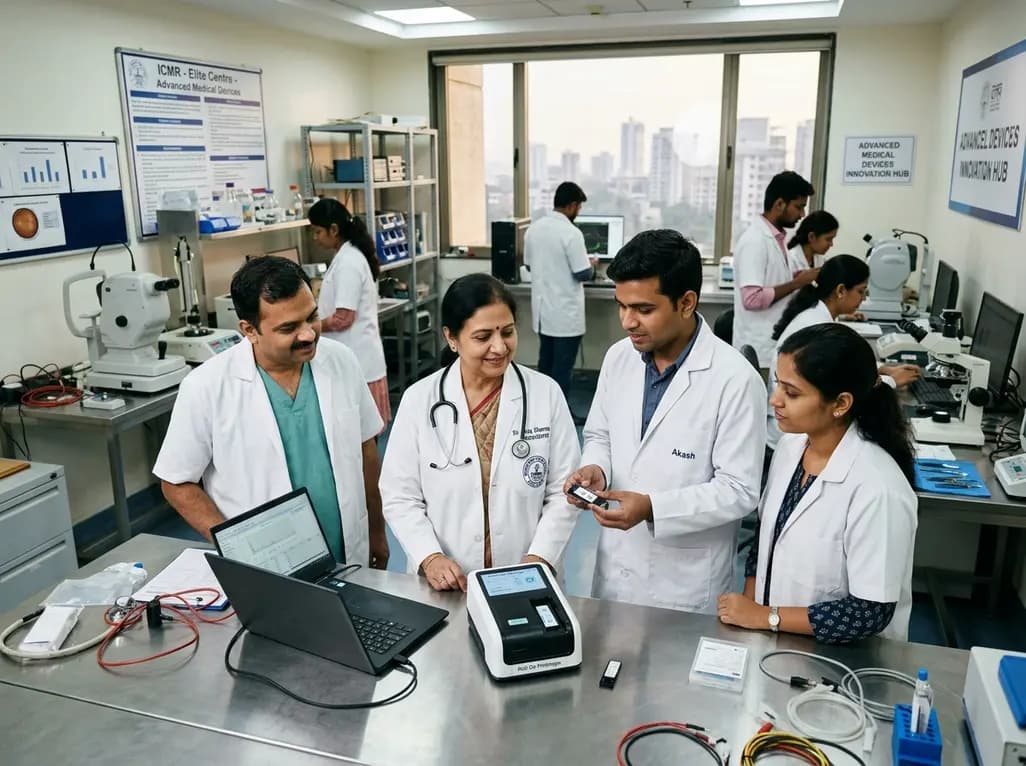
The Indian Council of Medical Research has funded seven top academic hubs to build indigenous healthcare technologies. Targeting point-of-care diagnostics, biomaterials, and ophthalmology, these multidisciplinary centres aim to tackle unmet clinical needs and make medical care affordable across India.
Today

Diagnostic data shows that nearly one in four spine investigations now involve patients younger than 40 years. This comprehensive overview explores the drivers behind this demographic trend, evaluates ergonomic hazards, clarifies red-flag signs, and highlights clinical indications for judicious diagnostic imaging.
Today

A multicenter cross-sectional study of 1,315 adults with type 1 diabetes reveals that the GMI/HbA1c ratio does not independently predict microvascular complications. Clinicians should prioritize sustained time in range and blood pressure management over glycation discordance metrics.
Today
