.webp&w=384&q=75)

Loading, please wait...
Loading, please wait...

A severe medical illness often represents a life-altering event. Recent epidemiological research indicates that PTSD in cancer patients represents an underrecognized clinical emergency across diverse oncology clinics. Cancer care traditionally focuses on tumor eradication, surgical margins, and cytotoxic regimens. However, clinicians increasingly realize that psychological trauma can occur at any stage of the cancer journey. The emotional impact of an invasive diagnosis, painful therapies, and the persistent fear of mortality create lasting distress. Consequently, addressing mental health in routine outpatient oncology settings has become essential for comprehensive patient care.
A recent large-scale investigation evaluated 4,103 adult outpatients with solid tumors or hematologic malignancies. The investigators employed the validated PTSS-8-Cancer scale to capture trauma symptoms during routine consultations. Remarkably, 32.5% of the overall outpatient cohort screened positive for probable post-traumatic stress disorder. This high rate confirms that significant psychological trauma affects nearly one out of every three individuals receiving active cancer care. Moreover, symptom prevalence varied substantially across specific oncological diagnoses. Individuals facing breast cancer demonstrated the highest vulnerability, with 39.7% meeting positive screening thresholds. Similarly, patients diagnosed with female genital cancers showed an alarmingly high prevalence of 37.2%. Individuals with head and neck cancers also experienced substantial burden, reaching 36.1%. These malignancies frequently involve body image disruption, functional impairment, and visible physical alterations. Therefore, these physical changes likely amplify emotional trauma, triggering intense intrusive thoughts, severe avoidance, and heightened hyperarousal throughout treatment.
The study concurrently analyzed sociodemographic and psychosocial characteristics to pinpoint vulnerable patient subgroups. Statistical analyses revealed that positive screening rates occurred significantly more often among women and younger adults. Additionally, individuals living without a domestic partner and those reporting lower economic income displayed higher likelihoods of trauma symptoms. A pre-existing history of psychiatric illness also strongly correlated with heightened vulnerability to post-traumatic stress. However, while these statistical correlations achieved clear significance, their observed effect sizes remained consistently small. This crucial finding indicates that psychological distress does not restrict itself to narrow high-risk demographics. Instead, oncological trauma distributes broadly across varied socioeconomic strata, biological sexes, and age groups. Consequently, clinicians cannot rely exclusively on demographic profiles to suspect mental distress. Rather, oncology teams must recognize that every person walking through the clinic doors carries substantial risk for severe psychological suffering.
Understanding oncological trauma requires differentiating medical stress from typical external trauma. Conventional trauma models usually conceptualize discrete past events, such as physical assault or natural disasters. In contrast, a malignancy represents an ongoing, continuous threat that emanates from within the patient's own body. Intrusive memories often center on hearing the initial diagnosis, undergoing emergency procedures, or awaiting vital scan results. Furthermore, somatic hypervigilance frequently develops because normal physical sensations can trigger terrifying thoughts of disease progression. Patients frequently adopt avoidance behaviors, such as postponing surveillance imaging or missing follow-up appointments. In turn, such behavioral avoidance directly impairs oncological outcomes and complicates clinical treatment regimens. Chronic activation of the autonomic nervous system and hypothalamic-pituitary-adrenal axis may also drive persistent systemic inflammation. Therefore, unaddressed traumatic stress diminishes overall quality of life and compromises patient resilience.
Given the widespread distribution of post-traumatic symptoms, universal screening represents an urgent clinical priority. Relying solely on clinical intuition or spontaneous patient disclosure fails to detect the majority of struggling patients. Consequently, oncology centers must embed rapid, validated screening instruments into standard intake workflows. Clinicians can easily administer concise instruments, such as the PTSS-8-Cancer tool or the Distress Thermometer, within five minutes. Nursing staff or digital patient portals can effortlessly gather these scores before physician consultations begin. Furthermore, routine screening normalizes conversations regarding mental health, dismantling the profound stigma that frequently prevents individuals from seeking help. When healthcare teams screen every patient systematically, they identify vulnerable individuals before severe decompensation occurs. Thus, early detection paves the way for prompt, targeted psychiatric and psychological interventions.
Adopting trauma-informed care transforms modern oncology environments into spaces of psychological safety and shared empowerment. Trauma-informed care does not require every oncologist to perform specialized psychiatric therapy. Instead, this framework encourages clinicians to recognize the profound influence of trauma on patient behavior, communication, and decision-making. Physicians cultivate transparent communication by clearly explaining diagnostic procedures, presenting therapeutic options honestly, and restoring personal autonomy. Additionally, multidisciplinary teams must facilitate seamless referral pathways connecting patients directly to psycho-oncologists, clinical psychologists, and clinical social workers. Evidence-based interventions, such as cognitive behavioral therapy, prolonged exposure adaptations, and eye movement desensitization and reprocessing, offer proven therapeutic relief. Similarly, judicious psychopharmacological management helps alleviate severe insomnia, pervasive anxiety, and autonomic hyperarousal. Multidisciplinary collaboration ensures that oncologists treat the whole human being rather than isolated malignant cells.
Despite robust clinical evidence, major systemic barriers continue to impede the widespread integration of mental healthcare in oncology. Many outpatient oncology centers operate under extreme time pressure, leaving minimal time for in-depth psychosocial exploration. Furthermore, severe shortages of specialized psycho-oncology professionals persist in both tertiary hospitals and community clinics. Economic constraints and inadequate insurance coverage also prevent many vulnerable patients from accessing long-term mental health support. To overcome these complex obstacles, hospital leadership must invest in interdisciplinary staffing and supportive institutional workflows. Digital health applications and tele-mental health services provide scalable solutions to bridge existing geographic and socioeconomic gaps. Moreover, educating medical and surgical oncologists on trauma principles creates a culture of profound empathy. By elevating mental health to the level of standard oncological parameters, clinicians can achieve genuinely holistic cancer survivorship care.
Large-scale outpatient data demonstrate that roughly 32.5% of adult cancer patients screen positive for probable post-traumatic stress disorder. Rates climb even higher in breast, female genital, and head and neck malignancies. This widespread prevalence confirms that psychological distress represents a major clinical challenge across diverse oncology populations.
Patients who are younger, female, unmarried, economically disadvantaged, or carrying a prior psychiatric history exhibit elevated vulnerability. However, observed effect sizes remain relatively small across demographic factors. Therefore, traumatic stress remains broadly distributed, meaning clinicians should consider every cancer patient potentially vulnerable regardless of specific background.
Trauma-informed oncology is a clinical care framework that emphasizes safety, transparency, patient empowerment, and respect. It recognizes that diagnosis and treatment induce significant trauma. By combining compassionate communication with standardized distress screening and prompt psychological referrals, healthcare providers successfully protect patients from preventable emotional harm and re-traumatization.
Disclaimer: This content is for informational and educational purposes only. It is not intended to be a substitute for professional medical advice, diagnosis, or treatment. Always seek the advice of your physician or other qualified health provider with any questions you may have regarding a medical condition. Refer to the latest local and national guidelines for clinical practice.
References
Fuchs A et al. Post-traumatic stress in cancer patients: prevalence and psychosocial correlates. Epidemiol Psychiatr Sci. 2026 Oct 13. doi: 10.1017/S2045796026101085. PMID: 42864915.
Cordova MJ, Riba MB, Spiegel D. Post-traumatic stress disorder and cancer. Lancet Psychiatry. 2017;4(4):330-338.
Simkhaev A. Trauma Informed Care and early distress identification in oncology settings. J Psychosoc Oncol. 2025;43(2):294-317.

Read summarized clinical updates, watch expert medical content, and earn CME certifications right from your smartphone.
Open your smartphone camera to scan and install.





A landmark cross-sectional study of over 4,100 oncology outpatients reveals that nearly one in three experiences probable PTSD. Elevated rates occur in breast, gynecologic, and head and neck cancers, underscoring the critical need for universal psychosocial screening and trauma-informed oncological management.
Today
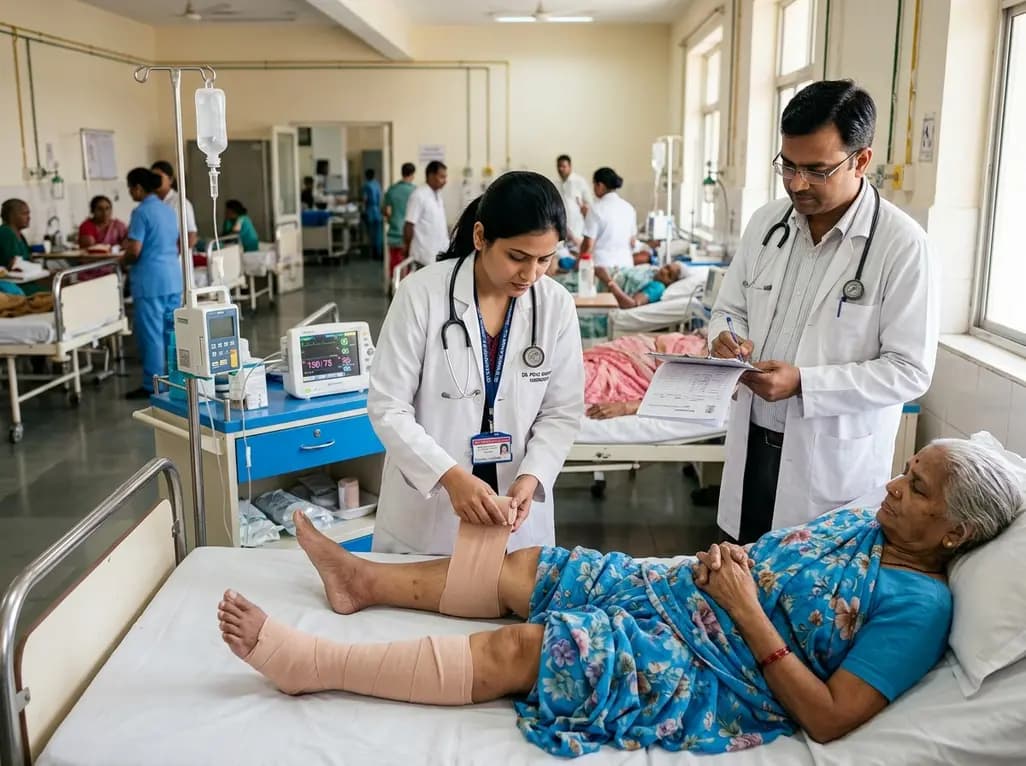
A Mayo Clinic study reveals that applying lower extremity elastic bandages in acute decompensated heart failure significantly improves diuretic efficiency by 340 mL per 40-mg furosemide equivalent. This mechanical therapy reduces required diuretic doses while safely maintaining necessary overall daily fluid clearance.
Today

A 34-year-old postpartum woman suffered a pheochromocytoma crisis resulting in cardiac arrest and respiratory failure. Intensivists successfully deployed veno-arteriovenous ECMO to stabilize refractory arrhythmias and differential hypoxemia, bridging her safely to complete tumor resection and full clinical recovery.
Today

A study shows that the aggregate index of systemic inflammation (AISI) significantly associates with elevated myocardial injury markers, including cardiac troponin T and CK-MB, in patients with coronary heart disease, highlighting its potential utility for cardiovascular risk stratification.
Today

A narrative review clarifies key nuances of the AO Spine Primary Infection Classification, including canal boundaries dorsal to the PLL, Type 1 versus Type 2 criteria, neural compression thresholds, and modifier application in primary spinal infections.
Today

Calcimimetic therapy for primary hyperparathyroidism can induce profound tumor fibrosis, necrosis, and reduced vascularity. These changes alter ultrasound and 4D-CT imaging and cause dense recurrent laryngeal nerve adhesions, requiring heightened surgical vigilance during definitive parathyroidectomy.
Today
