

Loading, please wait...
Loading, please wait...

Major depressive disorder presents with diverse affective, somatic, and cognitive manifestations that challenge primary care physicians and psychiatrists alike. Clinicians increasingly recognize that psychomotor retardation in depression serves as a prominent neurobiological marker rather than a mere secondary symptom. Psychomotor retardation presents with observable slowing of physical movements, lengthened speech latencies, and delayed mental processing. While healthcare practitioners frequently observe these signs in outpatient clinics, the specific impact of psychomotor slowing on prospective therapeutic recovery has remained uncertain. Recent large-scale evidence offers essential clarity regarding how motoric and cognitive slowing influences therapeutic outcomes across diverse intervention modalities.
Psychomotor retardation represents a pervasive neurobiological disruption that affects both mechanical movement and executive cognition. Patients often describe an overwhelming physical heaviness in their extremities, frequently struggling to initiate basic voluntary actions. In addition, family members frequently report noticeable pauses before speech and a marked blunting of spontaneous facial expressions. Neuroimaging investigations indicate that functional disconnectivity within frontostriatal circuits and altered basal ganglia dopamine signaling drive these debilitating symptoms. Consequently, individuals suffering from psychomotor slowing encounter immense friction when navigating everyday professional and personal routines. However, healthcare professionals often conflate these motoric signs with general lethargy, daytime somnolence, or medication-induced sedating side effects. Therefore, distinguishing genuine psychomotor slowing from general fatigue represents a crucial initial diagnostic step. Melancholic depression profiles frequently feature this presentation as an anchor sign of severe affective disturbance. Because general practitioners manage the vast majority of depressive episodes, accurate clinical recognition directly affects clinical stratification. Clinicians who recognize these specific motor signs can better predict overall treatment trajectories and establish realistic therapeutic timelines.
To investigate this clinical challenge rigorously, investigators conducted a comprehensive secondary analysis of individual participant data from nine randomized controlled trials. These trials originated from the Dep-GP database, an extensive consortium investigating unipolar depression therapies within primary care settings. The pooled cohort comprised 4,290 adult participants who received pharmacological agents, evidence-based psychological therapies, or structured exercise interventions. Researchers assessed baseline psychomotor slowing using the standardized Revised Clinical Interview Schedule. Furthermore, the investigators designated the standardized z-score of validated depression rating scales at three to four months post-randomization as the primary outcome. In addition, the study team established clinical remission as a vital secondary endpoint. Within-study regression models systematically controlled for established prognostic variables, including patient age, biological sex, self-reported ethnicity, marital status, and employment status. Moreover, statistical models adjusted for the specific randomized treatment allocation before researchers pooled the findings using random-effects meta-analysis. Consequently, this harmonized individual participant methodology minimized between-study variance while delivering robust statistical power across diverse intervention strategies.
The statistical analysis revealed that a substantial majority of patients experienced motoric slowing at baseline. Specifically, 2,754 of the 4,290 participants, representing 64.2 percent of the entire sample, endorsed psychomotor retardation before beginning therapy. Primary outcome modeling demonstrated that baseline psychomotor slowing significantly predicted higher depression severity at three to four months of follow-up. The pooled analysis yielded a statistically significant standardized z-score increase of 0.184. In addition, affected individuals demonstrated substantially lower odds of achieving clinical remission compared to peers without motoric slowing. The pooled odds ratio for remission was 0.737, representing a statistically significant 26 percent reduction in the likelihood of full recovery. Heterogeneity across the included trials remained moderate to substantial for both outcomes. Importantly, secondary sensitivity analyses confirmed that these adverse associations persisted even after researchers adjusted models for core depressive symptoms. Thus, the presence of motor and cognitive slowing reliably signals an elevated probability of persistent illness across diverse primary care populations.
Although the initial prognostic models demonstrated robust adverse outcomes, further secondary analyses introduced a nuanced clinical perspective. When the researchers fully adjusted the regression models for overall baseline depression severity, the statistical significance of psychomotor retardation attenuated. This statistical attenuation indicates that psychomotor slowing may not function as entirely independent prognostic determinants. Instead, psychomotor retardation serves as a direct clinical proxy for severe underlying depressive illness. Patients who manifest severe physical slowing invariably present with higher cumulative symptom burdens across affective and somatic domains. However, this finding does not diminish the practical utility of identifying motoric delays during routine clinical consultations. Furthermore, standardized psychiatric rating scales can prove cumbersome and time-consuming in busy medical outpatient clinics. In contrast, physical observation of gait velocity, speech pauses, and response latency provides rapid, objective prognostic insights. Therefore, psychomotor retardation acts as a rapid bedside barometer that alerts practitioners to heightened baseline episode severity without necessitating lengthy psychometric batteries.
These findings carry immediate, actionable relevance for general practitioners, family physicians, and consulting psychiatrists managing mood disorders. Because approximately two-thirds of primary care patients exhibit psychomotor slowing, routine clinical evaluation should actively target motoric and cognitive velocity. Furthermore, clinicians must recognize that standard initial therapies may yield suboptimal response rates in this specific subgroup. When physicians identify marked psychomotor retardation, they should schedule earlier follow-up intervals to monitor therapeutic compliance and symptom evolution. In addition, clinicians can counsel patients and caregivers realistically, setting expectations that recovery may require intensive treatment adjustments. In particular, dual-action antidepressants that enhance dopaminergic and noradrenergic transmission may offer biological advantages for patients with prominent striatal slowing. Similarly, behavioral activation strategies must account for severe physical inertia, adapting step-by-step goals to prevent early treatment abandonment. Consequently, early identification enables clinicians to construct personalized therapeutic regimens that anticipate treatment resistance.
Moving forward, psychiatric research must determine whether specific therapeutic classes demonstrate superior efficacy for depressive phenotypes featuring motor slowing. The Dep-GP individual participant data analysis examined outcomes across pharmacological, psychological, and exercise modalities without identifying distinct modality-specific superiority. Therefore, prospective randomized clinical trials should stratify patients by objective motor biomarkers, such as computerized voice acoustics and digital actigraphy. Moreover, novel therapeutic strategies targeting neuroinflammation and central dopamine deficiency warrant rigorous clinical investigation. Behavioral therapies also require targeted adaptations, incorporating physical movement and structured psychomotor therapies into conventional cognitive frameworks. Meanwhile, frontline practitioners should utilize psychomotor assessments to refine clinical triage and treatment planning. By incorporating routine behavioral observation into standard mood assessments, clinicians can rapidly distinguish vulnerable patients who require intensive therapeutic support. Ultimately, acknowledging motoric slowing as a hallmark of severe depressive pathology will elevate the standard of personalized depression care across medical settings.
Fatigue describes a subjective loss of physical energy and increased exhaustion without measurable physical slowing. In contrast, psychomotor retardation involves objective, measurable delays in gross motor movements, lengthened conversational pauses, diminished facial expressiveness, and slowed cognitive processing speed that clinicians and family members can readily observe during routine interactions.
Current individual participant data indicate that psychomotor retardation predicts overall poorer treatment response and lower remission rates across pharmacological, psychological, and exercise therapies. However, evidence does not yet prove that motor slowing favors one therapeutic modality over another, underscoring the need for individualized, multimodal management strategies.
Statistical attenuation occurred because psychomotor retardation strongly correlates with total depressive episode severity. Rather than operating as an isolated pathophysiological variable, psychomotor slowing serves as a primary clinical marker for severe systemic depressive illness, which inherently carries lower spontaneous recovery rates and heightened resistance to standard primary care interventions.
Disclaimer: This content is for informational and educational purposes only... Refer to the latest local and national guidelines for clinical practice.
References

Read summarized clinical updates, watch expert medical content, and earn CME certifications right from your smartphone.
Open your smartphone camera to scan and install.





A secondary analysis of nine randomized controlled trials demonstrates that psychomotor retardation in depression predicts higher residual symptom severity and lower remission rates, serving as a critical clinical marker of underlying illness severity.
Today

A validation study evaluates the consumer-grade InBody Dial H30 bioelectrical impedance device against a 3-compartment criterion in recreationally active adults, revealing a slight overestimation in body fat percentage and underestimation in fat-free mass alongside notable individual limits of agreement.
Today

A nationwide survey reveals substantial knowledge gaps among general practitioners regarding fetal pathology and autopsy. Enhanced training and interdisciplinary communication are vital to guide stillbirth evaluation, clarify autopsy consent, and improve preconception counseling for bereaved parents.
Today
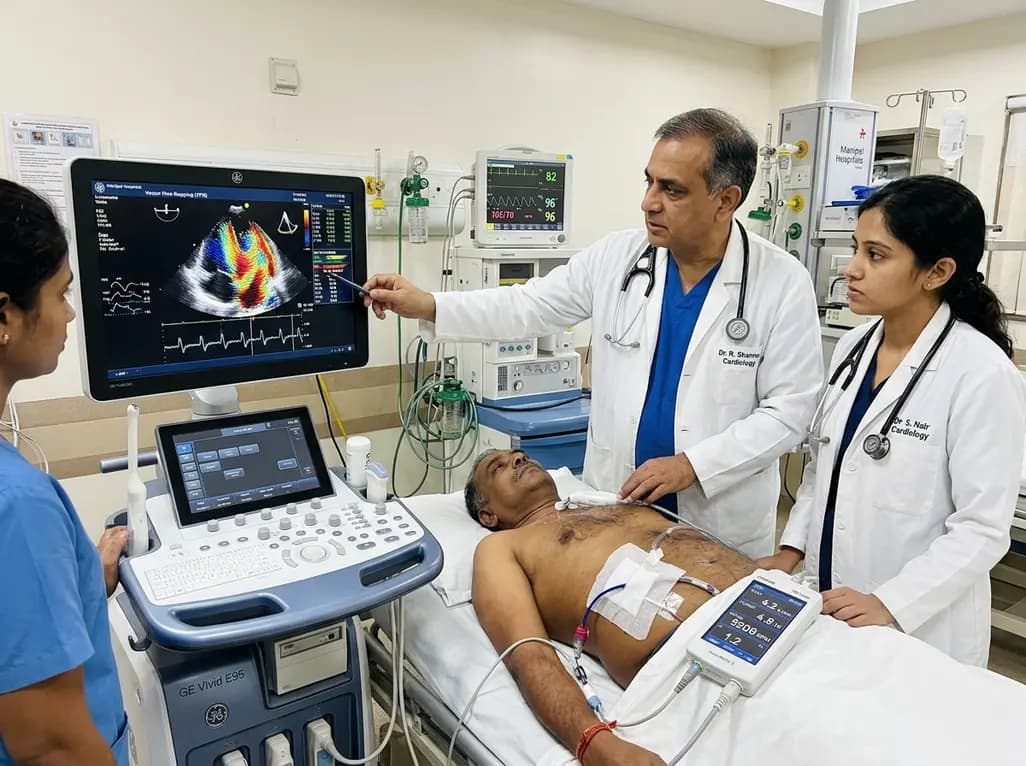
A pilot study shows that transesophageal echocardiography with vector flow mapping measures intraventricular energy loss in HeartMate 3 LVAD recipients. Energy loss significantly correlates with controller-displayed pump flow, offering clinicians deeper insights into ventricular unloading and intracardiac fluid mechanics.
Today

A comparative study demonstrates that simple and complex labral tears achieve comparable functional outcomes and low recurrence rates following arthroscopic stabilization for anterior shoulder instability, despite differing clinical presentations and dislocation histories.
Today

A nationwide analysis shows that inpatient lifestyle counseling for type 2 diabetes remains remarkably underutilized despite modest gains. Clinicians must bridge persistent demographic disparities and integrate structured dietary and exercise counseling into routine hospital discharge workflows.
Today
