.webp&w=384&q=75)

Loading, please wait...
Loading, please wait...

Modern clinical medicine relies heavily on reproducible taxonomy, but mental healthcare encounters unique epistemic hurdles. Current diagnostic manuals, including the International Classification of Diseases and the Diagnostic and Statistical Manual of Mental Disorders, serve as indispensable clinical frameworks. However, these classical systems classify mental syndromes through consensus descriptive criteria rather than natural, biological entities. As computational technologies expand, researchers increasingly evaluate how artificial intelligence can reshape modern psychiatric ontology. Rather than simply digitizing existing symptom checklists, emerging computational platforms analyze multimodal data to redefine disease boundaries. Clinicians now face a conceptual transformation that questions whether psychiatric disorders represent rigid categorical boxes or dynamic, interconnected systems across biological and psychosocial domains.
For decades, psychiatrists have recognized the fundamental limitations of descriptive nosology. Traditional diagnostic categories frequently suffer from high rates of diagnostic co-occurrence, marked heterogeneity within single disorders, and arbitrary symptom cutoffs. For instance, two individuals diagnosed with major depressive disorder can display completely non-overlapping symptom profiles. Furthermore, categorical diagnostic boundaries rarely align with distinct genetic markers, neuroimaging patterns, or pharmacological responses. Consequently, clinicians observe that operationalized diagnostic labels offer inadequate predictive power regarding long-term disease trajectories. In resource-diverse environments like India, where psychiatric distress frequently manifests through somatic idioms, rigid categorical boundaries prove especially restrictive. While standardized criteria historically improved reliability among clinicians, they inadvertently constrained biological investigation by enforcing artificial distinctions. Because mental suffering arises from complex neurobiological and psychosocial interactions, forcing diverse experiences into discrete categories obscures clinical reality. Therefore, contemporary psychiatry requires innovative epistemological frameworks. Modern computational methods offer promising avenues to interrogate these nosological structures, enabling researchers to explore empirical boundaries that better capture psychiatric complexity.
Artificial intelligence functions as an ontological engine by detecting latent regularities across vast, heterogeneous clinical repositories. Unlike human clinicians constrained by working memory, machine learning architectures effortlessly ingest multimodal data streams. These complex streams incorporate electronic medical records, clinical narratives, psychometric questionnaires, continuous passive digital phenotyping, voice acoustics, genomics, and functional neuroimaging. Consequently, sophisticated algorithms identify multidimensional patterns that remain hidden during routine clinical observation. For example, unsupervised clustering algorithms can isolate transdiagnostic symptom dimensions bridging affective, anxiety, and psychotic illness spectra. Moreover, longitudinal machine learning models identify distinct disease trajectories, accurately separating patients achieving lasting remission from those facing treatment resistance. Natural language processing tools further extract subtle semantic markers from patient discourse, providing objective indicators of cognitive processing. Therefore, computational ontology engineering does not merely digitize existing manuals. Instead, it constructs novel candidate concepts, including dynamic physiological endophenotypes and hybrid diagnostic entities. These computational structures reflect the true biological complexity of human psychopathology far better than static descriptive matrices.
Although machine learning algorithms discover compelling mathematical clusters, computational regularities do not immediately constitute genuine medical entities. An algorithmically derived cluster remains a mathematical abstraction until researchers validate it across real-world clinical populations. Therefore, candidate concepts produced by artificial intelligence must satisfy stringent epistemic and clinical criteria before achieving authentic ontological status. First, algorithms must demonstrate robust reproducibility across diverse geographic populations, demographic groups, and clinical environments. Second, candidate constructs require solid clinical validity, demonstrating verifiable associations with underlying biological mechanisms, functional trajectories, or therapeutic responses. Third, algorithmic predictions must retain clinical interpretability, ensuring psychiatrists understand the specific features driving diagnostic classifications. In addition, professional acceptability remains essential; mental health practitioners must find these computational concepts practical for bedside clinical reasoning. Most critically, new classifications must demonstrate patient meaningfulness by reflecting lived experiences of suffering. Consequently, artificial intelligence cannot independently establish nosological validity. Instead, multidisciplinary scientific consensus and rigorous clinical validation must guide the transition from mathematical clusters to accepted diagnostic categories.
While algorithmic classification introduces unprecedented analytical power, it also poses substantial epistemological and ethical dangers. The most pressing risk involves conflating statistical correlations with true clinical entities. High-dimensional models frequently pick up confounding environmental noise or dataset-specific artifacts, erroneously presenting them as disease biomarkers. Furthermore, clinicians risk falling prey to an illusion of objectivity, assuming computational classifications are inherently unbiased because they derive from mathematical algorithms. In reality, models trained on unrepresentative healthcare data often reproduce existing institutional prejudices. Algorithmic opacity, widely recognized as the black-box dilemma, further undermines clinical judgment by concealing internal computational rationale. Additionally, digital phenotyping carries the hazard of digital ossification, where provisional algorithmic outputs solidify into rigid bureaucratic labels before undergoing thorough validation. This premature codification threatens to marginalize subjective patient narratives, reducing personal distress to sensor outputs and wearable metrics. Clinicians must therefore exercise critical vigilance, recognizing that computational algorithms represent fallible analytical tools rather than autonomous arbiters of psychiatric truth.
To navigate these challenges successfully, psychiatry must construct dynamic, temporal, and pluralistic diagnostic maps. Artificial intelligence does not reveal the immutable essence of psychiatric disorders. Instead, it offers provisional conceptual cartographies that reorganize clinical reasoning and scientific exploration. Therefore, diagnostic ontologies must remain flexible, continuously adapting as new biological, cognitive, and social insights emerge. To protect patient welfare, computational systems must integrate human validation loops into every diagnostic workflow. Clinicians, neuroscientists, ethicists, and patients must participate actively in collaborative governance structures to examine algorithmic proposals. In addition, global medical bodies should promote open-source standards and transparent knowledge representation architectures to prevent commercial monopolies over diagnostic classifications. Combining dimensional modeling with longitudinal digital phenotyping allows clinicians to track dynamic symptom changes across time rather than relying on cross-sectional assessments. Ultimately, artificial intelligence will enrich mental healthcare only when grounded in ethical deliberation and clinical humility, ensuring computational tools empower human practitioners to deliver compassionate, individualized care.
Conventional nosology focuses on cataloging and organizing clinical disorders into standardized diagnostic manuals, including the ICD-11 and DSM-5, relying primarily on expert consensus. In contrast, psychiatric ontology investigates the fundamental nature and reality of mental conditions. While nosology offers practical diagnostic categories for administrative and clinical utility, an ontology questions whether these conditions represent genuine biological entities, continuous functional dimensions, or emergent psychosocial networks.
Unsupervised machine learning algorithms can uncover latent patterns and identify statistical clusters across heterogeneous biological and clinical datasets. However, algorithms cannot independently establish diagnostic validity. Mathematical clusters remain hypothetical constructs until researchers confirm their reproducibility, biological plausibility, and therapeutic relevance. Elevating computational clusters into recognized diagnostic categories requires rigorous empirical testing, professional consensus, ethical evaluation, and alignment with lived patient experiences to ensure genuine clinical utility.
Deploying digital phenotyping across India introduces complex cultural, linguistic, and socioeconomic challenges. Smartphone and wearable adoption varies widely, creating potential diagnostic disparities that disadvantage vulnerable rural populations. Additionally, psychiatric symptoms among Indian patients frequently manifest as somatic idioms of distress that automated algorithms might misinterpret. Clinicians must ensure that computational diagnostic tools incorporate culturally validated behavioral parameters, uphold robust privacy protections, and support rather than replace human clinical judgment.
Disclaimer: This content is for informational and educational purposes only and should not be considered medical advice. Always consult a qualified healthcare professional regarding any medical conditions or treatments. Refer to the latest local and national guidelines for clinical practice.
References
Mouchabac S et al. Towards a new psychiatric ontology in the era of artificial intelligence. Encephale. 2026 Sep 19. doi: undefined. PMID: 42763252.
Lin CH et al. Toward personalized classification and treatment in depression: A narrative review of digital phenotyping and artificial intelligence. Psychiatry Clin Neurosci. 2026; doi: 10.1111/pcn.70034. PMID: 41656776.
Insel TR. Digital phenotyping: technology for a new science of behavior. JAMA. 2017;318(13):1215-1216. doi: 10.1001/jama.2017.11295.

Read summarized clinical updates, watch expert medical content, and earn CME certifications right from your smartphone.
Open your smartphone camera to scan and install.





Psychiatric classifications remain vital clinical tools, yet traditional nosologies fail to capture natural disease boundaries. Recent conceptual advances evaluate whether artificial intelligence can build a dynamic psychiatric ontology that integrates digital phenotyping, biomarkers, and clinical reasoning.
Today
A groundbreaking study highlights how elevated ISG15 fuels RIG-I/MDA5 signaling and macrophage-microglia crosstalk during blood-brain barrier disruption in neuromyelitis optica spectrum disorder, revealing novel therapeutic targets for neuroinflammation.
Today
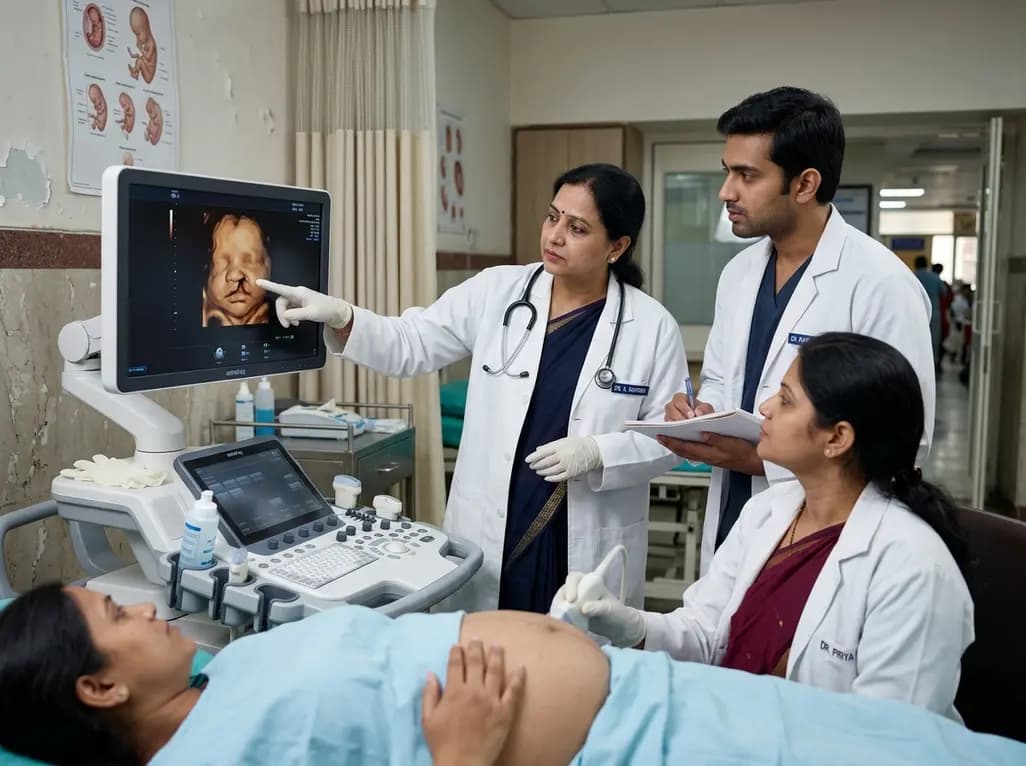
A 5-year retrospective study evaluates prenatal ultrasound detection of fetal cleft lip and palate. While overall detection reached 87%, accuracy varied from 99.3% in combined clefts to 50% in isolated cases. Combined defects showed elevated risks of concurrent structural anomalies and chromosomal abnormalities.
Today

An updated systematic review and meta-analysis of 7,875 patients reveals that routine microaxial left ventricular support during nonemergent high-risk PCI does not reduce mortality or ischemic complications, while significantly increasing major bleeding events.
Yesterday

Following Cyclone Chido, a WHO EMT-2 field hospital performed 268 surgeries in Mayotte. While acute trauma is expected initially, 98% of cases were septic wounds of the extremities requiring secondary intention healing, revealing crucial operational insights for disaster surgical preparedness.
Yesterday
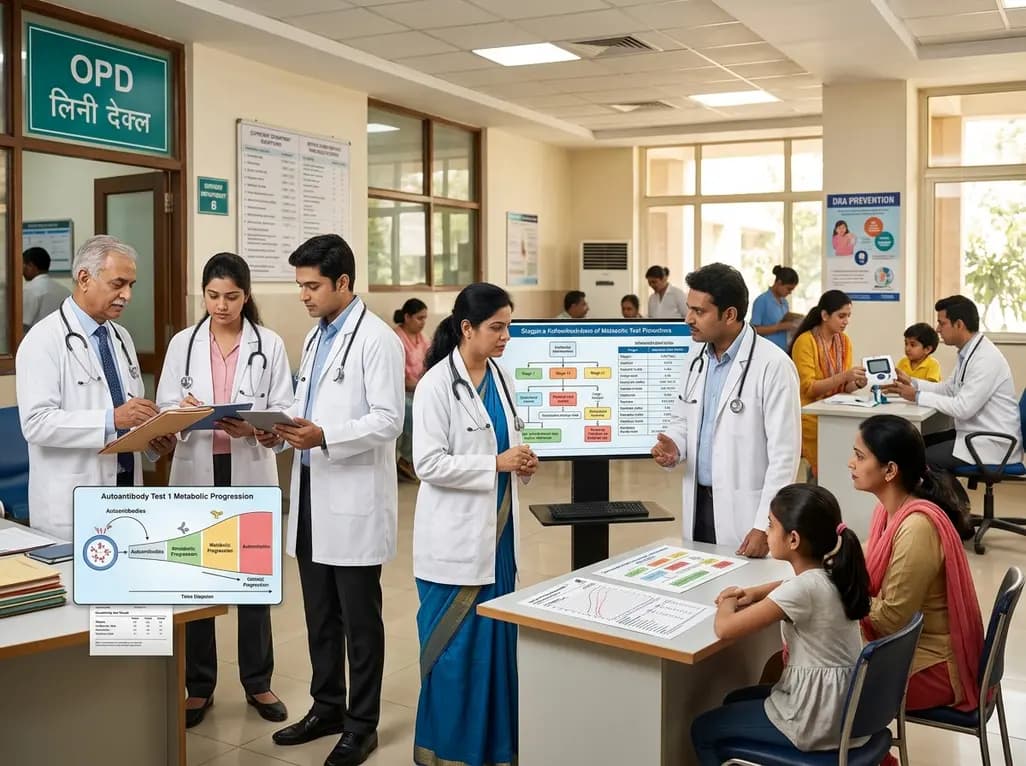
The SED-SEEN-SEEP consensus outlines an Integrated Care Pathway for preclinical type 1 diabetes, structuring target screening, autoantibody confirmation, metabolic staging, and proactive follow-up to prevent diabetic ketoacidosis and facilitate early disease-modifying intervention.
Yesterday
