.webp&w=384&q=75)

Loading, please wait...
Loading, please wait...

Managing adolescent idiopathic scoliosis (AIS) requires surgeons to carefully plan for sagittal balance to prevent Proximal Junctional Kyphosis AIS surgery complications. A new study published in the Global Spine Journal analyzed 282 patients to identify specific risk factors for PJK. Researchers categorized these individuals based on their 2-year follow-up results. Consequently, they found that certain sagittal shapes and alignment changes significantly influence the probability of developing junctional issues.
The investigation revealed that the level of the upper instrumented vertebra (UIV) differed significantly between the PJK and non-PJK groups. Specifically, the PJK group demonstrated a higher mean absolute change in the sagittal vertical axis (SVA). Moreover, the sagittal shape classification provided crucial insights. Patients with normal thoracic kyphosis or cervico-thoracic kyphosis were more prone to PJK. Conversely, those with hypo-thoracic kyphosis without thoracolumbar kyphosis showed lower risks.
Clinicians also assessed the Roussouly classification to understand how sagittal restoration impacts patient outcomes. They evaluated the correction relative to the functional T10 pelvic angle target. This assessment showed that improper restoration of the sagittal profile often leads to mechanical failure. Therefore, surgeons should aim for precise pelvic angle targets to ensure long-term spinal stability. Additionally, monitoring reciprocal changes in adjacent segments helps in identifying early signs of malalignment.
Furthermore, the study highlights the importance of maintaining proper thoracic kyphosis levels. Significant deviations in the sagittal vertical axis immediately after surgery often predict future PJK. Because these changes are often reciprocal, the alignment of the cervical and lumbar regions must also be balanced. Finally, achieving a harmonious sagittal profile reduces the stress on the proximal junction, thereby decreasing the risk of kyphotic progression.
Key indicators include the UIV level and significant changes in the absolute sagittal vertical axis (SVA). Additionally, preoperative sagittal shapes like normal thoracic kyphosis or cervico-thoracic kyphosis increase the risk compared to hypo-thoracic shapes.
The Roussouly classification helps surgeons understand the patient's natural sagittal alignment. By aligning the surgical correction with these classifications and the T10 pelvic angle target, surgeons can minimize the risk of Proximal Junctional Kyphosis AIS developments.
Disclaimer: This content is for informational and educational purposes only. It does not constitute medical advice or a substitute for professional clinical judgment. Refer to the latest local and national guidelines for clinical practice.
References

Read summarized clinical updates, watch expert medical content, and earn CME certifications right from your smartphone.
Open your smartphone camera to scan and install.





Study findings on how sagittal shapes and alignment targets influence the risk of proximal junctional kyphosis in adolescent idiopathic scoliosis surgery....
4 months ago
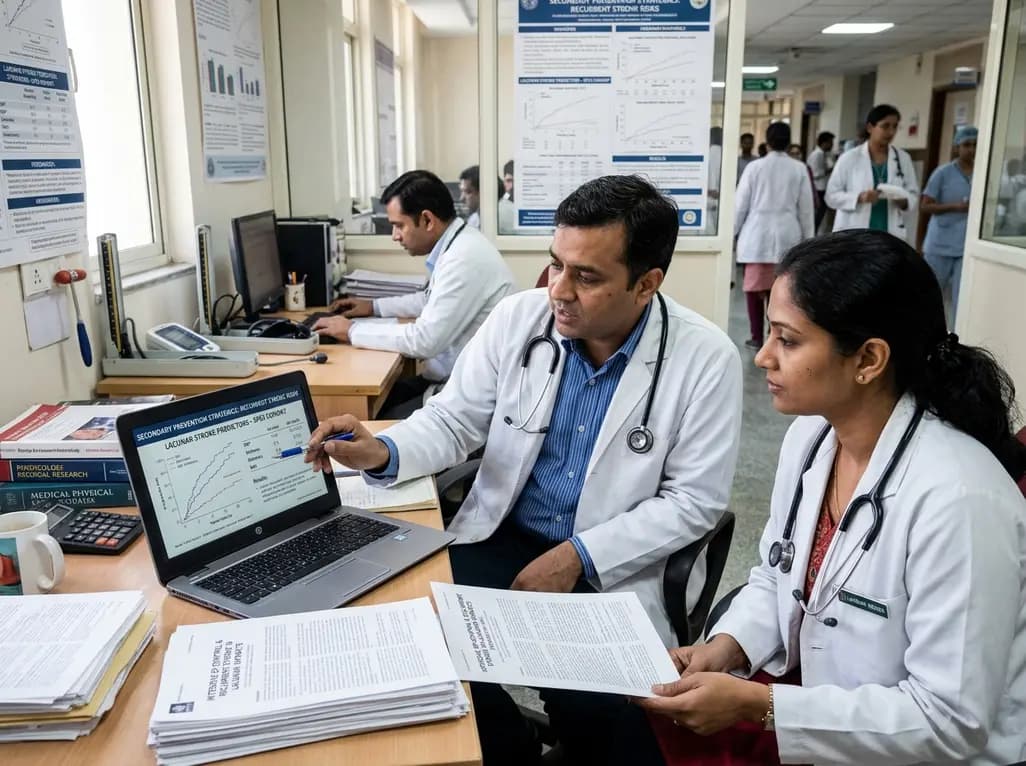
Explore vital recurrent stroke predictors in lacunar stroke patients managed with intensive blood pressure lowering. This analysis examines trial findings from SPS3 to uncover residual vascular risks, metabolic factors, and targeted secondary prevention strategies for high-risk neurological patients.
Today

A comprehensive scoping review synthesises evidence linking prenatal maternal mental health to long-term offspring neurodevelopment, evaluating neuroendocrine, inflammatory, and epigenetic pathways while highlighting clinical screening and future research priorities.
Today

The Directorate General of Health Services directs Indian states to halt the hazardous reuse and reprocessing of single-use medical devices. Discover regulatory implications under the Drugs and Cosmetics Act, critical infection risks, legal liabilities, and operational changes required across clinical specialties.
Today
Mitochondria-targeted nanoparticles self-assembled from EGCG and L-glutamic acid effectively restore mitochondrial homeostasis, suppress synovial inflammation, and attenuate chondrocyte senescence in osteoarthritis, offering a promising disease-modifying nanotherapy.
Today

India is advancing preventive healthcare by integrating genomics, artificial intelligence, and quantum technologies. With the SANGAM programme sequencing one million Indian genomes, clinicians can unlock personalized therapies, detect cardiometabolic risks early, and curb the burden of diabetes and heart disease.
Today
