.webp&w=384&q=75)

Loading, please wait...
Loading, please wait...

Obesity-related kidney disease (ORKD) remains a critical health challenge, characterized by structural and functional changes in the nephrons. Recent clinical research has highlighted how proteinuria remission bariatric surgery outcomes can significantly alter the disease trajectory. Furthermore, identifying the specific factors that drive either full remission or persistent damage is essential for personalized patient management. By reducing metabolic stress, these surgical interventions offer a metabolic reset that directly benefits renal health.
A recent prospective cohort study followed 39 patients with obesity and proteinuria for nearly two years after surgical intervention. The results showed that surgery led to a massive average weight loss of 38.5%. Consequently, proteinuria levels dropped by 43%, while albuminuria decreased by 14.3%. Additionally, researchers found that patients with a higher pre-operative percentage of albuminuria experienced the most significant post-operative reductions. However, a lower pre-operative estimated glomerular filtration rate (eGFR) often predicted persistent proteinuria, suggesting that late-stage interventions may have limited reversal potential. Therefore, timing is vital when considering surgery for patients with advanced obesity-related renal damage.
Medical practitioners in India are seeing a rise in metabolic-associated kidney dysfunction. This study emphasizes that weight loss is not just about aesthetics; it is a powerful tool for nephroprotection. Moreover, the data suggests that baseline renal function serves as a primary predictor for recovery success. Similarly, monitoring the albumin-to-creatinine ratio (ACR) pre-operatively can help clinicians set realistic expectations for their patients. Thus, bariatric surgery should be evaluated as a metabolic therapy rather than just a weight-loss procedure.
Patients can expect a reduction in proteinuria of approximately 43% within 21 months of bariatric surgery, alongside significant weight loss.
A lower baseline eGFR is often associated with persistent renal damage. Consequently, earlier surgical intervention is recommended to achieve full proteinuria remission.
Yes, significant total weight loss (averaging 38.5% in the study) is a primary driver for the improvement of albuminuria and overall metabolic health.
Disclaimer: This content is for informational and educational purposes only and does not constitute medical advice. It is not intended to be a substitute for professional medical advice, diagnosis, or treatment. Always seek the advice of your physician or other qualified health provider with any questions you may have regarding a medical condition. Refer to the latest local and national guidelines for clinical practice.
References
Pereira PR et al. Proteinuria Remission Profiles in Obesity-Related Kidney Disease after Bariatric Surgery. Am J Physiol Renal Physiol. 2026 Jun 09. doi: 10.1152/ajprenal.00496.2025. PMID: 42262750.
Dang J et al. Bariatric Surgery Slashes Risk of Kidney Failure, Heart Attack and Death. ASMBS Annual Meeting. 2026 May 05.
Abou-Mrad RM et al. Effects of weight reduction regimens and bariatric surgery on chronic kidney disease in obese patients. Am J Physiol Renal Physiol. 2013 Sep 01.

Read summarized clinical updates, watch expert medical content, and earn CME certifications right from your smartphone.
Open your smartphone camera to scan and install.





New study evaluates determinants of proteinuria remission in patients with obesity-related kidney disease (ORKD) following bariatric surgery....
4 months ago

This methodological viewpoint establishes ten rules to constrain noise and enhance precision across image scoring, database handling, and data analysis in rheumatology research.
Today

A study in JAMIA Open shows lightweight open-source reasoning LLMs achieve up to 95% sensitivity and accelerate evidence synthesis screening by nearly twentyfold, presenting a cost-effective, scalable AI solution for biomedical research and systematic reviews.
Yesterday
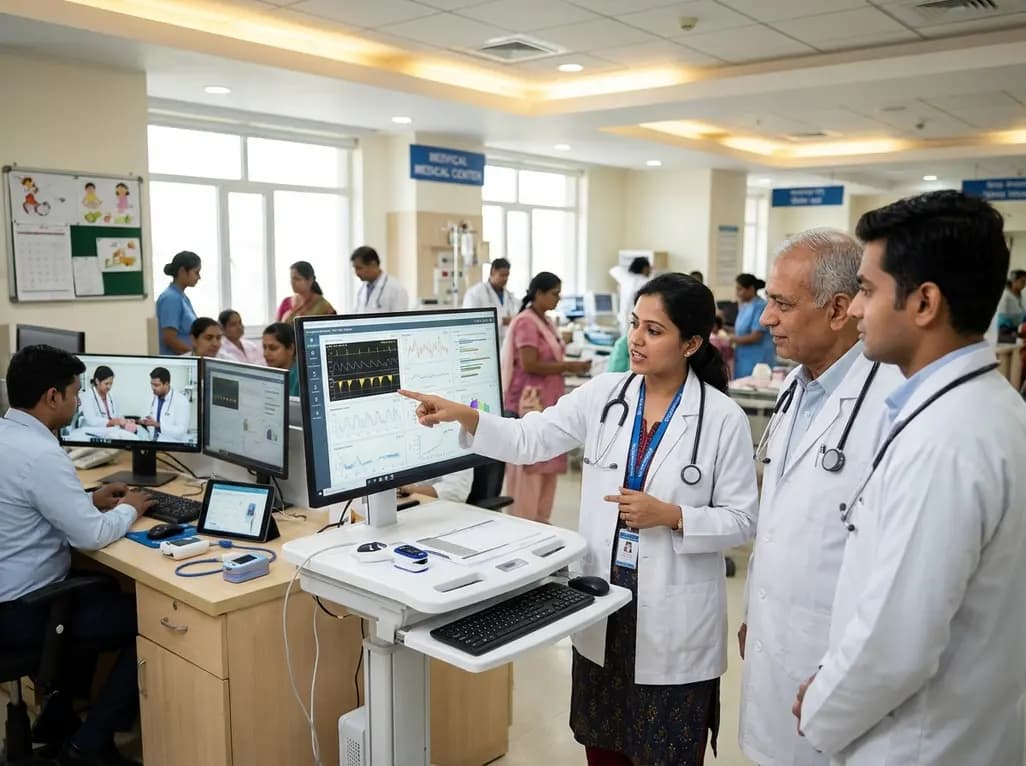
A landmark study details how an enterprise pediatric remote patient management model expanded from a single cardiology pilot to 16 diverse specialty programs by combining centralized digital operations with specialty clinical leadership.
Yesterday

A comparative review of tension band wiring and intramedullary screw fixation in thumb metacarpophalangeal arthrodesis, evaluating union rates, hardware complications, and clinical outcomes.
Yesterday

A nationwide observational study from Norway investigates whether SGLT2 inhibitor therapy improves 5-year metabolic parameters in kidney transplant recipients with post-transplantation diabetes mellitus (PTDM), finding comparable glycemic, renal, and blood pressure profiles between user and non-user cohorts.
Today
