.webp&w=384&q=75)

Loading, please wait...
Loading, please wait...
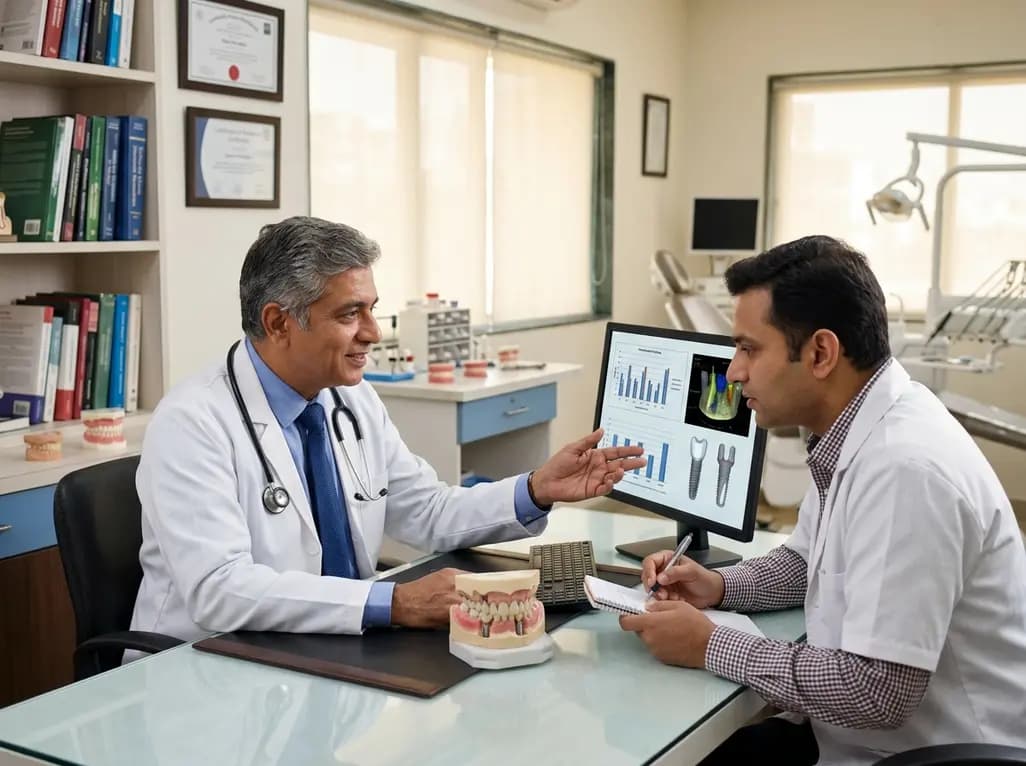
Bridging the gap between academic research and clinical application remains a significant challenge in modern dentistry. For private practitioners, understanding current prosthodontics research priorities is essential to ensure that scientific advancements translate into better patient care. A recent cross-sectional study conducted in Switzerland explored the perspectives of private practitioners on clinical research. The findings suggest a growing interest among clinicians to participate in research that directly addresses real-world clinical needs.
The study utilized an anonymous online questionnaire to gather data from fifty-six dentists. Results showed that approximately one-third of respondents currently participate in research. Furthermore, nearly half expressed a strong interest in future involvement, particularly in clinical trials. When ranking prosthodontics research priorities, practitioners emphasized three critical factors: predictability in therapy-related decision-making, a trusting patient-clinician relationship, and overall patient satisfaction. These outcomes indicate that private practitioners value studies that provide concrete evidence for everyday procedural success over abstract theoretical models.
Moreover, the researchers analyzed how clinicians access research information. Interestingly, the study predicts a significant decrease in reliance on traditional sources like colleagues, study clubs, and PubMed. In contrast, the use of professional journals and social media appears stable. This shift highlights the evolving landscape of medical education, where digital platforms play an increasingly prominent role in disseminating evidence-based knowledge. Consequently, researchers must adapt their communication strategies to reach clinicians where they are most active.
Ultimately, integrating the perspectives of private practitioners is vital for the future of dentistry. By focusing on practice-oriented research, the academic community can produce findings that are more relevant to the clinical environment. This alignment will likely foster greater collaboration between academia and private practice. Such partnerships are necessary to improve the quality of reconstructive dentistry and ensure that patient outcomes remain the primary focus of all research endeavors.
Practitioners prioritize predictability in clinical outcomes, the strength of the patient-clinician relationship, and patient satisfaction as the most important research areas.
While traditional sources like PubMed and study clubs may see a decline in usage, journals and social media remain stable and influential platforms for practitioners to stay updated.
Involving private practitioners ensures that dental research remains relevant to real-world clinical challenges, making scientific findings easier to implement in daily practice.
Disclaimer: This content is for informational and educational purposes only. It does not constitute professional medical or dental advice, diagnosis, or treatment. Refer to the latest local and national guidelines for clinical practice.
References
Pachiou A et al. Bridging Clinical Practice and Research: A Cross-Sectional Study of Swiss Private Practitioners' Perspectives on Research Priorities in Prosthodontics. Int J Prosthodont. 2026 Jun 03. doi: 10.11607/ijp.9838. PMID: 42234480.
Ali K, Kay EJ. Bridging the gap: harnessing clinical evidence for smarter primary care dentistry. British Dental Journal. 2024 Oct 24. doi: 10.1038/s41415-024-7974-7.
Kumar V, Sridhara KS, Srividya S. Evidence based research in prosthodontics. J Pharm Bioallied Sci. 2015 Aug;7(Suppl 2):S334-7. doi: 10.4103/0975-7406.163439.
"
Read summarized clinical updates, watch expert medical content, and earn CME certifications right from your smartphone.
Open your smartphone camera to scan and install.





A cross-sectional study highlights how aligning prosthodontic research with clinical needs can bridge the gap between private practice and academia....
4 months ago

Novel diimide and hydrazone scaffolds, particularly compound #C4, synergistically reactivate latent HIV-1 when combined with JQ1 or PKC activators. Demonstrating donor-matched proviral transcription ex vivo and non-canonical signaling, these findings advance shock and kill strategies toward reservoir eradication.
Today

A cross-sectional study reveals that maternal RSV vaccination coverage reached only 43.7% in Argentina, with maternal vaccine knowledge being the sole independent predictor of uptake. Clinicians play a crucial role in eliminating informational and structural barriers to optimize infant health.
Today

Review how tailored exercise programs benefit frail older patients with heart failure. Explore pathophysiological mechanisms, individualized training prescriptions, and strategies to overcome adherence barriers in clinical practice.
Yesterday

This comparative study evaluates posterior labral tears with and without glenohumeral instability, highlighting distinct demographic patterns, MRI underestimation in stable shoulders, and successful arthroscopic repair outcomes.
Yesterday

A clinical study demonstrates that early intervention with tocilizumab, either as monotherapy or bridged with corticosteroids, achieves significant proptosis reduction and resolves active inflammation in treatment-naive thyroid eye disease.
Yesterday
