.webp&w=384&q=75)

Loading, please wait...
Loading, please wait...

Prostate cancer remains a formidable challenge for clinicians in India and globally due to its profound metabolic heterogeneity and propensity for therapeutic resistance. Current treatments often struggle against the adaptive mechanisms of tumor cells, which frequently evade apoptosis through complex signaling pathways. However, a groundbreaking study has introduced a sophisticated prostate cancer nanoparticle therapy that leverages the tumor's own metabolic signatures to trigger cell death. This approach utilizes cysteine-based, glutathione-responsive polymer nanoparticles (Cys8E) to deliver CBL0137, a broad-spectrum antitumor agent. By specifically targeting the high glutathione (GSH) levels characteristic of malignant prostate cells, this delivery system ensures that the therapeutic payload is released precisely where it is needed most. Beyond simple drug delivery, these nanoparticles actively remodel the metabolic environment of the tumor. Consequently, this dual-action mechanism enhances the efficacy of the treatment while minimizing systemic toxicity. Therefore, understanding the interplay between nanomedicine and metabolic reprogramming is essential for developing the next generation of oncological interventions that can overcome traditional drug resistance. This research marks a significant shift from passive drug transport to active, metabolism-dependent regulation of cancer cell signaling.
Metabolic heterogeneity is a hallmark of prostate cancer progression, where cells adapt their internal chemistry to survive under stress. One of the most critical adaptations involves the elevation of glutathione (GSH) metabolism. Elevated GSH levels provide a potent antioxidant defense, which unfortunately protects cancer cells from oxidative stress induced by chemotherapy and radiotherapy. Furthermore, this metabolic profile is closely linked to poor clinical outcomes and the development of castration-resistant prostate cancer. Because the intracellular environment of these tumor cells is significantly more reductive than that of healthy tissue, it provides a unique opportunity for targeted intervention. The Cys8E@CBL nanoparticles are specifically designed to be redox-responsive, meaning they remain stable in the bloodstream but disintegrate rapidly upon encountering the high GSH concentrations inside a tumor cell. This release mechanism ensures a high local concentration of CBL0137, which can then inhibit the FACT complex and disrupt DNA transcription. Moreover, by interacting directly with the cell's redox state, the nanoparticles themselves begin to perturb the delicate metabolic balance. This perturbation is a crucial step in sensitizing the tumor to subsequent necroptotic signaling, making the metabolic state of the cancer its own worst enemy.
The engineering of Cys8E@CBL nanoparticles represents a major leap in nanomedicine design. These nanoparticles are constructed from a cysteine-based polymer that is inherently sensitive to the reducing environment created by high glutathione levels. When these particles enter the tumor cell via endocytosis, the disulfide bonds within the polymer backbone are cleaved by GSH. This cleavage leads to the rapid disassembly of the nanoparticle and the subsequent release of the encapsulated CBL0137. Additionally, the degradation of the carrier polymer releases cysteine and other metabolic precursors that influence the cell's internal chemistry. Studies have shown that this process does not just deliver a drug; it actively reshapes butyrate-associated metabolic homeostasis. Specifically, the internalization of Cys8E NPs alters the abundance of key metabolic enzymes, leading to an increase in intracellular protein butyrylation levels. This is particularly important because protein butyrylation is an emerging post-translational modification that regulates various cellular functions. By artificially elevating these levels, the nanoparticles prepare the cell for a specialized form of programmed death. Consequently, the carrier acts as a functional therapeutic component rather than a mere vehicle, illustrating the potential for multi-modal cancer therapies.
The most significant mechanistic discovery regarding this prostate cancer nanoparticle therapy involves the post-translational modification of the protein PGAM5. Researchers identified that the metabolic remodeling caused by Cys8E NPs leads to enhanced butyrylation at the lysine-95 (K95) residue of PGAM5. Under normal conditions, PGAM5 plays a role in mitochondrial homeostasis and cell death signaling. However, when it undergoes K95 butyrylation, its function is shifted to strongly promote necroptosis. Necroptosis is a form of regulated cell death that mimics necrosis but is controlled by specific genetic pathways, making it an excellent alternative when apoptosis is blocked. The butyrylation of PGAM5 K95 serves as a molecular switch that recruits the necroptotic machinery, leading to the efficient killing of prostate cancer cells. Furthermore, because this process is triggered by the metabolic state of the cell rather than traditional receptors, it is less susceptible to the common resistance mechanisms that plague standard therapies. Therefore, the ability to specifically induce PGAM5 butyrylation provides a novel target for therapeutic development. This shift toward necroptosis not only destroys the primary tumor cells but also has the potential to stimulate an immune response, further aiding in long-term cancer control.
The findings regarding PGAM5 butyrylation and GSH-responsive delivery have profound implications for the future of oncology in India. As we move toward precision medicine, the ability to tailor treatments to the metabolic profile of an individual patient's tumor becomes paramount. The Cys8E@CBL formulation demonstrates that we can target specific metabolic vulnerabilities, such as high GSH and altered butyrate levels, to achieve better outcomes. Furthermore, this research suggests that other post-translational modifications, like butyrylation, could be exploited in various cancer types. For clinicians, this means that the combination of nanomedicine and metabolic regulation could soon become a viable strategy for treating refractory cases. However, moving these laboratory successes into clinical trials requires careful consideration of manufacturing scalability and long-term safety profiles. Nevertheless, the integration of active metabolic regulation into nanoparticle design offers a promising path forward. This approach could potentially reduce the dosage of toxic drugs needed, thereby decreasing side effects for patients. As we refine these technologies, the focus will likely shift toward multi-targeted nanoparticles that can address the diverse metabolic adaptations found in metastatic prostate cancer, ultimately improving survival rates and quality of life.
GSH-responsive nanoparticles take advantage of the significantly higher concentrations of glutathione found within prostate cancer cells compared to healthy tissues. These nanoparticles are engineered with disulfide bonds that remain stable in the systemic circulation but break down rapidly in the presence of high glutathione. This ensures that the therapeutic payload, such as CBL0137, is released specifically inside the tumor environment, maximizing efficacy while protecting healthy cells from toxicity.
Protein butyrylation is a post-translational modification where a butyryl group is added to lysine residues on proteins. In the context of this nanoparticle therapy, the carrier itself alters metabolic enzyme levels, leading to increased butyrylation. This remodeling changes the function of key proteins like PGAM5, essentially rewiring the cancer cell’s internal signaling to favor cell death pathways that the tumor would otherwise try to avoid.
Advanced prostate cancer cells often develop mutations that allow them to evade apoptosis, the traditional form of programmed cell death. Necroptosis provides an alternative pathway to eliminate these resistant cells. Because necroptosis involves cell swelling and membrane rupture, it can also trigger a localized inflammatory response, potentially alerting the immune system to the presence of the tumor and enhancing the overall therapeutic effect against the malignancy.
Disclaimer: This content is for informational and educational purposes only... Refer to the latest local and national guidelines for clinical practice.
References
Luo T et al. Butyrylated PGAM5-Triggered and GSH-Responsive Cysteine Polymer Nanoparticles for CBL0137 Delivery to Enhance Necroptosis in Prostate Cancer. Adv Healthc Mater. 2026 Jul 05. doi: 10.1002/adhm.71387. PMID: 42402000.
Gao J et al. Metabolic reprogramming and epigenetic modifications in cancer. Journal of Experimental & Clinical Cancer Research. 2024.
Carter R et al. The Curaxin CBL0137: Mechanism of action and therapeutic potential in solid tumors. Expert Opinion on Investigational Drugs. 2023.
"
Read summarized clinical updates, watch expert medical content, and earn CME certifications right from your smartphone.
Open your smartphone camera to scan and install.





Recent breakthroughs in nanomedicine reveal how Cys8E@CBL nanoparticles target glutathione levels in prostate cancer. By promoting PGAM5 K95 butyrylation, these particles remodel tumor metabolism and trigger necroptosis, offering a potent new strategy for treating resistant prostate cancer cases.
3 months ago
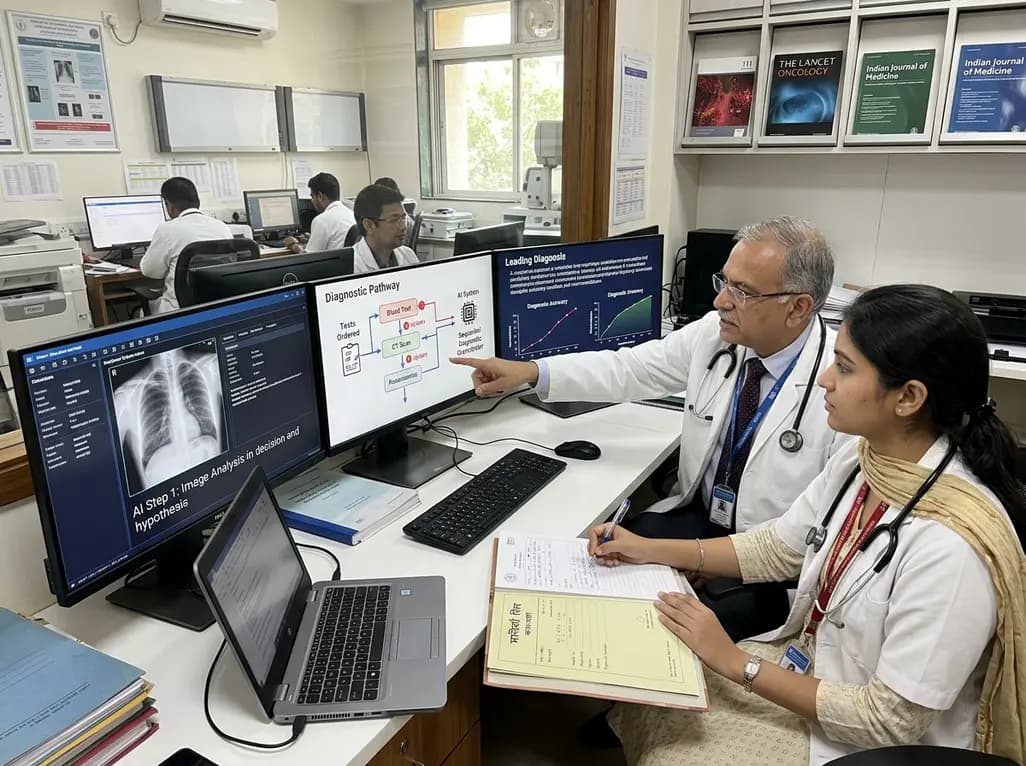
A breakthrough peer-reviewed study demonstrates that a sequential AI diagnosis system can mirror real-world clinical reasoning. By ordering stepwise tests and updating hypotheses dynamically, this multi-agent orchestrator achieved superior diagnostic accuracy while reducing investigative costs.
Today

A prenatal case highlights severe glutaric acidemia type II presenting as bilateral hyperechoic cystic kidneys at 18 weeks. Whole-exome sequencing revealed a novel homozygous ETFDH frameshift variant, demonstrating the power of rapid genetic testing in fetal renal anomalies.
Today

Review how tailored exercise programs benefit frail older patients with heart failure. Explore pathophysiological mechanisms, individualized training prescriptions, and strategies to overcome adherence barriers in clinical practice.
Yesterday

This comparative study evaluates posterior labral tears with and without glenohumeral instability, highlighting distinct demographic patterns, MRI underestimation in stable shoulders, and successful arthroscopic repair outcomes.
Yesterday

A clinical study demonstrates that early intervention with tocilizumab, either as monotherapy or bridged with corticosteroids, achieves significant proptosis reduction and resolves active inflammation in treatment-naive thyroid eye disease.
Yesterday
