.webp&w=384&q=75)

Loading, please wait...
Loading, please wait...
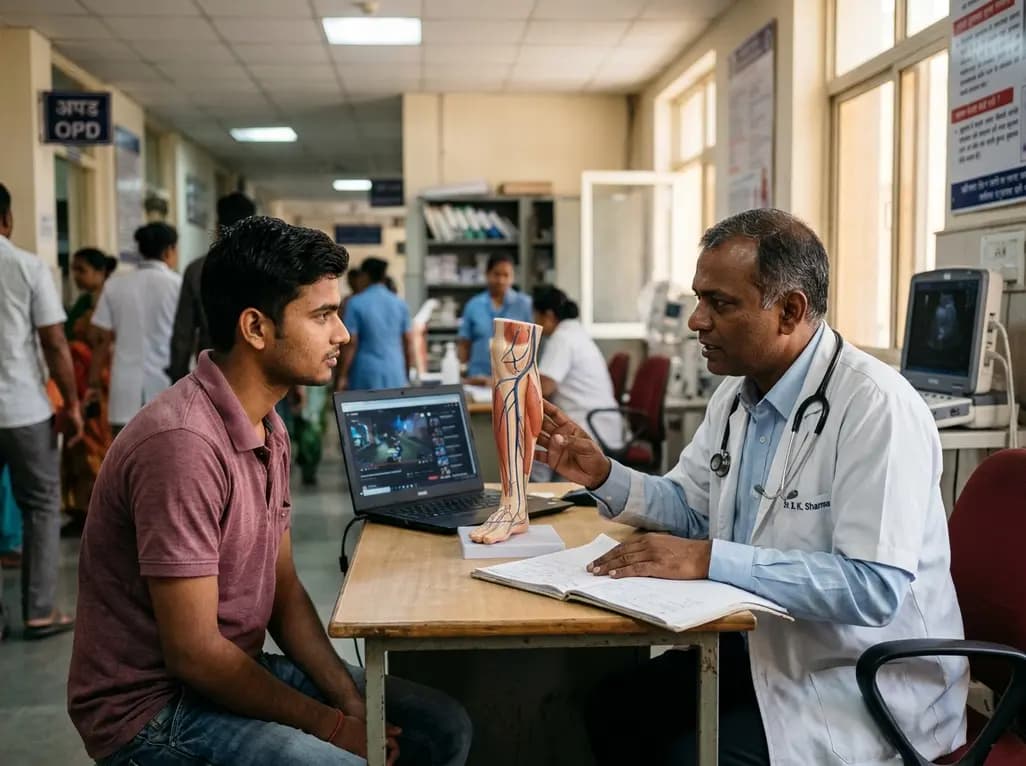
Recent clinical observations indicate that prolonged sitting blood clots pose an emerging vascular threat to adolescents and young adults. Historically, clinicians linked deep vein thrombosis almost exclusively to advanced age, major surgery, or extended hospital bed rest. However, modern lifestyle shifts have changed this clinical reality drastically. Extended sessions of gaming, streaming entertainment, and remote studying keep young individuals immobile for hours. Consequently, vascular specialists are reporting a notable rise in young patients presenting with venous thromboembolism.
Modern digital habits encourage prolonged immobility among teenagers and young professionals. Specifically, individuals frequently remain motionless for four to six consecutive hours while gaming or watching video content. During these unbroken sedentary intervals, the lower extremities remain completely static. Therefore, venous blood return depends heavily on active muscular contractions that do not occur. When patients stay seated without moving, blood collects within the deep venous sinusoids of the calves. As a result, sluggish circulation promotes local platelet aggregation and thrombin activation. Furthermore, prolonged hyperflexion of the knees and hips creates mechanical resistance against femoral venous outflow. This mechanical kink further slows venous velocity throughout the lower leg. Consequently, static blood pooling establishes an ideal environment for venous thrombus formation. Vascular specialists have highlighted this phenomenon, often termed e-thrombosis. In addition, many young individuals ignore initial symptoms like dull calf aching or subtle swelling. They often dismiss these warning signs as simple muscle fatigue from gaming. Thus, delayed presentation increases the danger of clot extension into proximal veins. Without prompt intervention, a peripheral clot can detach and travel to pulmonary arteries, causing life-threatening complications.
Recent global medical literature reinforces the clinical warnings issued by vascular surgeons. For instance, a comprehensive systematic review and dose-response meta-analysis evaluated 31 studies across 25 articles. The researchers identified a clear connection between sedentary behavior and venous thromboembolism. In fact, people with maximal sedentary exposure had a 24 percent higher risk of venous thromboembolism than active individuals. Furthermore, the researchers calculated a linear dose-response relationship across diverse demographic groups. Specifically, every additional hour of daily sedentary behavior elevated thromboembolism risk by approximately two percent. Notably, this statistical association persisted even after researchers adjusted for participants' overall physical activity levels. This finding confirms that a daily gym workout cannot completely erase the vascular hazards of prolonged seated stillness. In addition, dedicated adolescent studies have documented similar alarming trends. One observational investigation evaluated adolescents with acute venous thrombosis and discovered substantial screen exposure. In that cohort, patients averaged six daily hours of digital device usage, including nearly three continuous hours of complete immobility. Consequently, clinical researchers now view sedentary screen time as a quantifiable, independent contributor to modern thromboembolic risk profiles.
To appreciate this clinical challenge, physicians must evaluate venous hemodynamics. Under healthy physiological conditions, the calf muscle pump acts as a secondary heart for the peripheral circulation. Each contraction of the gastrocnemius and soleus muscles compresses the deep intramuscular veins. Consequently, this action propels deoxygenated blood upward through competent unidirectionally valved veins. However, prolonged sitting silences this essential muscular pump completely. When someone sits for multiple hours without standing, hydrostatic pressure in dependent leg veins rises sharply. Therefore, venous blood flow velocities decline to near-stagnant levels within the lower extremities. This state fulfills the classic venous stasis component of Virchow's triad. In addition, static blood accumulation causes local endothelial hypoxia within valve pockets. Hypoxic endothelial cells then release pro-inflammatory cytokines and express cell adhesion molecules. Consequently, activated leukocytes and platelets attach more readily to the vein wall. Moreover, local hemoconcentration occurs as plasma water filters into interstitial tissues under elevated hydrostatic pressure. This focal fluid shift elevates local blood viscosity and amplifies clotting cascades. Thus, undisturbed sitting triggers a cascade of mechanical and molecular events that directly favor intravascular thrombosis.
Prolonged immobility rarely causes thrombosis in complete biological isolation. Instead, digital immobility usually acts as a potent trigger that unmasks underlying clinical predispositions. For example, clinical investigators frequently detect inherited thrombophilias in young patients who develop sedentary-associated blood clots. Common genetic anomalies include Factor V Leiden mutations, prothrombin gene variants, and deficiencies in protein C, protein S, or antithrombin. Furthermore, lifestyle choices and systemic factors significantly magnify the baseline risk. Obesity adds substantial intra-abdominal pressure that impedes venous return from the femoral veins. In addition, chronic dehydration during intense gaming sessions thickens the circulating blood volume. Clinicians also emphasize the compounding danger of cigarette smoking, vaping, and hormonal exposure. Combined oral contraceptives and estrogen replacement therapies elevate circulating clotting factors considerably. When a young woman taking oral contraceptives sits motionless for six hours, her thrombosis risk multiplies exponentially. Similarly, acute systemic infections or mild inflammatory states can accelerate this hypercoagulable milieu. Therefore, practitioners must evaluate sitting habits alongside all constitutional and lifestyle variables. Recognizing these combined interactions allows physicians to identify highly susceptible patients before catastrophic events develop.
Because sedentary habits now play an undeniable role in vascular disease, clinical assessments must evolve accordingly. Previously, physicians queried patients primarily about long-distance air travel, recent surgeries, or prolonged hospital stays. Today, clinicians must routinely investigate daily digital device habits during outpatient evaluations. Specifically, doctors should ask adolescent and young adult patients about continuous hours spent on computers, gaming consoles, and streaming services. Furthermore, practitioners should examine unilateral leg swelling, localized calf tenderness, and superficial venous dilation with high suspicion. In addition, preventing sedentary thrombosis requires practical behavioral modifications. Vascular specialists advise that young individuals should never sit continuously for more than two hours. Instead, individuals should schedule mandatory movement breaks every sixty to ninety minutes. During these brief pauses, standing up and walking for two to three minutes rapidly empties stagnant venous pools. Additionally, seated calf-raise exercises, ankle pumps, and foot circles can stimulate the musculovenous pump during gaming or work sessions. Proper hydration also plays a crucial prophylactic role. Therefore, individuals should consume adequate water while avoiding excessive diuretic caffeinated beverages. Ultimately, integrating regular physical pauses into digital life provides robust, lifelong vascular protection.
Q1: What are the primary warning signs of deep vein thrombosis in young sedentary individuals?
Early symptoms of deep vein thrombosis frequently present subtly in young adults. Patients commonly report persistent unilateral calf swelling, unexplained localized warmth, and dull aching that worsens during weight-bearing. Additionally, superficial venous dilation and calf tenderness may develop. Many individuals mistake these signs for benign muscular strains. Therefore, immediate medical evaluation with venous duplex ultrasonography is essential whenever discomfort persists after extended sedentary screen sessions.
Q2: Why does regular daily exercise fail to completely eliminate the clotting risks of prolonged sitting?
While structured physical exercise provides immense cardiovascular benefits, it cannot undo the acute hemodynamic consequences of prolonged immobility. When someone sits motionless for several hours, the calf muscle pump shuts down completely. Consequently, venous stasis and local hemoconcentration occur rapidly regardless of the individual's overall athletic fitness. Therefore, a vigorous morning workout does not protect a person from blood pooling if they subsequently sit uninterrupted for six consecutive hours.
Q3: Which specific lifestyle modifications offer the best protection against e-thrombosis during gaming?
Individuals should break up long gaming or streaming periods by standing and walking every sixty to ninety minutes. Additionally, performing seated calf raises and ankle rotations helps activate the lower leg musculature during necessary desk work. Maintaining generous water hydration is equally vital because dehydration thickens blood volume. Furthermore, young gamers should avoid smoking and evaluate personal risk factors, including oral contraceptive use or hereditary clotting tendencies.
Disclaimer: This content is for informational and educational purposes only. It does not constitute medical advice or replace professional judgment. Refer to the latest local and national guidelines for clinical practice.
References

Read summarized clinical updates, watch expert medical content, and earn CME certifications right from your smartphone.
Open your smartphone camera to scan and install.





Sedentary habits such as continuous gaming, binge-watching, and desk work significantly elevate venous thromboembolism risks among adolescents and young adults. Vascular surgeons emphasize that immobility impairs the calf muscle pump, creating venous stasis and warranting proactive lifestyle counseling.
Today

Maternal anaemia contributes to nearly half of pregnancy-related fatalities across India. To prevent complications, Uttar Pradesh has added single-dose parenteral iron to its essential medicines list. This clinical transition aims to restore haemoglobin rapidly and protect high-risk mothers across rural facilities.
Today
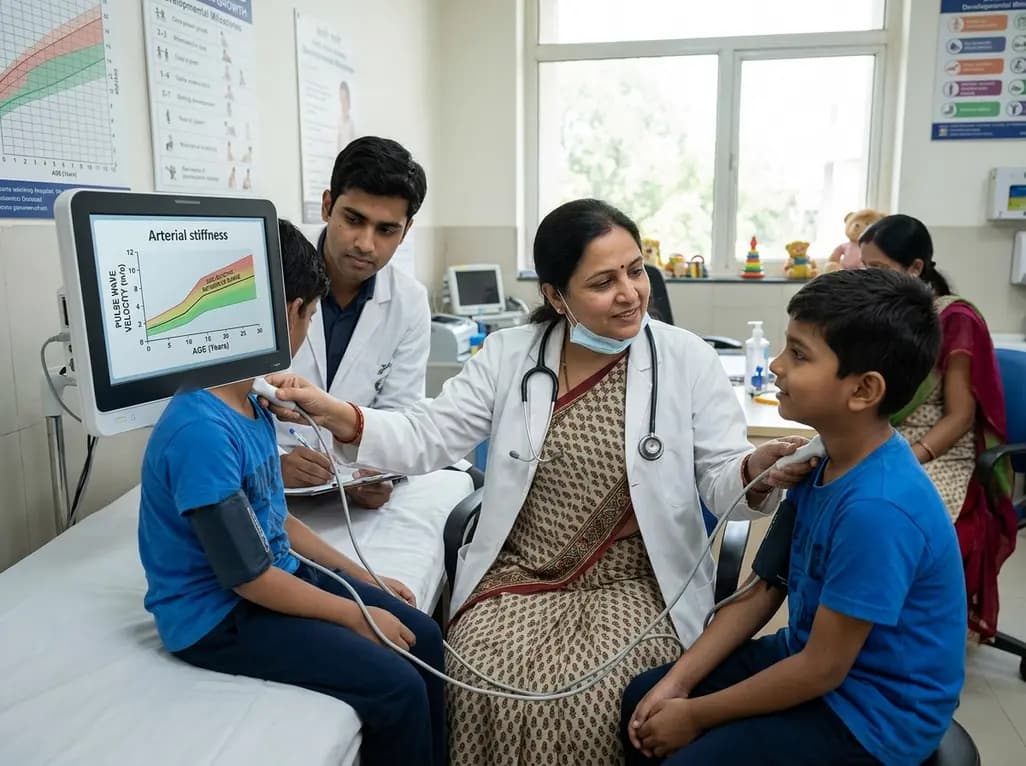
A landmark systematic review and meta-analysis establishes age-specific normative reference values for pediatric pulse wave velocity, revealing a nonlinear trajectory of arterial stiffness from early childhood through adolescence.
Today
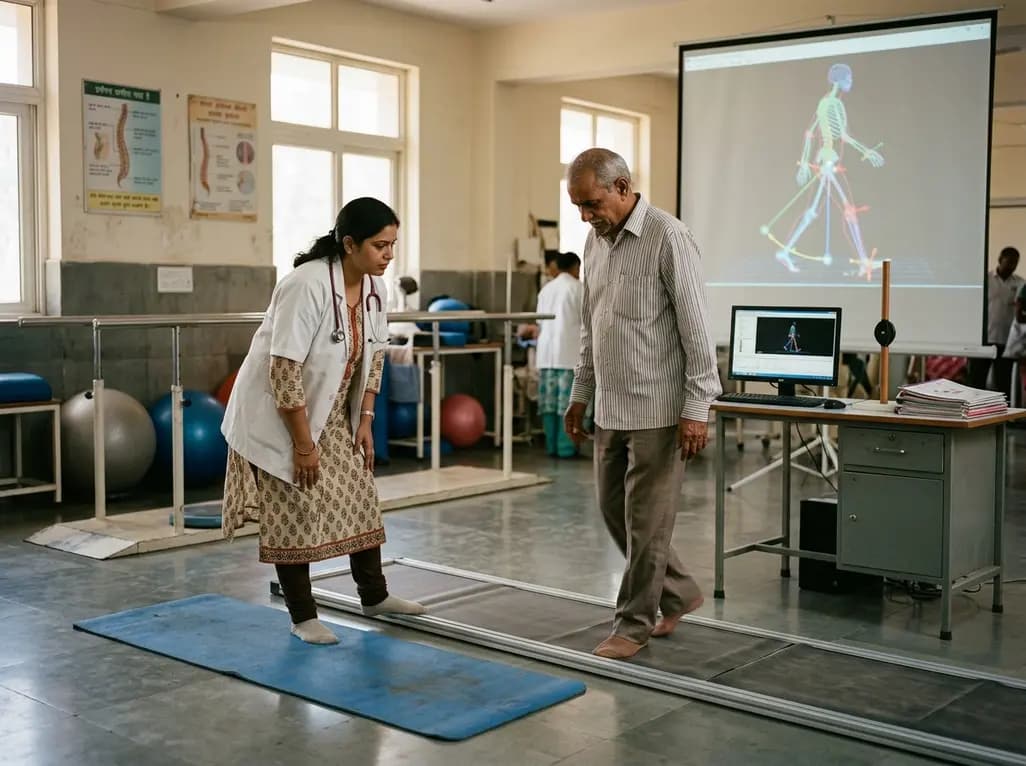
New biomechanical research reveals how postural stabilization mechanisms coordinate delayed sensory feedback and ground reaction forces to preserve pendulum-like center of mass motion across standing and walking, providing vital insights for balance rehabilitation and fall prevention.
Today

A landmark cross-sectional study in Asian adults with type 2 diabetes identifies novel urinary metabolites linked to mild cognitive impairment. Elevated urinary sucrose and altered metabolites highlight non-invasive pathways for early cognitive risk stratification and targeted metabolic management.
Today
