.webp&w=384&q=75)

Loading, please wait...
Loading, please wait...

Pelvic exenteration represents one of the most radical surgical procedures in surgical oncology, offering curative intent for locally advanced or recurrent pelvic malignancies. However, this complex operation carries substantial risks of postoperative complications, extended hospitalizations, and surgical mortality. Emerging clinical evidence highlights that preoperative nutritional status serves as a decisive prognostic factor in determining patient recovery and clinical trajectories. Historically, surgical teams prioritized anatomical resectability and tumor biology, but metabolic reserves frequently dictate perioperative resilience. Comprehensive nutritional evaluation before major surgery allows clinicians to risk-stratify candidates effectively and implement tailored prehabilitation strategies.
Patients requiring pelvic exenteration often present with complex oncologic histories, including prior chemotherapy, pelvic irradiation, and prolonged disease progression. Consequently, cancer cachexia, chronic inflammation, and altered gastrointestinal absorption frequently deplete critical metabolic reserves. Furthermore, persistent tumor burden drives systemic catabolism, which diminishes skeletal muscle mass and impairs baseline functional reserve.
Clinicians must recognize that malnutrition in advanced pelvic cancer is multifaceted. Many patients experience involuntary weight loss, sarcopenia, and micronutrient deficiencies that remain concealed beneath normal body weight. When these metabolically compromised patients undergo extensive pelvic organ resection and reconstructive procedures, their physiological stress responses escalate rapidly. Therefore, inadequate nutritional reserves severely impair cellular repair mechanisms and immune surveillance during the early postoperative phase.
Additionally, preoperative malnutrition elevates the risk of wound dehiscence, anastomotic disruption, and opportunistic sepsis. Multidisciplinary surgical oncology teams must identify baseline nutritional vulnerabilities during initial evaluation. By establishing early nutritional risk screening, clinicians can proactively intervene before surgery, thereby mitigating catastrophic perioperative complications.
Evaluating preoperative nutritional status requires a comprehensive framework rather than reliance on isolated laboratory parameters. Objective anthropometric markers such as body mass index provide initial baseline data; however, body mass index alone frequently fails to detect sarcopenic obesity. Therefore, comprehensive evaluation integrates biochemical markers, functional assessments, and validated clinical scoring tools.
Serum albumin remains one of the most widely evaluated biochemical markers in surgical oncology. Although systemic inflammation can influence serum concentrations, persistent hypoalbuminemia strongly correlates with impaired protein synthesis, blunted humoral immunity, and heightened surgical vulnerability. Furthermore, modern surgical protocols incorporate validated structured questionnaires, such as the Subjective Global Assessment and the Malnutrition Universal Screening Tool. These tools evaluate dietary changes, involuntary weight loss, gastrointestinal symptoms, and metabolic stress levels.
Additionally, advanced computed tomography cross-sectional imaging provides quantitative assessments of skeletal muscle index and myosteatosis. These radiological indicators reflect deep metabolic depletion that standard physical examinations might overlook. Combining clinical scoring, serum biomarkers, and radiological body composition creates an accurate metabolic profile. Consequently, surgical teams gain precise insight into each patient's physiological readiness for extensive exenterative surgery.
Recent meta-analytic data synthesizing findings from nine retrospective cohorts involving over one thousand surgical patients provide compelling clinical insights. Across these heterogeneous oncology cohorts, researchers examined the relationship between baseline nutritional markers and postoperative complications graded by the Clavien-Dindo classification. The pooled findings revealed that low body mass index significantly increased overall postoperative morbidity.
Furthermore, patients with confirmed hypoalbuminemia exhibited substantially higher odds of experiencing major surgical complications, including anastomotic leaks, pelvic sepsis, and extensive wound failure. Similarly, poor baseline ratings on the Subjective Global Assessment correlated directly with prolonged critical care admissions and increased 30-day readmission rates. These statistical findings underscore that physiological reserve is just as critical as surgical precision.
Moreover, postoperative morbidity after pelvic exenteration carries profound long-term consequences. Patients who develop severe septic complications or wound breakdown experience delayed adjuvant therapies, prolonged physical rehabilitation, and reduced overall survival. Therefore, meta-analytic evidence confirms that preoperative malnutrition is an independent driver of adverse surgical trajectories. Surgeons must incorporate these objective risk metrics into multidisciplinary surgical decision-making.
Given the direct association between nutritional depletion and adverse surgical outcomes, proactive multimodal prehabilitation is essential for surgical oncology candidates. Multimodal prehabilitation combines targeted medical nutrition therapy, structured physical conditioning, and psychological counseling to enhance physiological resilience. When surgical teams diagnose nutritional vulnerability early, they can initiate aggressive oral nutritional supplementation enriched with immunonutrients.
Specifically, clinical trials suggest that immunonutrition formulas containing arginine, omega-3 fatty acids, and nucleotides significantly enhance postoperative immune responses and reduce surgical site infections. Additionally, registered dietitians must calculate specific caloric and protein requirements, targeting at least 1.2 to 1.5 grams of protein per kilogram of body weight daily. In patients with severe gastrointestinal compromise, enteral tube feeding or total parenteral nutrition may be necessary before major surgery.
Furthermore, integrating prehabilitation programs within standard enhanced recovery protocols ensures optimal metabolic preparation. Physical therapists guide progressive resistance exercise to preserve functional lean muscle mass, while clinicians optimize glycemic control and correct anemia. Consequently, this intensive multidisciplinary approach transforms high-risk surgical candidates into resilient patients capable of withstanding radical pelvic extirpation and reconstruction.
Translating meta-analytic evidence into daily oncologic practice requires standardized clinical workflows across tertiary referral centers. Surgical teams should establish routine nutritional screening protocols at the point of surgical referral. Standardizing this assessment ensures that no vulnerable patient undergoes radical pelvic exenteration without a comprehensive metabolic evaluation.
Moreover, surgeons and oncologists must establish realistic timelines for preoperative nutritional optimization. Although delaying oncologic resection raises clinical concerns, evidence indicates that brief periods of structured nutritional replenishment yield substantial clinical benefits. Therefore, multidisciplinary tumor boards must balance oncologic urgency with physiological stabilization, especially for patients with severe malnutrition.
Additionally, future clinical investigations should focus on prospective randomized trials evaluating tailored nutritional interventions specifically designed for pelvic exenteration cohorts. Standardizing outcome reporting through validated classification systems will clarify the most effective supplementation protocols and timing. Ultimately, establishing robust perioperative nutritional pathways will minimize preventable surgical morbidity, improve post-discharge quality of life, and enhance long-term oncologic survival.
Preoperative nutritional status directly dictates cellular repair mechanisms, collagen synthesis, and local immune defenses across extensive surgical fields. Malnourished oncology patients experience depleted protein reserves, blunted fibroblast activity, and impaired capillary proliferation. Consequently, significant protein deficiency and micronutrient depletion increase the incidence of wound dehiscence, perineal flap necrosis, and deep pelvic abscesses following radical pelvic exenteration and extensive reconstructive procedures.
Clinicians achieve the most reliable assessments by combining the Subjective Global Assessment or Malnutrition Universal Screening Tool with objective biochemical markers such as serum albumin. Furthermore, incorporating cross-sectional computed tomography imaging to measure skeletal muscle index identifies hidden sarcopenia. This comprehensive multidimensional evaluation accurately captures subtle metabolic deficits that isolated weight or body mass index measurements frequently fail to detect.
Effective nutritional prehabilitation typically requires two to four weeks of structured dietary supplementation and protein optimization before major pelvic oncologic surgery. During this therapeutic window, registered dietitians provide targeted immunonutrition and high-protein formulas to replenish metabolic stores and improve nitrogen balance. Multidisciplinary teams carefully balance this brief nutritional optimization period against oncologic timelines to avoid compromising overall tumor control.
Disclaimer: This content is for informational and educational purposes only. It is not intended to provide medical advice, diagnosis, or treatment. Healthcare professionals must exercise independent clinical judgment and consult institutional protocols. Refer to the latest local and national guidelines for clinical practice.
References
Byrne L et al. Impact of Pre-Operative Nutritional Status on Postoperative Outcomes Following Pelvic Exenteration: A Systematic Review and Meta-Analysis. ANZ J Surg. 2026 Aug 20. doi: 10.1111/ans.70896. PMID: 42624795.
Lyell NJ, Kitano M, Smith B, Gleisner AL, Backes FJ, Cheng G, et al. The effect of preoperative nutritional status on postoperative complications and overall survival in patients undergoing pelvic exenteration: A multi-disciplinary, multi-institutional cohort study. Am J Surg. 2019;218(2):275-280.
van Rees JM, Visser E, van Vugt JLA, Rothbarth J, Verhoef C. Impact of nutritional status and body composition on postoperative outcomes after pelvic exenteration for locally advanced and locally recurrent rectal cancer. BJS Open. 2021;5(5):zrab089.
Hogan S, Steffens D, Vuong K, Rangan A, Solomon M, Carey S. Preoperative nutritional status impacts clinical outcome and hospital length of stay in pelvic exenteration patients - a retrospective study. Nutr Health. 2022;28(1):41-48.

Read summarized clinical updates, watch expert medical content, and earn CME certifications right from your smartphone.
Open your smartphone camera to scan and install.





A systematic review and meta-analysis explores the critical link between preoperative nutritional status—including BMI, albumin, and SGA—and postoperative morbidity in patients undergoing radical pelvic exenteration for advanced pelvic malignancies.
last month

With post-monsoon dengue surges threatening South Asian health systems, physicians must refine triage and management. This guide covers vital warning signs, plasma leakage detection, crystalloid titration, and vector containment strategies to prevent mortality during seasonal arboviral epidemics.
Today

Findings from Project Viva indicate that sustained postpartum weight retention, rather than excessive gestational weight gain alone, directly worsens women's mid-life cardiovascular health, degrading blood pressure and glycemic parameters decades after delivery.
Today
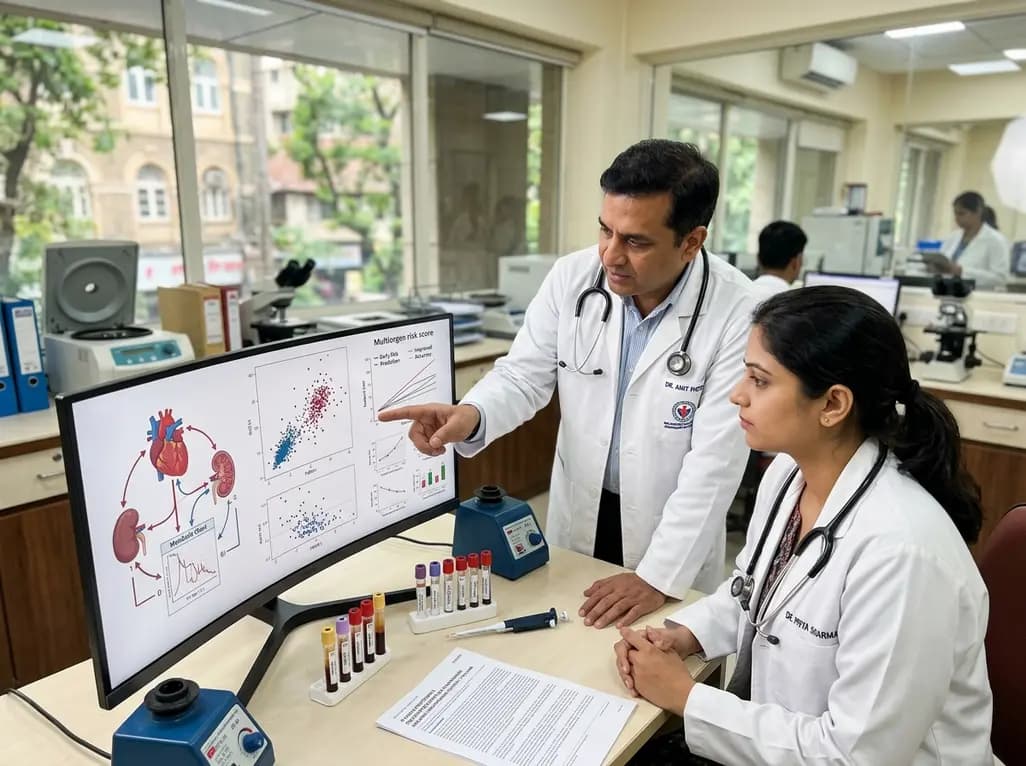
A large UK Biobank study reveals that plasma proteomic signatures capture preclinical organ damage and improve multiorgan risk prediction across early CKM syndrome stages 0 to 2 beyond traditional PREVENT clinical models.
Today

A retrospective CBCT study reveals that superior TMJ space asymmetry correlates moderately with occipital condyle-atlas-axis asymmetry in unilateral TMJ osteoarthritis, highlighting an imaging correlate between jaw biomechanics and upper cervical alignment rather than a standalone diagnostic marker.
Today

A Bayesian multilevel meta-analysis reveals that aerobic training combined with moderate carbohydrate restriction modestly lowers HbA1c in type 2 diabetes. However, sparse data and very low certainty leave incremental benefits over exercise or diet alone unproven, highlighting the need for individualized care.
Today
