.webp&w=384&q=75)

Loading, please wait...
Loading, please wait...
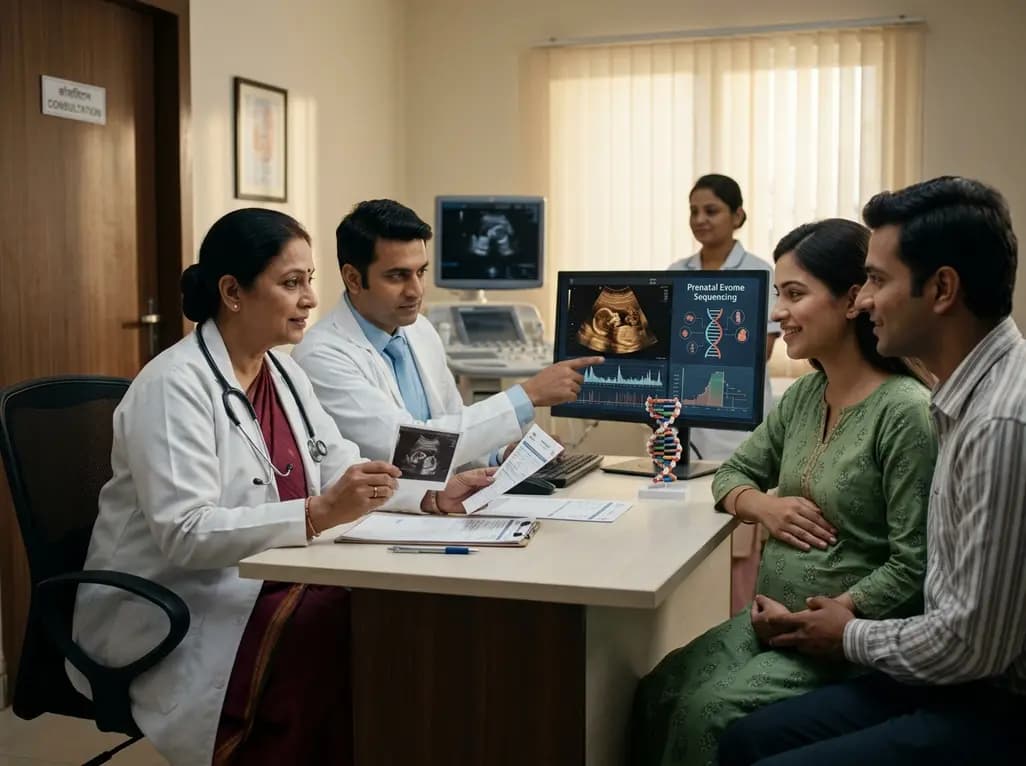
Advances in antenatal imaging allow clinicians to detect subtle anatomical variations early in pregnancy. However, ultrasound anomalies often create diagnostic ambiguity for obstetric teams and prospective parents. Routine cytogenetic tests, including karyotyping and chromosomal microarrays, frequently fail to explain non-chromosomal structural defects. In this challenging clinical context, prenatal exome sequencing has emerged as a transformative diagnostic tool. Historically, clinicians viewed genomic sequencing primarily as an instrument to identify lethal or severe neurodevelopmental disorders. Consequently, discovering an anomaly during antenatal screening routinely prompted discussions centered on grave outcomes. Emerging evidence demonstrates that high-throughput sequencing offers substantial utility beyond diagnosing severe pathology. Specifically, comprehensive genomic profiling can pinpoint benign, isolated, or highly treatable genetic conditions. By providing precise molecular diagnoses, sequencing enables clinicians to clarify ambiguous ultrasound findings. Furthermore, this approach prevents unjustified pregnancy terminations driven by diagnostic uncertainty. Clinicians can now offer nuanced, evidence-based guidance that accurately reflects postnatal expectations. As genomic testing becomes more accessible, understanding its reassuring potential is critical for contemporary maternal-fetal medicine specialists.
Recent large-scale clinical cohorts demonstrate the diagnostic power of next-generation sequencing in prenatal practice. In comprehensive cohorts evaluating structural or biochemical anomalies, exome sequencing achieves a diagnostic yield of approximately seventeen percent. While most identified variants confirm severe developmental disorders, a meaningful subset reveals comparatively favorable prognostic implications. For instance, researchers identified reassuring molecular diagnoses in approximately two percent of cases with definitive genetic findings. These cases involved variants linked to mild, isolated, transient, or medically treatable phenotypes. Identifying these specific genotypes immediately alters the clinical trajectory. Instead of anticipating complex multisystem syndromic disease, care teams can focus on targeted, organ-specific postnatal management. Moreover, resolving ambiguous phenotypes prevents unnecessary diagnostic cascades and prolonged hospital stays after delivery. Therefore, sequencing acts as a powerful molecular filter that stratifies fetuses into appropriate risk categories. Obstetricians and genetic counselors can subsequently deliver clear, objective prognostic assessments. This stratification is particularly vital when structural anomalies share phenotypic overlap with both benign variants and severe genetic syndromes.
Fetal limb defects and lateralization anomalies present significant prognostic challenges on routine prenatal sonography. For example, postaxial polydactyly can occur as an isolated, easily corrected finding or as a primary feature of severe ciliopathies. When sonographers detect an extra digit, distinguishing between these divergent outcomes via imaging alone remains difficult. In such scenarios, prenatal exome sequencing provides decisive diagnostic clarity. Demonstrating a pathogenic variant in the GLI1 gene confirms isolated postaxial polydactyly, effectively ruling out life-limiting syndromic ciliopathies. Similarly, the antenatal discovery of situs inversus often triggers intense parental anxiety regarding complex congenital heart disease or primary ciliary dyskinesia. Identifying causative variants in CFAP52 confirms isolated situs inversus totalis without associated syndromic impairment. Consequently, genetic clarification eliminates the looming suspicion of severe multiorgan dysfunction. Parents receive direct reassurance that their child will likely experience normal physical and cognitive development. Thus, molecular sequencing serves as a definitive diagnostic adjudicator, transforming vague ultrasound markers into well-defined, reassuring clinical prognoses.
Prenatal screening frequently uncovers unexpected biochemical anomalies that cause profound clinical confusion. For instance, an extremely low unconjugated estriol level on maternal serum screening raises concern for steroid sulfatase deficiency or lethal metabolic syndromes. In these situations, genomic sequencing can pinpoint maternal or fetal STS gene deletions, confirming X-linked ichthyosis. Although this dermatological condition requires ongoing skin care, it carries an excellent intellectual prognosis and a normal lifespan. Additionally, sequencing resolves complex, life-threatening fetal presentations like severe unexplained polyhydramnios and preterm labor. Mutations in the MAGED2 gene cause transient antenatal Bartter syndrome, a condition characterized by massive fetal polyuria and severe amniotic fluid elevation. While this disorder presents dramatically in utero, it spontaneously resolves during early infancy following appropriate supportive therapy. Without molecular confirmation, clinicians might mistake transient Bartter syndrome for permanent, debilitating renal dysplasias. Therefore, exome sequencing elucidates transient pathophysiology, reassuring parents that rigorous supportive care will yield a favorable long-term pediatric outcome.
The psychological toll of prenatal diagnostic uncertainty on expectant parents is profound and well documented. When fetal anomalies appear on ultrasound, parents frequently experience acute distress, grief, and uncertainty regarding pregnancy continuation. In the absence of definitive genetic data, fear of severe disability often leads families toward termination of wanted pregnancies. However, when prenatal exome sequencing confirms a mild or manageable etiology, it dramatically alters parental counseling. Genetic counselors can replace vague, worst-case scenarios with precise, reassuring medical facts. Furthermore, confirming a mild diagnosis empowers families to prepare practically and emotionally for birth. Parents can consult relevant pediatric subspecialists, such as pediatric surgeons or dermatologists, prior to delivery. Multidisciplinary care teams can establish structured postnatal management pathways before the infant arrives. Consequently, molecular testing minimizes acute parental anxiety, prevents tragic decisions based on misinterpretation, and strengthens parental confidence throughout the remainder of gestation.
Integrating high-throughput genomic sequencing into standard prenatal pathways requires coordinated multidisciplinary collaboration. As turn-around times for rapid exome sequencing decrease, clinicians can obtain diagnostic results within days rather than weeks. This rapid turnaround is essential for timely clinical decision-making within legal gestational timeframes. However, clinicians must also navigate significant technical and ethical complexities. Variants of uncertain significance and secondary findings require cautious bioinformatics interpretation and expert pre-test counseling. Obstetricians, maternal-fetal medicine specialists, and medical geneticists must collaborate closely to interpret molecular results within the specific clinical ultrasound context. Moreover, expanded access to prenatal sequencing in low- and middle-income settings will improve global reproductive health equity. Educating healthcare providers about both the diagnostic yield and the reassuring power of exome sequencing is paramount. In conclusion, genomic sequencing represents far more than a tool for detecting severe disability; it provides essential prognostic clarity that guides compassionate, individualized obstetric care.
Prenatal exome sequencing analyzes coding regions across thousands of genes to pinpoint specific pathogenic variants causing ultrasound anomalies. By identifying isolated single-gene alterations, such as GLI1 in postaxial polydactyly, sequencing definitively excludes multisystem syndromic disorders like ciliopathies. Consequently, this molecular precision allows clinicians to provide accurate, reassuring prognoses, ensuring prospective parents receive reliable information regarding expected postnatal development.
Extremely low maternal serum estriol levels indicate diverse underlying conditions, ranging from benign enzyme deficiencies to severe, lethal chromosomal abnormalities. Identifying an STS gene deletion through exome sequencing specifically confirms X-linked ichthyosis. This precise molecular diagnosis rules out lethal malformations, clarifies dermatological management needs at birth, and reassures parents that cognitive development and life expectancy remain completely unaffected.
Detecting reassuring genetic variants prenatally prevents unnecessary pregnancy terminations driven by diagnostic ambiguity and parental fear. Furthermore, it enables targeted multidisciplinary planning, such as scheduling minor postnatal corrective surgeries or pediatric consultations. Ultimately, molecular clarification eliminates diagnostic uncertainty, alleviates maternal psychological distress, and establishes evidence-based neonatal management pathways tailored to the specific condition.
Disclaimer: This content is for informational and educational purposes only. It does not constitute medical advice or establish a doctor-patient relationship. Healthcare professionals must exercise their independent clinical judgment. Refer to the latest local and national guidelines for clinical practice.
References
Rips J et al. When Fetal Anomalies Lead to Prognostic Clarification: An Underrecognized Application of Exome Sequencing. Prenat Diagn. 2026 Aug 16. doi: 10.1002/pd.70239. PMID: 42604848.
Lord J, McMullan DJ, Eberhardt RY, et al. Prenatal exome sequencing analysis in fetal structural anomalies detected by ultrasonography (PAGE): a cohort study. Lancet. 2019;393(10173):747-757.
Mone F, McMullan DJ, Williams D, et al. Evidence to Support the Clinical Utility of Prenatal Exome Sequencing in the Evaluation of the Fetus with Congenital Anomalies (Scientific Impact Paper No. 64). BJOG. 2021;128(4):e39-e50.
Fu F, Li R, Li Y, et al. Diagnostic yield of exome sequencing for prenatal diagnosis of fetal structural anomalies: a systematic review and meta-analysis. Prenat Diagn. 2022;42(6):662-685.

Read summarized clinical updates, watch expert medical content, and earn CME certifications right from your smartphone.
Open your smartphone camera to scan and install.





Exome sequencing in fetuses with structural or biochemical anomalies can identify mild, isolated, or transient genetic conditions. This refined prognostic assessment reduces uncertainty, avoids unwarranted pregnancy terminations, and enables tailored perinatal counseling and management.
last month

With post-monsoon dengue surges threatening South Asian health systems, physicians must refine triage and management. This guide covers vital warning signs, plasma leakage detection, crystalloid titration, and vector containment strategies to prevent mortality during seasonal arboviral epidemics.
Today

Findings from Project Viva indicate that sustained postpartum weight retention, rather than excessive gestational weight gain alone, directly worsens women's mid-life cardiovascular health, degrading blood pressure and glycemic parameters decades after delivery.
Today
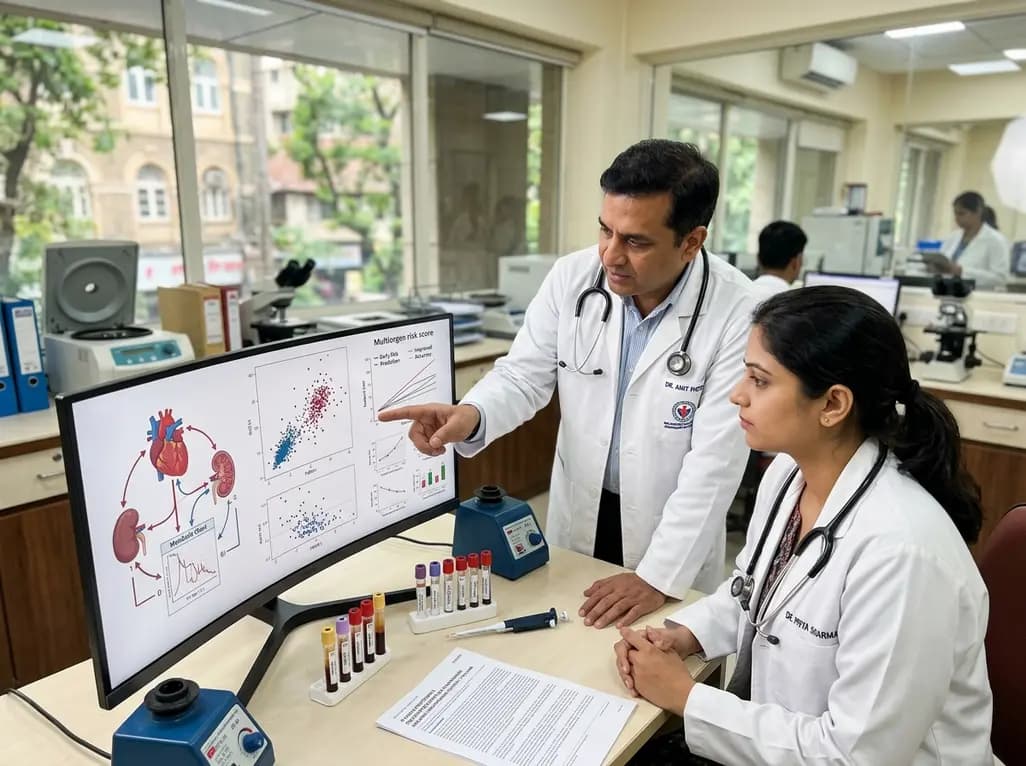
A large UK Biobank study reveals that plasma proteomic signatures capture preclinical organ damage and improve multiorgan risk prediction across early CKM syndrome stages 0 to 2 beyond traditional PREVENT clinical models.
Today

A retrospective CBCT study reveals that superior TMJ space asymmetry correlates moderately with occipital condyle-atlas-axis asymmetry in unilateral TMJ osteoarthritis, highlighting an imaging correlate between jaw biomechanics and upper cervical alignment rather than a standalone diagnostic marker.
Today

A Bayesian multilevel meta-analysis reveals that aerobic training combined with moderate carbohydrate restriction modestly lowers HbA1c in type 2 diabetes. However, sparse data and very low certainty leave incremental benefits over exercise or diet alone unproven, highlighting the need for individualized care.
Today
