.webp&w=384&q=75)

Loading, please wait...
Loading, please wait...

Emergency medical teams frequently encounter acutely deteriorating patients whose survival hinges on rapid triage and aggressive stabilization. Point-of-care diagnostics now permit early physiological evaluation long before hospital arrival. In this context, the prehospital mSOFA score has emerged as an invaluable tool for objective risk assessment during emergency transit. While previous research confirmed its strong discriminative capacity, clinicians lacked actionable cutoffs to guide on-scene interventions and destination hospital alerts. A landmark prospective multicentre investigation led by Del Pozo Vegas and colleagues has now established definitive clinical thresholds for this scoring system. Consequently, emergency clinicians can categorize patients into distinct prognostic strata within fifteen minutes of initial patient contact. Moreover, this standardized framework substantially improves prehospital decision-making regarding emergency department bypass, intensive care team activation, and aggressive on-scene resuscitation. By directly linking point-of-care biomarkers and clinical parameters to short-term prognosis, this investigation provides an evidence-based foundation for modern prehospital critical care.
The conventional Sequential Organ Failure Assessment score requires complex laboratory investigations that emergency response crews cannot readily obtain inside moving ambulances. To overcome these critical logistical barriers, clinical investigators developed the modified Sequential Organ Failure Assessment tool. This adapted version ranges from zero to seventeen points and relies entirely on rapid point-of-care testing. Specifically, field practitioners collect capillary or venous blood samples within fifteen minutes of initial patient contact to quantify metabolic and organ stress. The algorithm systematically incorporates indices of respiratory function, circulatory stability, and neurological status via the Glasgow Coma Scale. In addition, it integrates point-of-care biomarkers such as blood lactate and serum creatinine to capture subclinical hypoperfusion. The tool also replaces invasive arterial blood gas requirements with non-invasive peripheral oxygen saturation ratios. As a result, prehospital clinicians assess evolving multiorgan dysfunction without delaying scene departure or ambulance transit. In contrast to subjective impressions, this structured scoring system offers reproducible accuracy across diverse acute medical conditions. Therefore, the prehospital mSOFA score delivers a rigorous snapshot of acute physiological collapse during the critical golden hour.
The research team executed a prospective multicentre study across emergency services in Spain and Austria. Between January 1, 2021, and April 30, 2026, advanced life support ambulances enrolled adult patients suffering from non-traumatic acute medical illnesses. The primary derivation cohort comprised 14,726 patients, while an independent group of 2,100 patients formed the external validation cohort. The investigators established two-day in-hospital mortality as their primary clinical endpoint to capture acute early deterioration. In addition, the authors utilized locally estimated scatterplot smoothing curves, monotonic trend analysis, and the Youden index to discover mathematically optimal cutoffs. Paramedics and emergency physicians obtained point-of-care measurements swiftly, ensuring data completeness without interrupting emergency resuscitation. Furthermore, researchers blinded hospital outcome assessors to baseline ambulance scores to prevent prognostic bias. The study also recorded secondary outcomes, including critical care unit admission rates and urgent life-saving interventions. Consequently, this design represents one of the largest prospective evaluations of prehospital severity scoring to date.
The overall two-day mortality across the derivation cohort reached 5.6 percent. Through statistical modeling, the authors classified patients into five distinct prognostic categories exhibiting a striking mortality gradient. The lowest category, termed physiologic stability, captured scores from zero to two points with a 0.1 percent mortality. In this extensive low-risk subset, negative predictive values exceeded 98 percent, providing profound reassurance against catastrophic early collapse. The compensated at risk category covered scores of three to four points with a 2.5 percent mortality rate. In contrast, patients scoring five to seven points entered the significant imbalance tier, where mortality climbed to 16.1 percent. More critically, scores of eight to ten points defined frank multiorgan failure, presenting a substantial 45.3 percent mortality rate. Finally, patients scoring eleven or higher represented critical multiorgan failure, enduring an alarming 76.4 percent mortality rate. Notably, the independent validation cohort perfectly confirmed this steep mortality gradient across all subgroups.
These newly established thresholds carry profound operational benefits for daily emergency medical practice and acute hospital workflows. Besides predicting mortality, the five-tier framework correlated tightly with objective measures of hospital care intensity. For example, individuals in higher tiers required mechanical ventilation, vasopressors, and emergency hemodialysis far more frequently. Consequently, medical dispatchers and ambulance crews can streamline destination hospital selection during transport. Rather than transporting unstable patients to community facilities, ambulance teams can divert directly to tertiary intensive care centers. Furthermore, receiving emergency physicians can mobilize specialized resuscitation teams and clear resuscitation bays prior to ambulance arrival. In contrast, patients in the lowest risk bracket rarely deteriorate, permitting conservative monitoring and preventing unnecessary intensive care bed utilization. Thus, the prehospital mSOFA score optimizes resource deployment across overcrowded acute care emergency networks.
Emergency medical services across India are undergoing rapid modernization through expanded advanced life support ambulance fleets and point-of-care blood analyzers. However, acute overcrowding in public and private tertiary emergency departments frequently delays critical life-saving interventions. Adopting this validated five-category scale can substantially enhance prehospital triage across Indian metropolitan centers and rural referral corridors. For instance, ambulances operating under centralized dispatch can calculate the score en route to identify patients requiring ICU admission. Moreover, Indian emergency physicians can integrate this classification into triage protocols to expedite sepsis bundles and shock management. Because handheld metabolic devices are increasingly affordable, Indian health systems can realistically operationalize these thresholds. Nevertheless, Indian clinical leaders must conduct regional validation studies to account for local disease epidemiology and patient demographics.
Emergency medical personnel calculate the score by combining bedside clinical observations with rapid point-of-care laboratory biomarkers. Field crews measure pulse oximetry, Glasgow Coma Scale, and mean arterial blood pressure alongside capillary or venous creatinine and lactate levels. These parameters evaluate respiratory, cardiovascular, neurological, renal, and metabolic organ systems. The resulting cumulative score ranges from zero to seventeen points, allowing complete prognostic calculation within fifteen minutes of ambulance contact.
Scores of five or higher indicate significant physiological imbalance requiring aggressive resuscitation and rapid destination hospital notification. When scores reach eight points or greater, prehospital crews should prioritize direct transfer to tertiary centers equipped with intensive care units. These patients face excessive short-term mortality and often require emergent invasive mechanical ventilation, vasopressors, and immediate critical care specialist consultation upon emergency department arrival.
Unlike traditional early warning scores that rely solely on vital signs, this scoring system incorporates objective metabolic biomarkers through point-of-care testing. Consequently, it identifies occult tissue hypoperfusion and impending multiorgan failure before frank physiological collapse occurs. Moreover, the five-tier structure provides clear, empirically validated cutoffs with negative predictive values exceeding 98 percent, vastly improving clinical confidence during prehospital triage decisions.
Disclaimer: This content is for informational and educational purposes only and should not be considered medical advice or replace clinical judgment. Healthcare professionals must assess each clinical scenario independently, accounting for individual patient variables, institutional capabilities, and evolving medical literature. Refer to the latest local and national guidelines for clinical practice.
References

Read summarized clinical updates, watch expert medical content, and earn CME certifications right from your smartphone.
Open your smartphone camera to scan and install.





A prospective multicentre study validates actionable risk stratification thresholds for the prehospital mSOFA score. The 5-tier classification reliably predicts two-day mortality and guides early critical care interventions.
Today
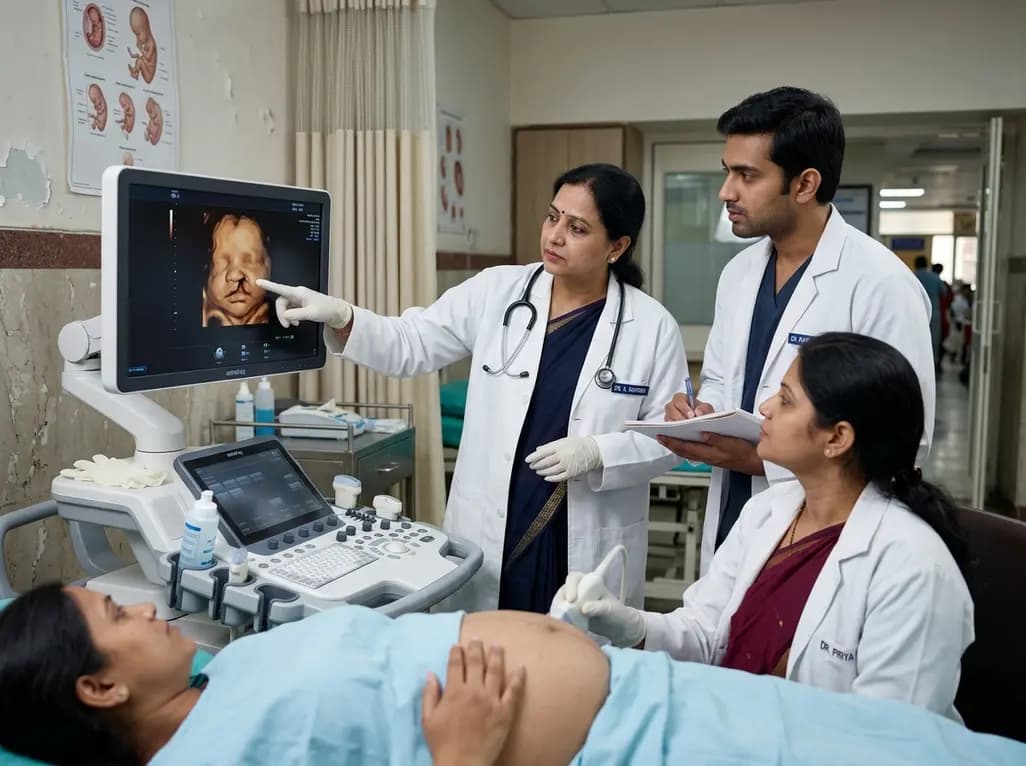
A 5-year retrospective study evaluates prenatal ultrasound detection of fetal cleft lip and palate. While overall detection reached 87%, accuracy varied from 99.3% in combined clefts to 50% in isolated cases. Combined defects showed elevated risks of concurrent structural anomalies and chromosomal abnormalities.
Today

An updated systematic review and meta-analysis of 7,875 patients reveals that routine microaxial left ventricular support during nonemergent high-risk PCI does not reduce mortality or ischemic complications, while significantly increasing major bleeding events.
Yesterday
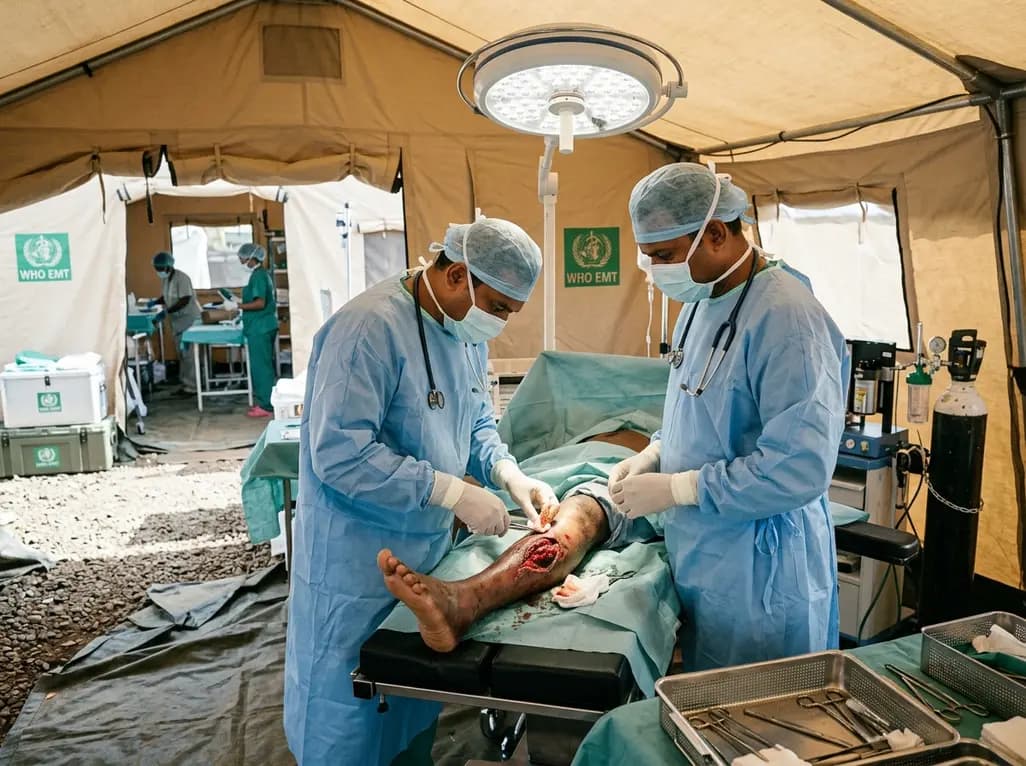
Following Cyclone Chido, a WHO EMT-2 field hospital performed 268 surgeries in Mayotte. While acute trauma is expected initially, 98% of cases were septic wounds of the extremities requiring secondary intention healing, revealing crucial operational insights for disaster surgical preparedness.
Today
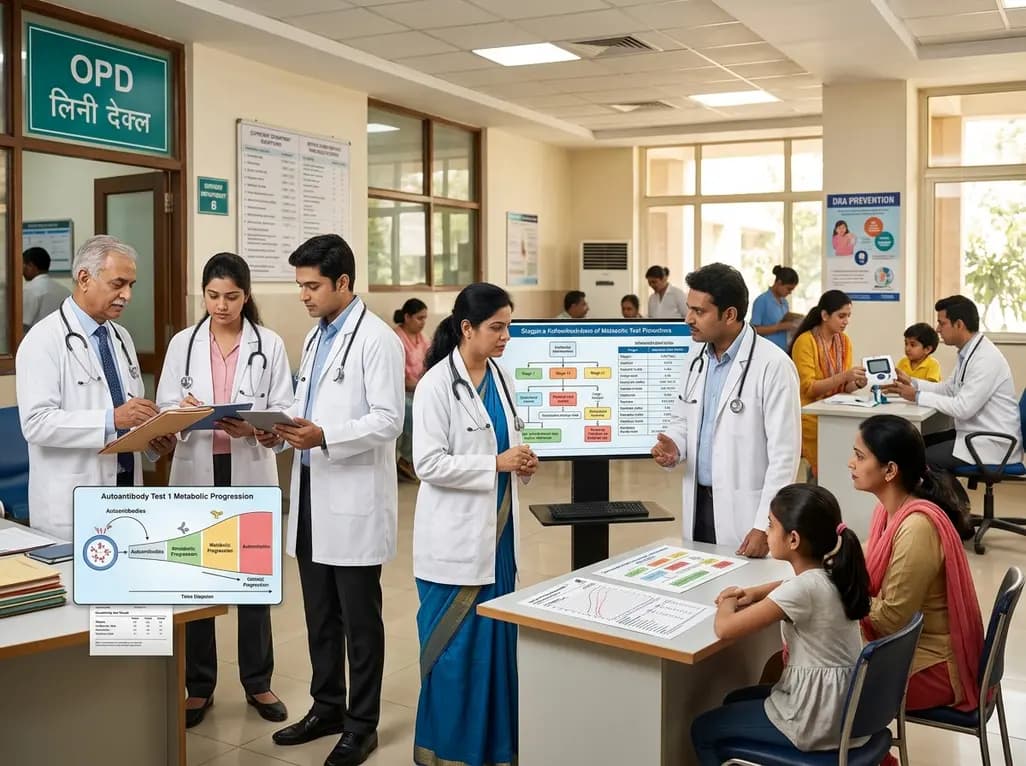
The SED-SEEN-SEEP consensus outlines an Integrated Care Pathway for preclinical type 1 diabetes, structuring target screening, autoantibody confirmation, metabolic staging, and proactive follow-up to prevent diabetic ketoacidosis and facilitate early disease-modifying intervention.
Yesterday
