.webp&w=384&q=75)

Loading, please wait...
Loading, please wait...
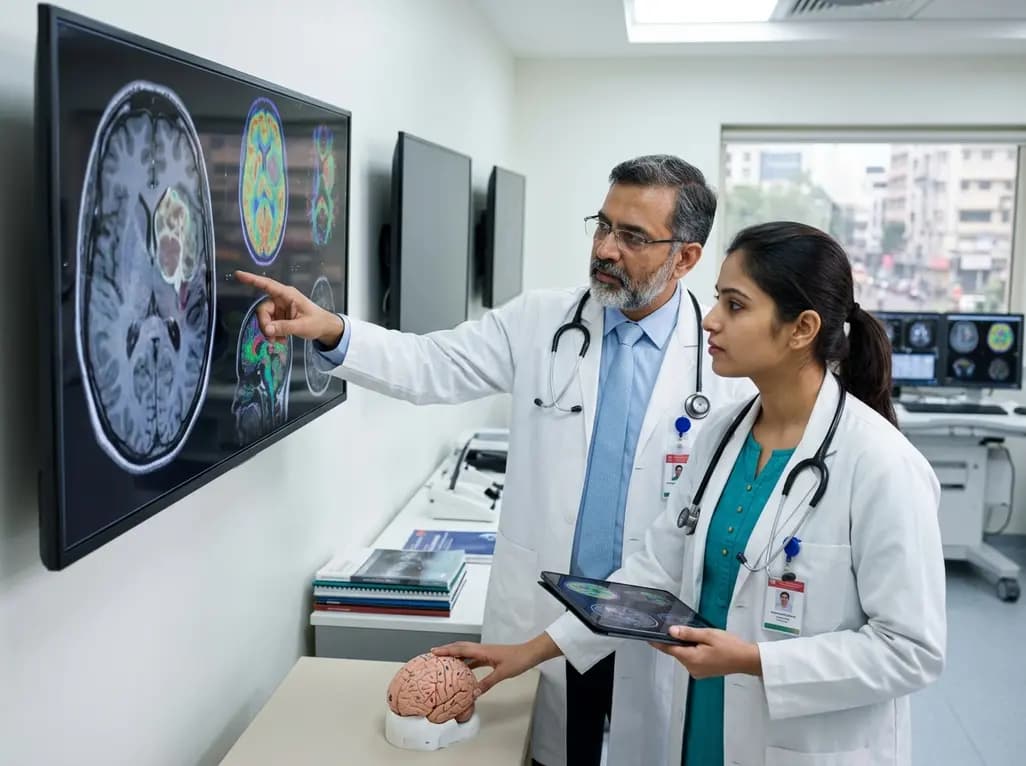
Type 5 insular and paralimbic gliomas present unique surgical challenges due to their complex vascular anatomy. Clinicians now adopt a precision neuro-oncology workflow to optimize patient outcomes. This method integrates advanced imaging with specialized surgical techniques. High-grade gliomas in the insular region often limit resection due to perforator-rich vessels. Consequently, traditional approaches may leave significant residual disease. This study evaluates a new integrated framework to improve safe resection rates.
The core of this strategy involves rigorous preoperative planning. Surgeons utilized structural MRI, diffusion tensor tractography, and vascular mapping to define safety boundaries. Furthermore, they employed the transsylvian microneurosurgical approach to access deep-seated tumors. This path allows for better visualization of eloquent subcortical pathways. By integrating these tools, the surgical team can navigate challenging corridors more effectively. Additionally, early postoperative MRI helps categorize residual disease for further treatment.
The results of this integrated approach are promising. Gross total resection (GTR) was achieved in 72% of the cases. Meanwhile, subtotal and partial resections occurred in 21% and 7% of patients, respectively. Most importantly, the study reported a neurologic preservation rate of 95%. This high percentage indicates that the multimodal planning successfully protected critical functions. Permanent deficits occurred in only 5% of the cohort. Therefore, the workflow balances maximal tumor removal with functional safety.
A key innovation in this workflow is the postoperative radionuclide-oriented stratification. After surgery, clinicians categorized residual disease into three groups: no significant residual, surgically constrained residual, and biologically high-risk residual. Specifically, 15% of patients fell into the high-risk category. These individuals became candidates for targeted radionuclide therapy. This precision approach ensures that adjuvant therapies focus on patients who need them most. Consequently, the workflow provides a structured framework for biologically informed decision-making.
This research highlights how multimodal integration can transform the management of surgically complex gliomas. By combining microsurgery with precision molecular targeting, clinicians can improve survival while maintaining quality of life. The precision neuro-oncology workflow stands as a viable model for modern neuro-oncology departments.
Type 5 gliomas involve the entire insula and extend into the paralimbic regions. Their deep location and proximity to the middle cerebral artery make them particularly difficult to resect.
Targeted radionuclide therapy delivers radiation directly to tumor cells based on molecular markers. It is particularly useful for high-risk residual disease that cannot be safely removed through further surgery.
Disclaimer: This content is for informational and educational purposes only and does not constitute medical advice or a professional recommendation. The information provided should not be used for diagnosing or treating a health problem or disease. Patients should always consult with a qualified healthcare professional regarding any medical condition or treatment. Refer to the latest local and national guidelines for clinical practice.
References
Wang J et al. Radionuclide Therapy Integrated Multimodal Transsylvian Microneurosurgical Management of Type 5 Insular and Paralimbic Gliomas for Precision Oncology. Cancer Biother Radiopharm. 2026 Jun 09. doi: 10.1177/10849785261458514. PMID: 42261737.
Müller J, et al. Targeted radionuclide therapy for gliomas: Emerging clinical trial landscape. Neuro-Oncology. 2024. doi: 10.1093/neuonc/noae125.
Lucas CHG, et al. The surgical management of diffuse gliomas: Current state of neurosurgical management and future directions. Neuro-Oncology. 2023. doi: 10.1093/neuonc/noad133.
"
Read summarized clinical updates, watch expert medical content, and earn CME certifications right from your smartphone.
Open your smartphone camera to scan and install.





An integrated study evaluates a workflow for Type 5 insular gliomas using multimodal planning, transsylvian surgery, and radionuclide-oriented stratificatio...
4 months ago

Novel diimide and hydrazone scaffolds, particularly compound #C4, synergistically reactivate latent HIV-1 when combined with JQ1 or PKC activators. Demonstrating donor-matched proviral transcription ex vivo and non-canonical signaling, these findings advance shock and kill strategies toward reservoir eradication.
Today

A cross-sectional study reveals that maternal RSV vaccination coverage reached only 43.7% in Argentina, with maternal vaccine knowledge being the sole independent predictor of uptake. Clinicians play a crucial role in eliminating informational and structural barriers to optimize infant health.
Today

Review how tailored exercise programs benefit frail older patients with heart failure. Explore pathophysiological mechanisms, individualized training prescriptions, and strategies to overcome adherence barriers in clinical practice.
Yesterday

This comparative study evaluates posterior labral tears with and without glenohumeral instability, highlighting distinct demographic patterns, MRI underestimation in stable shoulders, and successful arthroscopic repair outcomes.
Yesterday

A clinical study demonstrates that early intervention with tocilizumab, either as monotherapy or bridged with corticosteroids, achieves significant proptosis reduction and resolves active inflammation in treatment-naive thyroid eye disease.
Today
