.webp&w=384&q=75)

Loading, please wait...
Loading, please wait...

Postpartum hemorrhage (PPH) remains a leading cause of maternal mortality worldwide. To improve clinical readiness, a new study explores the use of a PPH management mobile application for midwifery students. This innovative tool aims to enhance both theoretical knowledge and practical skill execution during obstetric crises. In India, where maternal health remains a priority, such digital interventions could prove transformative for nursing and midwifery education.
Researchers conducted a two-phase randomized controlled trial to assess the application's efficacy. Initially, they validated a knowledge test with a cohort of 90 students using the Test Analysis Program. Subsequently, 82 participants from a university in the Central Black Sea region were split into intervention and control groups. While everyone received standard classroom demonstrations, the intervention group also utilized the mobile game for one week. This supplemental period allowed students to engage with clinical scenarios repeatedly in a low-stakes environment.
The findings indicate that students using the PPH management mobile application scored significantly higher on validated knowledge tests compared to the control group. Furthermore, their performance on standardized procedure checklists improved markedly. Transitioning from traditional lectures to interactive gamification helps bridge the gap between theory and practice effectively. Therefore, integrating such tools into the medical curriculum could strengthen the healthcare workforce in regions with high maternal risk.
Gamification offers a low-cost and high-impact solution for modern medical education. Specifically, it allows students to learn from their mistakes in a risk-free virtual environment. Because PPH requires immediate and precise action, the muscle memory built through digital simulation is invaluable. Consequently, this technology provides a scalable way to standardize emergency obstetric care training across diverse healthcare settings. Educators should consider these mobile tools to supplement standard simulation-based training.
No, these applications are designed to supplement, not replace, traditional clinical instruction and hands-on simulation. They provide a vital reinforcement layer for theoretical knowledge and protocol memorization.
Yes, gamified learning is highly effective for improving retention and engagement among healthcare workers. It is particularly useful for mastering standardized emergency protocols in fast-paced medical environments like labor rooms.
Disclaimer: This content is for informational and educational purposes only. It does not constitute medical advice and should not be used as a substitute for professional clinical judgment. Refer to the latest local and national guidelines for clinical practice.
References
Çitak G et al. The Effect of Game-based Mobile Application in Learning Postpartum Hemorrhage Management for Midwifery Students. Comput Inform Nurs. 2026 Feb 24. doi: 10.1097/CIN.0000000000001501. PMID: 41734387.
Dieteren C, Sarkar S, Saharan S, Bonfrer I. Effects of a smartphone application on maternal health knowledge and dietary diversity among pregnant women in India: a randomized single center pilot study. Journal of Global Health Reports. 2022;6:e2022057.
Bayrampour H et al. Effectiveness of mHealth Apps for Maternal Health Care Delivery. PMC. 2025.

Read summarized clinical updates, watch expert medical content, and earn CME certifications right from your smartphone.
Open your smartphone camera to scan and install.





A study demonstrates that a game-based mobile application significantly improves midwifery students' knowledge and skills in managing postpartum hemorrhage....
7 months ago
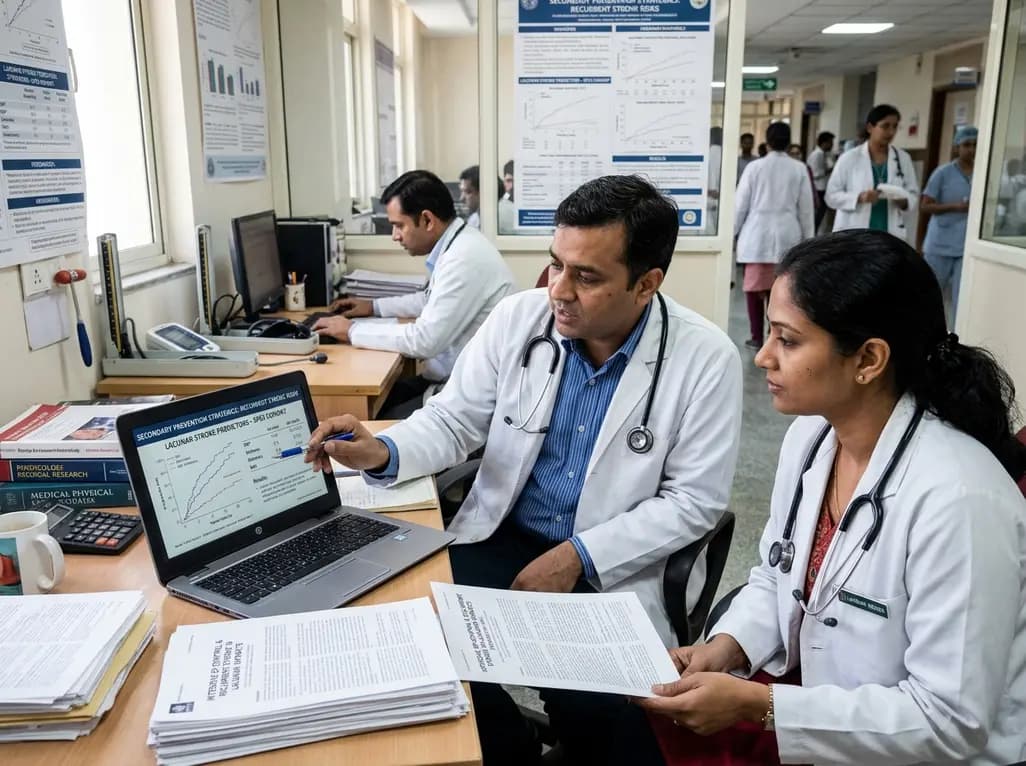
Explore vital recurrent stroke predictors in lacunar stroke patients managed with intensive blood pressure lowering. This analysis examines trial findings from SPS3 to uncover residual vascular risks, metabolic factors, and targeted secondary prevention strategies for high-risk neurological patients.
Today

Odisha has established India's first state-level clinical protocol specifically tailored for pregnant women with sickle cell disease. Developed with NHM and UNICEF, the framework provides structured antenatal screening, crisis mitigation, standardized referral pathways, and specialized interdisciplinary care.
Today

The Directorate General of Health Services directs Indian states to halt the hazardous reuse and reprocessing of single-use medical devices. Discover regulatory implications under the Drugs and Cosmetics Act, critical infection risks, legal liabilities, and operational changes required across clinical specialties.
Today

Mitochondria-targeted nanoparticles self-assembled from EGCG and L-glutamic acid effectively restore mitochondrial homeostasis, suppress synovial inflammation, and attenuate chondrocyte senescence in osteoarthritis, offering a promising disease-modifying nanotherapy.
Today

India is advancing preventive healthcare by integrating genomics, artificial intelligence, and quantum technologies. With the SANGAM programme sequencing one million Indian genomes, clinicians can unlock personalized therapies, detect cardiometabolic risks early, and curb the burden of diabetes and heart disease.
Today
