.webp&w=384&q=75)

Loading, please wait...
Loading, please wait...
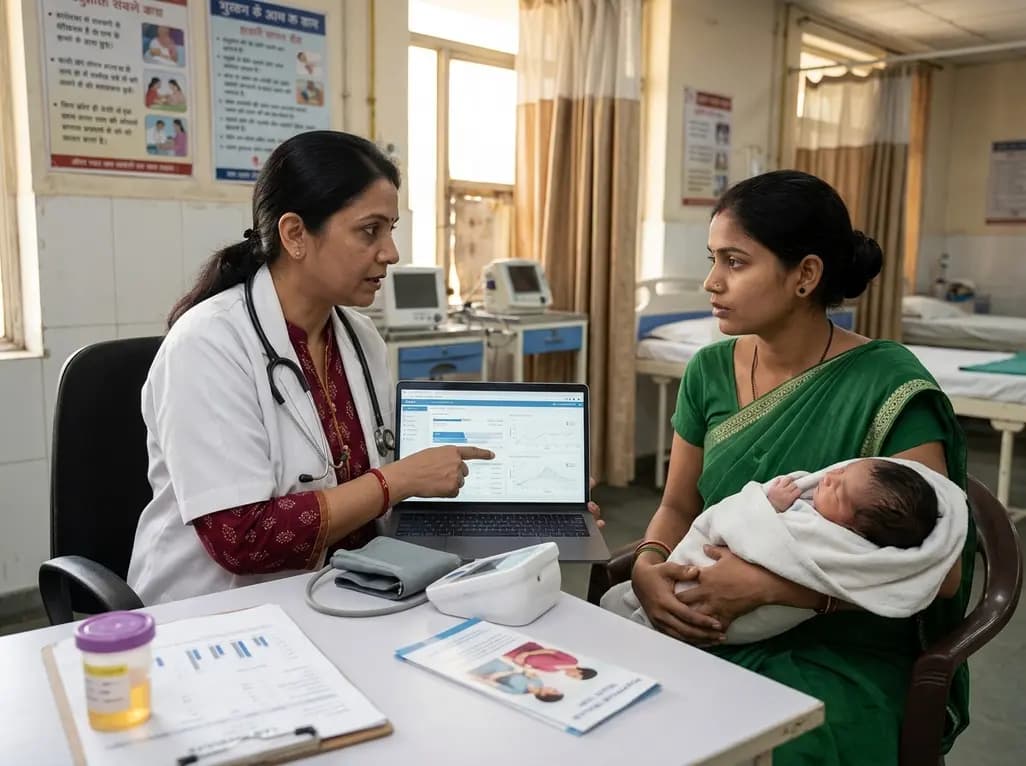
Hypertensive disorders of pregnancy (HDP), especially pre-eclampsia, serve as critical indicators of a woman’s future health. While delivery resolves the immediate crisis, many women continue to face long-term cardiovascular and renal risks. Therefore, clinicians must implement a structured postpartum kidney assessment to identify those at risk of chronic kidney disease (CKD). Current protocols often focus solely on blood pressure surveillance, yet this narrow approach may miss persistent renal damage or incomplete recovery.
Research indicates that a significant subgroup of women demonstrates persistent abnormalities after delivery. These issues often manifest as albuminuria or proteinuria rather than a sharp drop in the estimated glomerular filtration rate (eGFR). Consequently, relying only on serum creatinine might give a false sense of security. Early detection is vital for managing pregnancy-unmasked CKD and improving maternal outcomes. Furthermore, transition from obstetric to primary care requires clear communication regarding these renal findings.
The proposed framework integrates three core pillars: blood pressure monitoring, serum creatinine with eGFR, and urinary assessment. This multi-faceted postpartum kidney assessment ensures that clinicians do not overlook silent renal impairment. Moreover, the timing of these tests should align with routine obstetric follow-up, typically around six to twelve weeks postpartum. If abnormalities persist, a repeat evaluation at six months is often necessary to confirm if the condition has stabilized.
High-priority patients require even closer scrutiny. For instance, women who experienced pregnancy-associated acute kidney injury (AKI) or those with preterm pre-eclampsia face the highest risk. Additionally, persistent hypertension or pre-existing comorbidities should trigger immediate specialist consultation. By adopting this feasible approach, obstetric services can bridge the gap between acute care and long-term renal health. Ultimately, this proactive strategy prevents the late diagnosis of established kidney disease.
Albuminuria often appears before a significant decrease in eGFR occurs. Therefore, urinary assessment helps identify early-stage renal damage that serum creatinine levels might miss during the early postpartum period.
Patients with severe or preterm pre-eclampsia, pregnancy-associated AKI, or persistent hypertension are at high risk. Additionally, those with pre-existing conditions like diabetes or obesity require more vigilant monitoring and follow-up.
A referral is recommended if there is persistent proteinuria, a significantly reduced eGFR, or if hypertension remains difficult to control despite standard treatment. Early nephrology involvement helps in planning long-term renal protection strategies.
Disclaimer: This content is for informational and educational purposes only. It does not constitute professional medical advice, diagnosis, or treatment. Always seek the advice of your physician or other qualified health provider with any questions you may have regarding a medical condition. Refer to the latest local and national guidelines for clinical practice.
References
Corrêa LMA et al. Postpartum kidney assessment after hypertensive disorders of pregnancy: A practical framework for obstetric care. Int J Gynaecol Obstet. 2026 Jun 13. doi: 10.1002/ijgo.71144. PMID: 42287092.
Brown MA et al. The hypertensive disorders of pregnancy: ISSHP classification, diagnosis & management recommendations for international practice. Pregnancy Hypertens. 2018;13:291-310.
KDIGO 2024 Clinical Practice Guideline for the Evaluation and Management of Chronic Kidney Disease. Kidney Int. 2024;105(4S):S117-S314.

Read summarized clinical updates, watch expert medical content, and earn CME certifications right from your smartphone.
Open your smartphone camera to scan and install.





Hypertensive disorders of pregnancy like pre-eclampsia signal future renal risks. This review proposes a postpartum kidney assessment framework using BP, creatinine, and albuminuria to identify incomplete recovery or chronic kidney disease, especially in high-risk patients.
4 months ago

As monsoon seasons elevate arboviral disease threats, Tamil Nadu has initiated an ICMR-monitored evaluation of the tetravalent dengue vaccine in Tenkasi district. Clinicians emphasize clinical monitoring, public prevention, and high-quality early pediatric care to reduce disease morbidity across endemic regions.
Today

A comparative cohort study evaluates vNOTES vs TLH hysterectomy for benign conditions, demonstrating shorter operative duration, faster return to daily activities, and equivalent female sexual function scores without increased dyspareunia.
Today

Review how tailored exercise programs benefit frail older patients with heart failure. Explore pathophysiological mechanisms, individualized training prescriptions, and strategies to overcome adherence barriers in clinical practice.
Yesterday

This comparative study evaluates posterior labral tears with and without glenohumeral instability, highlighting distinct demographic patterns, MRI underestimation in stable shoulders, and successful arthroscopic repair outcomes.
Yesterday

A clinical study demonstrates that early intervention with tocilizumab, either as monotherapy or bridged with corticosteroids, achieves significant proptosis reduction and resolves active inflammation in treatment-naive thyroid eye disease.
Today
