.webp&w=384&q=75)

Loading, please wait...
Loading, please wait...

Minimally invasive techniques have revolutionized general surgery across healthcare systems worldwide. However, expanding operative indications requires continuous surveillance of adverse outcomes to protect clinical safety. A recent multi-center investigation evaluated laparoscopic surgery complications across four general surgery facilities in Ouagadougou, Burkina Faso. The findings offer valuable insights into surgical site morbidity, emergency operative risks, and targeted infection control strategies.
In this retrospective five-year cross-sectional study of 1,377 laparoscopic operations, investigators recorded adverse events in 38 patients. This represents an overall complication incidence of 2.8%, highlighting the baseline safety of laparoscopy even within developing healthcare systems. Among the affected cohort, the mean age was 42.6 years, with 23 female patients and 15 male patients, establishing a male-to-female ratio of 0.68.
Furthermore, these demographic metrics reflect typical surgical presentations in general abdominal units. The low complication rate confirms that laparoscopic techniques remain reliable and reproducible across varied surgical environments. However, recognizing patient vulnerability is essential because acute tissue inflammation and delayed initial presentation frequently compromise postoperative tissue healing. Consequently, surgeons must maintain vigilant postoperative tracking during early recovery phases.
Emergency surgical interventions comprised 65.8% of all complicated cases documented in the study. Acute appendicitis was the single most frequent surgical indication, accounting for 12 cases of postoperative morbidity. Because emergency abdominal pathology often involves localized peritonitis, purulent exudate, and significant tissue edema, operative fields present heightened contamination risks.
Consequently, performing emergency laparoscopy under time constraints and altered anatomical planes increases operative complexity. In many low- and middle-income healthcare centers, patients often seek hospital care after significant symptom delay. Therefore, tissue necrosis and microbial contamination are often already advanced upon initial trocar insertion. Surgical teams must therefore emphasize thorough peritoneal irrigation, gentle tissue handling, and meticulous port closure to minimize adverse sequelae during acute surgical emergencies.
Surgical site infection emerged as the predominant complication, occurring in 71.9% of all adverse cases. Additionally, the mean time to the onset of postoperative complications was 2.5 days. This early manifestation strongly suggests intraoperative contamination during specimen extraction or trocar placement rather than delayed secondary bacteremia.
Trocar sites are vulnerable to bacterial inoculation when infected tissues, such as inflamed appendiceal stumps or gallbladders, contact the abdominal wall without protection. Moreover, inadequate sterilization of laparoscopic instruments, sub-optimal electrocautery-induced tissue charring, and hematoma formation in port wounds amplify bacterial proliferation. Therefore, adopting protective specimen retrieval endobags, ensuring proper wound irrigation, and applying antiseptic dressings remain pivotal measures. Surgeons must systematically decontaminate all extraction wounds before closing fascia and skin layers.
Reassuringly, the study recorded zero operative or postoperative mortality among the 1,377 procedures. This finding affirms that minimally invasive surgery provides a safe alternative to open laparotomy in low-resource environments. Nevertheless, patients who developed complications experienced a prolonged mean hospital stay of 9.5 days.
This protracted hospitalization imposes a significant economic and psychosocial burden on patients and resource-constrained health systems. Prolonged admissions also increase the risk of hospital-acquired superinfections and unnecessary broad-spectrum antimicrobial consumption. Hence, minimizing surgical morbidity directly protects hospital bed capacity and lowers direct healthcare expenditures. Timely identification of wound erythema or superficial discharge allows outpatient management, preventing prolonged bed occupancy and secondary complications.
Preventing surgical site infections requires a multifaceted quality-improvement approach tailored to hospital infrastructure. Because infectious morbidity represents the vast majority of avoidable complications, operating theaters must enforce standardized sterilization and disinfection protocols for reusable laparoscopic hardware. In particular, optical trocars, camera sheaths, and hand instruments require validated high-level disinfection.
Additionally, surgical teams should optimize preoperative antibiotic prophylaxis by administering appropriate agents within 60 minutes prior to skin incision. Maintaining strict operating theater ventilation, minimizing intraoperative room traffic, and practicing sterile technique during port insertion further decrease bacterial loads. Postoperatively, nursing teams must follow aseptic wound care guidelines to prevent secondary contamination during dressing changes. Implementing surgical safety checklists consistently ensures compliance across surgical staff.
The findings from Ouagadougou offer valuable parallels for surgical units across district hospitals and high-volume tertiary centers in India. As laparoscopic appendectomy and cholecystectomy expand into rural and suburban Indian healthcare facilities, infection control remains paramount. Resource constraints, high emergency surgical caseloads, and rising antimicrobial resistance create comparable clinical challenges.
Indian surgeons should actively promote the routine use of affordable indigenous endobags for infected tissue extraction. Furthermore, institutional antimicrobial stewardship programs must discourage indiscriminate postoperative antibiotic extensions, focusing instead on sterile operative technique and proper wound toileting. Establishing regular surgical audits and complication registries will enable Indian surgical departments to identify institutional vulnerabilities, reduce port-site infections, and ensure that minimally invasive surgery delivers optimal patient outcomes.
In this multicenter study, surgical site infections accounted for 71.9% of all documented complications, while the overall complication rate was 2.8% among 1,377 laparoscopic cases. Although minimally invasive surgery significantly reduces wound complications compared to open laparotomy, trocar sites remain susceptible to bacterial contamination. This is especially true during emergency operations involving infected visceral organs such as the appendix or gallbladder.
Emergency procedures often involve advanced tissue inflammation, purulent exudate, and heightened bacterial bioburden compared to elective surgeries. In this study, emergency procedures accounted for 65.8% of complicated cases. Delayed patient presentation, friable tissues, and urgent operative conditions increase intraoperative contamination risks, making meticulous tissue handling, thorough peritoneal lavage, and protective specimen retrieval essential to prevent postoperative infectious morbidity.
Surgical teams can significantly reduce port-site infections by consistently using endobags for tissue extraction, ensuring thorough port-site irrigation, and applying strict aseptic techniques. Furthermore, administering timely preoperative antibiotic prophylaxis, properly sterilizing reusable laparoscopic instruments, avoiding excessive thermal tissue injury, and closing fascial defects carefully help eliminate dead space and prevent hematoma formation, thereby minimizing wound breakdown and infection.
Disclaimer: This content is for informational and educational purposes only and should not be considered medical advice. Always consult a qualified healthcare professional regarding any medical condition or treatment. Refer to the latest local and national guidelines for clinical practice.
References

Read summarized clinical updates, watch expert medical content, and earn CME certifications right from your smartphone.
Open your smartphone camera to scan and install.





A 5-year multicenter study in Ouagadougou evaluated 1,377 laparoscopic cases, revealing an overall complication rate of 2.8%. Surgical site infections comprised 71.9% of adverse events, primarily in emergency surgeries. Strengthening infection control and port-site care is crucial for optimal surgical outcomes.
last month
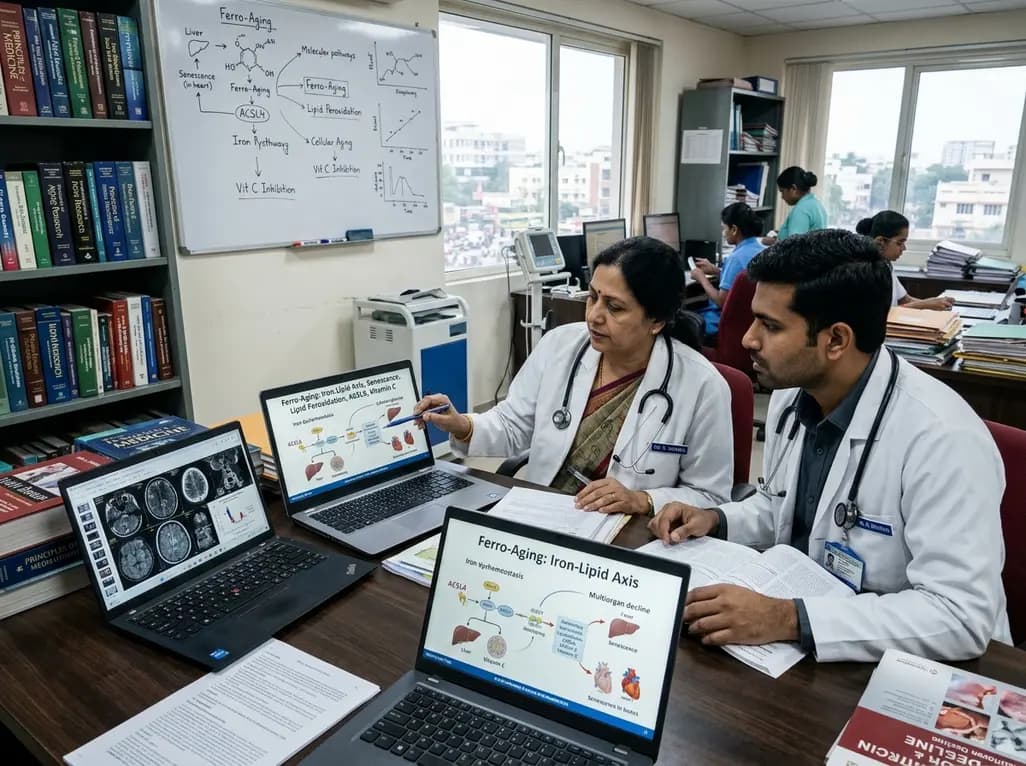
Recent research defines ferro-aging as a conserved iron-lipid axis driving organ decline across primates. Age-related iron dyshomeostasis stimulates ACSL4-mediated lipid peroxidation, promoting cellular senescence. Notably, vitamin C directly inhibits ACSL4, suppressing phospholipid oxidation and multi-organ decay.
Today
A retrospective cohort study evaluated 1,000 low-risk singleton births to assess maternal and neonatal outcomes during office-hours versus off-hours. Off-hours deliveries were significantly associated with higher odds of intrapartum cesarean sections and episiotomies, highlighting critical obstetric staffing considerations.
Today
New clinical evidence demonstrates a shift away from strict exercise restrictions in genetic heart disease. While patients with channelopathies engage in more vigorous activity than those with cardiomyopathies, shared decision-making and individualized risk assessments ensure safe, beneficial exercise participation.
Today
Sarcopenia significantly impairs functional independence and amplifies fracture risks in patients with osteoarthritis and osteoporosis. Learn about modern diagnostic strategies, GLP-1 therapy considerations, and evidence-based non-pharmacological management across multidisciplinary clinical settings.
Today
Discover how to identify superimposed entrapment neuropathy in diabetic patients. This review details clinical evaluation, surgical decompression evidence, and a structured algorithm for primary care referrals to prevent ulcers and preserve limb function.
Today
