.webp&w=384&q=75)

Loading, please wait...
Loading, please wait...

Managing early-onset fetal growth restriction (FGR) requires precise tools to determine underlying causes. A recent study highlights how placental insufficiency markers can evaluate the fetal growth restriction genetic risk. Researchers analyzed pregnancies where growth was severely limited before 29 weeks of gestation. Specifically, they looked at cases where the estimated fetal weight was at or below the 3rd percentile.
The soluble fms-like tyrosine kinase-1 (sFlt-1) to placental growth factor (PlGF) ratio typically serves as a proxy for placental health. However, a lower ratio in these high-risk cases suggests a higher probability of non-chromosomal genetic abnormalities. When placental markers appear relatively normal, the restriction may stem from intrinsic fetal factors rather than placental dysfunction. Consequently, clinicians might need to prioritize advanced genetic testing like chromosomal microarray (CMA) or whole-exome sequencing (WES) in these specific scenarios.
Furthermore, the data indicates that stratifying patients by their sFlt-1/PlGF ratio improves diagnostic yield. Mothers with low ratios had a significantly higher rate of pathogenic genetic variants in their fetuses. This finding is particularly relevant for Indian clinicians who often balance the costs and benefits of invasive prenatal testing. Moreover, identifying these markers early can guide parental counseling and neonatal management plans effectively.
Additionally, the study emphasizes that even when ultrasound findings are isolated, the absence of placental insufficiency should raise suspicion. If the placenta appears to be functioning well biochemically, the growth restriction is likely secondary to a genetic condition. Therefore, integrating these biomarkers into routine protocols could refine the selection of candidates for exome sequencing.
A high sFlt-1/PlGF ratio indicates placental insufficiency. Conversely, a low ratio in severe FGR suggests the cause might be genetic rather than placental, increasing the likelihood of finding anomalies through CMA or WES.
Clinicians should consider WES when early-onset FGR is severe (\u22643rd percentile) and placental markers like the sFlt-1/PlGF ratio are within normal limits, as this combination points toward a higher genetic risk.
Disclaimer: This content is for informational and educational purposes only. It does not constitute professional medical advice, diagnosis, or treatment. Always seek the advice of your physician or other qualified health provider with any questions you may have regarding a medical condition. Refer to the latest local and national guidelines for clinical practice.
References

Read summarized clinical updates, watch expert medical content, and earn CME certifications right from your smartphone.
Open your smartphone camera to scan and install.





Recent research shows that low placental insufficiency markers (sFlt-1/PlGF ratio) help predict genetic anomalies in early-onset fetal growth restriction....
6 months ago

Explore vital recurrent stroke predictors in lacunar stroke patients managed with intensive blood pressure lowering. This analysis examines trial findings from SPS3 to uncover residual vascular risks, metabolic factors, and targeted secondary prevention strategies for high-risk neurological patients.
Today

Odisha has established India's first state-level clinical protocol specifically tailored for pregnant women with sickle cell disease. Developed with NHM and UNICEF, the framework provides structured antenatal screening, crisis mitigation, standardized referral pathways, and specialized interdisciplinary care.
Today

The Directorate General of Health Services directs Indian states to halt the hazardous reuse and reprocessing of single-use medical devices. Discover regulatory implications under the Drugs and Cosmetics Act, critical infection risks, legal liabilities, and operational changes required across clinical specialties.
Today
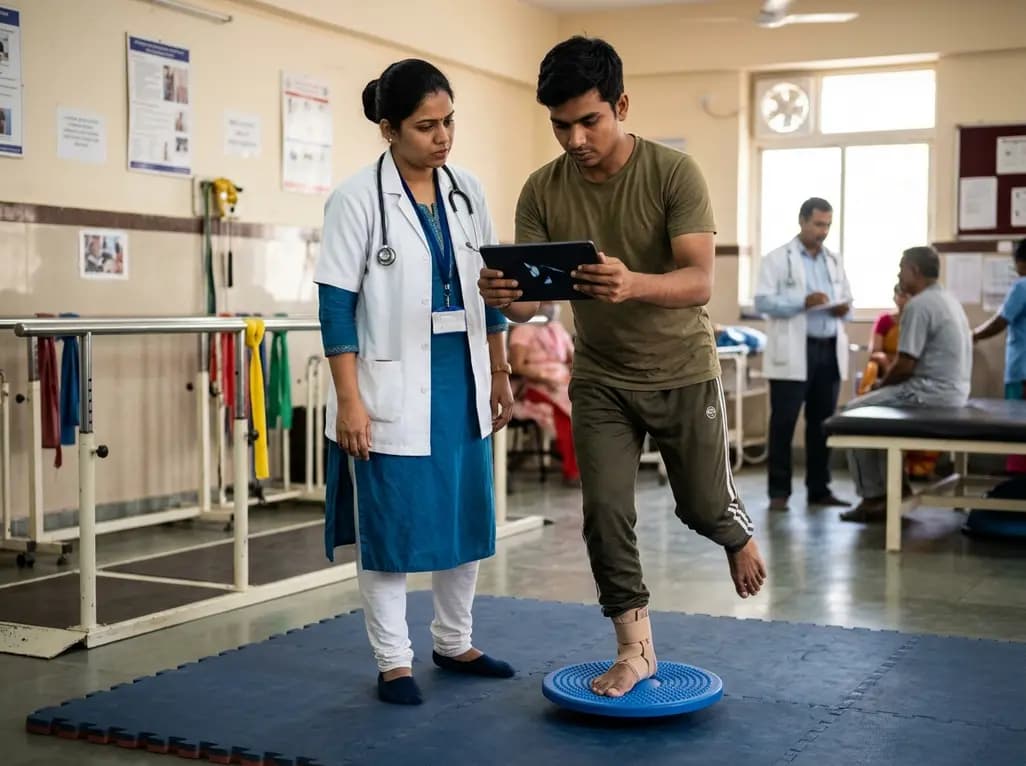
A randomized controlled trial demonstrates that an eight-week dual-task training intervention significantly improves static and dynamic postural control over standard balance exercises in individuals with chronic ankle instability, addressing critical neurocognitive deficits during athletic and daily activities.
Today

India is advancing preventive healthcare by integrating genomics, artificial intelligence, and quantum technologies. With the SANGAM programme sequencing one million Indian genomes, clinicians can unlock personalized therapies, detect cardiometabolic risks early, and curb the burden of diabetes and heart disease.
Today
