.webp&w=384&q=75)

Loading, please wait...
Loading, please wait...

In the complex environment of the Intensive Care Unit (ICU), clinicians frequently encounter the challenge of managing sepsis alongside Acute Kidney Injury (AKI). Piperacillin/tazobactam remains a cornerstone of empirical therapy in Indian healthcare settings due to its broad-spectrum activity against Gram-negative pathogens. However, determining the Piperacillin Tazobactam AKI Dosing regimen requires a delicate balance between achieving therapeutic efficacy and avoiding drug accumulation. Standard doses may lead to toxicity, while early reductions might result in subtherapeutic levels during the critical early phase of infection. This dilemma is particularly relevant in India, where the burden of critical illness and antibiotic resistance is high. A recent multicenter cohort study by Saad MO and colleagues investigates this exact issue, providing much-needed clarity on how early dose adjustments influence survival outcomes for our most vulnerable patients. Consequently, understanding these dynamics is essential for improving clinical outcomes and reducing the risk of treatment failure in the ICU.
Furthermore, the physiological changes associated with critical illness significantly alter the pharmacokinetics of beta-lactam antibiotics. Patients with AKI often experience changes in the volume of distribution and drug clearance. Therefore, applying a 'one-size-fits-all' approach to dosing can be hazardous. While clinicians often fear the neurotoxicity associated with high levels of piperacillin, the risk of underdosing during the first 24 to 48 hours of sepsis is equally concerning. Research suggests that maintaining high plasma concentrations early in the treatment course is vital for pathogen eradication. In contrast, premature dose reduction based solely on initial creatinine levels may compromise the antibiotic's bactericidal effect. This study specifically aimed to evaluate whether early intervention in dosing improves or hinders the 28-day mortality rate among these patients.
When clinicians manage septic patients with declining renal function, the primary concern is often the prevention of further kidney damage or systemic toxicity. However, the accumulation of piperacillin/tazobactam is not merely a laboratory concern; it can manifest as clinical neurotoxicity, including seizures and encephalopathy. These complications can prolong the duration of mechanical ventilation and increase the length of stay in the ICU. Nevertheless, we must weigh these risks against the immediate threat of uncontrolled infection. In many Indian ICUs, the lack of real-time therapeutic drug monitoring (TDM) makes this balance even harder to achieve. Consequently, physicians often rely on creatinine-based formulas to guide dose adjustments, despite their limitations in the acute setting.
Moreover, the study highlights that the timing of dose adjustment is a critical variable. Early adjustment, defined as modification within the first 24 to 48 hours, may prevent toxicity but could also lead to a failure in achieving the required time-above-MIC (minimum inhibitory concentration). This is particularly dangerous for beta-lactams, which are time-dependent antibiotics. Additionally, the fluctuating nature of renal function in AKI means that a dose that is appropriate today may be subtherapeutic tomorrow if the patient's renal perfusion improves. Thus, the clinical decision-making process must be dynamic rather than static. The researchers found that mortality outcomes were closely tied to how aggressively these adjustments were implemented in the early stages of critical care admission.
The retrospective multicenter cohort study utilized data from the eICU Collaborative Research Database to analyze adult patients with AKI who received piperacillin/tazobactam. By focusing on patients with a pretreatment estimated glomerular filtration rate (eGFR) that warranted concern, the researchers sought to identify patterns in mortality based on dosing strategies. Interestingly, the findings suggest that the relationship between dose adjustment and mortality is not as straightforward as previously assumed. While dose reduction is standard practice in chronic kidney disease, its role in AKI is more nuanced. For instance, the study suggests that rapid dose reduction might be associated with higher mortality if not handled with extreme caution.
Furthermore, the data indicates that clinicians should prioritize the achievement of therapeutic targets over the fear of potential accumulation during the initial resuscitation phase. This is because the mortality risk from inadequately treated sepsis often outweighs the risk of antibiotic-associated side effects in the short term. However, this does not mean that renal function should be ignored. Instead, it suggests that dose adjustments should perhaps be deferred until the patient is hemodynamically stable and the bacterial load has been partially addressed. Moreover, the study emphasizes the need for individualized dosing regimens that account for the patient's overall clinical trajectory, rather than relying solely on biochemical markers of renal function. This shift in perspective could significantly impact how we manage infections in Indian tertiary care centers.
To implement Piperacillin Tazobactam AKI Dosing effectively, clinicians must integrate various factors, including the severity of the infection, the likely pathogen, and the stage of AKI. The study by Saad MO et al. suggests that early, aggressive dose reduction might not be the safest path for all patients. Instead, a loading dose followed by a standard or slightly reduced dose for the first 24 hours may be more beneficial for survival. This strategy ensures that therapeutic concentrations are reached rapidly, which is essential for controlling the inflammatory response in sepsis. Consequently, the timing of the first 'adjusted' dose becomes a pivotal moment in the patient's treatment plan.
Additionally, the research highlights that 28-day ICU mortality is a comprehensive metric that reflects the success of both the antimicrobial therapy and the management of AKI. If dose adjustments are made too early, the risk of therapeutic failure increases, leading to secondary complications. On the other hand, if adjustments are never made, the risk of drug-induced toxicity becomes a significant hurdle to recovery. Therefore, a middle-ground approach—potentially guided by clinical response and serial renal function tests—is recommended. Furthermore, as we look toward the future of critical care in India, the integration of pharmacodynamic modeling and TDM could provide a more precise way to handle these adjustments, ensuring that every patient receives the exact amount of drug needed for their specific physiological state.
Although TDM for beta-lactams is not yet widely available in many clinical settings across India, its value cannot be overstated. The study's results indirectly point toward the limitations of using serum creatinine as the sole guide for dosing in AKI. Creatinine is a lagging indicator of renal function, meaning that by the time it rises, the AKI is already well-established. Conversely, as renal function begins to recover, creatinine levels may stay elevated for several days. This lag can lead to inappropriate dosing for several days. Therefore, monitoring actual drug levels would allow for precise adjustments that ensure both safety and efficacy. In the absence of TDM, clinicians are encouraged to use clinical judgment and perhaps lean toward higher doses in the first 48 hours of treatment.
Moreover, the study underscores that the impact of piperacillin/tazobactam on mortality is also influenced by the presence of co-morbidities and the severity of the primary illness. Patients with multiple organ failure may handle drug clearance differently than those with isolated AKI. Consequently, the holistic management of the patient is just as important as the specific antibiotic dose. By considering the patient's fluid balance, use of vasopressors, and nutritional status, intensivists can better predict the pharmacokinetic behavior of piperacillin/tazobactam. Ultimately, the goal is to move away from reactive dose adjustments and toward a proactive, patient-centered antimicrobial strategy that prioritizes survival and renal recovery equally.
The findings from this multicenter study open new avenues for research into personalized medicine within the ICU. While the retrospective nature of the study provides valuable insights, prospective randomized controlled trials are needed to confirm the optimal timing for dose adjustments. In the meantime, the current evidence suggests that we should be cautious about reducing doses too early in the course of sepsis-associated AKI. This is a significant takeaway for healthcare providers in India, where the management of septic shock remains a daily challenge. By refining our approach to Piperacillin Tazobactam AKI Dosing, we can potentially save more lives and improve the quality of care for critically ill patients.
In addition, the medical community must continue to advocate for better diagnostic tools to assess renal function in real-time. Biomarkers other than creatinine, such as cystatin C or NGAL, may offer a more accurate picture of a patient's current GFR, allowing for safer dosing adjustments. Furthermore, the development of dosing software that incorporates patient-specific variables could assist clinicians in making more informed decisions at the bedside. As we refine these strategies, the emphasis must remain on the patient's clinical outcome. By combining robust clinical data with innovative technology, we can navigate the complexities of antibiotic dosing in the setting of organ failure and ensure that our therapies are both potent and safe for every patient we treat.
Acute Kidney Injury primarily reduces the renal clearance of piperacillin and tazobactam, as both components are predominantly excreted via the kidneys. In the ICU, this is further complicated by fluid resuscitation, which increases the volume of distribution. This means that while clearance is lower, the initial concentration in the blood may also be lower than expected. Therefore, clinicians must carefully time dose adjustments to avoid both early underdosing and late-stage drug toxicity.
Yes, accumulation of piperacillin/tazobactam can lead to significant neurotoxicity, especially in patients with impaired renal function. Symptoms may include confusion, tremors, and even status epilepticus. Because these symptoms often mimic ICU delirium or metabolic encephalopathy, the diagnosis can be difficult to make. Clinicians should maintain a high index of suspicion for drug toxicity when a patient with AKI fails to improve neurologically despite the successful treatment of the underlying infection.
Most experts recommend prioritizing a full loading dose of piperacillin/tazobactam regardless of the patient's renal function. This approach ensures that therapeutic plasma levels are achieved rapidly to combat the infection. Since the initial dose is primarily determined by the volume of distribution rather than the rate of clearance, it is generally safe and necessary. Subsequent doses can then be adjusted based on the patient's evolving renal status and the severity of the septic process.
Disclaimer: This content is for informational and educational purposes only and does not constitute medical advice. It is not intended to be a substitute for professional medical advice, diagnosis, or treatment. Always seek the advice of your physician or other qualified healthcare provider with any questions you may have regarding a medical condition. Refer to the latest local and national guidelines for clinical practice.
References
Saad MO et al. Impact of Early Dose Adjustment of Piperacillin/Tazobactam on Mortality in Critically Ill Patients With Acute Kidney Injury: A Retrospective Multicenter Cohort Study. Ann Pharmacother. 2026 Jul 05. doi: 10.1177/10600280261452547. PMID: 42402098.
KDIGO 2012 Clinical Practice Guideline for Acute Kidney Injury. Kidney International Supplements. 2012; 2(1):1-138.
Roberts JA, et al. DALI: Drug Antibiotic Levels in Intensive Care Unit Patients: Are drug determinants of beta-lactam antibiotic levels in critically ill patients? A multinational, multicentre study. Clin Infect Dis. 2014; 58(8):1072-1083.

Read summarized clinical updates, watch expert medical content, and earn CME certifications right from your smartphone.
Open your smartphone camera to scan and install.





A retrospective multicenter study evaluates if early dose adjustment of piperacillin/tazobactam in critically ill patients with acute kidney injury affects 28-day ICU mortality. Findings suggest that timing and precision in dosing are critical for survival in septic AKI cases.
3 months ago
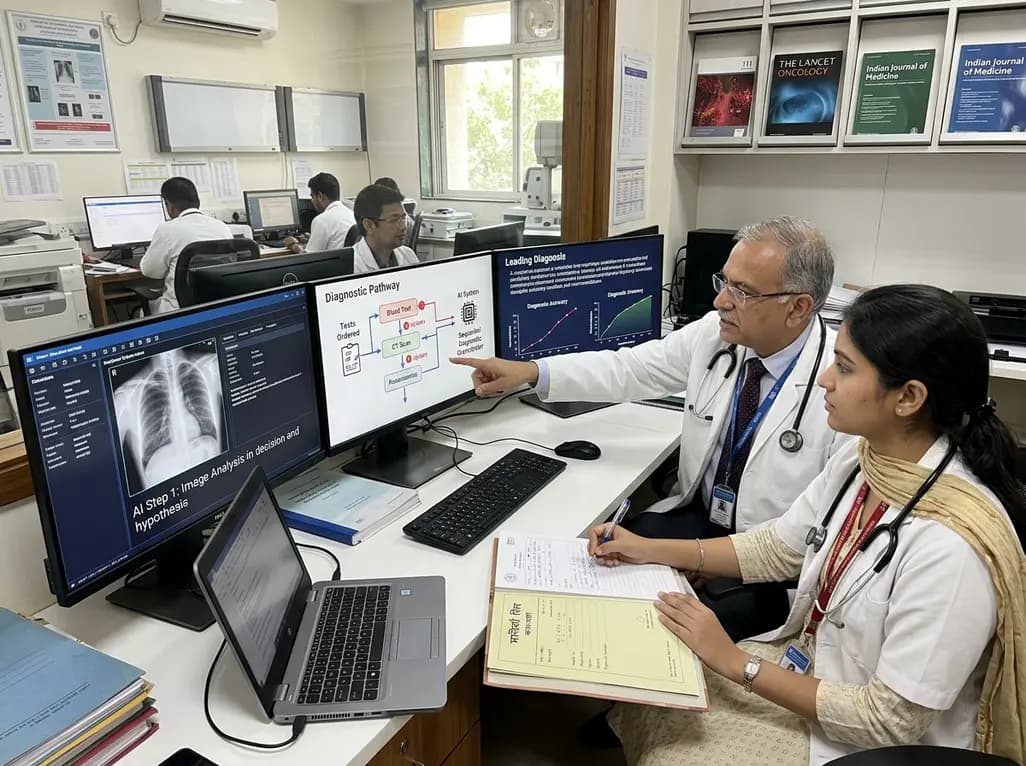
A breakthrough peer-reviewed study demonstrates that a sequential AI diagnosis system can mirror real-world clinical reasoning. By ordering stepwise tests and updating hypotheses dynamically, this multi-agent orchestrator achieved superior diagnostic accuracy while reducing investigative costs.
Today

A prenatal case highlights severe glutaric acidemia type II presenting as bilateral hyperechoic cystic kidneys at 18 weeks. Whole-exome sequencing revealed a novel homozygous ETFDH frameshift variant, demonstrating the power of rapid genetic testing in fetal renal anomalies.
Today

Review how tailored exercise programs benefit frail older patients with heart failure. Explore pathophysiological mechanisms, individualized training prescriptions, and strategies to overcome adherence barriers in clinical practice.
Yesterday

This comparative study evaluates posterior labral tears with and without glenohumeral instability, highlighting distinct demographic patterns, MRI underestimation in stable shoulders, and successful arthroscopic repair outcomes.
Yesterday

A clinical study demonstrates that early intervention with tocilizumab, either as monotherapy or bridged with corticosteroids, achieves significant proptosis reduction and resolves active inflammation in treatment-naive thyroid eye disease.
Yesterday
