

Loading, please wait...
Loading, please wait...

Prostate cancer remains one of the leading causes of oncological morbidity and mortality worldwide. Recently, oncologists have explored dietary chemoprevention alongside standard clinical treatment protocols. Bioactive dietary compounds demonstrate striking biological activity in laboratory models. However, poor systemic bioavailability has historically limited their clinical utility. To address this pharmacokinetic barrier, researchers increasingly develop phytochemical nanoparticles in prostate cancer models. Understanding whether these delivery systems truly alter epigenetic signatures is essential for contemporary urologists and clinical oncologists.
Epigenetic dysregulation plays a pivotal role in prostate tumorigenesis and disease progression. Unlike irreversible genomic mutations, epigenetic modifications represent potentially reversible alterations in chromatin architecture and gene expression. Consequently, investigators focus intently on DNA methyltransferase inhibition and histone modification. Natural bioactive compounds, such as sulforaphane, curcumin, genistein, and green tea polyphenols, have shown measurable effects in preclinical prostate cancer cell lines. Specifically, these compounds induce locus-specific promoter demethylation and restore the expression of silenced tumor suppressor genes. For instance, sulforaphane can reactivate critical protective enzymes, including glutathione S-transferase P1, which detoxifies reactive electrophiles and protects genomic integrity. Similarly, curcumin modulates histone acetyltransferases and alters microRNA expression profiles in androgen-sensitive cells. Therefore, dietary compounds theoretically offer a non-cytotoxic means of reversing transcriptional silencing. In addition, these natural agents influence nuclear factor kappa B activation and disrupt multiple pro-survival oncogenic cascades. Nevertheless, free phytochemicals undergo rapid hepatic metabolism, show minimal water solubility, and fail to achieve effective intra-tumoral concentrations in human tissues.
To circumvent the severe pharmacokinetic hurdles of native compounds, nanomedicine offers innovative encapsulation platforms. Engineers construct liposomes, polymeric micelles, lipid nanoparticles, and solid mesoporous silica carriers to transport hydrophobic plant extracts. Consequently, phytochemical nanoparticles in prostate cancer research have garnered substantial scientific attention. These advanced carriers protect labile molecules from premature enzymatic degradation in the bloodstream. Furthermore, nanoscale formulation significantly enhances systemic circulation half-life and improves cellular uptake through enhanced permeation effects. In laboratory models, formulated epigallocatechin gallate and nano-encapsulated quercetin demonstrate markedly higher intracellular accumulation compared to unformulated extracts. In addition, experimental animals treated with nano-phytochemicals frequently exhibit reduced tumor volume and lower prostate-specific antigen concentrations. Thus, nanocarriers clearly improve drug delivery kinetics and cellular internalization. However, researchers must distinguish between simple cytotoxic suppression and genuine molecular reprogramming. Most published evaluations focus strictly on traditional cytotoxicity assays, apoptotic markers, or gross xenograft regression. As a result, the literature often assumes epigenetic modulation occurs simply because drug delivery improves, creating a notable scientific presumption.
A rigorous appraisal of current literature reveals a critical missing link in nanomedicine research. Although nano-formulations reliably increase intracellular bioavailability, few studies measure precise chromatin remodelling or promoter demethylation in vivo. For example, while free green tea catechins and sulforaphane modulate DNA methyltransferases in cell culture, nanoparticle versions rarely track these specific epigenetic endpoints. Instead, investigators primarily report non-specific cell death, reduced angiogenesis, or impaired cell migration. Therefore, evidence that nanocarriers preserve the intended epigenetic mechanism within solid tumors remains largely presumptive. Moreover, the prostate microenvironment presents severe physiological barriers that impede uniform nanoparticle distribution. Variable vascular permeability, dense desmoplastic stroma, and elevated interstitial fluid pressure limit uniform nanocarrier penetration. Furthermore, tumor cell populations exhibit marked receptor heterogeneity, meaning that targeted nanoparticles do not engage every malignant clone equally. Consequently, enhanced cellular uptake in peripheral tumor zones does not guarantee uniform therapeutic target engagement. Uro-oncologists must therefore recognize that higher tissue concentration does not automatically translate into functional chromatin restoration.
When translating laboratory concepts to human trials, clinicians encounter fundamental genetic realities. Epigenetic therapeutics presuppose that target tumor suppressor genes remain genetically intact but transcriptionally silenced. However, advanced prostate tumors frequently harbor definitive genomic deletions rather than epigenetic repression. For instance, phosphatase and tensin homolog loss predominantly occurs through physical chromosomal deletion. Because DNA demethylation cannot restore an absent gene sequence, epigenetic modulators cannot correct this critical defect. Furthermore, human clinical trials utilizing dietary compounds have repeatedly yielded mixed or negative findings. Several randomized controlled studies evaluating high-dose green tea extracts or isoflavones failed to meet primary progression-free survival endpoints. In addition, oral administration of concentrated dietary extracts has triggered unexpected adverse safety signals. High-dose polyphenols can cause acute hepatic injury, gastrointestinal distress, and clinically significant drug-drug interactions. Nano-formulations could theoretically alter toxicity profiles, but human safety data for systemic phytochemical nanoparticles remain exceedingly sparse. Therefore, practitioners must resist premature extrapolation from benchtop observations to clinical patient management.
For practicing oncologists and urologists, integrating scientific rigor into discussions about dietary supplements is paramount. Many patients seek natural chemopreventive therapies, assuming plant-derived substances are inherently effective and non-toxic. However, physicians must clearly explain that phytochemical nanoparticles remain experimental investigational platforms. To date, regulatory authorities have not approved any nano-phytochemical formulation for prostate cancer therapy or prevention. Future progress requires meticulously designed translational trials that link pharmacokinetics with documented target engagement. Researchers must demonstrate that nano-formulations reach human prostate tissue at biologically active concentrations. Furthermore, future clinical protocols must assess pre-treatment and post-treatment biopsy specimens for locus-specific demethylation and histone mark restoration. Until robust phase II and phase III trials confirm meaningful survival benefits, standard evidence-based treatments must remain the foundation of care. In conclusion, while nanotechnology provides powerful tools for drug engineering, molecular target engagement must drive clinical translation. Clinicians should counsel patients against unverified commercial formulations that promise epigenetic cancer cures.
No, phytochemical nanoparticles cannot reverse PTEN loss because this abnormality typically involves complete genomic deletion rather than reversible epigenetic silencing. While epigenetic modulators can remove aberrant DNA methyl tags from intact promoter regions, they cannot reconstruct physically deleted chromosomal material. Consequently, tumors characterized by PTEN deletions do not regain functional protein expression through nanocarrier-mediated phytochemical therapy, underscoring the absolute necessity of identifying distinct molecular subsets before selecting epigenetic strategies.
Free dietary phytochemicals generally fail in human trials because of exceptionally poor bioavailability, low aqueous solubility, and extensive first-pass hepatic metabolism. Although laboratory experiments demonstrate potent anticancer effects at micromolar concentrations in vitro, oral ingestion yields negligible concentrations in human prostate tissue. Furthermore, rapid systemic clearance and systemic chemical instability prevent sustained target engagement, leading to disappointing clinical outcomes and negative phase III chemoprevention results.
Commercial nano-phytochemical supplements are not recommended for prostate cancer patients because they lack regulatory oversight, standardized dosing, and robust human safety evaluations. Unregulated nano-supplements may exhibit unpredictable bioavailability, causing unanticipated toxicities such as hepatic injury or systemic gastrointestinal distress. Moreover, concentrated phytochemicals can interact adversely with conventional therapies, including antiandrogens, radiation, and chemotherapy. Patients should strictly rely on approved oncological treatments under the guidance of qualified specialists.
Disclaimer: This content is for informational and educational purposes only. It is not intended to be a substitute for professional medical advice, diagnosis, or treatment. Always seek the advice of your physician or other qualified health provider with any questions you may have regarding a medical condition. Never disregard professional medical advice or delay in seeking it because of something you have read here. The authors and publishers are not responsible for any adverse effects resulting from the use of the information presented. Refer to the latest local and national guidelines for clinical practice.
References

Read summarized clinical updates, watch expert medical content, and earn CME certifications right from your smartphone.
Open your smartphone camera to scan and install.





A critical analysis of phytochemical nanoparticles in prostate cancer, evaluating whether enhanced drug delivery connects with measured epigenetic changes and clinical efficacy in oncology practice.
Today

A study reveals that extracellular vesicle-derived miR-144-5p is a highly predictive diagnostic biomarker for carotid artery plaques (AUC 0.907). Correlating with IL-1β and TNF-α, it opens new avenues for liquid biopsy-based stroke risk assessment and vascular monitoring.
Today

A new quality-improvement initiative reveals that universal maternal mental health screening in the NICU increased screening rates from 29.5% to 95.0%, with nearly 60% of screened mothers requiring psychosocial referrals, highlighting the urgent need for embedded mental health resources.
Today
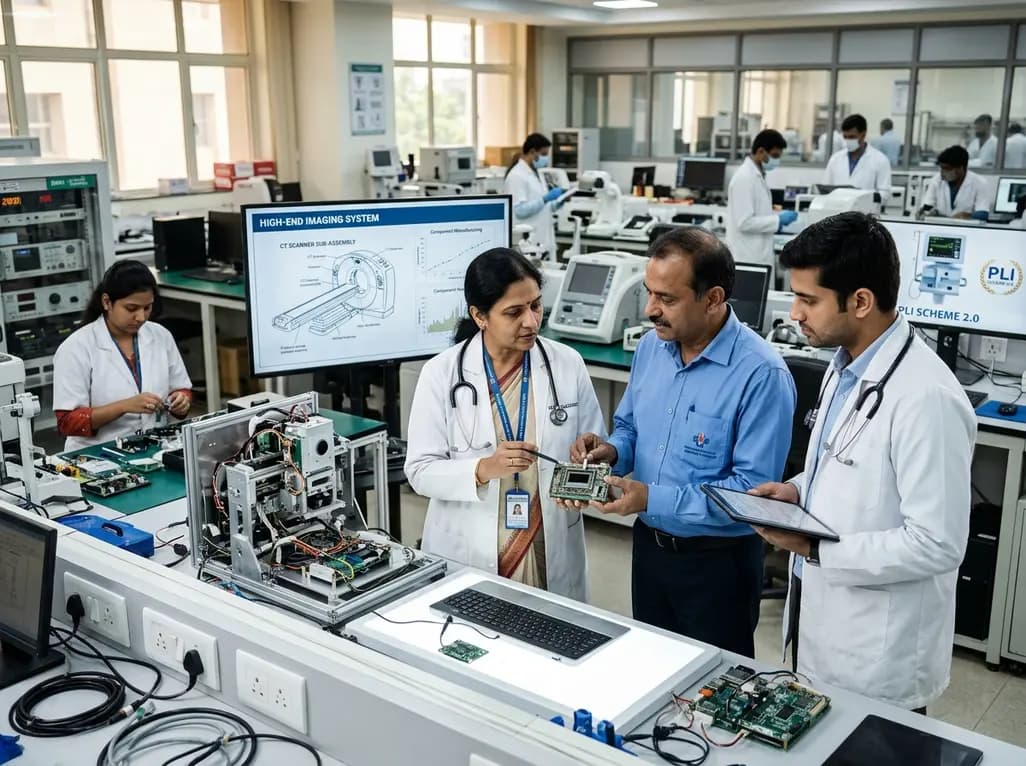
The Department of Pharmaceuticals has extended the medical devices PLI scheme to 2035-36 with a Rs 2,700 crore outlay. Featuring relaxed investment barriers and eliminated sales thresholds, the revised framework targets deep manufacturing, high-end diagnostics, critical MedTech components, and supply resilience.
Today

A metabolomic study reveals that aging delays glutathione synthesis and gamma-glutamylcysteine accumulation following muscle injury. Although precursor supplementation targets this enzymatic bottleneck, in vitro tests show no immediate effect on myogenesis, highlighting the complexity of muscle repair in older adults.
Today

A systematic review evaluates psychological interventions for smoking cessation in diabetes, showing short-term success but highlighting challenges in long-term abstinence.
Today
