.webp&w=384&q=75)

Loading, please wait...
Loading, please wait...

Mental health vulnerabilities often peak during the transition to higher education, where academic strain, social transitions, and lifestyle disruptions converge. Clinicians frequently encounter young adults presenting with depressive episodes and severe anxiety. A major national prospective cohort study has provided compelling evidence demonstrating that regular physical exercise offers significant protection against common mental disorders among university students. Consequently, integrating lifestyle medicine into primary psychiatric prevention has become essential for modern clinical practice.
The Students' Health and Wellbeing Study, known as SHOT2022, evaluated over 53,000 Norwegian university students to explore prospective links between exercise parameters and mental well-being. Researchers tracked a longitudinal subcohort of 10,460 students over a one-year follow-up period. Unlike cross-sectional surveys that merely capture momentary distress, this investigation utilized the standardized Composite International Diagnostic Interview. Therefore, researchers could accurately identify formal diagnoses of major depressive episodes and generalized anxiety disorder.
The longitudinal framework allowed investigators to establish clear temporality between baseline physical activity habits and subsequent psychiatric morbidity. Furthermore, the analysis controlled for baseline psychological distress using the Hopkins Symptom Checklist alongside diverse sociodemographic factors. Consequently, the findings provide robust epidemiological validation that physical activity patterns directly influence psychiatric vulnerability in young adults.
The prospective study demonstrated a strong inverse relationship between exercise frequency and the subsequent incidence of psychiatric illness. Specifically, students who rarely or never engaged in physical exercise experienced significantly higher relative risks for developing common mental disorders compared to daily exercisers. In adjusted Poisson regression models, sedentary women demonstrated a 15% increased risk, whereas inactive men exhibited a 33% higher risk.
Additionally, students failing to achieve standard public health recommendations for physical activity showed elevated vulnerability to mood and anxiety pathology. The data revealed that total weekly exercise volume exhibited a dose-dependent protective effect up to approximately ten hours per week. Interestingly, female students demonstrated a distinct curvilinear association, indicating that moderate and steady physical engagement provides optimal psychological resilience without requiring extreme athletic training.
A critical clinical takeaway from this prospective evaluation centers on the multidimensional characterization of exercise regimens. Although clinicians frequently assume vigorous exertion is necessary for neurobiological benefit, the data revealed that regular weekly frequency is the most decisive protective factor. Regular participation in moderate physical activities consistently lowered psychiatric risk, even when exercise sessions were relatively brief.
Moreover, extreme exercise intensity did not confer additional protective benefits over moderate, sustained routines. Therefore, clinicians should avoid prescribing intimidating high-intensity training programs to sedentary students. Instead, medical professionals should advocate for attainable, routine physical activities that seamlessly integrate into demanding academic schedules. Promoting sustainable habits prevents burnout, enhances compliance, and ensures lasting neuroprotective benefits for young adults navigating demanding university environments.
Multiple biological pathways explain why physical exercise protects against psychiatric morbidity. Regular muscular exertion stimulates the synthesis and release of brain-derived neurotrophic factor, which enhances hippocampal neurogenesis and synaptic plasticity. Furthermore, physical activity modulates monoaminergic neurotransmission, improves hypothalamic-pituitary-adrenal axis regulation, and reduces systemic inflammatory cytokines that frequently drive depressive phenotypes.
Beyond neurobiology, exercise provides indispensable psychosocial benefits. Physical activity fosters self-efficacy, enhances cognitive resilience, and mitigates ruminative thought patterns associated with academic pressure. In addition, participating in campus sports or group workouts expands social support networks, counteracting the profound loneliness that often triggers common mental disorders in young scholars.
General practitioners, psychiatrists, and university health services must actively translate these findings into routine patient evaluations. Inquiring about physical activity habits should become standard during every clinical assessment of young adults. When doctors identify sedentary behaviors, they must provide personalized lifestyle prescriptions alongside standard psychotherapeutic or pharmacological interventions.
Furthermore, educational institutions must design supportive campus environments that facilitate regular movement. Constructing accessible recreational facilities, integrating active breaks into lecture schedules, and organizing non-competitive athletic programs can dramatically lower student psychological distress. By combining institutional initiatives with proactive medical counseling, healthcare providers can curb the rising burden of psychiatric illness across university populations.
Exercise promotes hippocampal neurogenesis, upregulates brain-derived neurotrophic factor, and improves hypothalamic-pituitary-adrenal axis regulation. Additionally, regular physical activity reduces systemic neuroinflammation, alleviates academic stress, and enhances social engagement, thereby lowering the incidence of depression and generalized anxiety disorder.
No, high-intensity workouts are not required to protect against common mental disorders. Prospective findings demonstrate that consistent frequency and moderate weekly activity provide robust psychological resilience, whereas extreme intensity offers no significant additional psychiatric benefit over steady routines.
Engaging in moderate physical activity up to ten hours per week provides significant protective benefits against depression and anxiety. Meeting the baseline public health target of 150 minutes weekly of moderate activity remains highly effective for mental well-being.
Disclaimer: This content is for informational and educational purposes only. It is not intended to provide medical advice, diagnosis, or treatment. Healthcare professionals should make diagnostic and therapeutic decisions based on their independent clinical judgment and individual patient circumstances. Treatment decisions and drug choices should strictly follow the approved product information in respective jurisdictions and national clinical practice guidelines. All information presented should be independently verified for completeness and accuracy. Refer to the latest local and national guidelines for clinical practice.
References

Read summarized clinical updates, watch expert medical content, and earn CME certifications right from your smartphone.
Open your smartphone camera to scan and install.





A prospective national study indicates that regular physical exercise significantly reduces the risk of common mental disorders, including depression and anxiety, in higher education students, highlighting the therapeutic value of consistent, sustainable physical activity.
last month

Systemic amyloidosis management is undergoing a therapeutic revolution. This clinical review synthesizes updates from the International Society of Amyloidosis, detailing novel plasma cell therapies, TTR stabilizers, silencers, translational models, and artificial intelligence in drug development.
Today

A retrospective study of 824 patients undergoing over 2,200 intradetrusor onabotulinumtoxinA injections identifies sex- and etiology-specific predictors of 2-week post-void residual, highlighting the influence of baseline residual volumes, toxin dosage, and distinct urodynamic parameters on urinary retention risk.
Today
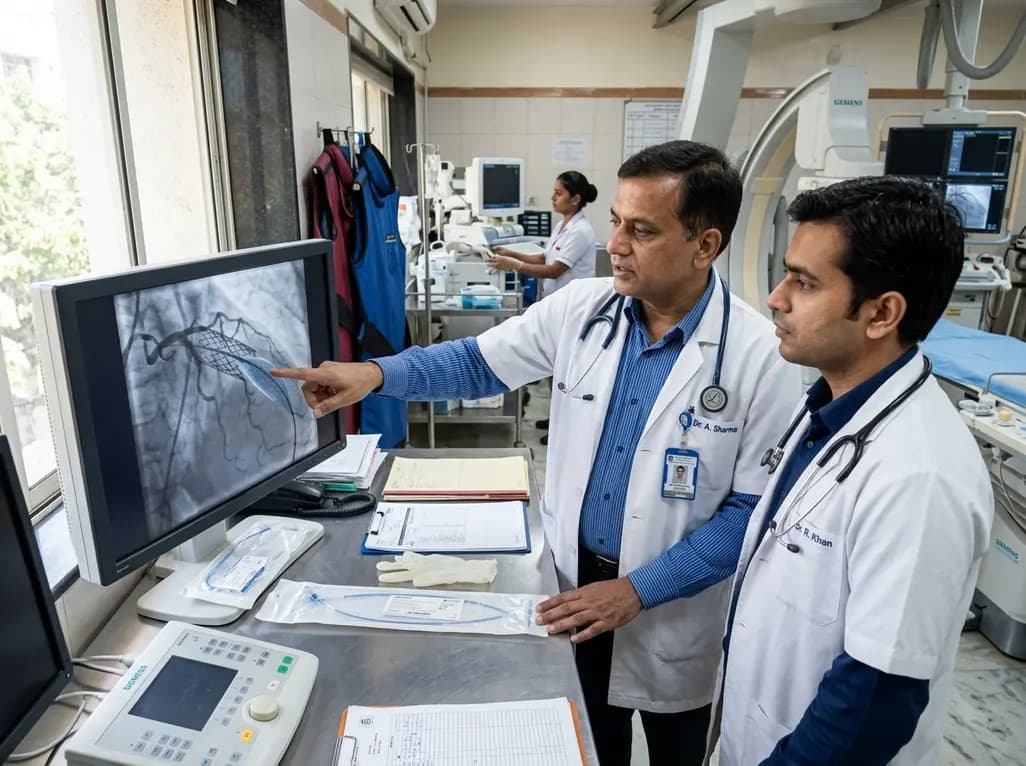
The US FDA has granted approval to the SELUTION SLR drug-eluting balloon for treating coronary in-stent restenosis. This milestone introduces a sustained-release sirolimus platform that eliminates the need for additional permanent metallic stents while maintaining robust vascular healing and luminal patency.
Today

The Thumbs-Out Classification (TOC) is a reliable screening tool for detecting thumb-in-palm deformity in children with cerebral palsy. Utilizing traffic-light tiers for radial abduction, TOC enables clinicians to monitor upper limb function and initiate timely therapeutic or surgical interventions.
Today

A comprehensive review analyzes periconceptional GLP-1 receptor agonist exposure, revealing reassuring data on congenital anomalies and adverse perinatal outcomes while emphasizing the need for cautious patient counseling.
Today
