.webp&w=384&q=75)

Loading, please wait...
Loading, please wait...

Acute cryptogenic ischemic stroke in young adults represents an urgent and expanding clinical dilemma worldwide. While regular exercise typically confers robust vascular protection across diverse age groups, extreme variations in daily exertion may trigger unexpected vascular consequences. Recently, a multicenter European case-control study illuminated the complex relationship between physical activity and early-onset neurovascular events. Consequently, these novel findings challenge conventional medical assumptions and emphasize the necessity of nuanced cardiovascular risk stratification among active adults.
Clinicians recognize that ischemic strokes occurring in individuals younger than 50 years often lack conventional cardiovascular etiologies. In fact, cryptogenic presentations account for nearly half of all young neurovascular admissions. Traditional vascular risk factors like hypertension and dyslipidemia fail to fully explain these sudden cerebral infarctions. Therefore, investigators initiated a comprehensive European multicenter study across 19 specialized stroke centers to examine whether physical exertion patterns correlate with disease onset.
The investigators systematically enrolled 533 young patients aged 18 to 49 years presenting with a first-ever cryptogenic event. Concurrently, the team recruited 533 age- and sex-matched stroke-free controls from identical demographic populations. The cohort showed a median age of 41 years, and women constituted 47.3% of all participants. Furthermore, researchers documented demographic characteristics, educational attainment, traditional vascular risk factors, and non-traditional lifestyle exposures.
To quantify weekly exertion reliably, researchers administered the validated short International Physical Activity Questionnaire. They subsequently calculated Metabolic Equivalent of Task values per week. Finally, the authors classified participants into distinct percentiles, utilizing the central 25th to 75th percentile cohort as the stable reference category for adjusted statistical comparisons.
Public health guidelines consistently promote vigorous exercise to enhance metabolic fitness and minimize long-term arterial stiffening. Nevertheless, the study revealed a striking paradoxical correlation at the upper extreme of physical exertion. Young individuals scoring in the top 10% of physical activity faced more than double the odds of early neurovascular infarction. Specifically, conditional logistic regression yielded an adjusted odds ratio of 2.07 after rigorous control for established confounders.
This elevated risk remained persistent across diverse multivariable models. Consequently, the findings overturn the simplistic belief that unlimited high-intensity training provides uncompromised vascular immunity. In contrast, moderate exercisers maintaining activity between the 25th and 75th percentiles exhibited predictable baseline protection.
Several physiological mechanisms might elucidate this surprising association. Prolonged strenuous endurance exercise can provoke acute systemic inflammation, transient hypercoagulability, and heightened platelet reactivity. In addition, severe exertion induces repetitive hemodynamic surges that stress the cerebral microvasculature. Therefore, while moderate movement preserves arterial integrity, chronic extreme exertion may occasionally destabilize vulnerable vascular beds in susceptible individuals.
A patent foramen ovale often provides a direct anatomical conduit for paradoxical embolization in young patients. Because right-to-left interatrial shunts represent a prevalent finding in this population, the investigators stratified their cohort by high-risk anatomical features. Interestingly, the presence of a high-risk interatrial communication altered the observed behavioral patterns substantially.
Among patients presenting with a documented high-risk patent foramen ovale, physical activity levels showed no independent statistical association with stroke occurrence. Thus, mechanical shunting and paradoxical venous emboli likely overshadow lifestyle patterns in these individuals. Intrinsic cardiac architecture evidently drives thrombosis and embolism regardless of weekly exertion levels.
In sharp contrast, the correlation emerged prominently among individuals lacking a high-risk interatrial communication. In this substantial subgroup, the data demonstrated a distinct U-shaped hazard curve. Participants occupying the highest 10% of physical exertion demonstrated an adjusted odds ratio of 1.78. Similarly, sedentary individuals in the bottom 10% demonstrated an adjusted odds ratio of 1.76. Hence, both extreme physical inactivity and excessive physical strain independently elevated the risk of cerebral ischemia.
The emergence of a bidirectional risk profile among patients without high-risk interatrial defects demands rigorous mechanical scrutiny. Sedentary behavior in the lowest activity decile promotes well-established pathological cascades. Specifically, prolonged sitting induces venous stasis, impairs peripheral endothelial function, and accelerates subclinical atherogenesis. Furthermore, physical inactivity fosters insulin resistance and systemic low-grade inflammation, which compromise cerebral perfusion over time.
Conversely, the hazards accompanying extreme physical exertion reflect entirely different biological pathways. Vigorous athletic training frequently triggers rapid shifts in sympathetic tone and abrupt arterial pressure spikes. These acute hemodynamic variations can induce cervical arterial dissection, particularly among young adults with undiagnosed connective tissue fragility. In addition, exhaustive exertion increases blood viscosity through dehydration and elevates circulating thrombogenic microparticles.
Moreover, intense endurance regimens can induce structural atrial remodeling, increasing vulnerability to transient subclinical atrial fibrillation. These transient dysrhythmias may generate microthrombi without leaving permanent diagnostic footprints during standard surface electrocardiography. Therefore, distinct biological mechanisms drive cerebral ischemia at opposing ends of the exertion spectrum.
These compelling observations urge physicians to rethink how they assess lifestyle histories during acute stroke workups. Medical teams frequently overlook granular athletic history when evaluating fit young patients admitted with acute focal deficits. Therefore, clinicians must routinely assess weekly exertion levels and sudden spikes in training intensity alongside classical vascular parameters.
Furthermore, these findings emphasize the critical necessity of comprehensive cardiac imaging. Cardiologists should utilize transesophageal echocardiography and transcranial Doppler bubble studies to identify or exclude occult interatrial communications. When structural cardiac shunts are absent, physicians should investigate alternative mechanisms, such as occult arterial dissection or exercise-induced prothrombotic states.
Finally, post-stroke counseling requires a balanced, patient-centered approach. Clinicians must actively discourage sedentary behavior because prolonged immobility unambiguously harms vascular longevity. However, healthcare professionals should also guide competitive athletes toward gradual, monitored resumption of exertion. Recommending moderate, structured aerobic activity between 150 and 300 minutes weekly offers the greatest cardiovascular safety. In conclusion, personalized exercise prescriptions will optimize secondary prevention without subjecting cerebral vessels to excessive biomechanical strain.
Extreme physical exertion can provoke transient hypercoagulability, acute systemic inflammation, and marked elevations in platelet reactivity. Furthermore, intense athletic strain triggers dramatic blood pressure fluctuations that increase shear stress on cerebral vessels. Consequently, in individuals with underlying vascular vulnerabilities, these combined biomechanical and prothrombotic stressors may induce cervical arterial dissection or trigger acute thromboembolic events.
In patients possessing a high-risk patent foramen ovale, mechanical right-to-left shunting acts as the primary driving mechanism for paradoxical cerebral embolism. Therefore, venous microthrombi can traverse the interatrial defect and enter systemic circulation irrespective of baseline physical exertion. Consequently, structural cardiac anatomy overrides lifestyle variations, decoupling routine activity levels from the immediate risk of stroke occurrence.
Clinicians should advise young stroke survivors to avoid both prolonged sedentary behavior and unmonitored extreme exertion. Instead, patients should target moderate aerobic activity spanning 150 to 300 minutes weekly, distributed across regular sessions. Furthermore, physicians must tailor exercise prescriptions following thorough cardiac evaluation, ensuring gradual progression while avoiding sudden high-intensity spikes that might stress the cerebral circulation.
Disclaimer: This content is for informational and educational purposes only. It is not intended to be a substitute for professional medical advice, diagnosis, or treatment. Always seek the advice of your physician or other qualified health provider with any questions you may have regarding a medical condition. Refer to the latest local and national guidelines for clinical practice.
References

Read summarized clinical updates, watch expert medical content, and earn CME certifications right from your smartphone.
Open your smartphone camera to scan and install.





A European case-control study shows that extreme physical activity levels—both sedentary habits and very high exertion—correlate with increased risk of cryptogenic ischemic stroke in young adults, especially in those without high-risk patent foramen ovale, prompting a re-evaluation of exercise advice.
Today

Bacteroides thetaiotaomicron utilizes an intricate multiprotein extracellular relay and outer membrane vesicles for cobamide scavenging in the human gut. This review examines its transport mechanics, riboswitch regulation, and potential clinical implications for host-microbe vitamin competition and nutrient absorption.
Today

Novel preclinical research demonstrates that antisense oligonucleotides targeting essential genes such as DARS1, DYNC1I2, and EIF2S3 selectively induce apoptosis in ovarian and lung cancer cells. Conditional biomarker activation provides a viable strategy to spare normal tissue while overcoming therapy resistance.
Today
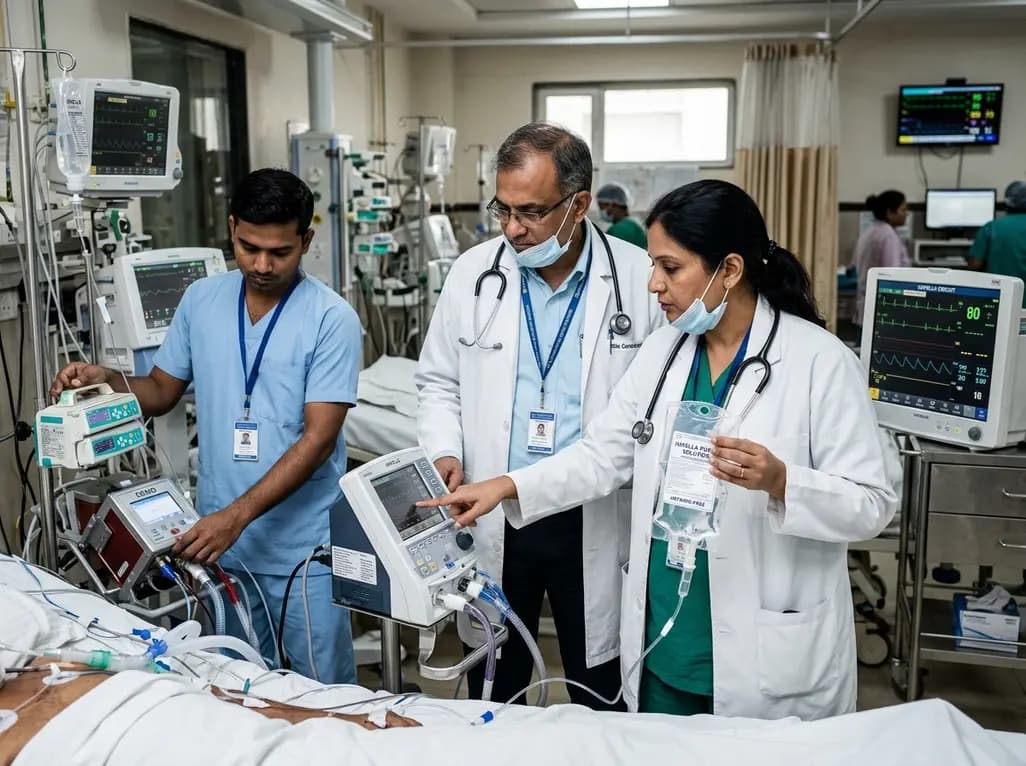
This clinical analysis examines heparin-free versus heparin-containing Impella purge solutions in patients receiving concomitant ECMO support (ECPELLA). Evidence suggests anticoagulant-free purges maintain device patency while reducing bleeding risks, offering a viable strategy alongside systemic anticoagulation.
Today

A 10-year Markov state-transition model shows minimally invasive tubular decompression dominates open laminectomy for pure lumbar spinal stenosis, yielding 5.95 vs 5.91 QALYs and saving $4,167 per patient through reduced complications and lower index costs.
Today

A preclinical study demonstrates that naringin-loaded phytosomes significantly enhance oral bioavailability and provide neuroprotective efficacy in diabetic neuropathy by dampening inflammation, reducing oxidative stress, and relieving neuropathic pain.
Today
