.webp&w=384&q=75)

Loading, please wait...
Loading, please wait...
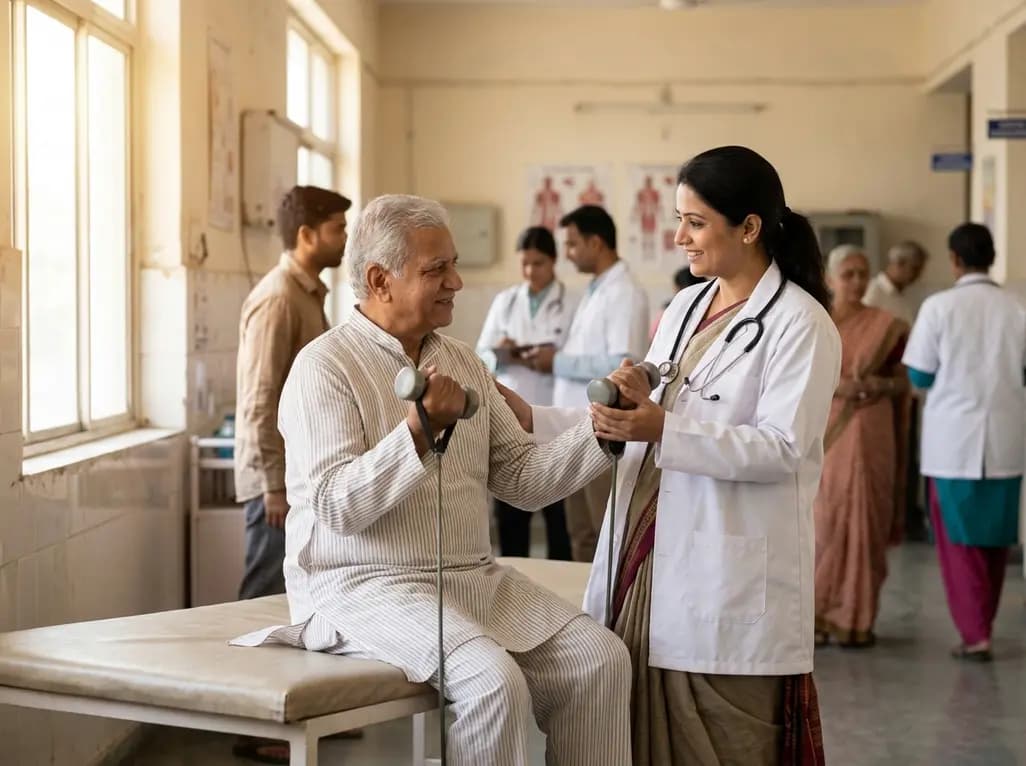
As the global population ages, cognitive decline and dementia have emerged as significant public health hurdles that demand urgent attention. India, with its rapidly growing geriatric demographic, faces an increasing burden of neurodegenerative conditions. Consequently, identifying modifiable lifestyle factors is essential for clinicians who seek to improve patient outcomes. Recent evidence highlights that moderate-to-vigorous physical activity (MVPA) plays a pivotal role in maintaining brain health. Specifically, researchers have focused on how Physical Activity and Cognition correlate among older adults to develop better preventative strategies. Understanding these dynamics allows healthcare providers to offer more effective, evidence-based care. The China Health and Retirement Longitudinal Study (CHARLS) provides valuable insights into this relationship by analyzing a large cohort of community-dwelling seniors. Notably, the study emphasizes that movement is not just about physical strength but also about mental resilience. Furthermore, the interplay between mood and movement suggests that mental health is a key component of cognitive preservation. For Indian physicians, these findings offer a pragmatic framework for daily geriatric management.
One of the most fascinating aspects of recent research is the mediating role of mental health in the aging process. Depressive symptoms significantly influence how physical activity impacts the brain's functional capacity. Specifically, the analysis found that lower depressive symptom burden accounted for approximately 21.1% of the total association between MVPA and cognition. This finding suggests that movement helps the brain partly by improving the patient’s overall mood. Exercise acts as a known antidepressant that regulates neurotransmitters like serotonin and dopamine. Consequently, when seniors engage in regular physical activity, their risk of clinical depression decreases, which in turn preserves their cognitive reserve. In India, where mental health issues in the elderly often go undiagnosed, this link is particularly relevant for primary care. Doctors should recognize that physical activity serves a dual purpose by strengthening the body and stabilizing the mind simultaneously. Furthermore, the attenuation of the direct effect after adjusting for depression indicates that mood management is an inseparable part of cognitive care. Therefore, routine screening for depressive symptoms should always accompany exercise prescriptions.
Interestingly, the relationship between physical movement and mental clarity is not uniform across all geriatric age groups. The data indicates that age acts as a significant moderator in this association, changing the strength of the benefit. Specifically, the positive impact of MVPA on cognition becomes significantly stronger as individuals reach more advanced ages. The study observed that the benefit was more pronounced in participants around the age of 77 compared to those near 63 years. This phenomenon might be explained by the higher baseline risk of cognitive decline in the oldest-old population. Consequently, for those at the highest risk, even small increments in physical activity can yield substantial cognitive rewards. This finding challenges the misconception that exercise is less effective for the very elderly. On the contrary, physical activity may provide a critical buffer against the accelerated brain aging seen in advanced years. For clinicians in India, this highlights the importance of prescribing age-attuned programs for all seniors. Furthermore, the data suggest a progressive increase in efficacy as the patient ages.
To understand why activity and mental function are so closely linked, we must look at the underlying biological pathways. Regular MVPA triggers several neuroprotective processes that safeguard the brain from age-related structural damage. For instance, exercise stimulates the production of brain-derived neurotrophic factor (BDNF), which is essential for neuronal growth. Additionally, physical movement improves cardiovascular health, which directly affects the brain’s microvasculature and nutrient delivery. By reducing systemic inflammation and oxidative stress, activity prevents the accumulation of damage in sensitive brain regions like the hippocampus. Furthermore, regular exercise has been shown to increase the volume of gray matter in areas responsible for executive function. These structural changes provide a physical reserve that helps the brain resist the pathology of dementia. In the context of the CHARLS study, these mechanisms likely explain the robust association found between activity levels and cognitive scores. Moreover, the reduction in depressive symptoms through exercise further lowers neuroinflammation. Therefore, clinicians should view exercise as a potent biological intervention for the aging mind.
Based on the evidence, Indian physicians should adopt a more proactive stance toward promoting physical activity in late life. Specifically, exercise recommendations must be tailored to the individual’s age, physical capacity, and current mental health status. For older adults, moderate-to-vigorous activity does not necessarily mean high-impact sports or heavy weightlifting. instead, it can include activities like brisk walking, yoga, or traditional dance, which are culturally relevant in India. Furthermore, clinicians should integrate routine mood assessments into every geriatric check-up to ensure mental health support. Since depressive symptoms mediate a significant portion of the cognitive benefit, treating low mood is essential for maximizing brain outcomes. Additionally, family members should be involved in encouraging seniors to stay active, as social support significantly improves adherence. Healthcare providers can also suggest community-based programs that combine physical movement with social interaction. Consequently, this multi-pronged approach addresses both the physical and emotional determinants of cognitive decline. Therefore, the focus should shift toward sustainable, enjoyable activities that patients can maintain long-term to ensure success.
Moderate-to-vigorous physical activity refers to movements that noticeably increase heart rate and breathing. For seniors, moderate intensity might include brisk walking, ballroom dancing, or light cycling on level ground. Vigorous activity typically involves more strenuous efforts such as jogging, swimming laps, or heavy gardening. The goal is to reach a level where conversation is possible but slightly difficult due to exertion. Regular engagement in these activities is essential for brain health.
Depression impacts cognition through both biological and behavioral pathways. Biologically, chronic depression is associated with elevated cortisol levels and increased neuroinflammation, which can damage the hippocampus and impair memory retention. Behaviorally, individuals with depressive symptoms often experience reduced motivation and poor sleep, which contribute to mental fatigue. By reducing these symptoms through physical activity, patients can improve their focus, processing speed, and overall cognitive resilience against aging and neurodegeneration.
This strengthening effect occurs because older individuals generally have a lower baseline of physiological and cognitive reserve. Consequently, their brains are more sensitive to the neuroprotective effects of exercise, such as improved cerebral blood flow and neuroplasticity. In the oldest-old, physical activity acts as a critical intervention that can significantly slow down the accelerated rate of decline. Thus, even those in their late 70s can experience substantial mental benefits from starting a regular movement program.
Disclaimer: This content is for informational and educational purposes only and does not constitute medical advice. It is not intended to be a substitute for professional medical advice, diagnosis, or treatment. Always seek the advice of your physician or other qualified health provider with any questions you may have regarding a medical condition. Refer to the latest local and national guidelines for clinical practice.
References
Song H et al. Moderate-to-vigorous physical activity and cognition among older adults in China: Mediation by depressive symptoms and moderation by age. Public Health. 2026 Jul 09. doi: undefined. PMID: 42424706.
Erickson KI et al. Exercise training increases size of hippocampus and improves memory. Proc Natl Acad Sci U S A. 2011;108(7):3017-3022.
Livingston G et al. Dementia prevention, intervention, and care: 2020 report of the Lancet Commission. Lancet. 2020;396(10248):413-446.
"
Read summarized clinical updates, watch expert medical content, and earn CME certifications right from your smartphone.
Open your smartphone camera to scan and install.





A comprehensive study of 5,318 older adults shows that moderate-to-vigorous physical activity significantly boosts cognitive function. This benefit is partially driven by reduced depressive symptoms and is notably more pronounced in individuals as they reach advanced ages.
3 months ago

Novel diimide and hydrazone scaffolds, particularly compound #C4, synergistically reactivate latent HIV-1 when combined with JQ1 or PKC activators. Demonstrating donor-matched proviral transcription ex vivo and non-canonical signaling, these findings advance shock and kill strategies toward reservoir eradication.
Today

A cross-sectional study reveals that maternal RSV vaccination coverage reached only 43.7% in Argentina, with maternal vaccine knowledge being the sole independent predictor of uptake. Clinicians play a crucial role in eliminating informational and structural barriers to optimize infant health.
Today

Review how tailored exercise programs benefit frail older patients with heart failure. Explore pathophysiological mechanisms, individualized training prescriptions, and strategies to overcome adherence barriers in clinical practice.
Yesterday

This comparative study evaluates posterior labral tears with and without glenohumeral instability, highlighting distinct demographic patterns, MRI underestimation in stable shoulders, and successful arthroscopic repair outcomes.
Yesterday

A clinical study demonstrates that early intervention with tocilizumab, either as monotherapy or bridged with corticosteroids, achieves significant proptosis reduction and resolves active inflammation in treatment-naive thyroid eye disease.
Yesterday
