.webp&w=384&q=75)

Loading, please wait...
Loading, please wait...

Accurately differentiating a phyllodes tumor vs fibroadenoma remains a significant challenge for clinicians and pathologists today. While both lesions appear as fibroepithelial masses, their clinical management differs drastically. Fibroadenomas are generally benign and often require minimal intervention. In contrast, phyllodes tumors (PT) can exhibit aggressive behavior and carry a high risk of local recurrence. Therefore, a precise diagnosis on core needle biopsy is essential to guide surgical planning and prevent inadequate margins.
A recent meta-analysis by Torres LAF et al. evaluated 14 studies involving 1,413 patients. This research aimed to pinpoint histological features that distinguish these two entities effectively in limited tissue samples. The study revealed that phyllodes tumors exhibit significantly higher rates of specific pathological markers compared to fibroadenomas. Consequently, recognizing these markers can help surgeons decide between simple enucleation and wide local excision.
Researchers identified several significant predictors of a phyllodes tumor on biopsy specimens. For instance, infiltrative margins showed an odds ratio (OR) of 6.06. This suggests that tumors with irregular borders are far more likely to be phyllodes than fibroadenomas. Furthermore, stromal overgrowth (OR 9.92) and increased stromal cellularity (OR 7.95) served as powerful discriminators during the analysis. Moreover, the presence of stromal mitoses and fragmented specimens strongly favored a phyllodes diagnosis.
Additionally, the distinction is particularly challenging for benign and borderline phyllodes tumors due to morphological overlap with cellular fibroadenomas. However, the study confirms that even in core needle biopsies, specific stromal features provide high predictive value. Pathologists must therefore meticulously examine the stroma for any signs of hypercellularity or atypia. Consequently, combining these histological findings with clinical data and imaging ensures better patient outcomes in breast oncology.
Core needle biopsy provides a pathological basis for diagnosis but has limitations due to tissue heterogeneity. However, identifying features like stromal overgrowth or infiltrative margins significantly increases the diagnostic accuracy for phyllodes tumors.
Distinction is critical because surgical management differs. Fibroadenomas require minimal intervention. Conversely, phyllodes tumors need wider surgical margins to reduce the high risk of local recurrence and potential progression.
Disclaimer: This content is for informational and educational purposes only. It does not constitute medical advice or a professional relationship. Refer to the latest local and national guidelines for clinical practice.
References
1. Torres LAF et al. Comparative Histological Features of Phyllodes Tumor and Fibroadenoma in Breast Core Needle Biopsies. Int J Surg Pathol. 2026 Apr 14. doi: 10.1177/10668969261422683. PMID: 41979873.
2. Nassar A et al. Significant histologic features differentiating cellular fibroadenoma from phyllodes tumor on core needle biopsy specimens. Am J Clin Pathol. 2014;142(3):362-9.
3. Lee AH et al. Histological features useful in the distinction of phyllodes tumour and fibroadenoma on needle core biopsy of the breast. Histopathology. 2007;51(3):336-44.

Read summarized clinical updates, watch expert medical content, and earn CME certifications right from your smartphone.
Open your smartphone camera to scan and install.





This meta-analysis identifies critical histological markers, such as infiltrative margins and stromal overgrowth, to distinguish phyllodes tumors from fibro...
6 months ago

Following regulatory scrutiny from FSSAI regarding promotional representations and lean muscle preservation claims, Dr. Reddy's Laboratories and Nestlé Health Science are currently reviewing the branding and marketing strategy for their joint nutritional supplement Celevida GLP+.
Today
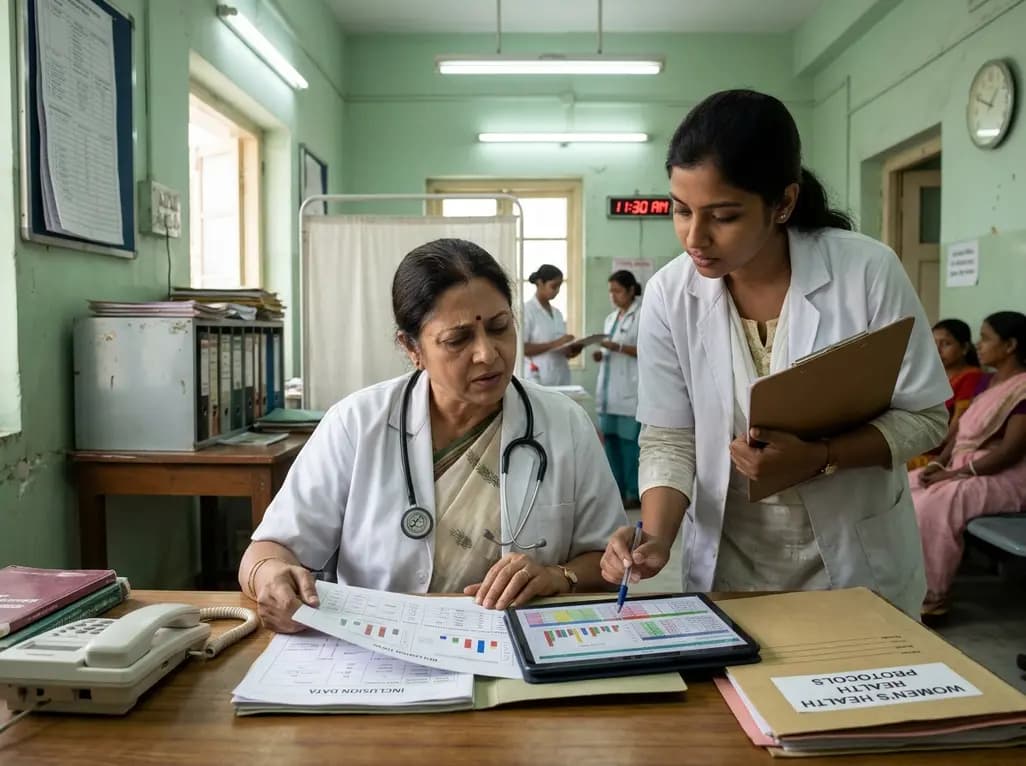
Demanding exhaustive hormonal profiling can inadvertently discourage clinical studies involving females. Methodological standards must align with the specific scientific question to expand, not restrict, equitable evidence for women.
Today

The Directorate General of Health Services directs Indian states to halt the hazardous reuse and reprocessing of single-use medical devices. Discover regulatory implications under the Drugs and Cosmetics Act, critical infection risks, legal liabilities, and operational changes required across clinical specialties.
Today
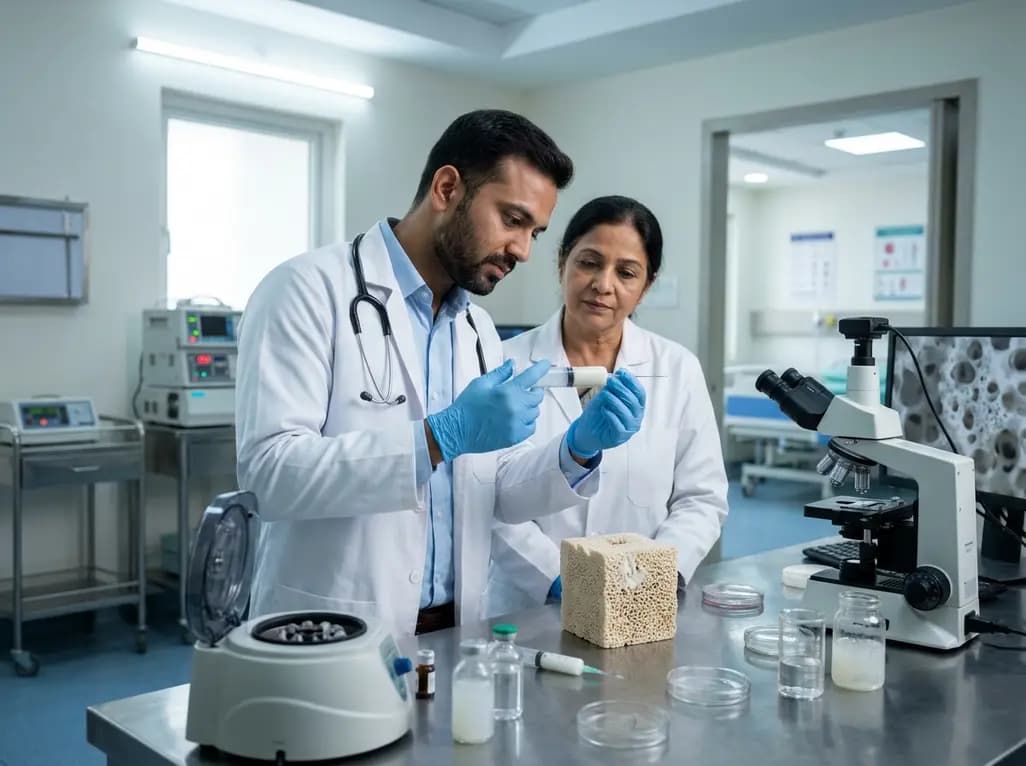
A novel calcium polyphosphate coacervate enables injectable bone implants with in situ hierarchical porosity via phase separation and gas foaming, significantly enhancing cell proliferation, energy metabolism, and osteogenic differentiation for minimally invasive bone defect repair.
Today

India is advancing preventive healthcare by integrating genomics, artificial intelligence, and quantum technologies. With the SANGAM programme sequencing one million Indian genomes, clinicians can unlock personalized therapies, detect cardiometabolic risks early, and curb the burden of diabetes and heart disease.
Today
