.webp&w=384&q=75)

Loading, please wait...
Loading, please wait...

Phycoerythrin (PE) represents a significant bioactive pigment with potent antioxidant and anti-inflammatory properties. However, its practical application in the pharmaceutical industry remains limited by its sensitivity to light and heat. Researchers recently explored a solution involving the formation of a complex between bromelain-hydrolyzed phycoerythrin (PEH) and agarose oligosaccharides (AOs). This study demonstrates how these molecules work together to ensure phycoerythrin hydrolysate stability and enhance its functional capacity.
Fluorescence analysis revealed that AOs and PEH undergo static quenching. This process significantly quenches the intrinsic fluorescence of the protein. Furthermore, Fourier-transform infrared (FTIR) analysis showed that the α-helix content increased from 0.1568 to 0.1653. Hydrophobic interactions and hydrogen bonding primarily drive this interaction. Consequently, the structural integrity of the hydrolysate improves significantly without compromising its molecular essence.
The results of this complexation are impressive. Specifically, the DPPH radical scavenging rate of the AOs/PEH complex rose to 88.67%, compared to only 67.54% for untreated PEH. This suggests that the complex acts as a more effective antioxidant. Moreover, after treatment at 60 °C, the complex displayed a stability 1.34 times higher than the untreated version. Even at extreme temperatures of 80 °C, the complex maintained a smaller overall color variation, which is vital for maintaining product quality in pharmaceutical formulations.
This research provides a robust method for overcoming the environmental sensitivity of natural pigments. Therefore, pharmacists and researchers can now look toward using these stabilized complexes in health supplements and diagnostic markers. By enhancing phycoerythrin hydrolysate stability, the industry can utilize these sustainable, algae-derived compounds more effectively in clinical and nutritional products.
Phycoerythrin is a powerful antioxidant and fluorescent marker, but it degrades quickly under light or heat. Improving its stability allows it to be used in therapeutic supplements and precise diagnostic imaging without losing its efficacy.
They interact through hydrophobic bonding and hydrogen interactions, leading to static quenching. This stabilizes the protein structure, specifically increasing the α-helix content, which protects the molecule from environmental stressors.
The complexation significantly boosts the DPPH radical scavenging rate. This means the stabilized hydrolysate is more capable of neutralizing free radicals, making it a more potent ingredient for anti-aging and anti-inflammatory products.
Disclaimer: This content is for informational and educational purposes only. It does not constitute professional medical advice, diagnosis, or treatment. Always seek the advice of your physician or other qualified healthcare provider with any questions you may have regarding a medical condition. Refer to the latest local and national guidelines for clinical practice.
References
1. Li Z et al. Stabilization and color protection of phycoerythrin hydrolysate through agarose oligosaccharide complexation. J Sci Food Agric. 2026 May 12. doi: 10.1002/jsfa.70719. PMID: 42121009.
2. Aguiar ALL et al. Stability and Antioxidant Activity of R-Phycoerythrin from Gracilaria birdiae. Marine Drugs. 2023.
3. Higashimura Y et al. Agaro-oligosaccharides: recent advances in production, bioactivities, and functional applications for human health. J-Stage. 2023.

Read summarized clinical updates, watch expert medical content, and earn CME certifications right from your smartphone.
Open your smartphone camera to scan and install.





Research shows that agarose oligosaccharides stabilize phycoerythrin hydrolysate, boosting antioxidant activity and heat resistance for pharmaceutical use....
5 months ago
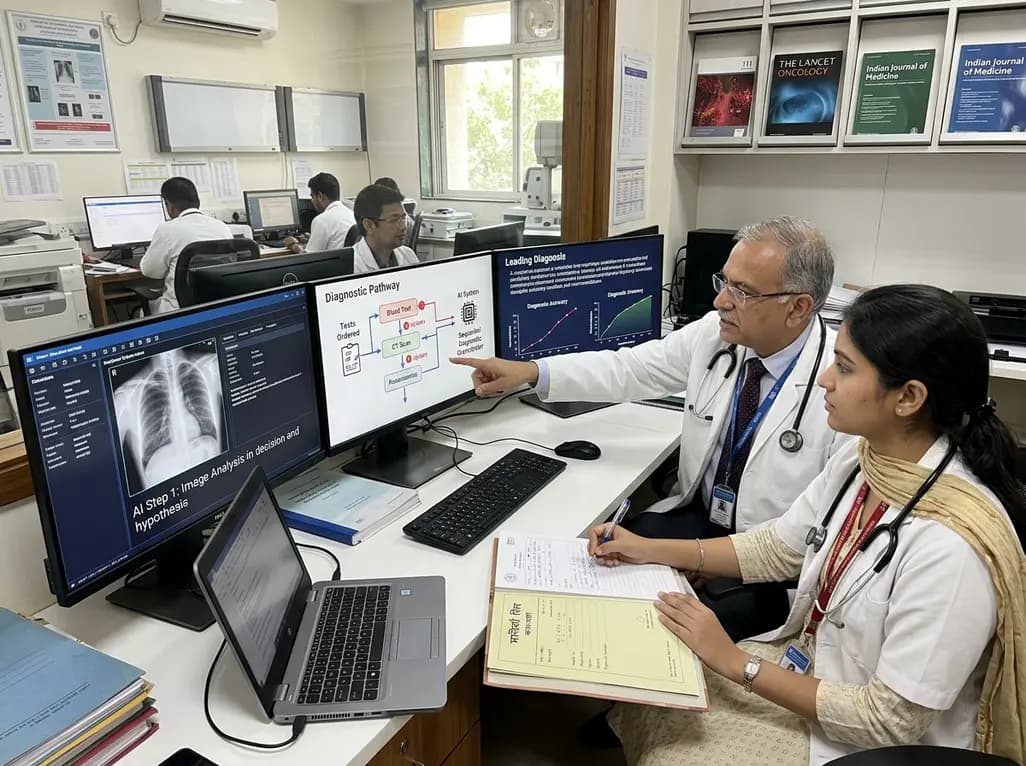
A breakthrough peer-reviewed study demonstrates that a sequential AI diagnosis system can mirror real-world clinical reasoning. By ordering stepwise tests and updating hypotheses dynamically, this multi-agent orchestrator achieved superior diagnostic accuracy while reducing investigative costs.
Today

A prenatal case highlights severe glutaric acidemia type II presenting as bilateral hyperechoic cystic kidneys at 18 weeks. Whole-exome sequencing revealed a novel homozygous ETFDH frameshift variant, demonstrating the power of rapid genetic testing in fetal renal anomalies.
Today

Review how tailored exercise programs benefit frail older patients with heart failure. Explore pathophysiological mechanisms, individualized training prescriptions, and strategies to overcome adherence barriers in clinical practice.
Yesterday

This comparative study evaluates posterior labral tears with and without glenohumeral instability, highlighting distinct demographic patterns, MRI underestimation in stable shoulders, and successful arthroscopic repair outcomes.
Yesterday

A clinical study demonstrates that early intervention with tocilizumab, either as monotherapy or bridged with corticosteroids, achieves significant proptosis reduction and resolves active inflammation in treatment-naive thyroid eye disease.
Yesterday
