.webp&w=384&q=75)

Loading, please wait...
Loading, please wait...
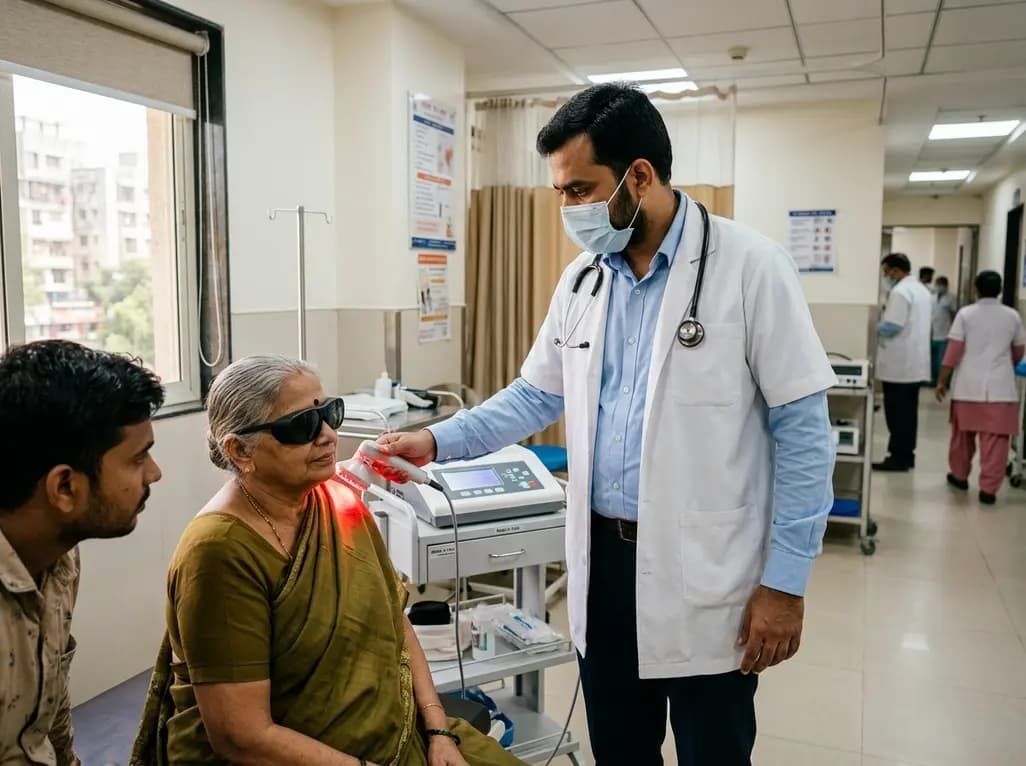
Modern medicine continually seeks non-invasive interventions to augment traditional treatment paradigms. Consequently, photobiomodulation therapy has emerged as a promising adjunctive modality across diverse clinical disciplines. Clinicians employ specific red and near-infrared light wavelengths to stimulate cellular activity without inducing thermal damage. Rather than replacing standard interventions, this biophotonics approach supports natural tissue restoration. Medical practitioners increasingly evaluate its capacity to resolve inflammation, ease pain, and accelerate recovery.
Photobiomodulation therapy operates on well-defined biophysical principles first recognized by Hungarian physician Endre Mester in 1967. Specifically, low-powered red and near-infrared wavelengths penetrate targeted tissues without causing thermal ablation. Chromophores within cell mitochondria, notably cytochrome c oxidase, absorb these incident photons. Consequently, this energy transfer enhances mitochondrial membrane potential and boosts adenosine triphosphate synthesis. Moreover, the process generates low levels of reactive oxygen species that activate crucial downstream biochemical cascades. Research spearheaded by scholars like Dr. Praveen Arany reveals that light exposure directly activates latent transforming growth factor-beta 1 (TGF-β1). Furthermore, this activated cytokine initiates robust cell signaling pathways that control gene expression. Cells subsequently alter transcription profiles to decrease pro-inflammatory mediators and upregulate endogenous antioxidants. In addition, the irradiated tissue exhibits improved microvascular perfusion through localized nitric oxide release. As a result, the tissue shifts from a destructive inflammatory state to an active reparative phase. Therefore, this non-invasive bioenergetic modulation provides a biological basis for tissue regeneration. Clinicians harness these intracellular pathways to foster cellular turnover across compromised anatomical structures. Accordingly, modern research continues to uncover how these photophysical signals promote overall cellular resilience.
Wound management represents one of the most clinically established applications for targeted red light therapy. Acute surgical wounds and refractory chronic ulcers both exhibit accelerated closure rates following structured irradiation protocols. Specifically, photobiomodulation stimulates dermal fibroblasts to synthesize essential collagen fibers and reorganize the extracellular matrix. Moreover, light photons prompt macrophages to transition rapidly from a destructive M1 phenotype into a reparative M2 state. This immunological transition significantly curbs chronic tissue degradation while fostering healthy granulation tissue formation. Furthermore, laboratory investigations show that elevated TGF-β1 signaling promotes keratinocyte migration across the wound bed. As a result, re-epithelialization proceeds more swiftly and reduces the overall risk of opportunistic bacterial infections. Additionally, local endothelial cells respond to photon absorption by accelerating capillary sprouting and improving regional blood supply. Consequently, ischemic wound margins receive necessary oxygen and circulating nutrients vital for cellular proliferation. Clinicians observing chronic diabetic foot ulcers frequently report reduced ulcer surface area after combining light therapy with standard debridement. Therefore, integrating supportive phototherapy alongside standard dressings can shorten recovery timelines for complex surgical wounds. Ultimately, patients experience expedited wound closure with significantly less pathological scar tissue formation.
Cancer therapies often produce severe collateral toxicities that severely impair a patient's overall quality of life. For instance, chemotherapeutic agents and head or neck radiation routinely trigger debilitating oral mucositis. Patients with extensive mucositis experience excruciating mucosal ulcerations that hinder eating, swallowing, and speaking. Consequently, severe cases frequently disrupt planned antineoplastic regimens and necessitate prolonged hospitalizations. However, international oncology organizations now endorse supportive red light therapy to prevent and manage oral mucositis. Dental specialists and oncologists deliver low-dose light directly to vulnerable mucosal tissues before and during radiation. Notably, the treatment shields healthy oral mucosa against severe oxidative necrosis without shielding tumor cells from radiation. Furthermore, photobiomodulation relieves severe oral discomfort by decreasing pro-inflammatory cytokines and reducing local nerve hypersensitivity. In addition, dental surgeons employ similar therapeutic protocols following complicated tooth extractions and implant placements. Dr. Nitish Kamboj emphasizes that applying light therapy under clinical supervision accelerates oral tissue healing. Therefore, supportive phototherapy mitigates painful treatment side effects without compromising the primary cancer therapy. Patients maintain better nutritional status and complete their essential oncology schedules without avoidable therapeutic delays. Accordingly, supportive light therapies represent a substantial advancement in compassionate multidisciplinary cancer care.
Chronic pain conditions place an enormous burden on both outpatient clinics and affected individuals. Fortunately, photobiomodulation offers an effective, non-pharmacological pathway to soothe persistent musculoskeletal and joint discomfort. Specifically, near-infrared wavelengths penetrate deeply into periarticular spaces, tendons, and muscle bundles. The absorbed energy reduces pro-inflammatory prostaglandins and decreases substance P synthesis within peripheral sensory neurons. Consequently, local nociceptors exhibit decreased firing rates and produce a noticeable analgesic effect. Moreover, the therapy transiently slows fast axonal conduction velocities across peripheral A-delta and C nerve fibers. This direct electrophysiological modulation blunts sharp pain signals travelling toward the central nervous system. In addition, improved lymphatic drainage rapidly clears inflammatory exudates and resolves chronic joint edema. Patients suffering from knee osteoarthritis, cervicalgia, and myofascial pain syndromes frequently experience improved range of motion. Therefore, incorporating light therapy into physical rehabilitation programs lowers reliance on systemic nonsteroidal anti-inflammatory drugs. Furthermore, this modality avoids the gastric, renal, and cardiovascular side effects linked with prolonged analgesic usage. As a result, pain management specialists can deliver durable symptomatic relief to medically fragile individuals. Ultimately, phototherapy empowers clinicians to construct multimodal pain management programs that enhance physical mobility.
Despite widespread clinical promise, broader integration into daily practice requires standardized therapeutic parameters. Currently, light treatments follow a biphasic dose-response curve commonly known as the Arndt-Schulz law. Specifically, insufficient light doses fail to stimulate cellular machinery, whereas excessive doses can suppress regenerative activity. Therefore, clinicians must calculate precise parameters, including wavelength, irradiance, power density, and cumulative treatment duration. Furthermore, the commercial market contains numerous consumer LED masks and handheld beauty gadgets. However, these consumer devices lack the calibrated power output and penetration depth required for deep medical indications. Experts in Dehradun underscored the necessity for robust clinical trials across Indian healthcare centers. Medical institutions need reproducible randomized trials to build evidence-based protocols for surgical, dermatological, and dental procedures. Additionally, formal training will help physicians determine exact therapeutic windows for diverse patient populations. Interdisciplinary collaboration between surgeons, oncologists, physical therapists, and biomedical engineers will drive standardized implementation. Consequently, regulatory bodies can establish authoritative guidelines that ensure safe and uniform clinical deployment. Ultimately, rigorous research will transform supportive phototherapy from an experimental modality into a routine, standardized clinical tool. Clinicians can then confidently prescribe calibrated light alongside conventional medical regimens.
Q1: What biological mechanism drives photobiomodulation therapy?
Photobiomodulation therapy works by delivering non-thermal red and near-infrared light to target tissues. Mitochondrial chromophores, particularly cytochrome c oxidase, absorb photons and stimulate adenosine triphosphate production. Additionally, the process generates controlled reactive oxygen species that activate latent transforming growth factor-beta 1. Consequently, these signaling cascades downregulate inflammatory cytokines, upregulate antioxidant defenses, and stimulate fibroblast migration. This bioenergetic stimulation accelerates tissue repair without inflicting cellular injury.
Q2: Can photobiomodulation safely complement standard oncological treatments?
Yes, clinical evidence demonstrates that photobiomodulation therapy safely complements conventional cancer care. Multinational oncology associations recommend red light therapy to prevent and manage severe oral mucositis caused by radiation or chemotherapy. Crucially, the non-ionizing light targets mucosal tissues without protecting malignant cells or hindering antineoplastic regimens. Furthermore, the therapy alleviates severe oral pain and accelerates healing, allowing patients to maintain nutritional intake and complete essential oncology schedules.
Q3: How does clinical photobiomodulation differ from over-the-counter consumer devices?
Clinical photobiomodulation equipment uses calibrated laser or LED sources delivering specific wavelengths, power densities, and measured fluences under medical supervision. In contrast, commercial over-the-counter devices, such as beauty masks, provide low irradiances that affect only superficial skin layers. Moreover, clinical treatments target deeper structures like joints, nerves, and mucosal tissues using validated protocols. Standardized clinical supervision ensures patients receive effective therapeutic doses while avoiding inhibitory exposure.
Disclaimer: This content is for informational and educational purposes only. It does not constitute medical advice or replace professional judgment. Refer to the latest local and national guidelines for clinical practice.
References

Read summarized clinical updates, watch expert medical content, and earn CME certifications right from your smartphone.
Open your smartphone camera to scan and install.





Photobiomodulation uses red and near-infrared wavelengths to modulate cellular activity, reduce inflammation, and accelerate tissue repair. Experts discuss how this non-thermal light modality complements conventional care in surgical recovery, oncology support, dental procedures, and chronic pain management.
last month

Discover the crucial role of glymphatic dysfunction in stroke, where perivascular clearance failure and neuroinflammation exacerbate cerebral edema and post-stroke brain injury.
Today

A prenatal case highlights severe glutaric acidemia type II presenting as bilateral hyperechoic cystic kidneys at 18 weeks. Whole-exome sequencing revealed a novel homozygous ETFDH frameshift variant, demonstrating the power of rapid genetic testing in fetal renal anomalies.
Today

Review how tailored exercise programs benefit frail older patients with heart failure. Explore pathophysiological mechanisms, individualized training prescriptions, and strategies to overcome adherence barriers in clinical practice.
Yesterday

This comparative study evaluates posterior labral tears with and without glenohumeral instability, highlighting distinct demographic patterns, MRI underestimation in stable shoulders, and successful arthroscopic repair outcomes.
Yesterday

A clinical study demonstrates that early intervention with tocilizumab, either as monotherapy or bridged with corticosteroids, achieves significant proptosis reduction and resolves active inflammation in treatment-naive thyroid eye disease.
Yesterday
