.webp&w=384&q=75)

Loading, please wait...
Loading, please wait...

Phillygenin (PHI), a key bioactive ligand from Forsythia suspensa, is gaining recognition for its therapeutic potential. While traditional medicine often highlights its antiviral and antioxidant properties, robust toxicological data were previously limited. A recent systematic evaluation now clarifies the Phillygenin safety profile, showing that this compound possesses a wide margin of safety for oral administration. Researchers assessed its safety through both acute and sub-chronic assays to provide essential evidence for clinical applications.
The study conducted toxicity tests following strict international guidelines to ensure reliable results. In the acute phase, KM mice received a single high dose of 5000 mg/kg body weight. Consequently, researchers observed no treatment-related mortality or toxic manifestations over 14 days, indicating a lethal dose (LD50) exceeding 5000 mg/kg. Furthermore, a 28-day sub-chronic study evaluated doses reaching 25,000 mg/kg in SD mice. Across all groups, clinical signs, body weight, and biochemical parameters remained normal. Additionally, histopathological examinations revealed no damage to vital organs.
Beyond its safety, Phillygenin significantly improves liver health by boosting essential antioxidant defenses. The research demonstrated that PHI increases levels of Superoxide Dismutase (SOD) and Glutathione (GSH) in the liver. Simultaneously, it reduces Malondialdehyde (MDA), which is a common marker of oxidative stress. Moreover, Phillygenin suppressed the expression of Pregnane X Receptor (PXR) and the enzyme CYP3A1. This finding suggests that the compound can effectively modulate xenobiotic metabolism. Collectively, these results support the development of PHI as a safe agent for hepatoprotective and antiviral therapies.
Phillygenin is a natural bioactive ligand extracted from the plant Forsythia suspensa, widely used for its antioxidant and antiviral properties.
Yes, recent toxicological studies show a high safety margin with an LD50 exceeding 5000 mg/kg and no adverse effects during long-term sub-chronic administration.
It enhances the liver\'s antioxidant capacity by increasing SOD and GSH levels while reducing oxidative damage and modulating drug-metabolizing enzymes.
Disclaimer: This content is for informational and educational purposes only. It does not constitute medical advice or a professional relationship. Always consult a qualified healthcare provider for diagnosis and treatment. Refer to the latest local and national guidelines for clinical practice.
References
1. Qian J et al. Toxicological and Liver Antioxidant Evaluation of Phillygenin Following Acute and Sub-Chronic Oral Administration. J Appl Toxicol. 2026 May 06. doi: 10.1002/jat.70224. PMID: 42092304.
2. Zhou Y et al. Phillygenin: A review of its pharmacology, pharmacokinetics, and safety. Phytomedicine. 2022;104:154316.
3. Guo H et al. Antiviral and anti-inflammatory activities of Phillygenin from Forsythia suspensa. J Ethnopharmacol. 2022;284:114812.
"
Read summarized clinical updates, watch expert medical content, and earn CME certifications right from your smartphone.
Open your smartphone camera to scan and install.





New toxicological data confirms Phillygenin's high safety margin and its ability to enhance liver antioxidant capacity and modulate xenobiotic metabolism....
5 months ago

Explore vital recurrent stroke predictors in lacunar stroke patients managed with intensive blood pressure lowering. This analysis examines trial findings from SPS3 to uncover residual vascular risks, metabolic factors, and targeted secondary prevention strategies for high-risk neurological patients.
Today

Odisha has established India's first state-level clinical protocol specifically tailored for pregnant women with sickle cell disease. Developed with NHM and UNICEF, the framework provides structured antenatal screening, crisis mitigation, standardized referral pathways, and specialized interdisciplinary care.
Today

India is advancing preventive healthcare by integrating genomics, artificial intelligence, and quantum technologies. With the SANGAM programme sequencing one million Indian genomes, clinicians can unlock personalized therapies, detect cardiometabolic risks early, and curb the burden of diabetes and heart disease.
Today
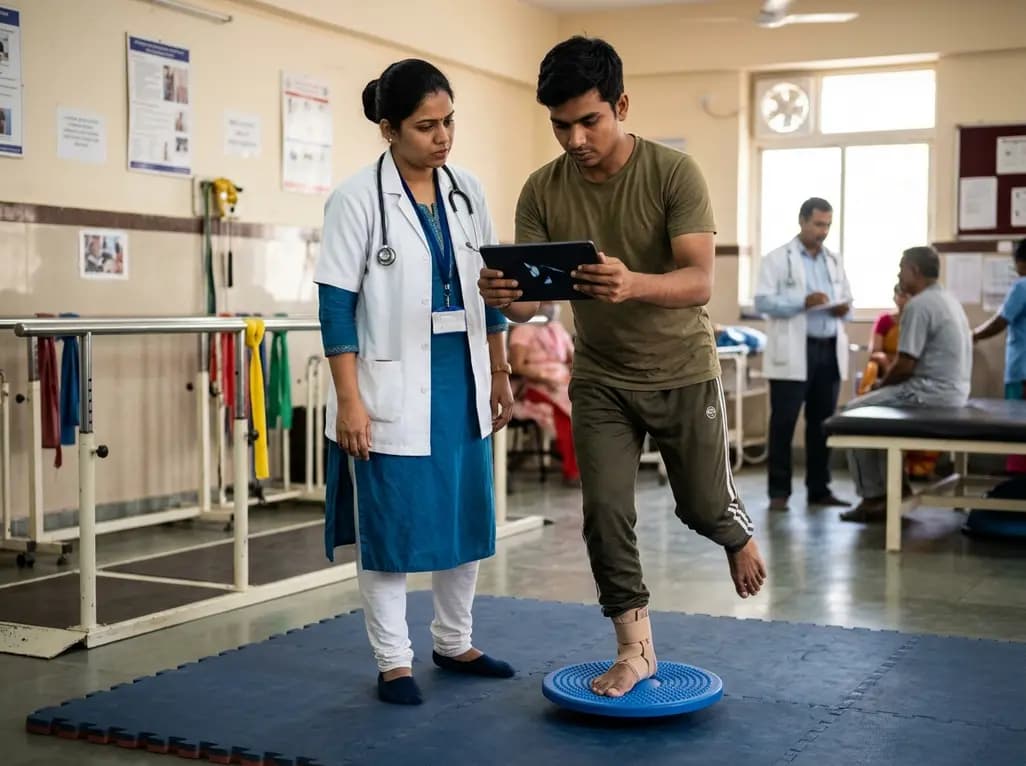
A randomized controlled trial demonstrates that an eight-week dual-task training intervention significantly improves static and dynamic postural control over standard balance exercises in individuals with chronic ankle instability, addressing critical neurocognitive deficits during athletic and daily activities.
Today

A retrospective cohort study of 7,716 ICU patients from the MIMIC-IV database demonstrates that Gradient Boosting Decision Trees significantly outperform traditional SOFA scores in predicting in-hospital mortality among patients with sepsis and diabetes, with SHAP analysis providing clinical interpretability.
Today
