

Loading, please wait...
Loading, please wait...
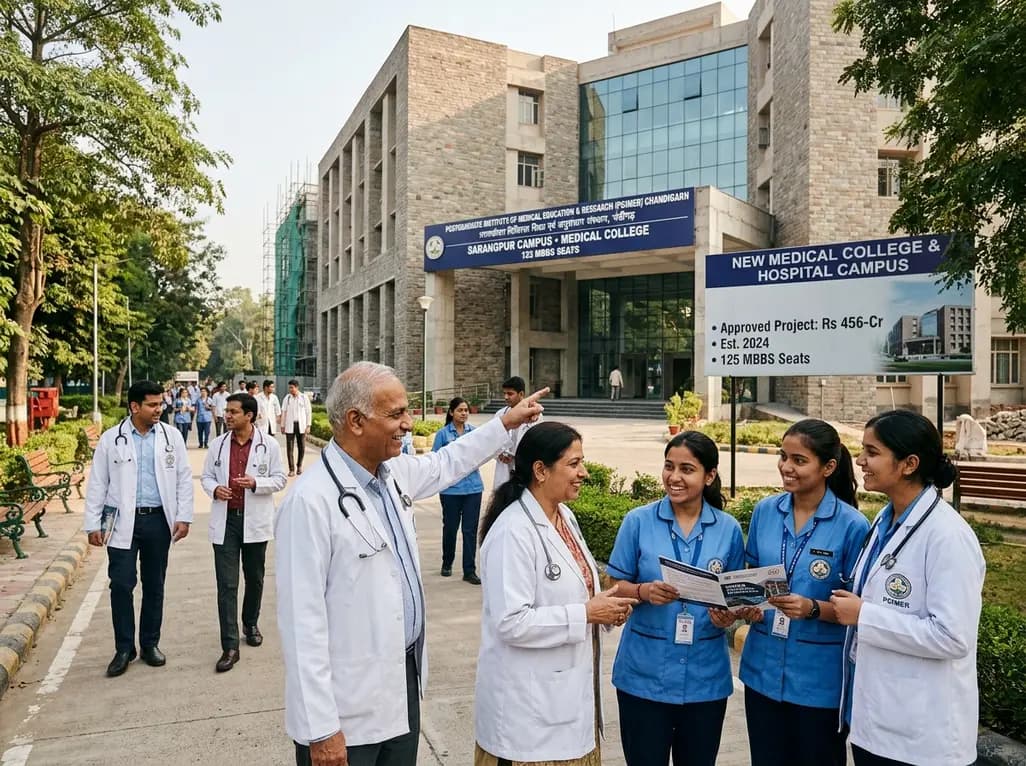
The Union Government officially sanctioned a landmark project establishing the PGIMER Chandigarh MBBS curriculum at a dedicated Sarangpur campus. Union Health and Family Welfare Minister Jagat Prakash Nadda announced this approval through a formal statement. Specifically, the initiative commits Rs 456 crore in central funding to expand public medical training infrastructure. For decades, the institute excelled exclusively as an apex postgraduate referral center. However, this historic decision broadens its institutional mandate into undergraduate medical education. Consequently, the institution will welcome an annual intake of 125 medical students.
The newly sanctioned medical college will occupy nearly 51 acres at the Sarangpur satellite campus. Notably, the Department of Expenditure approved the substantial project budget of Rs 456 crore. The administration carefully structured this capital outlay to build world-class educational facilities. Furthermore, the campus layout incorporates extensive academic zones, residential hostels, and recreational areas. Urban planners designed the complex to alleviate acute patient congestion at the existing PGIMER main campus. As a result, patients and trainees will enjoy superior spatial organization and dedicated facilities. In addition, the facility will house modern lecture halls with multimedia interactive display systems. Faculty members will utilize integrated departmental wings to conduct cross-disciplinary preclinical instruction. Therefore, students can bridge theoretical basic science knowledge with clinical correlations immediately. The master plan also includes expansive green spaces and energy-efficient building standards. Consequently, the Sarangpur campus creates an optimal, environmentally sustainable academic atmosphere for learners. Health officials anticipate that construction will proceed under rigorous quality benchmarking standards. Meanwhile, institutional authorities are coordinating utility connections and municipal clearances with city administrators. These collaborative administrative efforts ensure steady project milestones without procedural delays.
Introducing an undergraduate cohort transforms the academic fabric of this apex medical institute. Previously, PGIMER concentrated its educational resources exclusively on specialist and subspecialist medical training. However, establishing the PGIMER Chandigarh MBBS track generates a comprehensive continuum of physician education. Junior students will observe complex tertiary care protocols from their earliest training semesters. Moreover, senior residents and faculty mentors can actively nurture early clinical instincts among undergraduates. This hierarchical mentorship model significantly elevates the quality of bedside clinical apprenticeships. Furthermore, exposure to high-volume outpatient clinics sharpens diagnostic acumen and patient communication skills. The annual intake of 125 medical students will substantially augment national physician numbers. Accordingly, this influx directly supports the central goal of establishing 75,000 new medical seats nationwide. Prime Minister Narendra Modi championed this target to address chronic doctor-to-population deficits. Thus, the Sarangpur initiative translates national policy objectives into tangible regional clinical assets. In addition, local secondary care facilities will benefit from expanded community outreach initiatives. In fact, academic leaders expect keen interest from top-ranking applicants across the country. This competitive cohort will further stimulate clinical research activities. Consequently, the entire institutional ecosystem gains immense academic vitality and productivity.
Modern medical pedagogy relies heavily on simulation laboratories and objective skill evaluation modules. Therefore, the Sarangpur campus incorporates sophisticated simulation suites within its academic master blueprint. Trainees can practice critical emergency procedures on high-fidelity virtual mannequins before touching actual patients. For instance, learners will master endotracheal intubation, central venous access, and trauma resuscitation safely. Consequently, simulation training drastically minimizes clinical errors during initial bedside encounters. Additionally, the planned medical college includes advanced digital anatomy dissection tables. These interactive tables complement traditional cadaveric dissection with multi-planar volumetric rendering. Furthermore, students can examine complex pathology specimens using digitized virtual microscopy platforms. Digital histology repositories enable remote study access and standardized self-assessment testing modules. The administration also intends to integrate artificial intelligence diagnostics into basic clinical research courses. In particular, budding doctors will learn how algorithmic tools interpret radiological images and genomic panels. However, faculty leaders stress that technological advancements will never replace compassionate patient care. Thus, clinical communication, bedside manners, and medical ethics remain core curriculum priorities. As a result, graduates will excel in both resource-limited rural environments and tertiary hospitals. Ultimately, this balanced pedagogical framework prepares physicians for evolving clinical challenges.
Healthcare access across northern India exhibits notable geographic and demographic disparities. While metropolitan hubs maintain specialized medical institutions, outlying rural regions frequently experience severe physician shortages. Therefore, expanding undergraduate training capacity at PGIMER directly helps mitigate these persistent staffing challenges. The annual output of 125 newly qualified medical graduates steadily strengthens the peripheral primary care network. Moreover, these newly trained physicians can serve structured clinical internships across neighbouring districts. States such as Punjab, Haryana, Himachal Pradesh, and Jammu and Kashmir will benefit directly from this distributed workforce. In addition, the institution will design specific public health modules tailored to northern regional disease burdens. For example, trainees will investigate regional metabolic disorders, occupational lung diseases, and seasonal infectious outbreaks. Understanding local epidemiological patterns equips future physicians with practical preventive medicine expertise. Consequently, regional communities receive targeted preventive interventions rather than solely episodic emergency treatments. Furthermore, establishing a secondary hospital wing at Sarangpur will decentralize patient influx. Currently, the main campus in Sector 12 experiences overwhelming outpatient volume pressures daily. Diverting routine clinical traffic to Sarangpur preserves tertiary resources for specialized consultations. Hence, the new campus solves urgent educational demands while optimizing patient care delivery.
Executing a massive medical infrastructure project demands meticulous phased scheduling and administrative coordination. Institutional directors have developed an agile transition framework to initiate undergraduate training without unnecessary delays. Specifically, academic leaders plan to launch the initial MBBS batch with 50 students from the existing campus. This provisional arrangement utilizes available lecture theatres and laboratories while construction teams finalize the Sarangpur campus. Consequently, aspiring medical students can access these prestigious seats as early as the 2027 academic session. Subsequently, the institute will scale the annual admission capacity to the approved 125-seat ceiling. The Standing Academic Committee and Standing Finance Committee have already approved the foundational MBBS curriculum structure. However, formal ratification by the Governing Body and Institute Body represents the next regulatory milestone. In addition, administrative officials must finalize specific counselling procedures and quota seat distributions for candidate selection. The National Eligibility cum Entrance Test will serve as the mandatory merit-based gateway for all prospective applicants. Meanwhile, dedicated faculty recruitment initiatives will assemble leading basic science educators and clinician instructors. Establishing specialized academic chairs ensures strict adherence to modern competency-based medical education standards. Furthermore, institutional procurement departments have initiated tenders for cutting-edge laboratory instruments and diagnostic machinery. Thus, thorough logistical preparations ensure a seamless launch for this historic expansion.
Q1: What is the approved capacity and budget for the new PGIMER medical college?
The Union Government approved a total capital outlay of Rs 456 crore for the new medical college at the Sarangpur campus. The facility spans nearly 51 acres and will accommodate an ultimate annual intake of 125 MBBS students. Furthermore, modern preclinical laboratories, research facilities, and advanced simulation suites will equip the campus. The investment directly strengthens undergraduate medical infrastructure while supporting broader national healthcare workforce expansion goals across northern India.
Q2: When will MBBS admissions commence, and how will candidates be selected?
Admissions will proceed strictly through the National Eligibility cum Entrance Test. Institutional authorities plan to launch the initial MBBS batch with 50 seats from the existing campus as early as the 2027 academic session. Subsequently, student intake will scale to the full 125-seat threshold once the Sarangpur infrastructure becomes fully operational. Candidates should monitor official institutional notifications regarding counselling authorities, state domicile allocations, and verified seat matrices before applying.
Q3: Why is introducing an MBBS program at PGIMER Chandigarh significant?
Historically, PGIMER focused entirely on postgraduate residencies, doctoral research, and super-specialty fellowships. Therefore, establishing an undergraduate medical curriculum creates an unbroken educational pipeline within one of India's most prestigious medical centers. Undergraduates will gain early clinical exposure to complex pathology alongside premier clinicians and researchers. Moreover, this transition bolsters regional healthcare delivery by developing well-rounded medical practitioners trained under world-class academic standards from the start of their clinical careers.
Disclaimer: This content is for informational and educational purposes only. It does not constitute medical advice or replace professional judgment. Refer to the latest local and national guidelines for clinical practice.
References

Read summarized clinical updates, watch expert medical content, and earn CME certifications right from your smartphone.
Open your smartphone camera to scan and install.





The Union Government has approved a Rs 456-crore medical college at PGIMER Chandigarh's Sarangpur campus with 125 MBBS seats. Explore infrastructure highlights, curriculum development, technological upgrades, and regional healthcare impacts of this major medical education milestone.
Today
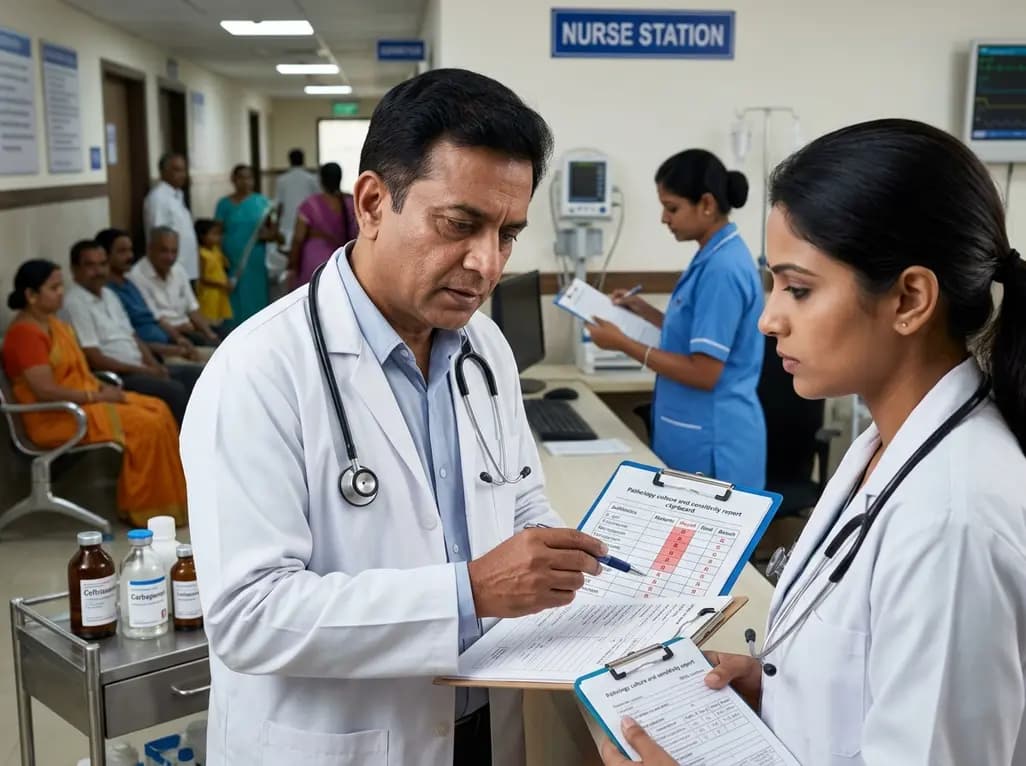
The latest surveillance report from the Indian Council of Medical Research exposes a steep nationwide decline in bacterial susceptibility. Common pathogens like E. coli and Klebsiella pneumoniae demonstrate critical resistance to cephalosporins and carbapenems, urging clinicians to rethink empirical antimicrobial therapy.
Today
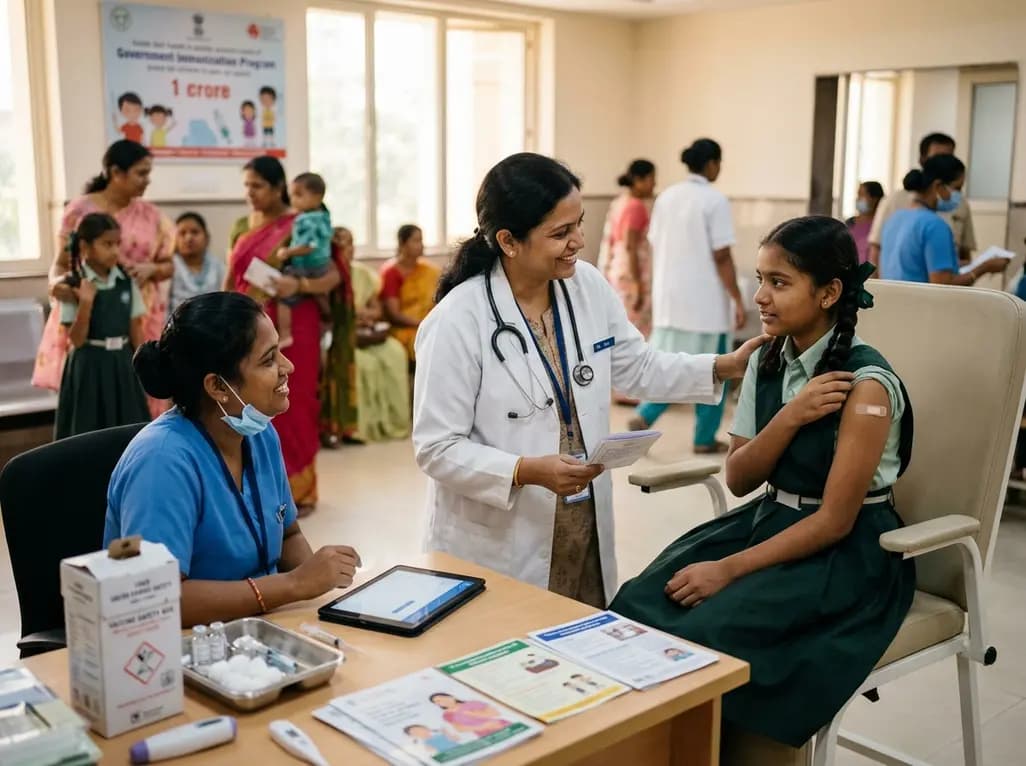
Under India's nationwide immunization drive, healthcare teams have vaccinated more than one crore 14-year-old girls within nine months. This comprehensive analysis evaluates state achievements, digital tracking via the U-WIN platform, clinical safety monitoring, and practical counselling strategies for practitioners.
Today

A large network analysis of middle-aged and older adults reveals distinct sex-specific dependency pathways between lifestyle factors and cardiometabolic diseases. Physical activity, smoking, and alcohol exhibit divergent bridging roles in men and women, underscoring the need for tailored clinical prevention.
Today
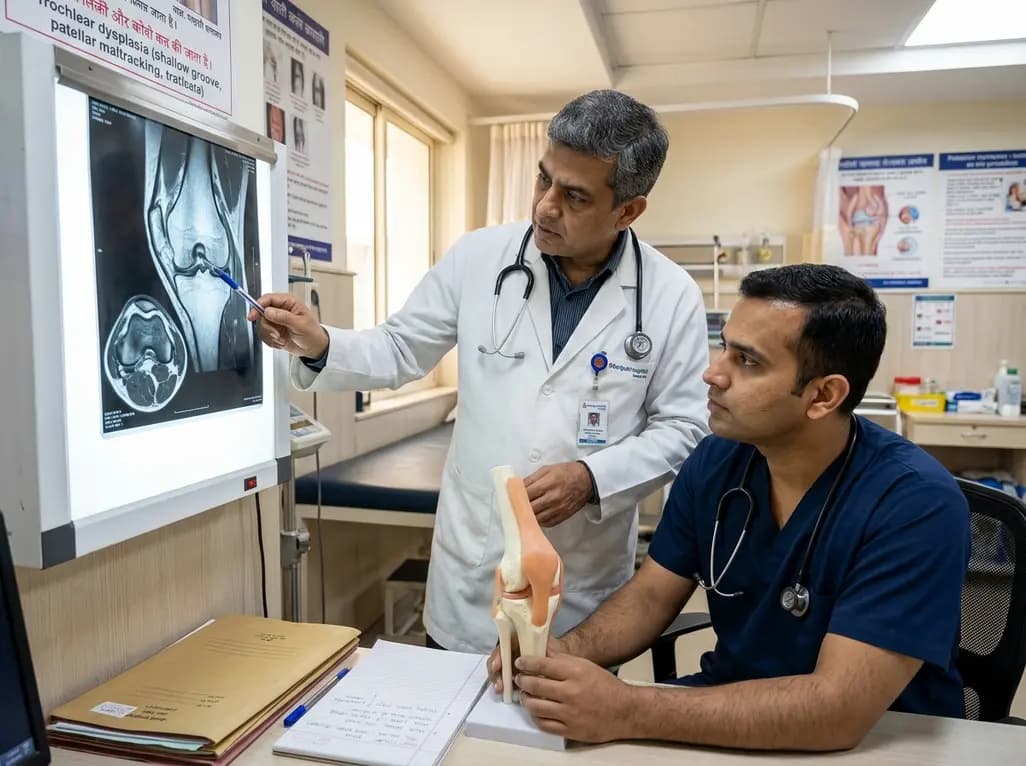
A landmark study reveals that patellofemoral cartilage defects in patients with trochlear dysplasia are primarily driven by patellar maltracking and spur height rather than dislocation frequency or shape mismatch, offering crucial insights for preoperative imaging and surgical stabilization.
Today
Single-cell transcriptomics reveals that STAP2 promotes retinal endothelial dysfunction in diabetic retinopathy through CXCR4 signaling. In vivo and in vitro studies show STAP2 knockdown reduces capillary drop-out and vascular leakage, uncovering a novel therapeutic target beyond anti-VEGF therapies.
Today
