

Loading, please wait...
Loading, please wait...

A landmark investigation by the European Court of Auditors indicates that regulatory authorities respond far too slowly to persistent environmental pollutants. Consequently, human populations face prolonged exposure to hazardous synthetic compounds without sufficient safeguards. Clinicians must recognize that PFAS health risks represent an escalating public health crisis worldwide. Outdated thresholds and bureaucratic inertia allow persistent per- and polyfluoroalkyl substances to accumulate relentlessly in human tissues.
Per- and polyfluoroalkyl substances encompass more than 10,000 distinct synthetic chemical compounds. Manufacturers prize these chemicals because strong carbon-fluorine bonds resist heat, oil, and moisture effectively. Therefore, companies deploy them extensively across consumer goods, including non-stick cookware, waterproof textiles, cosmetics, and food packaging. In addition, critical industrial sectors depend on them for medical devices and aerospace manufacturing. However, these indestructible chemical bonds prevent natural degradation, earning these compounds the moniker of forever chemicals.
Furthermore, medical literature demonstrates that these persistent agents accumulate steadily within human blood, liver, and kidneys. Clinicians observe alarming correlations between heavy serum concentrations and significant adverse physiological outcomes. In particular, epidemiological studies link chronic exposure directly to renal cell carcinoma, testicular cancer, hepatic dysfunction, and dyslipidemia. Moreover, endocrine specialists highlight profound thyroid disruptions and metabolic perturbations in heavily exposed communities. Toxicologists also report that bioaccumulation suppresses protective antibody responses following routine vaccinations.
Although European regulators initiated chemical restrictions in 2006, auditors found significant systemic flaws in current oversight. Specifically, enacting a formal chemical restriction under the REACH framework requires an astonishing average of eleven years. This extensive timeframe includes six full years solely devoted to initial hazard evaluation. Subsequently, administrators expend another five years navigating formal legislative procedures. Meanwhile, vulnerable populations consume contaminated water and food continuously throughout these administrative delays.
Consequently, commercial manufacturers exploit regulatory loopholes by introducing unmonitored analogues into commerce. Regulators refer to this persistent dilemma as regrettable substitution, where restricted molecules yield to equally toxic alternatives. For example, industrial chemical plants quickly replace banned long-chain compounds with short-chain varieties that demonstrate comparable persistence. Moreover, current registration thresholds exempt chemicals imported at volumes beneath one metric ton annually. As a result, authorities evaluate full toxicological datasets for only a fraction of manufactured substances.
Dietary intake constitutes the primary vector through which forever chemicals enter human physiology. Specifically, industrial runoff, contaminated biosolids, and persistent landfill leachates contaminate agricultural soils and aquatic ecosystems. Consequently, synthetic toxins integrate directly into commercial food webs and tap water systems. European auditors determined that current statutory limits for food rely on scientific assessments that are a decade old. Thus, these outdated standards fail to reflect current toxicological data regarding low-dose toxicity.
Moreover, Joelle Elvinger presented alarming quantitative models illustrating how rapidly typical dietary portions breach safe thresholds. For instance, consuming merely seven grams of contaminated anchovies can breach an adult's tolerable weekly intake. Similarly, an individual exceeds recommended exposure thresholds after consuming only 39 grams of contaminated wild salmon. Furthermore, eating 181 grams of eggs or 237 grams of beef at permitted maximums yields identical toxic burdens. Therefore, current food standards offer inadequate safety margins against cumulative biological contamination.
The audit also revealed widespread inconsistencies in national enforcement across European member states. Notably, more than one-third of evaluated countries perform no routine laboratory checks to verify compliance. This complete absence of rigorous market surveillance permits prohibited substances to persist within everyday consumer products. Furthermore, environmental monitoring programs completely ignore the most abundant degradation products currently circulating through public ecosystems.
In particular, investigators identified trifluoroacetic acid, commonly known as TFA, as an unmonitored chemical threat. Trifluoroacetic acid forms when refrigerants, industrial solvents, and fluorinated pesticides degrade in surrounding atmosphere and soil. Consequently, this persistent breakdown product now saturates groundwater resources and surface water reserves across continents. Nevertheless, public utilities rarely quantify this persistent compound during routine municipal water testing. Therefore, municipal authorities miss massive chemical burdens, exposing citizens to unquantified toxicological hazards.
Healthcare practitioners must remain alert to environmental toxicant exposures among patients presenting with unexplained multisystem disorders. For example, physicians should consider cumulative environmental toxicities when managing refractory thyroid conditions or dyslipidemia. Additionally, obstetricians must acknowledge that transplacental transmission and lactational transfer expose fetuses and newborns to heavy chemical loads. Hence, clinicians should educate patients regarding practical exposure reduction techniques across everyday household settings.
Furthermore, physicians should advise patients to reduce reliance on non-stick cookware and grease-resistant fast-food packaging. Families can also lower domestic chemical burdens by installing certified carbon block or reverse osmosis water filtration units. In addition, national medical societies should actively advocate for comprehensive, class-based chemical regulations rather than substance-by-substance bans. Only sweeping policy changes, unified surveillance networks, and updated dietary thresholds can mitigate this pervasive toxicological crisis effectively.
Q1: What clinical disorders are most strongly associated with long-term PFAS exposure?
Extensive clinical research links chronic exposure to significant immune suppression, marked by diminished antibody responses following vaccination. Additionally, toxicologists connect persistent accumulation to thyroid dysfunction, elevated serum cholesterol, ulcerative colitis, and gestational hypertension. Epidemiological studies also confirm elevated risks for kidney and testicular cancers. Therefore, physicians should consider environmental burdens when evaluating refractory endocrine disorders or atypical chronic disease presentations.
Q2: Why do current drinking water and dietary safety thresholds fail to protect patients?
Current statutory limits rely on toxicological guidelines formulated over a decade ago. Consequently, these outdated thresholds ignore recent evidence regarding endocrine disruption at minuscule concentrations. Furthermore, safe intake thresholds are easily breached by consuming small portions of contaminated food, such as seafood or eggs. Regulatory bodies also fail to account for cumulative lifetime bioaccumulation, leaving consumers vulnerable to chronic multisystem toxicity.
Q3: How can clinicians advise patients to minimize exposure to forever chemicals?
Clinicians should encourage patients to transition away from fluorinated non-stick cookware toward stainless steel, cast iron, or ceramic alternatives. Additionally, individuals should minimize the consumption of takeout foods packaged in grease-resistant paper wraps. Utilizing certified water filtration systems, particularly activated carbon filters or reverse osmosis units, also removes substantial chemical fractions from domestic drinking water.
Disclaimer: This content is for informational and educational purposes only. It does not constitute medical advice or replace professional judgment. Refer to the latest local and national guidelines for clinical practice.
References

Read summarized clinical updates, watch expert medical content, and earn CME certifications right from your smartphone.
Open your smartphone camera to scan and install.





A critical European Court of Auditors report warns that slow chemical regulation leaves millions exposed to toxic forever chemicals. Outdated thresholds in drinking water and food fail to protect public health, posing serious clinical threats including carcinogenesis, endocrine disruption, and immunotoxicity.
Today

A cross-sectional study in critical care reveals three distinct profiles of family surrogate decision-making self-efficacy, highlighting how clinician communication, hope, and social support drive decision readiness.
Today

A large cohort study demonstrates that fetal growth restriction in a first pregnancy raises maternal cardiovascular risk within five years postpartum, including elevated rates of heart failure, stroke, and myocardial infarction. Clinicians must initiate proactive postpartum screening and cardiovascular prevention.
Today

An NHANES analysis reveals that meeting 24-hour movement guidelines significantly lowers the odds of cardiovascular disease, obesity, hypertension, and diabetes among adults with disabilities, emphasizing the power of combined physical activity, sleep, and limited sedentary time.
Today

A paired cadaveric study compared triple and quintuple percutaneous Achilles tendon lengthening. While quintuple hemisection showed numerically greater elongation, differences were not statistically significant.
Yesterday
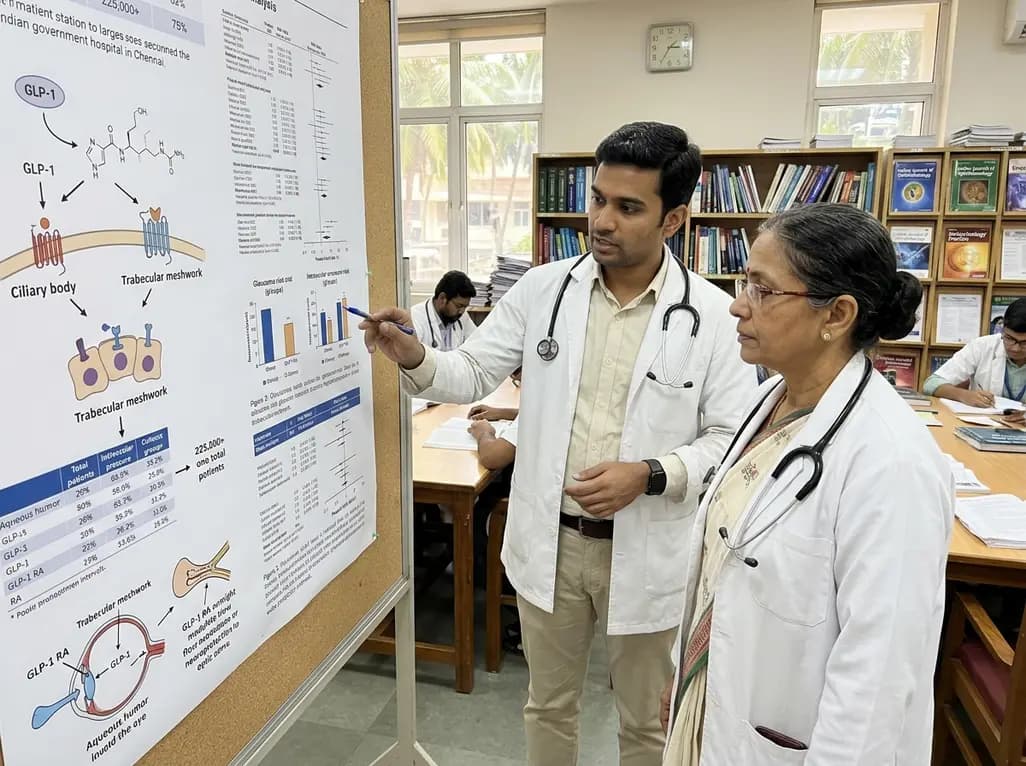
A systematic review and meta-analysis of over 225,000 patients explores whether GLP-1 receptor agonists reduce the risk of glaucoma and ocular hypertension. While pooled data show a 31% lower risk, low certainty and wide prediction intervals urge cautious optimism and further randomized trial evaluation.
Today
