.webp&w=384&q=75)

Loading, please wait...
Loading, please wait...

The therapeutic paradigm for early-stage and locally advanced non-small cell lung cancer (NSCLC) continues to shift toward comprehensive systemic approaches. Recently updated results from the phase III AEGEAN study highlight the long-term clinical efficacy of perioperative durvalumab when combined with standard neoadjuvant chemotherapy. Historically, surgical resection alone or neoadjuvant platinum-based chemotherapy yielded modest survival advantages in resectable disease. However, persistent risks of distant recurrence and local failure underscored the urgent requirement for more effective multimodal interventions. Perioperative immunotherapy represents a transformative strategy that primes the host immune system prior to tumor excision and subsequently eradicates micrometastatic disease during the adjuvant phase. The AEGEAN trial sought to validate whether this dual-phase regimen provides durable survival benefits in treatment-naive individuals presenting with stage II to IIIB resectable tumors. By examining event-free survival, disease-free survival, overall survival, and long-term toxicity profiles, these updated findings provide vital guidance for oncologists. As clinicians continually seek optimal protocols for operable thoracic malignancies, integrating immune checkpoint blockade across both pre- and postoperative periods emerges as an essential therapeutic milestone in modern thoracic oncology care.
The phase III AEGEAN trial evaluated a randomized, double-blind, global cohort of treatment-naive patients diagnosed with stage II to IIIB non-small cell lung cancer. Specifically, investigators randomly assigned 802 eligible participants in a 1:1 ratio to receive either platinum-based neoadjuvant chemotherapy paired with durvalumab or neoadjuvant chemotherapy with a matched placebo. Patients received intravenous durvalumab at a fixed dose of 1500 mg or placebo every three weeks for four cycles prior to planned definitive surgery. Following complete or feasible surgical resection, participants continued with single-agent durvalumab or placebo every four weeks for twelve additional cycles. Importantly, the primary efficacy analysis focused on the modified intention-to-treat population, which deliberately excluded individuals harboring sensitizing EGFR mutations or ALK translocations. This predefined exclusion criteria ensured that the observed outcomes accurately reflected immune responsiveness rather than targeted therapy pathways. The dual primary endpoints encompassed event-free survival assessed by blinded independent central review and pathologic complete response evaluated by central pathology review. Secondary endpoints included disease-free survival, overall survival, surgical feasibility, and longitudinal safety outcomes across both treatment arms.
The updated analysis, conducted at a median follow-up of 25.9 months among censored patients, confirmed sustained and statistically significant improvements across primary and secondary endpoints. Patients treated with perioperative durvalumab demonstrated a meaningful 31% reduction in the risk of disease recurrence, progression, or death compared to chemotherapy alone, yielding a hazard ratio of 0.69. Furthermore, landmark event-free survival rates consistently favored the immunotherapy combination across all predefined intervals throughout the follow-up period. Among the resected subpopulation, disease-free survival showed a clear numerical and clinical advantage, with a hazard ratio of 0.66 indicating prolonged freedom from tumor recurrence. Although overall survival data remain immature at this interim stage, analyses revealed a favorable numerical trend with a hazard ratio of 0.89 in favor of the durvalumab arm. Additionally, previous readouts confirmed a striking increase in pathologic complete response, rising from 4.3% in the chemotherapy-alone cohort to 17.2% with the addition of durvalumab. Major pathologic response rates similarly demonstrated marked enhancement, establishing that systemic tumor debulking and immune activation occur rapidly prior to thoracic surgery.
Extensive subgroup analyses from the AEGEAN trial demonstrate that the clinical benefit of perioperative durvalumab extends across diverse clinical and demographic strata. Investigators observed consistent event-free survival enhancements regardless of baseline disease stage, histology, or tumor programmed death-ligand 1 expression status. Notably, patients presenting with stage IIIA and IIIB disease, who traditionally face higher recurrence rates, achieved substantial risk reductions with the perioperative regimen. Similarly, both squamous and non-squamous non-small cell lung cancer subtypes exhibited improved clinical outcomes when receiving durvalumab alongside platinum-based doublets. Furthermore, exploratory analyses of the tumor microenvironment showed that patients with immune-activated profiles derived exceptional benefit, although clinical advantages were also detectable across various baseline immune phenotypes. Because patients with known EGFR or ALK alterations were excluded from the primary modified intention-to-treat cohort, these findings reinforce the necessity of prompt reflex molecular testing at diagnosis. Clinicians should routinely confirm wild-type status to identify appropriate candidates who are most likely to achieve durable survival benefits from perioperative immune checkpoint inhibition.
Administering immunotherapy in the neoadjuvant setting historically raised theoretical concerns regarding increased surgical complexity, operative delays, and elevated perioperative morbidity. However, the AEGEAN trial demonstrated that adding durvalumab to neoadjuvant chemotherapy did not compromise surgical feasibility, resection rates, or operative timing. The vast majority of eligible patients successfully underwent planned surgical resection, and the rate of complete R0 resections was numerically higher in the durvalumab arm compared to placebo. The incidence of adverse events aligned with the established safety profiles of platinum doublets and immune checkpoint inhibitors. During the adjuvant phase, maximum grade 3 or 4 adverse events occurred in 15.4% of patients in the durvalumab cohort versus 10.6% in the placebo group. Immune-mediated adverse events were generally manageable using standard clinical algorithms and systemic corticosteroids when indicated. Importantly, treatment discontinuation rates due to drug-related toxicity remained low and balanced, confirming that prolonged adjuvant administration following definitive pulmonary resection is well tolerated and clinically manageable for appropriately selected surgical candidates.
The updated AEGEAN findings carry vital implications for multidisciplinary thoracic oncology teams navigating real-world clinical practice. Traditionally, neoadjuvant chemotherapy delivered modest pathologic response rates, while standalone adjuvant strategies often struggled with patient compliance following major thoracic surgery. By bridging pre- and postoperative care, perioperative durvalumab maximizes systemic tumor clearance before surgical intervention and maintains continuous immune surveillance postoperatively to suppress residual micrometastases. For practicing oncologists and thoracic surgeons, these data emphasize the fundamental role of timely reflex molecular testing. Excluding patients with targetable oncogenic driver mutations ensures appropriate allocation to tyrosine kinase inhibitors while directing wild-type tumors toward perioperative immunotherapy. Furthermore, close collaboration between pulmonologists, medical oncologists, and thoracic surgeons is essential to monitor immune-related toxicities, schedule surgery within recommended windows, and support treatment adherence through the completion of adjuvant cycles. Ultimately, this evidence supports integrating perioperative durvalumab as a transformative standard treatment strategy for resectable stage II to IIIB non-small cell lung cancer.
The phase III AEGEAN trial evaluated two primary endpoints: event-free survival assessed by blinded independent central review and pathologic complete response evaluated through central pathology review. In addition, key secondary endpoints encompassed overall survival, disease-free survival in the resected subpopulation, major pathologic response rates, surgical feasibility parameters, and comprehensive longitudinal safety profiles across both the neoadjuvant and adjuvant treatment phases.
Data from the AEGEAN trial demonstrated that adding durvalumab to neoadjuvant chemotherapy does not compromise surgical feasibility, delay operative schedules, or increase perioperative complications. In fact, patients treated with the durvalumab combination achieved higher rates of complete R0 surgical resections compared to chemotherapy alone. The overall safety profile remained manageable, allowing most eligible candidates to proceed smoothly to curative surgery.
Patients with documented EGFR mutations or ALK rearrangements were excluded from the primary efficacy cohort because tumors with oncogenic driver alterations generally show diminished sensitivity to immune checkpoint inhibitors. Targeted tyrosine kinase inhibitors represent the standard of care for these specific molecular subtypes. Excluding them ensured that the evaluated clinical benefits of perioperative durvalumab accurately reflected outcomes in true wild-type disease.
Disclaimer: This content is for informational and educational purposes only. It is not intended to provide medical advice, diagnosis, or treatment. Healthcare professionals must exercise independent clinical judgment. Refer to the latest local and national guidelines for clinical practice.
References

Read summarized clinical updates, watch expert medical content, and earn CME certifications right from your smartphone.
Open your smartphone camera to scan and install.





Updated Phase III AEGEAN trial data show that perioperative durvalumab with neoadjuvant chemotherapy significantly improves event-free survival (HR 0.69) and disease-free survival in resectable NSCLC without compromising surgical feasibility or safety.
4 weeks back

With post-monsoon dengue surges threatening South Asian health systems, physicians must refine triage and management. This guide covers vital warning signs, plasma leakage detection, crystalloid titration, and vector containment strategies to prevent mortality during seasonal arboviral epidemics.
Today

Findings from Project Viva indicate that sustained postpartum weight retention, rather than excessive gestational weight gain alone, directly worsens women's mid-life cardiovascular health, degrading blood pressure and glycemic parameters decades after delivery.
Today
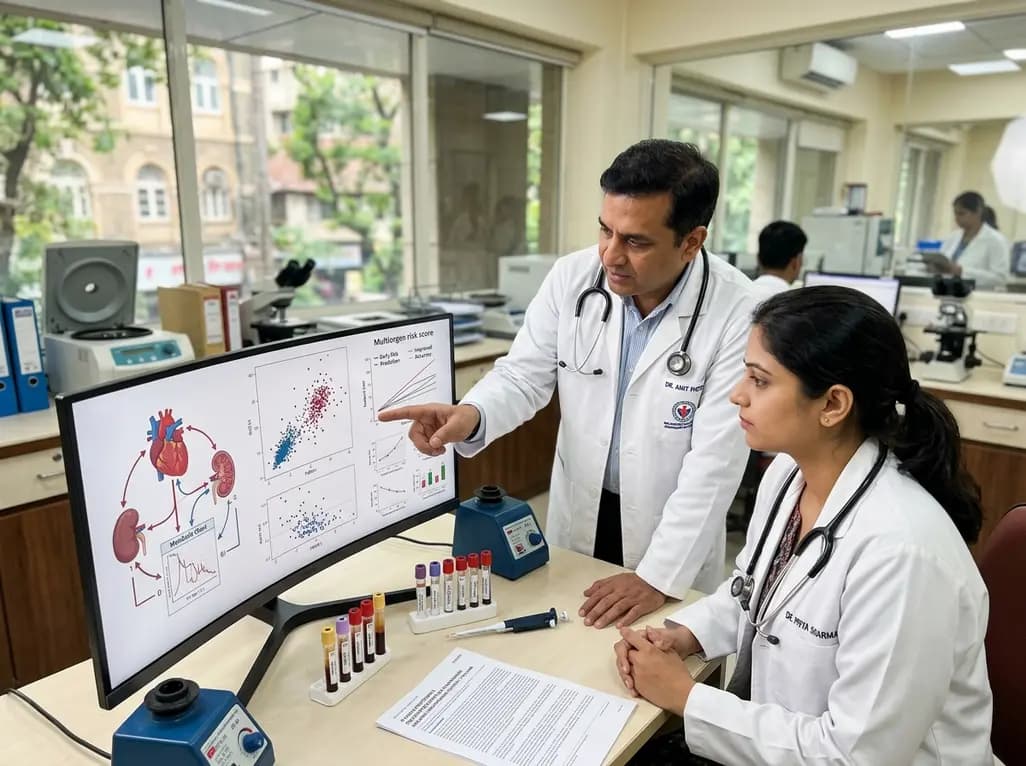
A large UK Biobank study reveals that plasma proteomic signatures capture preclinical organ damage and improve multiorgan risk prediction across early CKM syndrome stages 0 to 2 beyond traditional PREVENT clinical models.
Today

A retrospective CBCT study reveals that superior TMJ space asymmetry correlates moderately with occipital condyle-atlas-axis asymmetry in unilateral TMJ osteoarthritis, highlighting an imaging correlate between jaw biomechanics and upper cervical alignment rather than a standalone diagnostic marker.
Today

A Bayesian multilevel meta-analysis reveals that aerobic training combined with moderate carbohydrate restriction modestly lowers HbA1c in type 2 diabetes. However, sparse data and very low certainty leave incremental benefits over exercise or diet alone unproven, highlighting the need for individualized care.
Today
