.webp&w=384&q=75)

Loading, please wait...
Loading, please wait...

Periodontitis is a chronic inflammatory condition that significantly impacts oral health and has been linked to various systemic diseases. In the quest for effective periodontal tissue regeneration, researchers have focused on bone marrow-derived mesenchymal stem cells (BMMSCs) due to their potent immunomodulatory properties. A recent study has identified a critical pathway where Interleukin-6 (IL-6) influences these stem cells, potentially opening new avenues for clinical treatment in India and globally.
The study highlights that IL-6 levels are significantly elevated in experimental periodontitis. This cytokine activates the signal transducer and activator of transcription 3 (STAT3), which subsequently upregulates the expression of miR-181a-5p in BMMSCs. Furthermore, this microRNA acts as a molecular switch that governs the immune response within the periodontal microenvironment. Consequently, understanding this axis is vital for clinicians looking to manage the inflammatory cascades that lead to bone loss.
One of the most promising findings involves the Th17/Treg immune balance. While Th17 cells promote inflammation and bone resorption, regulatory T cells (Tregs) help maintain immune homeostasis. The research demonstrated that inhibiting miR-181a-5p can restore this balance. When preconditioned with a miR-181a-5p inhibitor, BMMSCs significantly improved periodontal tissue regeneration in mouse models. This intervention reduced the activity of osteoclasts, which are the cells responsible for bone destruction, thereby facilitating better recovery of the alveolar bone.
Currently, traditional periodontal therapies focus on biofilm control and surgical interventions. However, the integration of stem cell preconditioning techniques could revolutionize restorative practices. By targeting specific microRNAs like miR-181a-5p, dentists might soon be able to enhance the regenerative capacity of a patient's own stem cells. Additionally, this approach addresses the underlying immune dysfunction rather than just the symptoms of inflammation.
IL-6 promotes inflammation and triggers signaling pathways like STAT3 that alter the behavior of stem cells, leading to an imbalance in the immune response and increased bone resorption.
A balanced Th17/Treg ratio ensures that the immune system can resolve inflammation and support the osteogenic differentiation of stem cells, which is necessary for rebuilding lost bone and tissue.
While experimental results are promising, the use of microRNA inhibitors in periodontal therapy is currently in the research phase and requires further clinical trials before it becomes a standard treatment option.
Disclaimer: This content is for informational and educational purposes only and does not constitute medical advice. Always seek the advice of a qualified healthcare provider regarding any medical condition. Refer to the latest local and national guidelines for clinical practice.
References
Wu S et al. IL-6/STAT3-Mediated miR-181a-5p in Bone Marrow-Derived Mesenchymal Stem Cells Regulates Th17/Treg Balance in Experimental Periodontitis. Int Dent J. 2026 Jun 11. doi: undefined. PMID: 42275747.
Wang L, Wang J, Jin Y, Gao H, Lin X. Oral administration of all-trans retinoic acid modulates the Th17/Treg ratio and prevents alveolar bone resorption. J Clin Periodontol. 2020;47(6):676-688.
Casati MZ et al. Allogeneic Bone Marrow Mesenchymal Stem Cell Transplantation for Periodontal Regeneration. PubMed. 2014.
"
Read summarized clinical updates, watch expert medical content, and earn CME certifications right from your smartphone.
Open your smartphone camera to scan and install.





A new study reveals how IL-6 modulates miR-181a-5p via STAT3 in bone marrow-derived mesenchymal stem cells. This pathway regulates the Th17/Treg balance, offering a novel strategy for periodontal tissue regeneration and reducing bone resorption in inflammatory periodontal disease.
4 months ago

Review how tailored exercise programs benefit frail older patients with heart failure. Explore pathophysiological mechanisms, individualized training prescriptions, and strategies to overcome adherence barriers in clinical practice.
Today

Recent clinical studies reveal maternal autoantibodies targeting IL-1RA as potential triggers for preterm labor, opening avenues for targeted cytokine therapies. Concurrently, new perioperative findings show inhaled cannabis increases propofol requirements during upper endoscopy compared to oral edible consumption.
Today
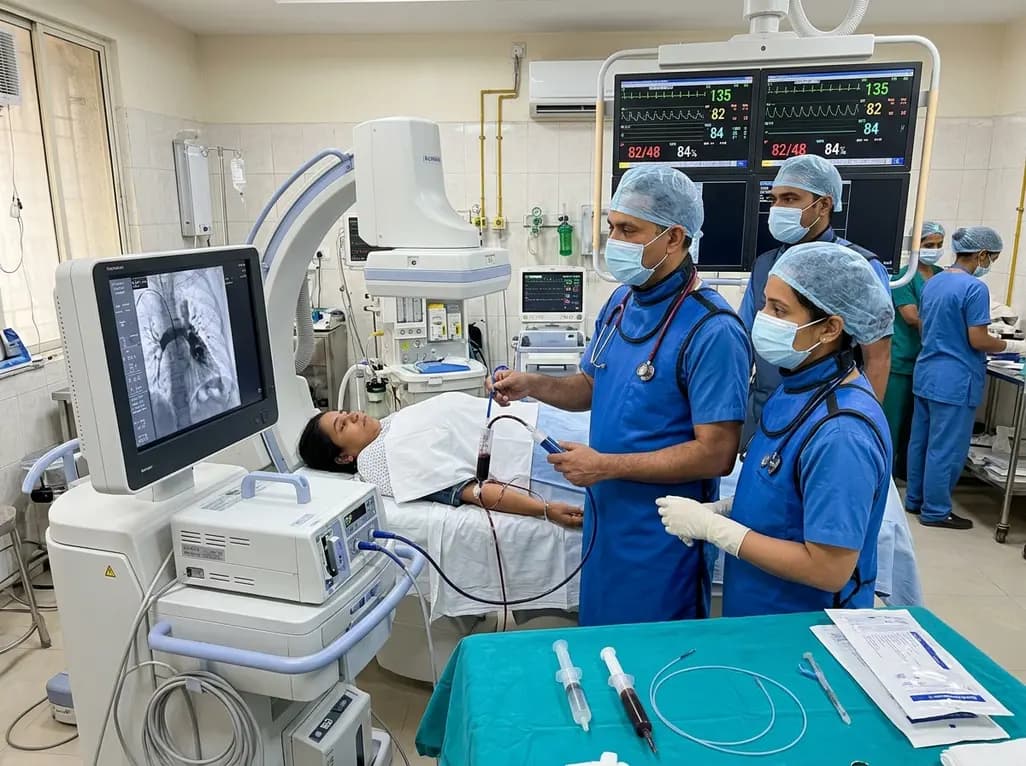
In high-risk pulmonary embolism complicated by severe anemia and active uterine bleeding, systemic thrombolysis is contraindicated. Large-bore aspiration thrombectomy provides rapid hemodynamic rescue without fibrinolysis, supported by inferior vena cava filter placement and multidisciplinary critical care.
Today

This comparative study evaluates posterior labral tears with and without glenohumeral instability, highlighting distinct demographic patterns, MRI underestimation in stable shoulders, and successful arthroscopic repair outcomes.
Today

A clinical study demonstrates that early intervention with tocilizumab, either as monotherapy or bridged with corticosteroids, achieves significant proptosis reduction and resolves active inflammation in treatment-naive thyroid eye disease.
Today
