.webp&w=384&q=75)

Loading, please wait...
Loading, please wait...
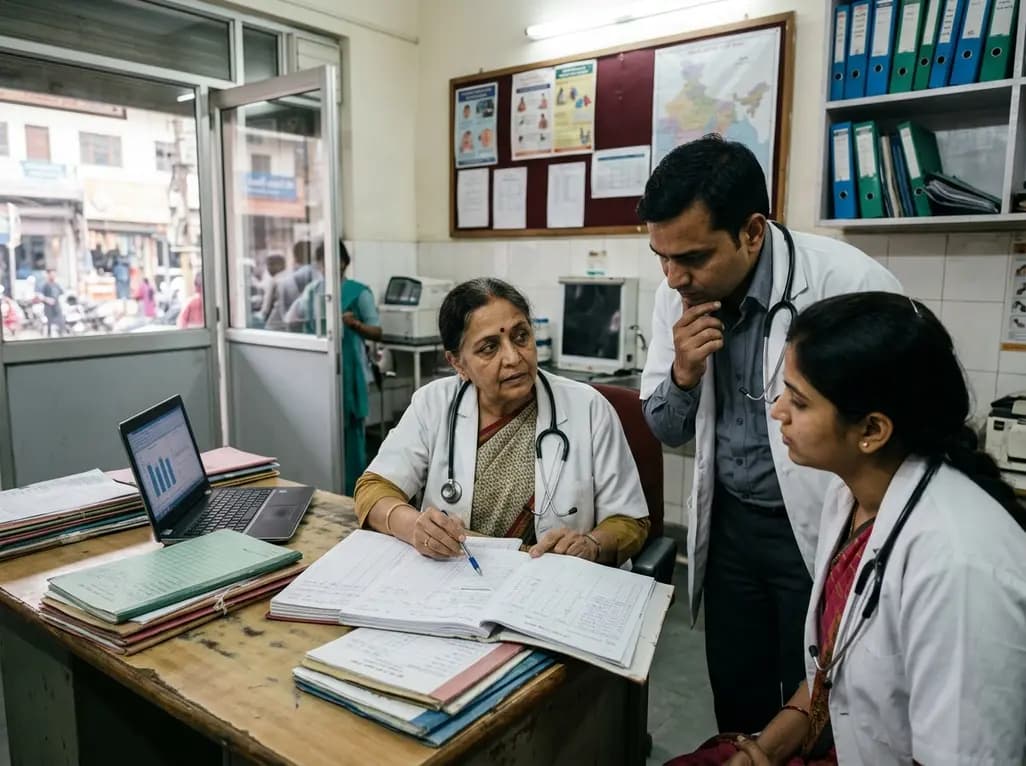
A recent study published in The Lancet Regional Health Southeast Asia has shed critical light on stillbirth rates in India. According to researchers forming the India State-Level Disease Burden Initiative Stillbirth Collaborators, Uttar Pradesh and Bihar together accounted for nearly half of the country's total stillbirths in 2023. Consequently, healthcare experts are calling for a fundamental shift in how fetal losses are tracked, reported, and managed across Indian states. Additionally, the analysis reveals that standard international definitions severely underestimate the actual clinical burden. Therefore, understanding gestational age thresholds is essential for clinicians, medical educators, policymakers, and public health advocates. Addressing these systemic gaps requires immediate coordinated attention across all levels of maternal care.
Standard international reporting relies heavily on a 28-week gestational threshold to define fetal death. However, the World Health Organization defines stillbirth as fetal death at 22 weeks of gestation or longer. The latest nationwide analysis demonstrates that stillbirth rates in India are 1.6 times higher when evaluated at the 22-week mark compared to the 28-week standard. Specifically, estimates suggest that approximately 565,900 stillbirths occurred at 22 weeks or later in 2023. This corresponds to a national stillbirth rate of 25.9 per 1,000 total births. Conversely, when applying the restrictive 28-week threshold, the total falls to 347,300 cases, yielding a rate of 16.1 per 1,000 births.
Furthermore, relying exclusively on late-gestation definitions creates a severe blind spot in epidemiological monitoring. Consequently, nearly two-fifths of all fetal losses remain uncounted in official national health statistics. To address this persistent issue, public health authorities must transition toward surveillance systems that accurately record fetal loss from 22 weeks onward. This structural shift will allow clinicians to capture early clinical complications effectively. Ultimately, comprehensive data collection will improve targeted medical interventions during critical early windows of pregnancy.
The landmark study reveals profound regional variations in fetal mortality across Indian states. SBR figures display a dramatic four-fold variation between different geographic regions. For example, Mizoram recorded a low stillbirth rate of 9.3 per 1,000 total births. In stark contrast, Uttar Pradesh reached a concerning high of 38.2 per 1,000 total births. Together, Uttar Pradesh and Bihar contributed almost half of all stillbirths recorded across the entire nation in 2023. Consequently, these two densely populated northern states represent high-priority areas for targeted maternal health programs and infrastructure development.
Moreover, the researchers identified a modest inverse correlation between state stillbirth rates and the Sustainable Development Goal 3 index scores developed by NITI Aayog. States with lower healthcare delivery metrics consistently experience higher rates of fetal loss. Therefore, closing the developmental gap between states is vital for achieving uniform maternal health outcomes nationwide. Additionally, local healthcare infrastructure must be strengthened to handle complex obstetric emergencies effectively. Without dedicated resource allocation to northern and central India, national health targets will remain elusive.
Accurate surveillance remains a cornerstone of effective maternal and child health policy. Nevertheless, routine national data sources in India face persistent reporting challenges. Data sources such as the Sample Registration System and National Family Health Surveys have primarily focused on late-gestation figures in prior analyses. Consequently, early fetal losses between 22 and 28 weeks often go unrecorded. Furthermore, inconsistent hospital reporting systems and limited availability of gestational-age-specific data obscure the true magnitude of the public health challenge.
To overcome these barriers, the research team compiled and analyzed data from 122 distinct sources, including national surveys, published studies, and civil registration systems. Their findings highlight the urgent necessity of standardizing gestational age reporting across all primary healthcare centers and hospitals. For instance, digital tracking tools and standardized clinical registers can ensure seamless documentation. Furthermore, training healthcare personnel to accurately record gestational age will eliminate misclassification between stillbirths and early neonatal deaths. As a result, public health leaders can make evidence-based decisions driven by precise epidemiological data.
Preventing fetal loss requires a thorough clinical understanding of underlying risk factors across the continuum of care. Researchers highlighted several critical maternal and obstetric conditions that contribute significantly to adverse outcomes. Specifically, deferred and referred deliveries, preeclampsia, eclampsia, and severe antepartum or postpartum hemorrhage represent primary clinical drivers of fetal loss. Additionally, multiple gestations, a previous history of stillbirth, and prior preterm birth markedly increase clinical risk during subsequent pregnancies.
Furthermore, maternal health status and socio-economic factors play a decisive role in fetal well-being. Widespread maternal anemia, malnutrition, and low body mass index remain prevalent across high-burden states. Therefore, expanding comprehensive antenatal screening is crucial for identifying high-risk pregnancies at the earliest stage. Clinicians must deliver continuous care across all stages of pregnancy. This approach includes early iron and folic acid supplementation, routine blood pressure monitoring, and prompt management of obstetric complications. Ultimately, proactive antenatal care can prevent a substantial proportion of fetal losses.
Achieving meaningful and sustained reductions in fetal mortality demands coordinated multi-sectoral action across healthcare delivery systems. Public health infrastructure must strengthen emergency obstetric care, intrapartum monitoring, and referral networks. For example, timely access to surgical interventions, such as cesarean deliveries, significantly improves fetal survival outcomes during complicated labor. Therefore, upgrading community health centers with skilled birth attendants and emergency surgical capabilities remains a top national priority.
Additionally, integrating stillbirth prevention directly into existing maternal and newborn health initiatives will amplify clinical impact. Policymakers must align state-level strategies with broader sustainable development goals to ensure equitable healthcare distribution. Furthermore, community-based health awareness campaigns should emphasize the critical importance of early antenatal registration and regular medical check-ups. Empowering pregnant women with knowledge regarding warning signs during pregnancy will encourage prompt medical consultation. Through continuous policy support and upgraded clinical infrastructure, India can significantly reduce preventable fetal losses.
Q1: Why are stillbirth rates in India underestimated in international reports?
International reports primarily use a 28-week gestational threshold to define stillbirth for global comparisons. However, many fetal losses occur between 22 and 28 weeks of gestation. By omitting these earlier losses, routine surveillance systems miss nearly two-fifths of total stillbirths. Consequently, national estimates based solely on late-gestation data significantly underestimate the true clinical burden across Indian states and local health districts.
Q2: Why do Uttar Pradesh and Bihar account for such a high proportion of stillbirths?
Uttar Pradesh and Bihar account for half of India's stillbirths due to high population density and persistent structural healthcare delivery challenges. These states face significant gaps in emergency obstetric care, higher rates of maternal anemia, and delayed hospital referrals. Additionally, lower health index performance directly correlates with higher rates of preventable intrapartum and antepartum fetal deaths in these specific high-burden regions.
Q3: What clinical strategies can effectively reduce stillbirths during pregnancy?
Reducing stillbirths requires comprehensive antenatal care throughout the full continuum of maternal health services. Essential clinical strategies include early identification of hypertensive disorders, managing maternal anemia, and providing timely emergency obstetric interventions. Furthermore, improving referral systems for deferred deliveries and strengthening continuous intrapartum monitoring at peripheral healthcare facilities significantly enhance overall fetal survival rates across vulnerable patient populations.
Disclaimer: This content is for informational and educational purposes only. It does not constitute medical advice or replace professional judgment. Refer to the latest local and national guidelines for clinical practice.
References

Read summarized clinical updates, watch expert medical content, and earn CME certifications right from your smartphone.
Open your smartphone camera to scan and install.





A recent analysis in The Lancet Regional Health Southeast Asia reveals that Uttar Pradesh and Bihar accounted for nearly half of India's stillbirths in 2023. The study highlights significant undercounting due to definition thresholds, underscoring the need for earlier surveillance and enhanced maternal care.
2 months ago

As monsoon seasons elevate arboviral disease threats, Tamil Nadu has initiated an ICMR-monitored evaluation of the tetravalent dengue vaccine in Tenkasi district. Clinicians emphasize clinical monitoring, public prevention, and high-quality early pediatric care to reduce disease morbidity across endemic regions.
Today

A comparative cohort study evaluates vNOTES vs TLH hysterectomy for benign conditions, demonstrating shorter operative duration, faster return to daily activities, and equivalent female sexual function scores without increased dyspareunia.
Today

Review how tailored exercise programs benefit frail older patients with heart failure. Explore pathophysiological mechanisms, individualized training prescriptions, and strategies to overcome adherence barriers in clinical practice.
Today

This comparative study evaluates posterior labral tears with and without glenohumeral instability, highlighting distinct demographic patterns, MRI underestimation in stable shoulders, and successful arthroscopic repair outcomes.
Today

A clinical study demonstrates that early intervention with tocilizumab, either as monotherapy or bridged with corticosteroids, achieves significant proptosis reduction and resolves active inflammation in treatment-naive thyroid eye disease.
Today
