.webp&w=384&q=75)

Loading, please wait...
Loading, please wait...

Furthermore, new research indicates that periodontal granulation tissue (GT) might be far more than just inflammatory debris. While dentists traditionally remove this tissue during surgery, its biological profile suggests significant translational potential. Specifically, a study published in 2026 explores how the intra-tissue bacteriome and cellular composition vary across different periodontal sites.
Notably, the study compared periodontal granulation tissue from osseous defects (GT) with samples from extraction sockets (ST) and root surfaces. In fact, GT displayed a bacteriome profile associated with periodontal health and was enriched with commensal species. Additionally, GT contained a significantly higher proportion of mesenchymal stem cells (MSCs) and fibroblasts than other tissues. Consequently, this tissue could serve as an accessible source of stem cells for future periodontal regeneration.
In contrast, samples from extraction sockets and root surfaces showed higher levels of periodontopathogens. Therefore, the local environment heavily influences the tissue's biological quality. Moreover, researchers also observed less inflammatory infiltration in GT compared to pocket walls. Thus, preserving GT during surgical procedures might actually support the healing process. Furthermore, pseudotime trajectory analysis revealed that mesenchymal progenitors in these tissues can differentiate into endothelial and epithelial lineages. Because of these attributes, future translational studies are subsequently necessary to validate GT as a viable autologous source for tissue engineering.
It contains a high concentration of mesenchymal stem cells (MSCs) and a bacteriome profile that is more aligned with periodontal health than disease.
The study suggests GT has lower inflammatory infiltration and fewer pathogens compared to other diseased tissues, pointing toward its potential safety and utility in regeneration.
Disclaimer: This content is for informational and educational purposes only and does not constitute medical advice or a professional recommendation. Always consult a qualified healthcare provider for diagnosis and treatment. Refer to the latest local and national guidelines for clinical practice.
References
Cheng T et al. Intra-Tissue Bacteriome and Cellular Profiles in Periodontal Granulation Tissue From Osseous Defects and Extraction Sockets. J Clin Periodontol. 2026 Feb 24. doi: 10.1111/jcpe.70108. PMID: 41732956.
Sam YH, et al. Periodontal granulation tissue - To remove or not to remove, that is the question. J Periodontal Res. 2024 Aug;59(4):636-646. doi: 10.1111/jre.13261.
Gilbert B. Periodontal Granulation Tissue. J Oral Hyg Health. 2023;11:376. doi: 10.4172/2332-0702.1000376.

Read summarized clinical updates, watch expert medical content, and earn CME certifications right from your smartphone.
Open your smartphone camera to scan and install.





A study reveals that periodontal granulation tissue contains mesenchymal stem cells and a healthy bacteriome, suggesting its potential for regeneration....
8 months ago

Failing to account for competing events like mortality in longitudinal geriatric studies produces biased risk estimates and misleading inferences. This review highlights key methodological principles, insights from the Precipitating Events Project, and practical approaches for clinical research appraisal.
Today

A study in JAMIA Open shows lightweight open-source reasoning LLMs achieve up to 95% sensitivity and accelerate evidence synthesis screening by nearly twentyfold, presenting a cost-effective, scalable AI solution for biomedical research and systematic reviews.
Today
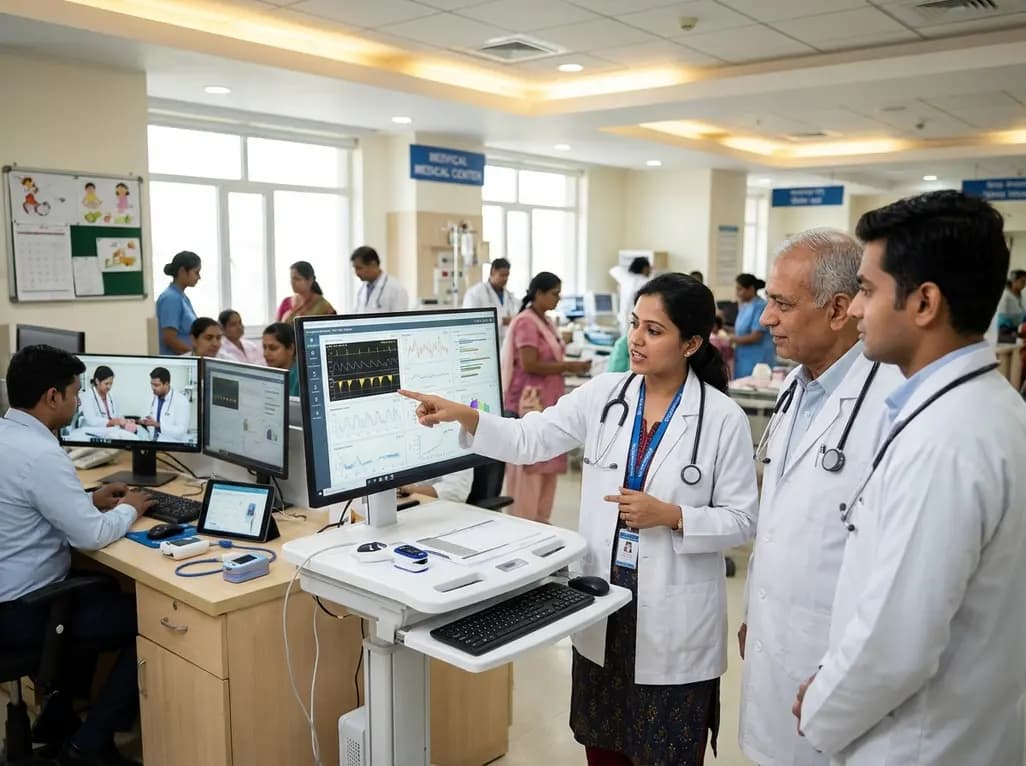
A landmark study details how an enterprise pediatric remote patient management model expanded from a single cardiology pilot to 16 diverse specialty programs by combining centralized digital operations with specialty clinical leadership.
Today

A comparative review of tension band wiring and intramedullary screw fixation in thumb metacarpophalangeal arthrodesis, evaluating union rates, hardware complications, and clinical outcomes.
Yesterday
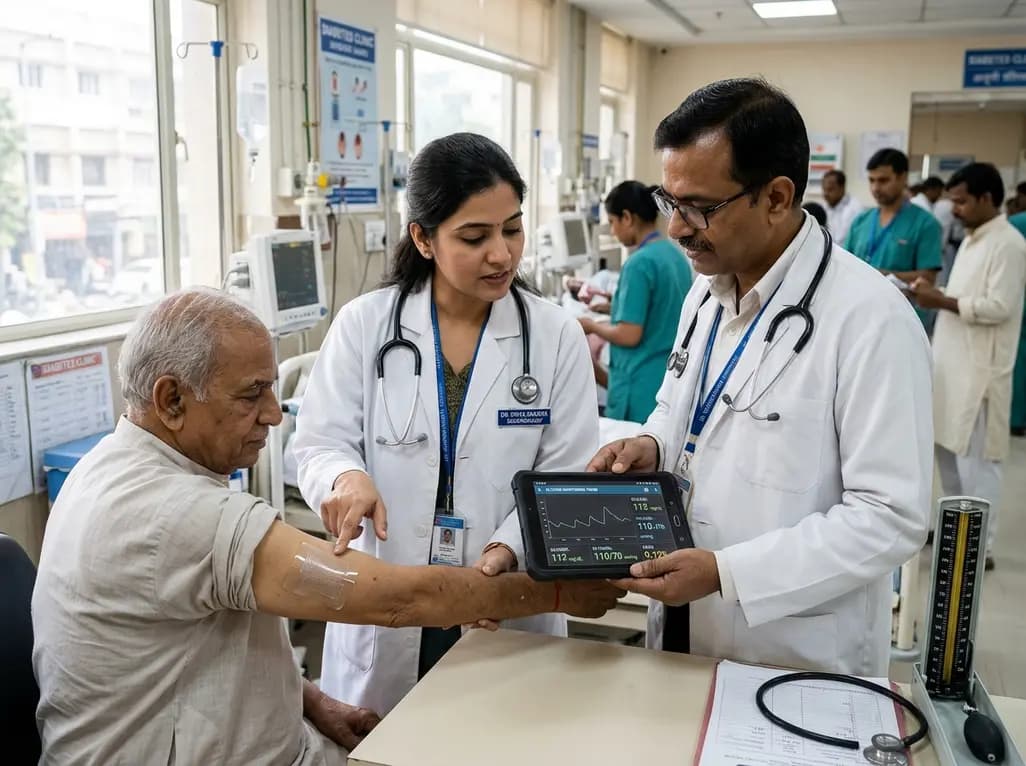
A breakthrough ultrathin multimodal sensor decouples physical hemodynamic monitoring from disposable electrochemical calibration, achieving long-term wearable glucose prediction with 81.36% accuracy and a 9.12% MARD. This offers a robust, drift-free solution for outpatient metabolic surveillance.
Today
